





 Portuguese
  English
  Spanish
  3 min of reading
  0 comments


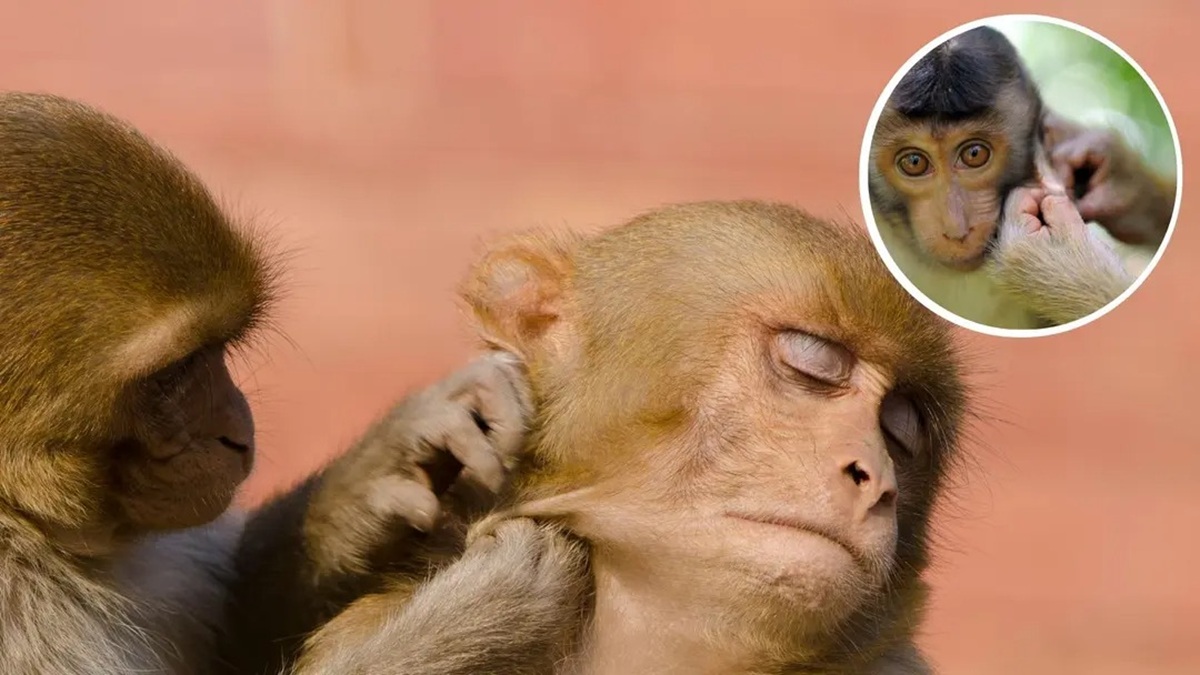
Research Details How Monkeys Managed to Sync Movements With Musical Beats, Including in Unheard Songs, Offering New Clues About Rhythm, Sound Perception, and Possible Evolutionary Roots of Musicality Observed in Human Behavior
Researchers observed that monkeys can keep up with the rhythm of music using their feet and maintain movements aligned with the beat. This behavior caught attention because it contradicts the idea that only animals with vocal learning abilities would be able to recognize and move in sync with a sound pattern. The team responsible highlighted that, among non-human species, isochrony is rare in the animal kingdom and typically appears only in very specific situations.
The analyzed ability requires pattern recognition, anticipation, and motor coordination. According to the researchers, it is a skill that emerges early in life and involves complex processes. The monkeys were presented with a song as a stimulus and responded with movements that adjusted to the rhythm throughout the experiment.
Responses to Unheard Songs
The researchers stated that the behavior continued even when the monkeys were exposed to songs they had not heard before. The finding was reinforced by the fact that they maintained synchronization with their feet even when they no longer received rewards for their performance. For the study’s authors, the results suggest that rhythmic perception may encompass a broader evolutionary spectrum than initially believed.
-
The oceans are darkening all over the planet – what is happening?

-
An engineer designs a solar plane to fly on Mars at an altitude of 1,000 meters and a speed of 300 km/h, covering 16,000 kilometers in a Martian year, 900 times the distance traveled by the Ingenuity helicopter in three years on the planet before experiencing a rotor failure, and NASA is already funding the feasibility study.

-
A new phenomenon of contactless magnetic friction intrigues scientists and questions a theory that has been valid since the 17th century.

-
An impressive phenomenon in Northern Brazil causes rivers of different colors to flow side by side, revealing secrets about sediments, currents, and biodiversity.


Observations indicated that monkeys do not experience music in the same way humans do and require extensive training. Nevertheless, they demonstrated the ability to interpret and move in time with a beat. The team emphasized that the result indicates deeper evolutionary roots for rhythm. The human ability to identify and follow a steady beat was highlighted in a press release cited by the researchers.
Origin and Limitations of Isochrony
The scientific literature considered by the study’s authors points out that isochrony is observed only in some birds and in specific individuals of other species. This scenario creates a gap in understanding the neurobiological bases of the ability. An important hypothesis, known as the vocal learning hypothesis, proposes that synchronization depends on specialized brain circuits that connect hearing and movement, developed to support complex vocal learning.
Vani Rajendran and her colleagues investigated whether monkeys trained to synchronize taps with the beats of a metronome could transfer this skill to complete songs, with all the acoustic diversity they entail. The group analyzed the performance of the animals in the face of this new sound complexity.
Musicality as a Human Mark
The results reinforced that musicality, especially rhythmic movement, constitutes an essential human characteristic. The team observed that few species demonstrate this capacity, and all of them exhibit vocal learning. For the researchers, this pattern indicates a relationship between learned vocalization and sensitivity to rhythm.
Published in the journal Science, the study emphasizes that synchronization of movements with music is a central element of human culture, although its evolutionary origins remain poorly understood. According to the foundational material, this ability involves extracting a constant pulse from continuous sounds, projecting this pattern over time, and adjusting motor commands to anticipate subsequent beats.
Counterpoint to the Vocal Learning Hypothesis
The presented conclusions show that monkeys were able to sync their movements with a subjective beat present in real songs.
The team also identified that they were able to maintain this response spontaneously, even when other strategies were available. This result contrasts with the influence of the vocal learning hypothesis, according to which only species with complex learned vocalizations could follow a musical beat.
The study indicates that monkeys broaden the understanding of the topic and show that rhythmic perception may have older and more distributed roots than initially expected.








Seja o primeiro a reagir!