





 Portuguese
  English
  Spanish
  5 min of reading
  0 comments


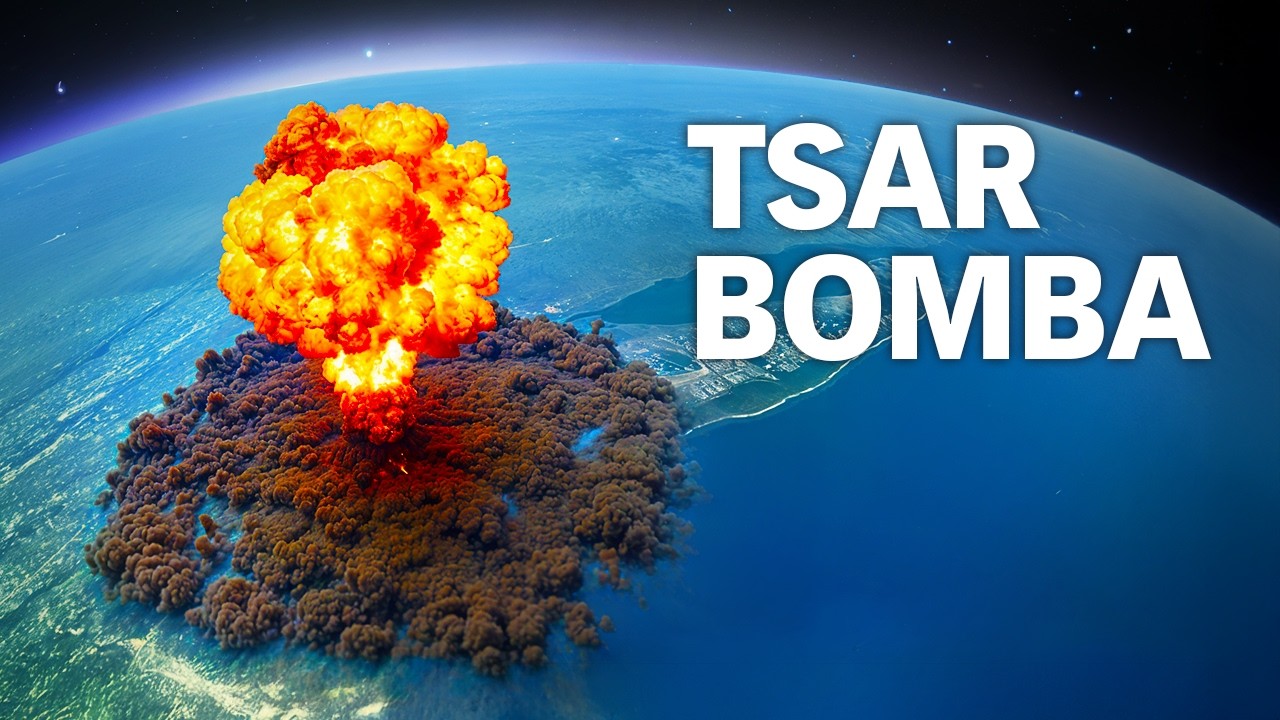
Tested in 1961 in Novaya Zemlya, the Soviet Tsar Bomba reached 50 megatons, generated a fireball of nearly 8 km, and entered into history as the largest artificial explosion ever recorded.
On October 30, 1961, the Soviet Union conducted, at the Novaya Zemlya nuclear test site, in the Novaya Zemlya archipelago, Arkhangelsk Oblast region, in the Arctic Ocean, the test of the Tsar Bomba, officially designated RDS-220 (AN602). The detonation occurred over Sukhoy Nos Cape, on Severny Island, in an event documented by institutional sources such as the Encyclopaedia Britannica, the Atomic Archive and technical analyses gathered by the Center for Arms Control and Non-Proliferation. The test marked the peak of the Cold War nuclear race and remains to this day the largest artificial explosion ever produced by humanity.
The Context of the Cold War and the Soviet Decision
In the early 1960s, the tension between the United States and the Soviet Union had reached a critical level. Nuclear tests were used not only as scientific experiments but as demonstrations of strategic power.
In 1961, under the leadership of Nikita Khrushchev, the Soviet government authorized the creation of an unprecedented thermonuclear weapon, with the explicit goal of demonstrating technological superiority and deterrence capability.
-
The Android as we know it has its days numbered after a new rule from Google that could end free APKs and completely transform the system by 2027.

-
Archaeologists use satellite technology and find a mysterious structure of 500 m² buried up to 6 meters beneath an ancient city in Egypt.
-
Supercomputer calculates when humanity may disappear from Earth, predicts a scorching supercontinent, temperatures of up to 70 degrees, and a planet moving towards becoming uninhabitable.
-
INMET danger alert: heavy rains between the 3rd and 4th may drop up to 100 mm/day and winds of 60 to 100 km/h in several regions of Brazil require extra caution.

According to historical records gathered by Britannica, the Tsar Bomba was conceived by a team led by physicist Andrei Sakharov, one of the leading figures in the Soviet nuclear program. The bomb had no practical purpose for direct military use: its size and weight made it impractical for combat deployment. The purpose was essentially political and psychological.
Where the Tsar Bomba Test Took Place
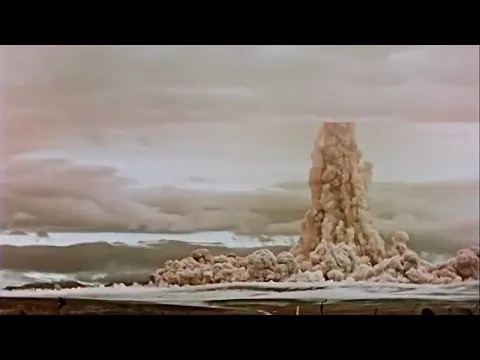

The test took place in one of the most remote locations on the planet, chosen specifically to reduce risks to the civilian population:
- Country: Soviet Union (now Russia)
- Region: Arkhangelsk Oblast
- Archipelago: Novaya Zemlya
- Island: Severny Island
- Specific Area: Sukhoy Nos Cape, near Mityushikha Bay
The Novaya Zemlya test site had been used since the 1950s as the primary site for Soviet nuclear tests, according to the Atomic Archive.
Power, Dimensions, and Numbers That Challenge Human Scale
The Tsar Bomba was detonated at approximately 4,000 meters above sea level, launched by a modified Tu-95V bomber. The bomb was equipped with a special parachute to slow its descent, allowing the aircraft to distance itself before the explosion.
The documented numbers are still impressive today:
- Official Power: about 50 megatons of TNT
- Maximum Estimates Cited in Technical Analyses: up to 58 megatons
- Historical Comparison: approximately 3,300 times more powerful than the Hiroshima bomb
- Fireball Diameter: about 8 kilometers
- Mushroom Cloud Height: estimated at over 60 kilometers, reaching the stratosphere
These values are cited in analyses from the Atomic Archive and in popular science articles published by Scientific American.
The Shock Wave That Traveled the Planet
One of the most documented effects of the explosion was the atmospheric shock wave. Seismographic and barometric instruments spread across the world recorded the phenomenon unequivocally.
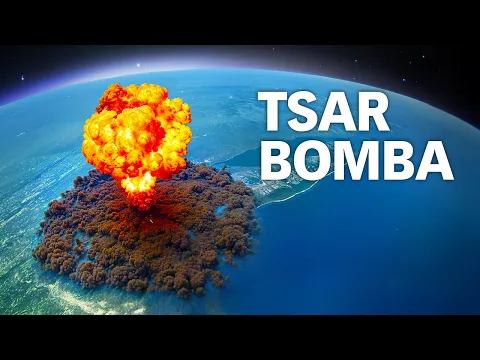
According to the Center for Arms Control and Non-Proliferation, the shock wave from the Tsar Bomba made three complete trips around the Earth. Windows were broken hundreds of kilometers from ground zero, including in locations over 600 kilometers from the detonation site, according to records gathered in subsequent historical analyses.
This global effect transformed the test into one of the most well-documented events in atmospheric instrumentation history.
Why the Tsar Bomba Was Not Used as an Operational Weapon
Despite its colossal power, the Tsar Bomba was never mass-produced. There are clear technical and strategic reasons for this:
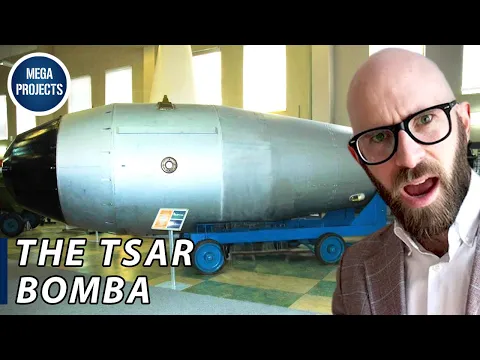
- Extreme Weight: about 27 tons, which severely limited launch vectors
- Dimensions: approximately 8 meters in length, requiring deep modifications in the aircraft
- Low Military Practicality: impossible to use in real tactical conflicts
- Environmental and Political Risk: unpredictable global effects
Historical reports cited by Britannica make it clear that the bomb was conceived as a demonstration tool, not as a weapon for ongoing use.
Environmental Impacts and Scientific Lessons
Although the test was conducted in a remote area, its environmental effects were significant. The final version of the Tsar Bomba had part of its design altered to reduce the amount of fissile material and, thus, minimize direct radioactive contamination. Even so, the test released enormous amounts of thermal energy and radiation.
Subsequent studies indicated that if detonated at its originally designed full power (estimated at up to 100 megatons), the bomb would have caused even more severe environmental consequences, something that contributed to international debates about nuclear testing limits.
Political Consequences and International Treaties
The detonation of the Tsar Bomba, in 1961, had immediate repercussions in international diplomacy. The test reinforced pressures to restrict atmospheric nuclear experiments.
Two years later, in 1963, the United States, Soviet Union, and United Kingdom signed the Partial Nuclear Test Ban Treaty, which banned nuclear explosions in the atmosphere, in space, and underwater. Historians and analysts cited by Scientific American point out that the Tsar Bomba was one of the key events that accelerated this agreement.
More than six decades after the test, the Tsar Bomba continues to be an absolute reference when it comes to human-created destructive power. No other nuclear artifact has ever come close to its scale.
For military historians and nuclear scientists, the test represents a turning point: proof that the capacity for destruction had surpassed any rational limit of use. From then on, nuclear deterrence began to rely more on the implicit threat than on practical demonstration.
Why the Tsar Bomba Is Still Studied Today
The Tsar Bomba continues to be analyzed across different fields of knowledge:
- Physics: study of shock waves, plasma, and extreme atmospheric effects
- Geopolitics: ultimate symbol of the logic of nuclear deterrence
- History: landmark of the Cold War and the arms race
- Environmental Science: reference for modeling global impacts of large-scale explosions
Institutional sources such as Britannica, the Atomic Archive and analyses published by arms control organizations continue to be used to study the event objectively and thoroughly.
The explosion of the Tsar Bomba, which occurred on October 30, 1961, in Novaya Zemlya, Arkhangelsk Oblast, stands as a concrete reminder of how far human engineering was capable of going in the name of strategic supremacy. More than a technical feat, it became a permanent symbol of the inherent risks of the nuclear age.







-

-

-

-

7 pessoas reagiram a isso.