





 Portuguese
  English
  Spanish
  3 min of reading
  76 comments





According to the National Mining Agency (ANM), the discovery of the rough diamond repeats a historical feat from 1938, but exposes the low return of mining for the country.
A rough diamond of 646.78 carats was found in Coromandel, in the Triângulo Mineiro/Alto Paranaíba region, and announced by the National Mining Agency (ANM) on September 7, 2025. The stone is considered the second largest ever recorded in Brazil, behind only the famous Getúlio Vargas diamond, which is 727 carats, discovered in the same city in 1938.
Despite the magnitude of the discovery and the million-dollar value that the gem could reach in the international market, only 2% of the sale value will return to Brazil in the form of taxes. This percentage is set by the Financial Compensation for the Exploitation of Mineral Resources (CFEM) and represents a minimal fraction of the wealth extracted from the national territory.
The Discovery in Coromandel
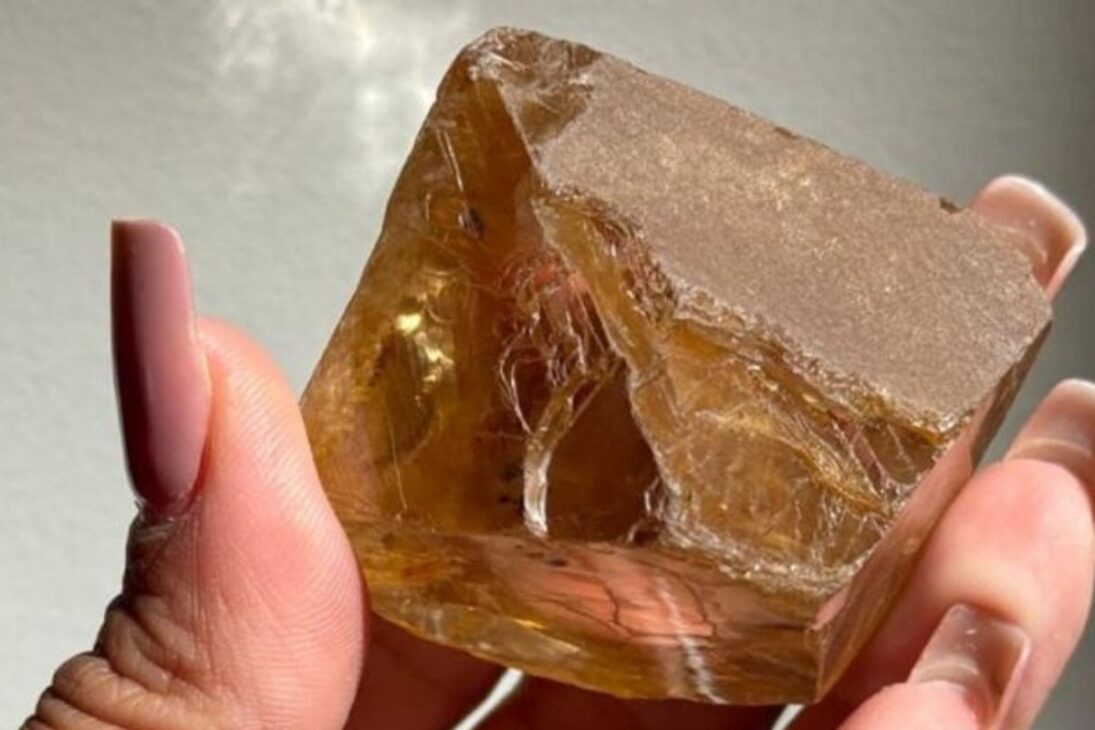
According to the ANM, the diamond was found in an area with a Garimpeira Mining Permit (PLG), which ensures that the extraction was legal and under official supervision. The discovery was registered in May 2025, but has only now become public.
-
Man never set foot on the Moon? 5 scientific proofs confirm that humanity has been there and definitively dismantle conspiracy theories.

-
The Brazilian Army will adopt humanoid robots to test the concept of future combat, says a website, surprising everyone, but later revealing that it was all just an allusion to April Fool’s Day.

-
There is a city in China right next to Hong Kong where people speak Portuguese, the streets have names in Portuguese, and the architecture looks like it came straight out of a historic city in Brazil.

-
Rare frog thought to be extinct after only appearing in fossils reappears, becoming a ‘living relic’ of evolution and gaining a real path to spread after combating introduced predators.


Coromandel, historically known for gem extraction, thus returns to the international scene almost 90 years after the milestone of the Getúlio Vargas diamond. The mining town confirms its position as one of the main diamond mining hubs in the country.
Certification and Sale Process
The commercialization of the diamond will follow the rules of the Kimberley Certification Process (KCP), an international agreement created in 2003 to prevent precious stones from financing conflicts or illegal activities. In this system, the ANM registers all information about the stone, including weight, carats, origin, and destination.
Only after the issuance of the Kimberley Certificate can the diamond be sold in the domestic market or exported. This step is essential for the commercialization to be recognized globally.
The Low Return in Taxes
The most striking aspect is the economic return for Brazil. Under current legislation, the CFEM for diamonds is only 2% of the gross sales revenue. In practice, this means that even if the stone reaches million-dollar values at international auctions, only a minimal fraction will remain with the municipality, the state, and the Union.
According to the ANM, these resources are mandatorily allocated to areas such as health, education, and local infrastructure, but the amount is small compared to the value that investors and collectors can pay for the stone.
Debate on Mining Taxation
The case reignites the discussion about the tax policy of mining in Brazil. Rare and highly valuable natural resources, such as diamonds and other gems, generate fortunes for the global market, but little return for the producing regions.
While international buyers compete for stones of this caliber, mining municipalities like Coromandel receive a tiny share of the wealth extracted from their territory, reinforcing a debate that has spanned decades in the country.
In your opinion, should Brazil increase taxes on diamond exploitation to ensure a greater return to producing cities? Or does the current rate already balance competitiveness and revenue? Leave your opinion in the comments — we want to hear from those who experience this impact in practice.






Esse dinheiro dos impostos se for aumentado vai p bolso dos políticos e não p população
É mais fácil estourar o bolso da população em geral, do que taxar ricos, arrebentam nos impostos IPVA, IPTU, taxa sobre Lca e Lci, mais de 20% de Imposto de renda e por aí vai…
O Brasil mais uma vez sendo explorado, melhor ROUBADO. Se está dentro do nosso país é nosso.