





 Portuguese
  English
  Spanish
  4 min of reading
  2 comments


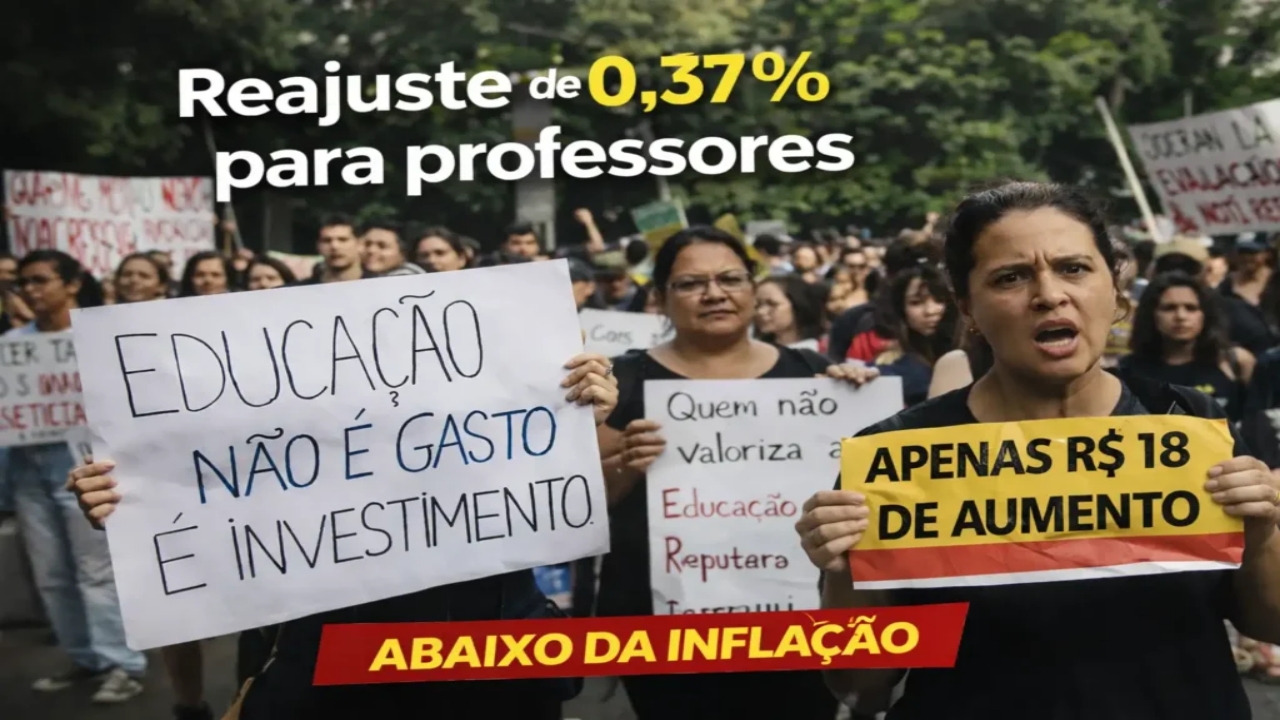


Adjustment to Teachers’ Salaries Forecasted by the MEC Equals R$ 18.10 and Is Below Inflation, Directly Impacting the Purchasing Power of Those Working in Basic Education.
The expectation is that the MEC will officially announce in 2026 an adjustment of 0.37% to the national base salary of basic education teachers. In practice, this means an increase of R$ 18.10 to salary.
With this percentage, the current amount of R$ 4,867.77 is expected to rise to around R$ 4,885.87 for a 40-hour workweek. The scenario draws attention as it indicates one of the smallest adjustments since the establishment of the teacher appreciation policy.
The inflation projection for 2025 remains well above the index projected for the base salary. Consequently, there’s an increasing risk of real loss and reduction in the purchasing power of educators.
-
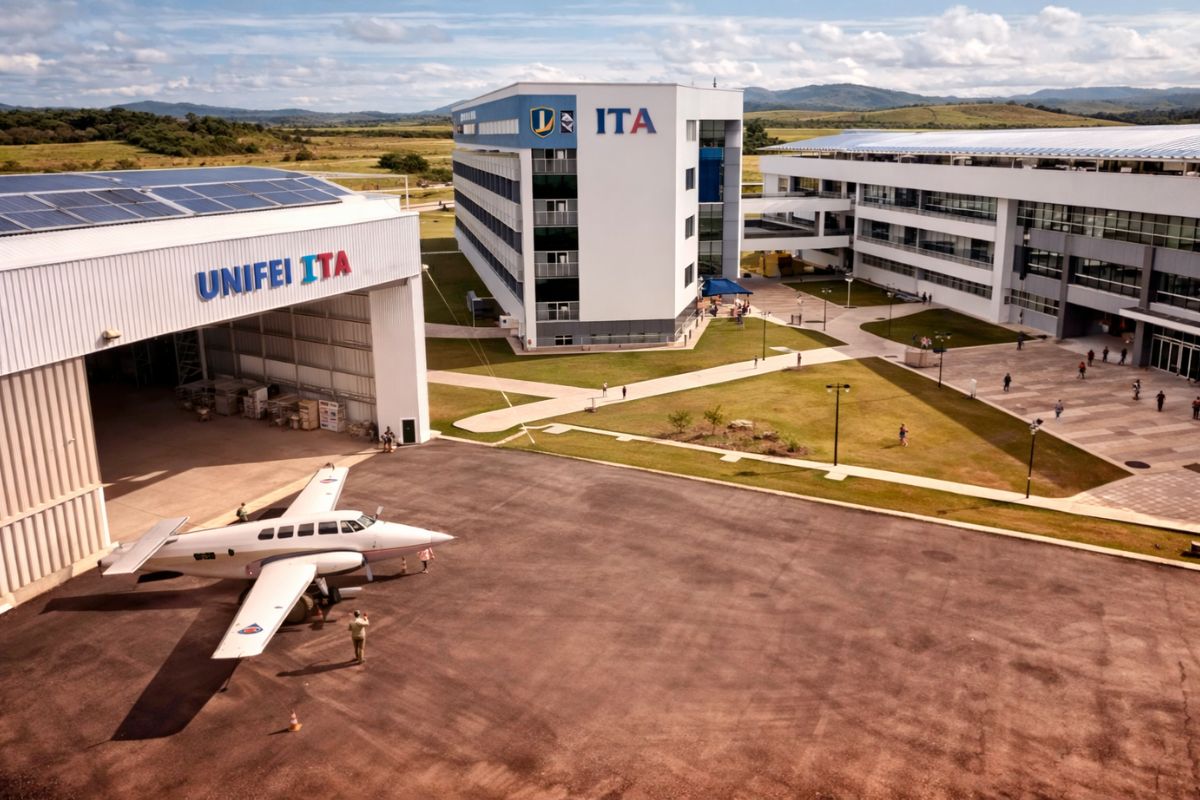
The institute that trained the greatest aerospace engineers in Brazil has just opened its first campus outside São Paulo after 75 years: ITA Ceará will have R$ 445 million, new courses in energy and systems, and classes are expected to start in 2027.
-
Luciano Hang, owner of Havan, goes to Juiz de Fora after the tragedy in February, brings R$ 1 million, hands out R$ 2,000 cards, and donates up to R$ 15,000 to victims in the region.

-
The Brazilian passport allows legal residence in dozens of countries without the need for a prior visa, and most Brazilians are unaware that they can apply for residency directly upon arriving in nations in South America, Africa, and even Europe.

-
Petrobras sends a message to Brazilian truck drivers after fuel collapse and reveals plan to have 100% domestic diesel.


What Happened and Why This Draws Attention
The projected adjustment of 0.37% appears amid an impasse between MEC, states, municipalities, and representatives of the category. Without an agreement, the tendency is to officialize the index calculated by the current rule.
The contrast with the estimated inflation for 2025 reinforces the perception that the increase does not even cover the losses of the period. This mismatch amplifies the pressure for changes to the model.
There is also a deadline for the formalization of the index. The MEC has until January 31 to officialize the adjustment.
What Changes in Practice for Basic Education Teachers
The immediate impact is direct on the base salary that serves as a reference for public education networks. With the addition of R$ 18.10, the base salary will rise to around R$ 4,885.87 for 40 hours a week.
When the adjustment falls below projected inflation, the result tends to be a reduction in purchasing power. This affects the daily lives of professionals who are already under pressure from costs and basic consumption.
The subject also impacts the perception of appreciation of the career, as the base salary is viewed as a sign of public policy for teaching.
What Are the Rules, Deadlines, and Conditions
The calculation of the base salary adjustment is defined by Law No. 11,738/2008, known as the Teachers’ Salary Law. The methodology primarily considers the growth of the annual minimum value per student of the Fundeb.
The Fundeb is identified as the main mechanism for financing basic education in the country and directly influences the index applied to the base salary.
The deadline for officialization is January 31, when the MEC must formalize the projected percentage.
Teachers’ Salaries: How the Fundeb Came to Influence the Adjustment Index
After changes to the Fundeb in 2020, alerts regarding distortions in the calculation increased. Two factors gained weight in this debate: the reduction in the number of enrollments in basic education and changes in the fund’s composition.
These elements began to negatively impact the index, with stronger oscillations from one year to the next. The result is an adjustment that can vary widely, without delivering predictability.
This behavior is evident in the recent comparison: in 2022, there was an increase of 33.24%, while in 2024, the adjustment was just 3.62%.
Points of Attention and Common Questions
States and municipalities point out that the current model creates a legislative vacuum, as it does not provide budgetary predictability. On the other hand, the perspective of teacher representatives is that the formula has ceased to guarantee real appreciation.
The issue has also gained political weight, as an adjustment of 0.37% tends to generate public debate and backlash. At the same time, the index rule is tied to a calculation prescribed by law, limiting immediate changes without revising the model.
Within the government, there is a consensus on the need for a change in methodology, but still no agreement on which format to adopt.
New Teachers’ Salaries: What Could Happen from Now On
A working group created in 2023 brought together MEC, Undime, Consed, and CNTE to discuss alternatives. Even with the involvement of these entities, consensus has yet to be reached.
Among the proposals debated is the combination of the average growth of the Fundeb with the inflation measured by the INPC, with disagreement over the weight of each indicator. The INPC is projected to close 2025 at around 4.7%, exceeding the projected adjustment.
In Congress, the Education Parliamentary Front advocates for a new model that combines teacher appreciation and fiscal security. Deputy Rafael Brito (MDB-AL) states that the response must be swift to avoid long-term effects from a very low adjustment.
The outlook for 2026 indicates the officialization of 0.37%, with an increase of R$ 18.10 and the base salary reaching around R$ 4,885.87 for 40 hours a week. The difference between the index and the projected inflation reinforces the risk of real loss.
Without an agreement on a new methodology, the rule of Law No. 11,738/2008 continues to determine the calculation. The pressure for a review is increasing, with direct impact on the attractiveness of the profession and the dynamics of basic education in the country.










Com certeza vamos ter troco nas eleições…
Enquanto isso o governo segue com a torneira de gastos desnecessários sob sigilo totalmente aberta levando o país para um caos econômico sem precedentes.