





 Portuguese
  English
  Spanish
  4 min of reading
  0 comments


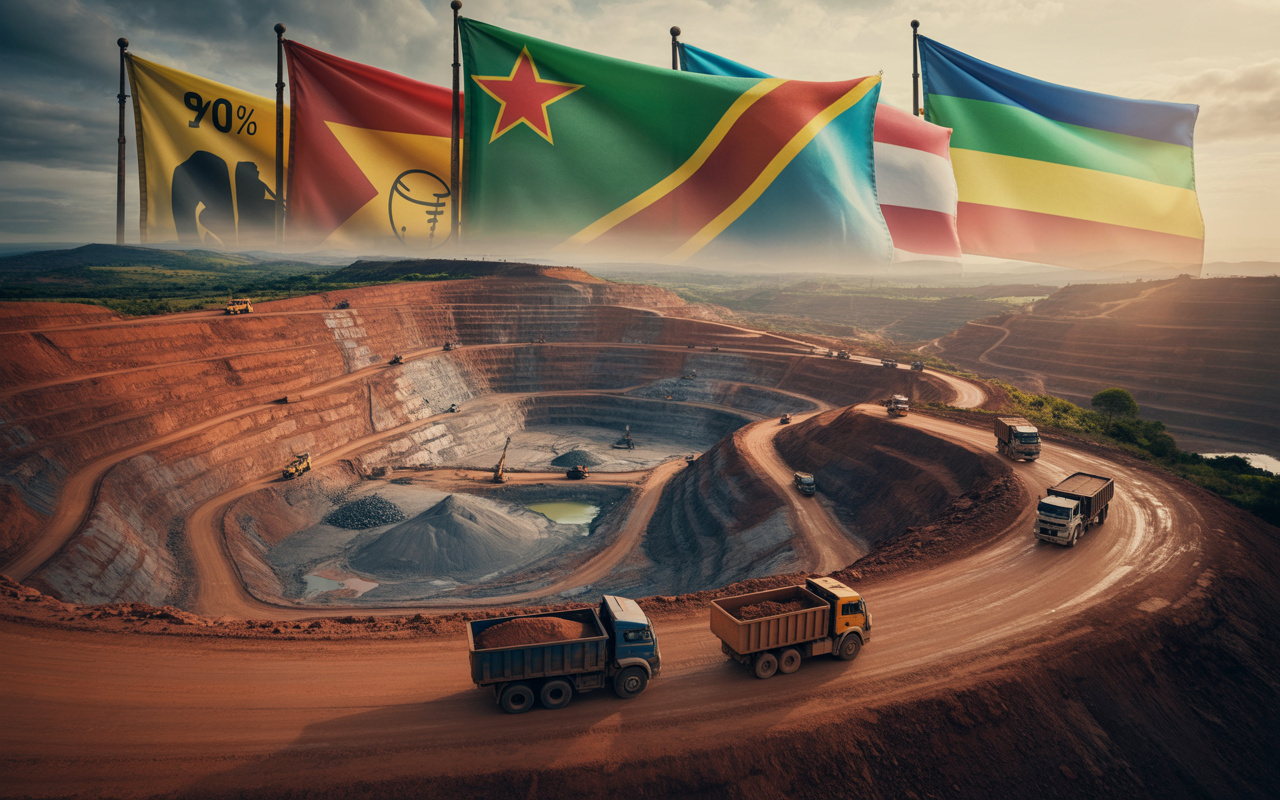
With Up to 70% of Global Cobalt, The Democratic Republic of the Congo Has Become A Key Piece in The Global Competition for Critical Minerals Used in Batteries, Weapons, and Technology.
Few countries concentrate as much strategic power in the ground as the Democratic Republic of the Congo. Although often associated with political instability and humanitarian crises, the DRC holds a quiet yet central position in the global economy of the 21st century. Smartphones, electric vehicles, energy storage systems, drones, satellites, and even advanced weaponry directly depend on minerals extracted from its territory.
Among these resources, the most critical is cobalt, an essential metal for high-density lithium-ion batteries. Widely accepted estimates indicate that the country accounts for about 70% of global production, a level of concentration that is nearly non-existent for any other modern strategic mineral.
Why Cobalt Has Become A Geopolitical Metal
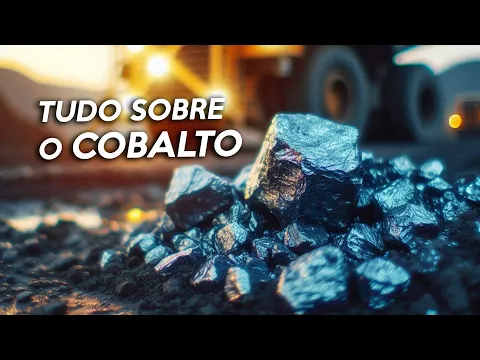

Cobalt is not just another industrial input. It is crucial to ensure thermal stability, durability, and safety in high-performance batteries. Without it, the range of electric cars decreases, the risk of overheating increases, and military applications become less reliable. This means that control over cobalt directly impacts:
-
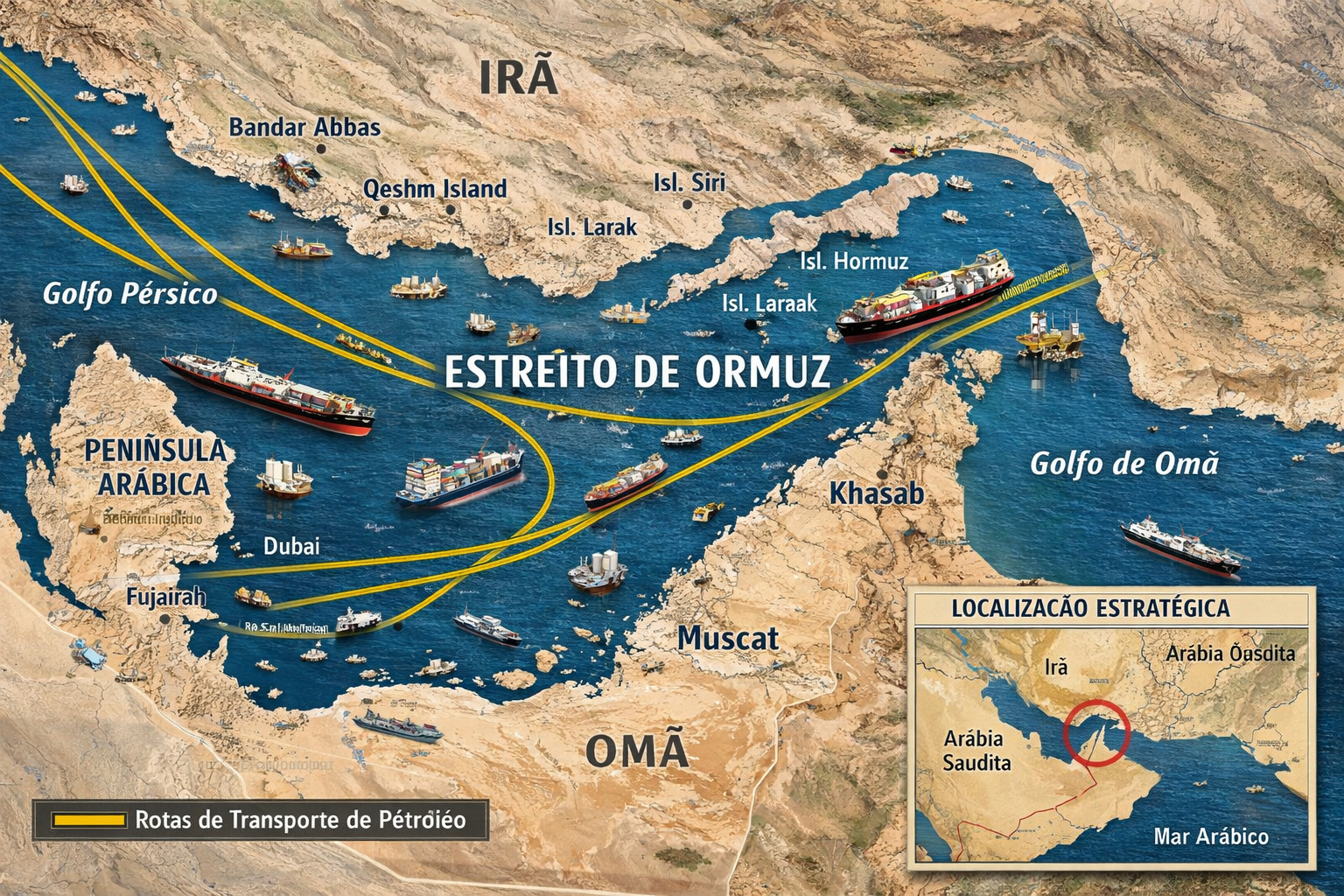
Global summit with over 40 countries pressures Iran for a blockade in the Strait of Hormuz and warns of direct impact on oil, food, and the global economy.
-
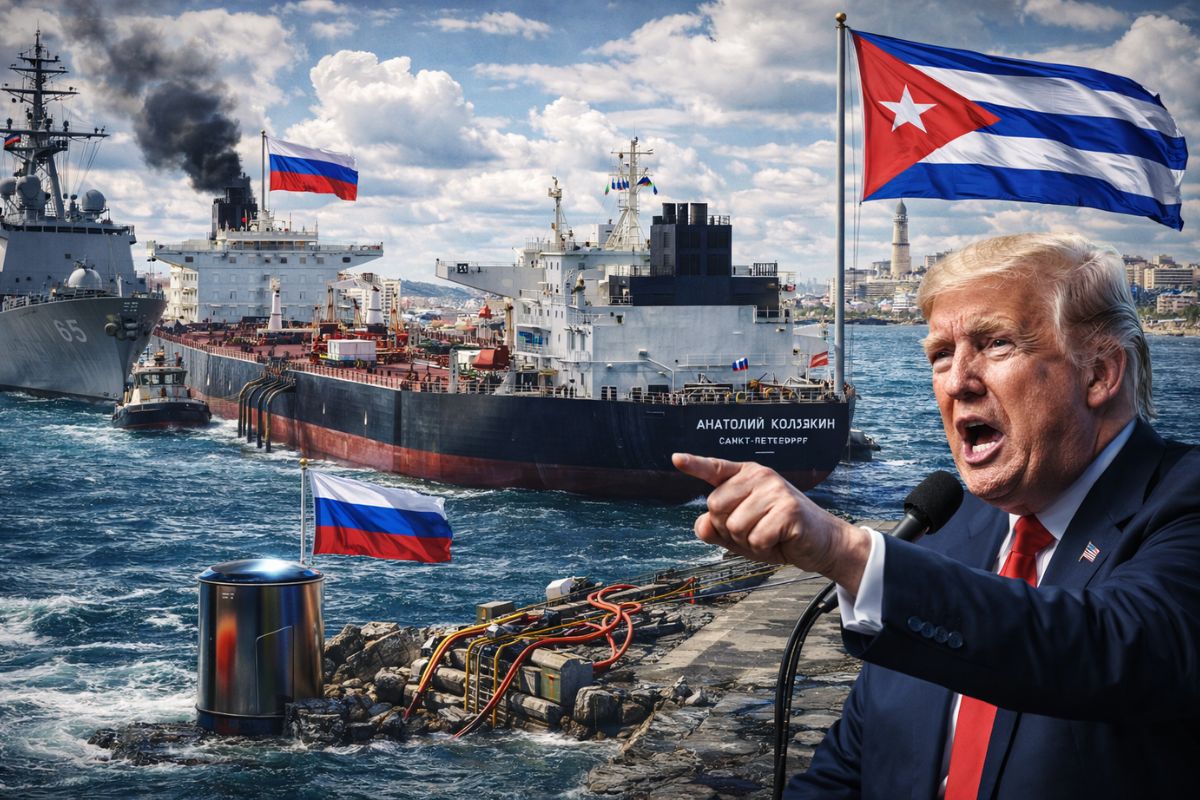
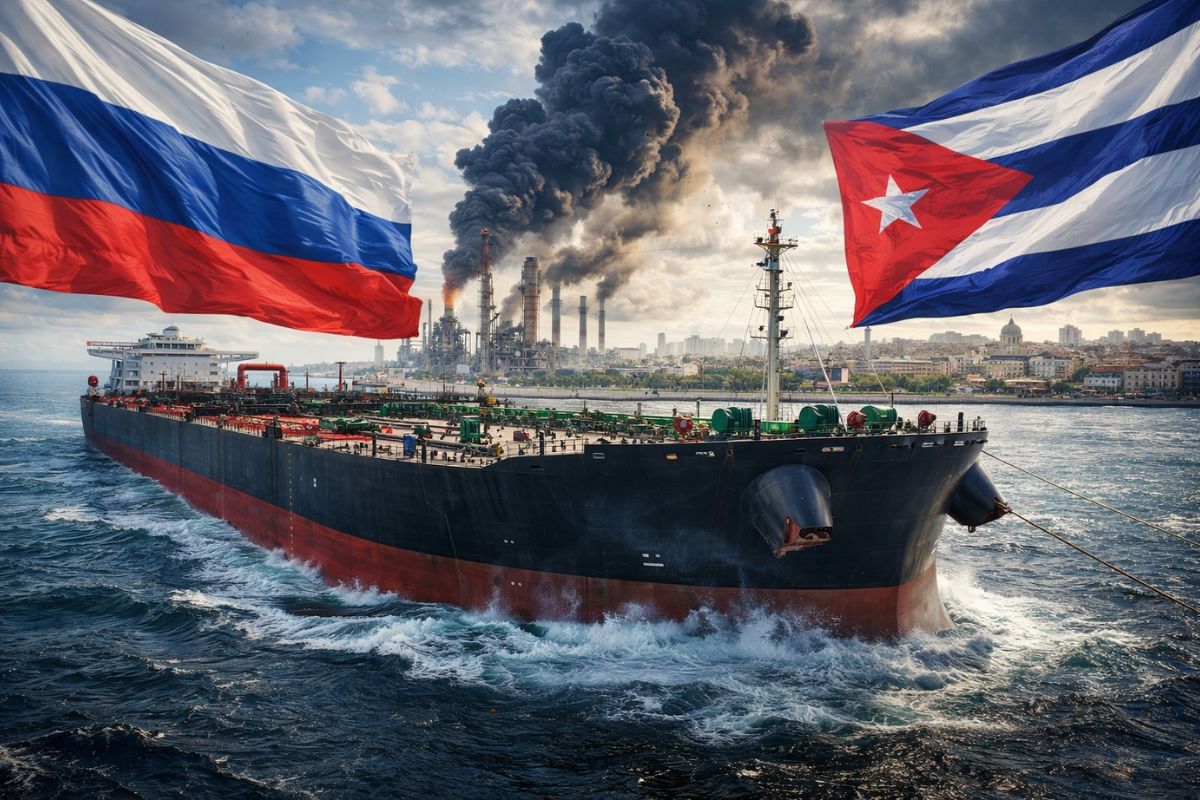
Russia has broken the U.S. maritime blockade to send oil to Cuba and is now loading a second ship while Trump says that “Cuba is next” in a possible military action against the island.
-
Spain challenges the USA and closes its airspace for operations against Iran, raising global tension and provoking the threat of a trade rupture.

-
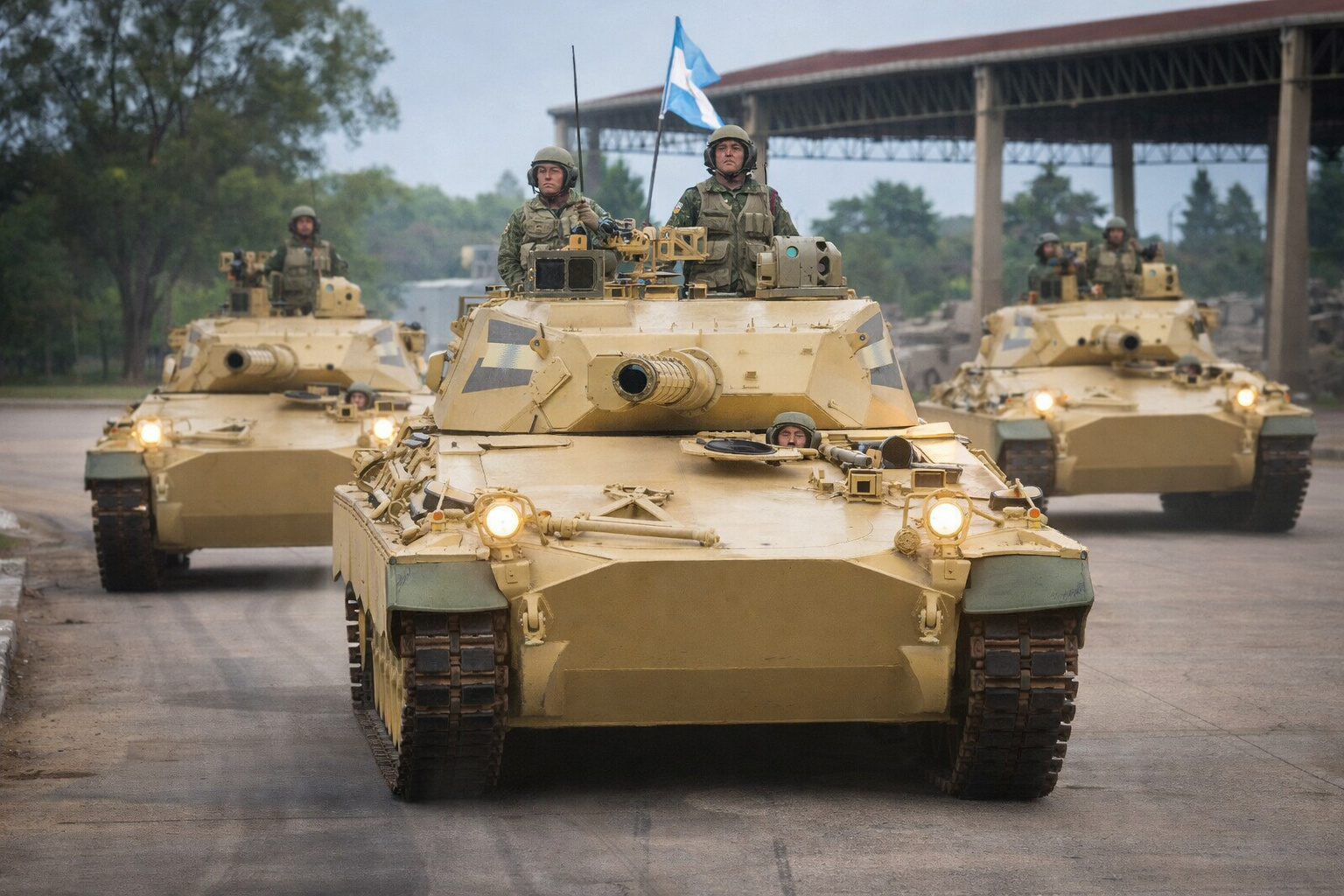
While no other country manufactures tanks in Latin America, Argentina activates the TAM 2C-A2 and raises a curiosity about the technological lag in the region.

- the global energy transition, based on electrification;
- the automotive industry of the future;
- mobile military systems, drones, and submarines;
- sensitive technological supply chains.
By concentrating most of this metal, the DRC has become a strategic choke point, closely watched by governments and corporations.
Copper, Coltan, and The Invisible Foundation of The Digital Age
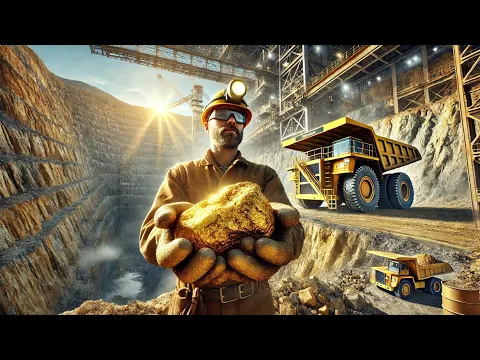
In addition to cobalt, the country hosts some of the largest copper reserves in Africa, a metal essential for electrical grids, motors, renewable energy infrastructure, and communication. The growth of global electrification has skyrocketed the demand for copper, further elevating Congo’s importance.
Another crucial resource is coltan, a mineral from which tantalum and niobium are extracted, used in high-performance electronic capacitors. These components are present in almost all modern devices, from smartphones to military guidance systems.
The combination of these minerals turns the DRC into a physical pillar of the digital economy, even though much of the added value is still captured outside its borders.
China, The United States, and The Silent Race for Congolese Subsoil
In the last two decades, China has decisively advanced into the Congolese mineral sector. Chinese companies control or participate in some of the largest cobalt and copper mines in the country, often directly integrated into industrial chains that range from extraction to battery production.
This movement has provided China with a clear strategic advantage, reducing its reliance on open markets and consolidating direct access to critical raw materials.
In response, the United States and European allies have begun to treat the DRC not just as an economic partner, but as strategic territory. Diplomatic initiatives, cooperation agreements, and programs for “responsible supply chains” have gained momentum, seeking to reduce exclusive dependence on Chinese infrastructure.
The Paradox of Mineral Wealth and Structural Poverty
Despite supporting trillion-dollar industries, the DRC faces profound challenges. Much of the mining occurs in contexts of low local industrialization, exporting raw or semi-processed ore. This limits value capture and keeps the country vulnerable to external fluctuations.
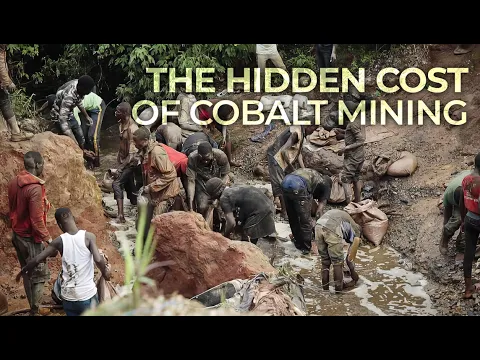
Additionally, social and environmental issues weigh heavily on the sector’s image. Artisanal mining, common in some regions, raises concerns about working conditions, safety, and sustainability.
These vulnerabilities are increasing international pressure for traceability and certifications, turning Congolese cobalt into a global political and ethical issue.
Attempts to Change The Game Within The Country
In recent years, Congolese authorities have begun discussing strategies to retain more value internally, including greater state control, contract revisions, and incentives for local industrialization. The ambition is to move from being merely a raw material supplier to advancing to intermediate stages of the chain, such as refining and processing.
Though these plans face structural obstacles, they indicate a shift in posture: the recognition that the country’s power lies not just in the volume of reserves, but in its ability to negotiate access to them in an increasingly mineral-critical world.
A Key Territory in The New Global Order
The competition for the Democratic Republic of the Congo does not involve armies or military bases, but something equally decisive: control over the inputs that drive modern technology. In a scenario of accelerated energy transition, mass electrification, and strategic competition among major powers, the Congolese subsoil has become one of the planet’s most coveted assets.
Regardless of who leads the next technological decade, one reality is already clear: no power will be able to sustain its industry, defense, or energy matrix without directly engaging with the Democratic Republic of the Congo.
The country, long seen as peripheral, has now taken center stage in a competition that will define the course of the 21st century.








Seja o primeiro a reagir!