





 Portuguese
  English
  Spanish
  5 min of reading
  7 comments


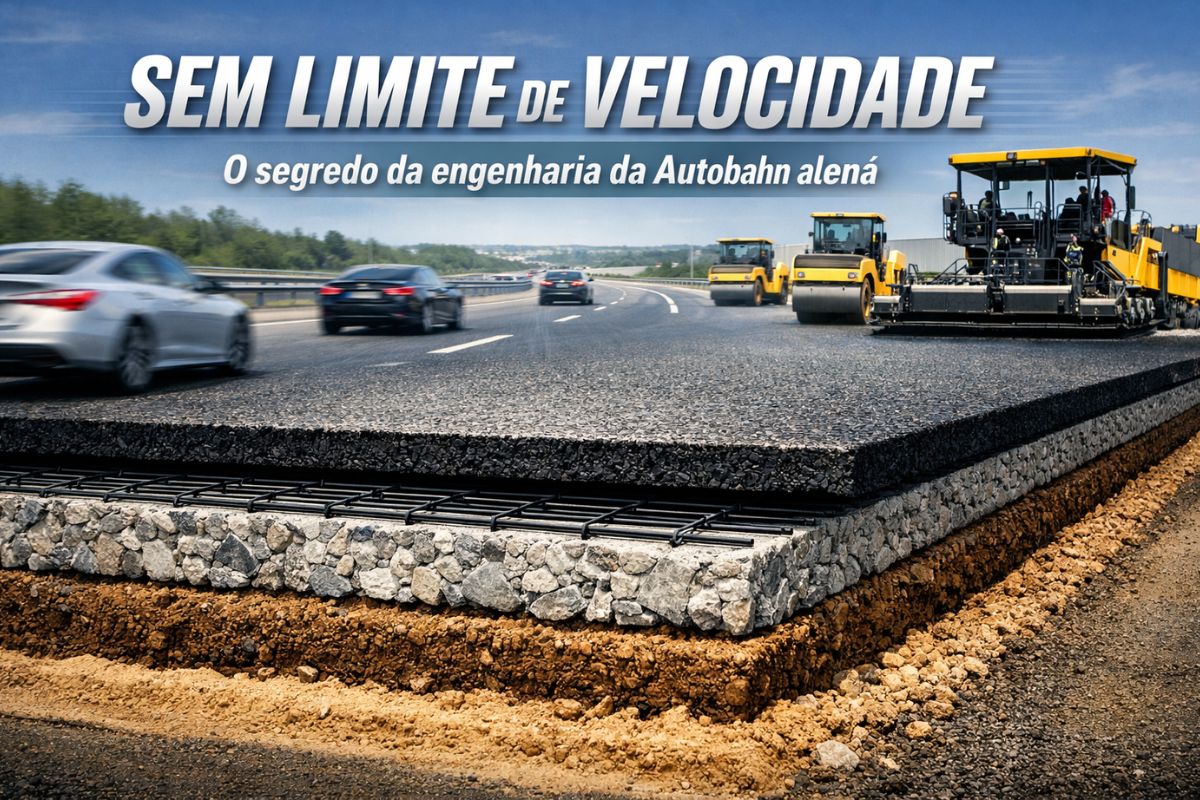


With Deep Structural Layers, Reinforced Concrete, High-Tech Asphalt, and Continuous Maintenance, the German Autobahn Without Speed Limit Becomes a Showcase of Extreme Engineering.
In several segments of the German road network, the Autobahn operates without a speed limit, allowing cars to reach speeds close to 300 km/h under ideal conditions. At first glance, this seems like a recipe for chaos and pavement destruction in no time. But in practice, what you see is one of the most stable and secure high-speed systems on the planet, the result of an engineering project that treats each kilometer as a complex structure, not just “pavement thrown on the ground.”
The secret lies in combining meticulous planning, calculated structural layers, cutting-edge materials, and a continuous cycle of maintenance and recycling. In a country with an area smaller than half of Texas, but with a road density much higher than that of several large countries, Germany has turned the Autobahn into a benchmark for those studying high-performance roads.
Why a Highway Without a Speed Limit Remains Safe

At first glance, a stretch of the Autobahn appears to be just another gray asphalt lane. What is not visible to the naked eye is the completely different construction philosophy from the common standard.
-
With 55 floors, 177 meters in height, a 15-meter walkway between the twin towers, ventilated facade, and 6,300 m² of leisure space, Ápice Towers already has one tower completed and another nearly at the top.

-
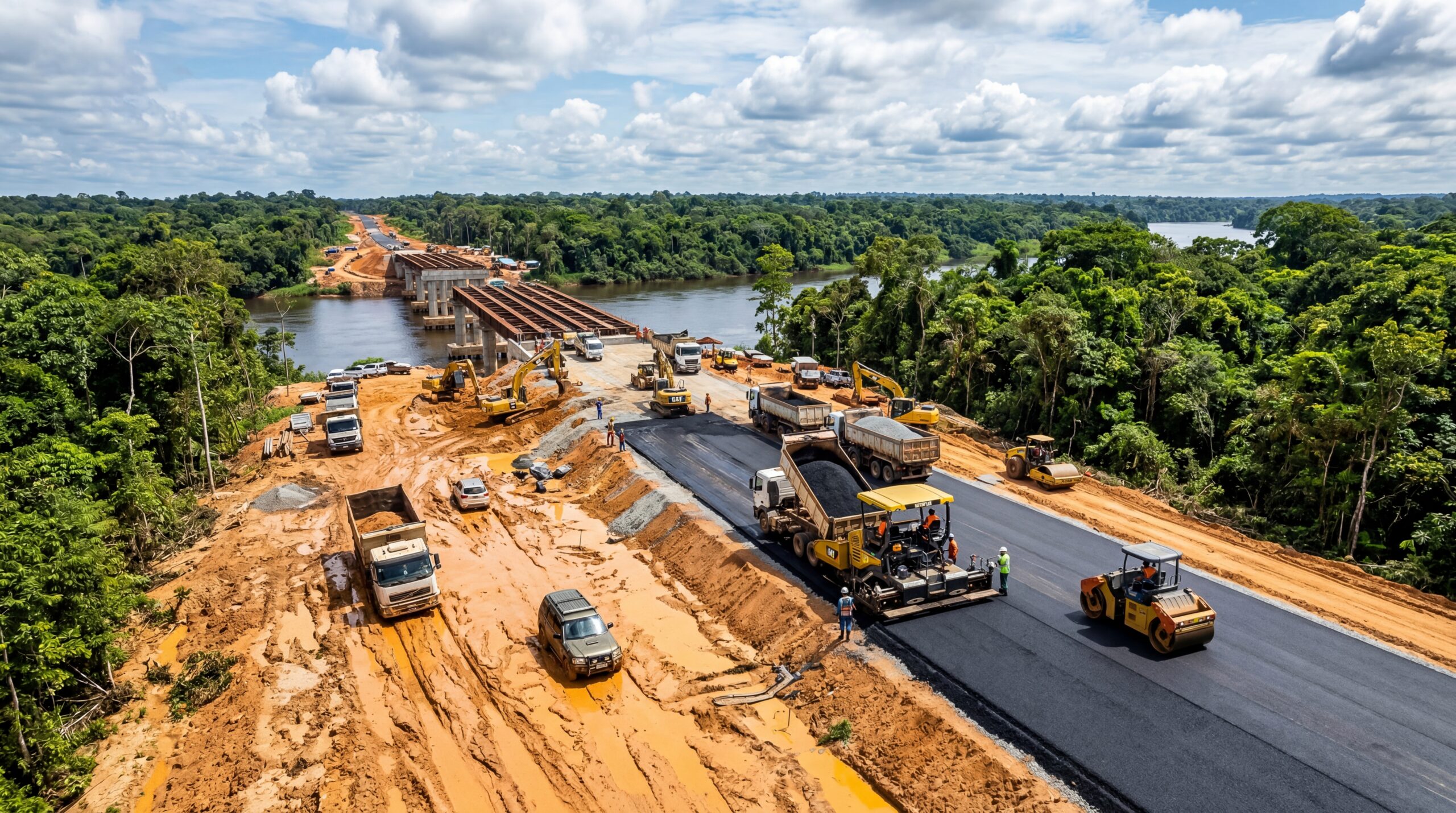
After nearly 50 years of neglect, BR-319 receives R$ 678 million to pave 340 km, gain a 320-meter bridge, and try to lift Amazonas out of the mud, the quagmire, and road isolation.
-
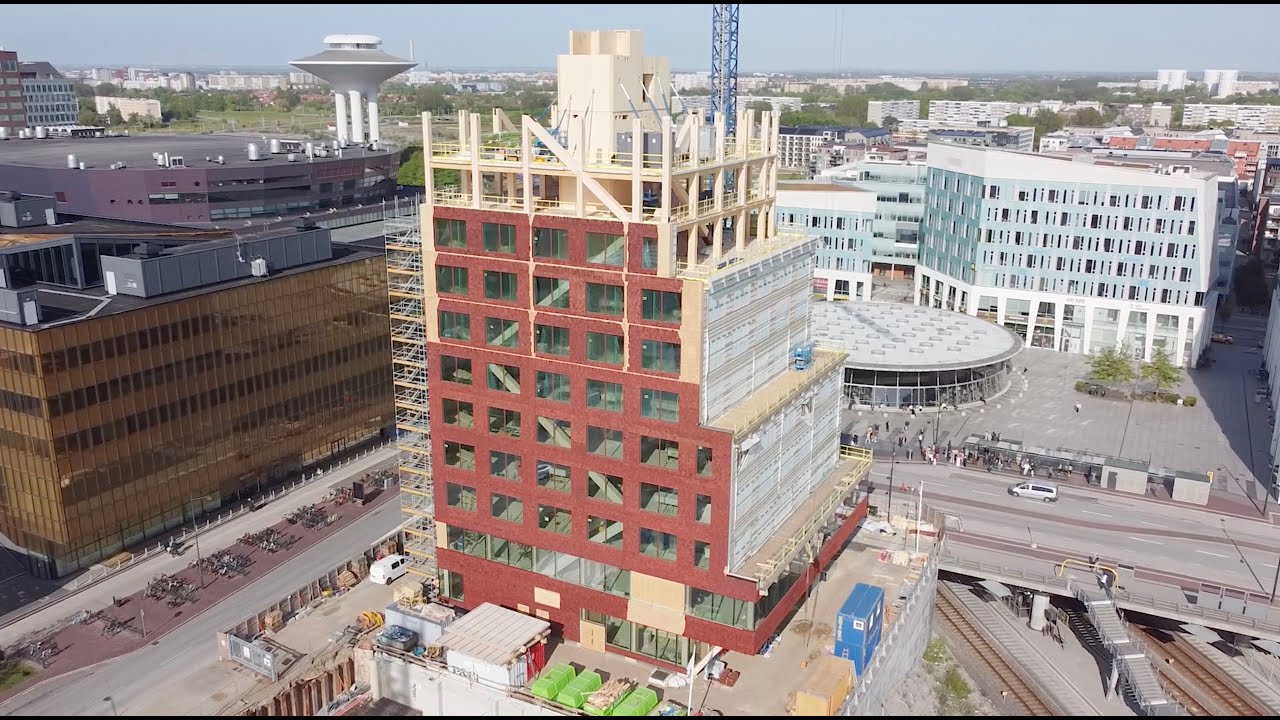
In Sweden, a 51-meter tower was built almost entirely of wood, without a concrete structural core and with solar panels integrated into the facade, using CLT and laminated beams to challenge the dominance of steel and concrete in modern buildings.
-
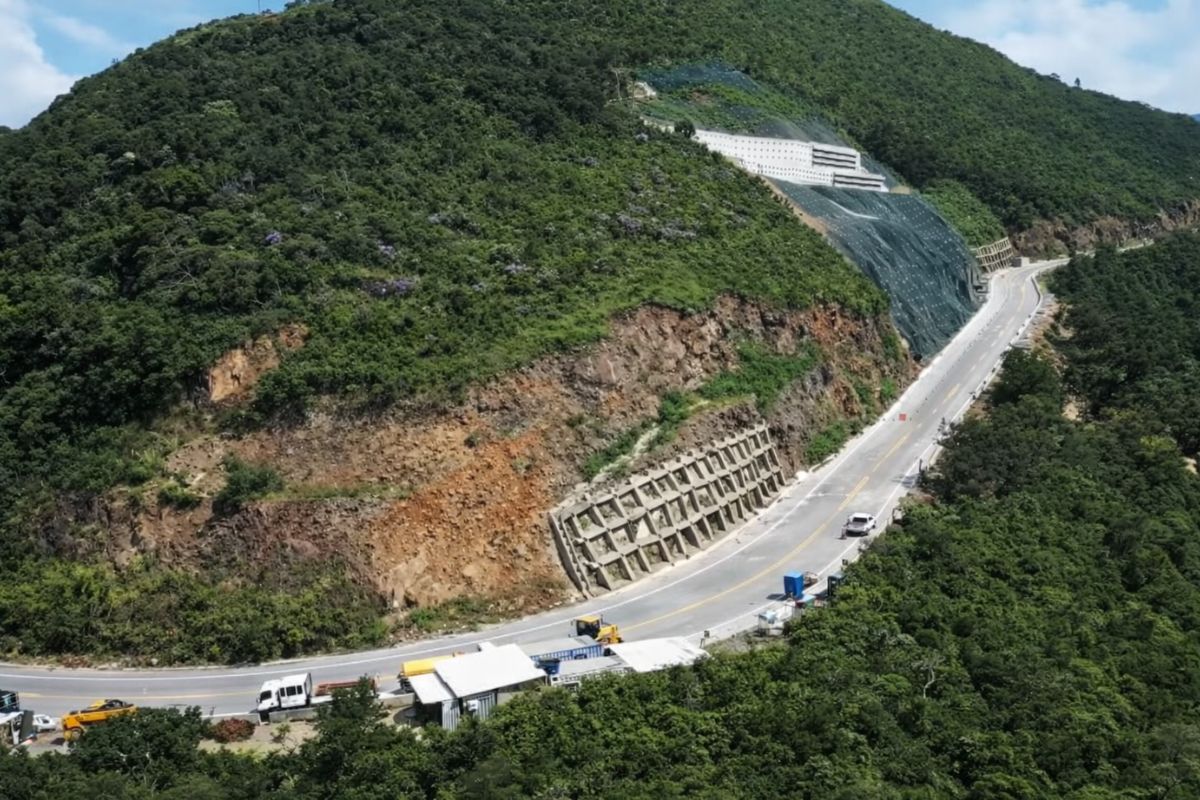
The section of Serra da Rocinha on BR-285 is now open in Timbé do Sul: 50 m tensioned curtains and top-down technique stabilize the slope, with a stairway duct controlling the water.

In stretches without a speed limit, any bump, wheel track, or deformation would be potentially dangerous for vehicles moving at extremely high speeds.
Therefore, each segment is designed as a massive engineering structure, focusing on stability and predictability of behavior. The idea is for the pavement to remain firm and without visible deformations even with cars and trucks passing all day long under high load, including some vehicles crossing the highway at 300 km/h.
Invisible Foundations: Four Structural Layers Under the Asphalt
Before any layer of asphalt appears, the structural base comes into play. The Autobahn is built on four main levels: compacted subgrade, stabilized subbase, load-bearing base, and finally, the high-performance asphalt surface.
Construction begins with a long preparation phase, still with the alignment passing through forests or rural areas. Teams conduct geological surveys and environmental analyses to determine the thickness of each layer and how to stabilize the soil in each section.
Then, trees, vegetation, and the organic top layer are completely removed to prevent future settling.
Heavy vibratory rollers pass several times over the ground to achieve the necessary density, while trucks unload crushed stone, which is spread by graders, moistened, and compacted to form an extremely rigid base. This stone base serves as a load-bearing foundation, distributing the weight of vehicles and extending the lifespan of the entire pavement.
Reinforced Concrete and Laser-Guided
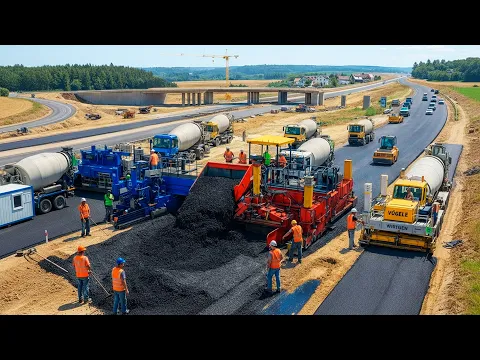

With the graded and compacted earth and rock base leveled, it’s time for structural concrete. Heavy trucks bring the pre-mixed concrete and unload it at specific points, always on a protective blanket that prevents moisture loss to the soil and keeps the surface clean.
This concrete is fed into a slipform paver. Inside, internal screws spread the material, high-frequency vibrators remove air bubbles, and a rear mold gives the exact profile of the roadway. Everything is guided by laser systems that control smoothness, slope, and thickness with millimeter precision.
Steel bars are automatically inserted into the still-wet concrete, tying adjacent slabs and helping to prevent cracks over the years.
After molding, finishing arms smooth the surface, and the concrete, with a large structural thickness, receives a curing compound to retain moisture and prevent cracking during hardening.
Next, machines lightly brush the top, creating fine grooves that enhance tire grip at high speeds, something vital on a roadway partially without a speed limit.
High-Tech Asphalt for Extreme Cold and Summer Heat

Only after all this preparation comes the layer of asphalt. In modern projects, the mixture arrives at trucks at high temperature and is directly fed into the paver, which spreads the material continuously.
The asphalt of the Autobahn is not just any mixture: it receives advanced polymers capable of withstanding intense heat on the surface in summer, without becoming too soft, and remains flexible in winter, resisting cracks caused by freezing. In a single pass, the vibratory table of the paver can achieve most of the final compaction, which is essential for thin layers that cool very quickly.
The result is an extremely uniform mat, with the appropriate texture for high grip and minimal deformation, ideal for a highway that anticipates sections with cars traveling without a defined speed limit.
Signage, Barriers, and Details That Save Lives

The engineering of the Autobahn does not end with the asphalt. The horizontal signage uses thermoplastic paint heated and applied with precise thickness and width. While the paint is still hot, thousands of glass microbeads are thrown onto the stripes, ensuring intense reflection of headlights at night.
This attention to visibility at high speeds makes a difference on a road without a constant speed limit, where any error in reading the road can be fatal. The concrete barriers also follow a strict industrial standard: they are pre-cast in factories, vibrated to eliminate air bubbles, numbered, transported, and then precisely fitted on-site, forming continuous lines of protection.
Only after all this, engineering teams walk the stretch evaluating smoothness, drainage, surface traction, and structural integrity. The roadway is only opened to traffic when all criteria are met.
Maintenance and Recycling: The Secret to Durability
No pavement is eternal. On the Autobahn, the lifespan of the asphalt layer is around several years, depending on traffic intensity and cycles of heat and cold.
Instead of simply covering defects with new layers, teams begin with controlled milling of the damaged lane, removing a few centimeters of asphalt without disturbing the foundation.
The material is crushed, taken to a plant, screened, sized, and cleaned of impurities. Usable grains receive rejuvenating additives and are mixed with new binder and fresh aggregates.
Modern plants can use a significant portion of recycled material, maintaining the performance of new pavement while reducing emissions and consumption of natural resources. Then, a machine applies a thin layer of asphalt emulsion as structural glue, and subsequently deposits the hot recycled asphalt, compacting it all in a single pass until the required density is achieved.
This cycle of construction, maintenance, and recycling ensures that even stretches without a speed limit continue operating with quality close to that of a newly delivered roadway, without relying on complete renovations every few years.
In the end, what seems like “just a road without limits” is actually a laboratory of applied engineering on a national scale. And you, would you dare to drive at 250 or 300 km/h on a stretch without a speed limit on the Autobahn, fully trusting this level of engineering, or would you prefer to stick to 130 km/h even with all this structure?





Que notícia merdosa, até a imagem generada por um AI er merdosa e amadora. Cheio de erros. Meu des pouca vergonha de jornalismo
Eu prefiro as “ótimas “estradas brasileiras,o ipva mais justo do mundo e as pegadinhas de limites de velocidade onde num trecho de 500 mts o limite muda umas 5 vezes
Sério que na figura voces escreveram “alená” ao invés de “alemã”???
Quem confere isso antes de ir ao “ar”???
Que amadorismo! 🤣🤣🤣🤣🤣