





 Portuguese
  English
  Spanish
  5 min of reading
  0 comments


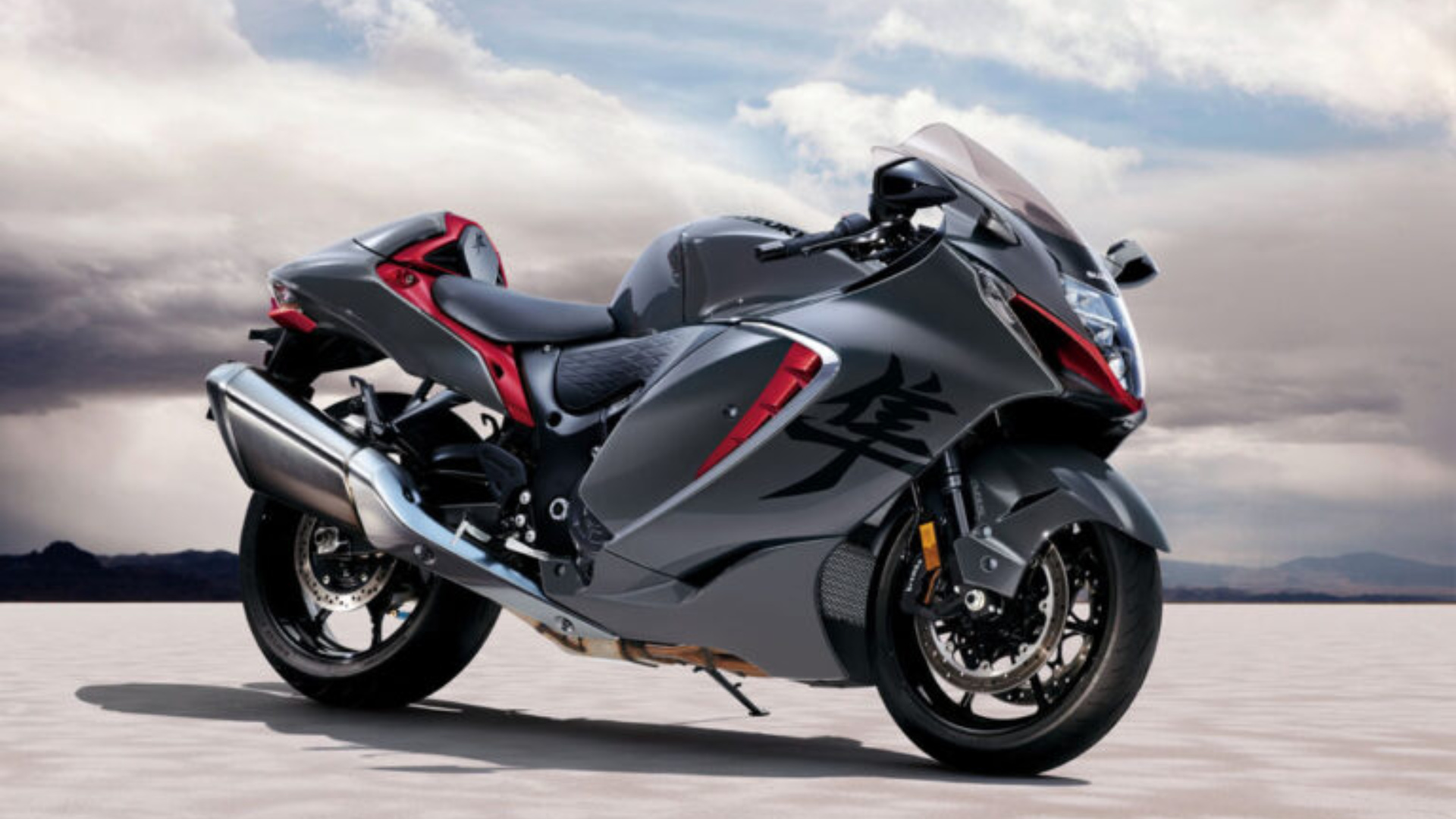
Agreement Between Manufacturers Tried to Slow Down the Race for Speed, But Suzuki Pushed the Limits and Created a Legend on Two Wheels. Discover the Story of the Hayabusa and How It Revolutionized the Concept of the Fastest Motorcycle in the World
In the late 1990s, Japanese manufacturers like Suzuki, Honda, Yamaha, and Kawasaki were engaged in a true war for the fastest motorcycle in the world. Super sports models began to exceed 300 km/h with ease, raising concerns from European authorities. To avoid bans or restrictions on the continent, the manufacturers signed an unofficial agreement in 1999 — known as the “gentlemen’s agreement” — to limit the top speed of motorcycles to 300 km/h. This decision changed the landscape of motorcycling, officially ending the competition for extreme speed among major manufacturers.
But Suzuki did not stand still. Still in the same year, it launched a model that radically — and historically — challenged this agreement.
The History of the Hayabusa: The Motorcycle That Broke the Pact
The name Hayabusa, which means “peregrine falcon” in Japanese, was intentionally chosen. This bird is known for diving at over 300 km/h, making it a perfect metaphor for the motorcycle’s proposal. Launched in 1999, the GSX1300R Hayabusa shocked the market.
-
The car stored for 38 years: when opening the barn door, what appears is breathtaking and looks like a scene from a movie!

-
Fiat works miracles in the Brazilian market, lowers the price of its 0 km hatch to R$ 69,990, reestablishes the model as the cheapest car in the country, and reignites the battle against Kwid and C3.
-
Chevette with cooking gas: How the gas cylinder ends up being used in cars clandestinely and why this makeshift solution can result in leaks, explosions, damaged engines, and seized vehicles.
-
Fiat launches the new 2027 Toro hybrid with 48V, 176 hp, an electric motor of 15.5 hp, a 0.85 kWh battery, up to 7% fuel savings, 8% fewer emissions, and possible exemption from IPVA.


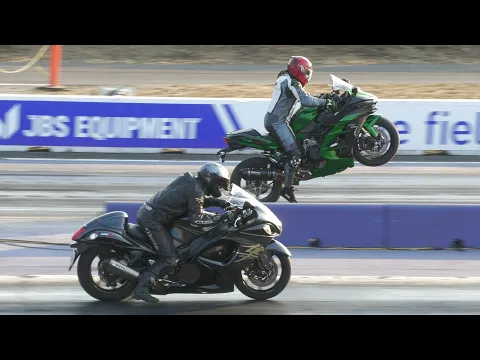

It was equipped with a four-cylinder inline engine, 1,299 cc and 173 hp, and could exceed 310 km/h without limiters. The first version quickly became a symbol of raw performance, solidifying its place in the history of the Hayabusa as a game-changer in the super sports segment.
The fastest motorcycle in the world at the turn of the millennium was a Suzuki — and it had exceeded the silent pact among Japanese manufacturers.
Motorcycles with 300 km/h Limit: A Brake on Technical Advancement
Despite the accomplishment of the Hayabusa, pressure on manufacturers increased. In response, starting in 2000, models began rolling out of factories with electronic systems that limited their top speed to 299 km/h.
This informal agreement was respected by almost all brands, including Suzuki itself, which in subsequent generations of the Hayabusa began to include the speed limiter. Still, the motorcycling community continued to seek ways to bypass the system, and tuned versions of the motorcycle began to achieve even more astonishing results.
From that point on, speed contests mainly took place outside of factories — in workshops, drag races, and controlled speed events.
Suzuki Reaches 450 km/h: When the Limit Disappears
In 2023, British racer Jack Frost — from Holeshot Racing — achieved the impressive mark of 442 km/h (274.9 mph) on a turbocharged Hayabusa. This performance was recorded in a mile race held in the UK and is considered one of the highest ever achieved by a modified production motorcycle.
This feat represents the crowning of a continuous evolution process. The Hayabusa has always had the potential to go beyond, and tuners proved this with projects that positioned the motorcycle as the fastest ever recorded on land — comfortably surpassing the limits imposed by the manufacturers’ agreement.
Although these turbocharged versions are not homologated for urban use, they demonstrate how robust the Hayabusa’s mechanical base is and how ready it is for extreme performances.
The Generations of the Hayabusa and Its Evolution
The Hayabusa has had three major versions over the years:
- First Generation (1999–2007): 1,299 cc engine and real speed over 310 km/h. It was the generation that broke the barrier and forced the pact among manufacturers.
- Second Generation (2008–2020): With an enlarged engine of 1,340 cc and 197 hp, it became even more powerful but featured an electronic limiter of 299 km/h.
- Third Generation (since 2021): Redesigned to meet Euro 5 emission standards. Maintains the 1,340 cc engine with 188 hp, refined electronic controls, and modern safety features.
Even without seeking the title of the fastest motorcycle in the world anymore, the Hayabusa remains a benchmark for balance between power, comfort, and stability at high speeds.
Fastest Motorcycle in the World: Comparisons and Competition
The Kawasaki H2R, launched in 2015, is often remembered as the only factory motorcycle capable of rivaling the Hayabusa in terms of speed. With 310 hp and a supercharger, the H2R exceeds 350 km/h. However, it is exclusively a track bike, not homologated for public use.
The Hayabusa, on the other hand, is a street bike with track performance. Its fame is therefore sustained not only by power but also by versatility and reliability.
Moreover, while the H2R is produced in very limited numbers, the Hayabusa remains a mass-produced sports model, available in various markets — including Brazil.
The Influence of the Hayabusa on Modern Motorcycling
The presence of the Hayabusa transcended the world of two wheels. Its striking design and performance reputation have made it one of the most recognized motorcycles in the world. It frequently appears in movies, series, video games, and pop culture, revered by enthusiasts and collectors alike.
Additionally, it has served as a technical reference for many other super sports bikes over the decades. The Hayabusa’s engine, for example, has even been adapted for race cars and prototypes.
Even in the face of evolving technologies and the rise of ultra-fast electric motorcycles, the name Hayabusa remains loaded with prestige. It is more than just a fast motorcycle — it is a symbol of freedom, daring, and engineering at its purest form.
Technical Specifications – Suzuki Hayabusa (2021–Current)
| Specification | Details |
| Model | Suzuki GSX-1300R Hayabusa (3rd Generation) |
| Release Year | 2021 |
| Engine | Inline 4-cylinder, DOHC, 16 valves |
| Displacement | 1,340 cm³ |
| Max Power | 188 hp at 9,700 rpm |
| Max Torque | 15.3 kgfm at 7,000 rpm |
| Transmission | 6-speed manual |
| Final Drive | Chain |
| Electronic Fuel Injection | Yes |
| Cooling | Liquid |
| Top Speed | Electronically limited to 299 km/h |
| 0–100 km/h Acceleration | Approximately 3.2 seconds |
| Dry Weight | 264 kg |
| Seat Height | 800 mm |
| Fuel Tank Capacity | 20 liters |
| Average Consumption | 15 to 17 km/l (estimated) |
| Brakes | ABS, dual front discs and rear disc |
| Front Suspension | Inverted telescopic fork, adjustable |
| Rear Suspension | Mono-shock, adjustable |
Why the Hayabusa Still Matters?
Thirty years after the manufacturers’ pact and the beginning of limitations for motorcycles with a 300 km/h limit, the Hayabusa continues to be a living legend. Its impact on the industry has been profound: it redefined the limits of what to expect from a sports motorcycle and inspired an entire generation of motorcyclists and engineers.
It has demonstrated that, even in the face of rules, the spirit of overcoming can prevail. When Suzuki reaches 450 km/h with modified versions, it reinforces this idea: there are no limits that passion and engineering cannot challenge.
Today, the Hayabusa represents not only speed but also balance, sophistication, and reliability. Its story continues to be written with each new generation — and it is precisely this longevity, combined with the boldness of its birth, that secures its eternal place among the greatest motorcycles in history.








Seja o primeiro a reagir!