





 Portuguese
  English
  Spanish
  6 min of reading
  0 comments


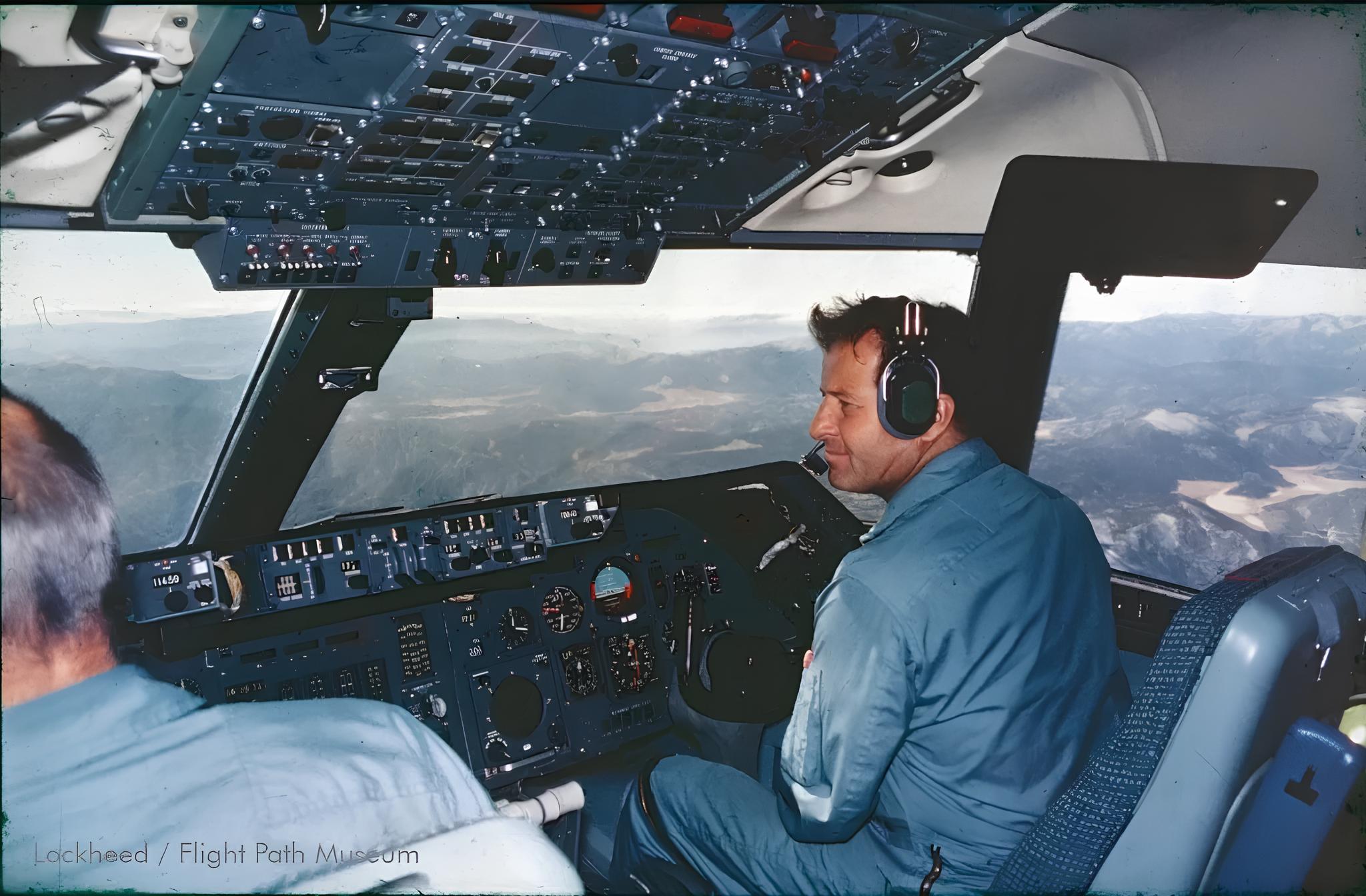
Lockheed L-1011 TriStar Was a Revolutionary Aircraft, Featuring Technology Ahead of Its Time, But Delays, Costs, and Industrial Decisions Caused the Model to Fail in Sales.
Lockheed L-1011 TriStar made history as one of the most advanced airplanes ever conceived in its time and, at the same time, as one of the greatest commercial failures in civil aviation. Its design brought together technical solutions that were years ahead of competitors, unprecedented safety systems, advanced automation, and a level of operational refinement that pilots and engineers considered superior to any other widebody launched in the early 1970s. Nonetheless, the TriStar struggled to convert technological excellence into market success, selling fewer than 250 units and prematurely ending Lockheed’s ambition to dominate commercial aviation.
The contrast between technical quality and commercial performance is so significant that the L-1011 became a subject of study in universities, aerospace engineering schools, and strategic analyses of the aerospace industry.
To understand why such an acclaimed aircraft failed, one must look back at the historical context, industrial decisions, and the risks taken during one of the most turbulent periods of modern civil aviation.
-
Chaos On Airplane Could Be Expensive: Proposal Aims To Prevent Disruptive Passengers From Flying For Up To 1 Year In Brazil And Face Fines Of Up To R$17,500

-
Man Arrested After Halting Takeoff of Fire Department Helicopter During Child Rescue in Guaratuba

-
With 37 Tons of Cargo, Over 8,000 km Range, and Ability to Land on Unpaved Runways, the Airbus A400M Demonstrates How Europe Created a Military Giant That Transports Armored Vehicles, Aerially Refuels Fighters, and Operates in Conflict Zones and Humanitarian Missions Worldwide
-
Emergency Landing in Campos Amarais After Bird Strike on Small Plane


The Race for Widebodies and the Pressure for Innovation at the End of the 1960s
By the late 1960s, global air transportation was changing rapidly. The growth of the middle class, the expansion of international routes, and the popularization of air travel created an unprecedented demand for larger, more efficient airplanes capable of transporting a growing volume of passengers.
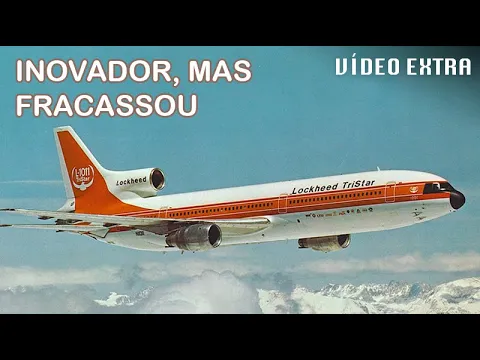

Companies were seeking to reduce the cost per seat, increase range, and improve onboard comfort, while airports were still adapting to the new scale of commercial aviation.
It was in this scenario that the first widebody aircraft emerged, capable of carrying more than 200 passengers with two aisles. Boeing had launched the 747, an intercontinental giant, while McDonnell Douglas was working on the DC-10, a trijet designed for medium and long haul routes.
Lockheed, previously focused mainly on military contracts, realized it needed to enter this market if it wanted to remain relevant in civil aviation.
The L-1011 TriStar was born as the company’s most ambitious bet. Unlike the 747, designed for larger airports, and the DC-10, focused on simplicity and costs, the TriStar was conceived to be the safest, quietest, and most sophisticated widebody in the world.
A Project That Anticipated the Future of Commercial Aviation
From the first sketches, the TriStar was designed to incorporate technologies that were not yet common in civil aircraft. The Lockheed invested heavily in flight automation, system redundancy, and cockpit ergonomics, creating an aircraft that required less effort from pilots and provided safety margins superior to those of competitors.
Among the most notable innovations was the automatic descent control system, capable of managing the final approach with extreme precision, something rare at the time. The aircraft also featured advanced diagnostic systems that alerted the crew to failures before they became critical, reducing the risk of incidents in flight.
Another differentiator was the electronic integration of systems, a concept that would only become standard decades later with the advent of the glass cockpit. Although the L-1011 still used analog instruments, its logic of operation already pointed towards a more automated, safe, and predictable aviation.
The RB211 Engine and the Bet That Almost Destroyed the Program
If on one hand the TriStar was technically brilliant, on the other it was tied to one of the riskiest decisions in aviation history: total dependence on a single engine. Lockheed chose the Rolls-Royce RB211, a revolutionary turbofan that was quieter and more efficient than any other available at the time.
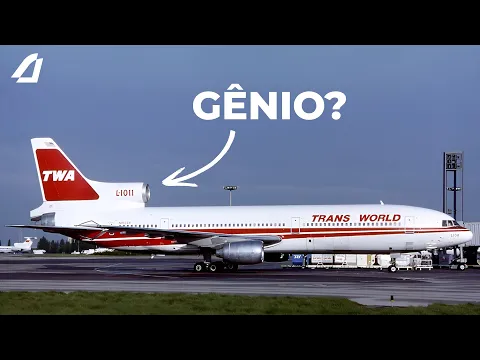
The RB211 utilized fan blades made from composite materials, a bold innovation that promised to reduce weight and fuel consumption. On paper, the engine was perfect for the TriStar. In practice, it became the program’s biggest nightmare.
During testing, serious failures related to blade durability and design complexity emerged. Delays accumulated, costs exploded, and in 1971, Rolls-Royce went into financial collapse, being nationalized by the British government to prevent its total bankruptcy.
This episode had a direct impact on the TriStar. While the DC-10 rapidly advanced to market, the L-1011 remained stalled, awaiting an engine that simply wasn’t ready. Airlines, pressured by deadlines and fleet needs, began canceling orders and migrating to the competitor.
Critical Delays and Loss of Market Timing
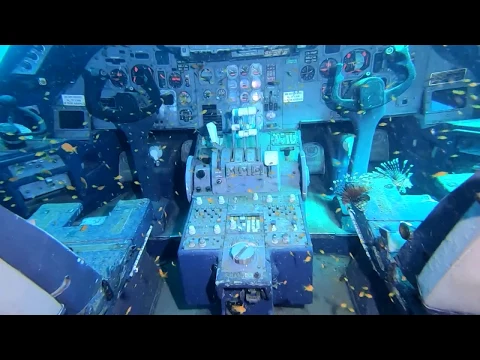
In commercial aviation, timing is everything. An aircraft can be excellent, but if it arrives too late, it loses space to rivals that have already consolidated contracts, routes, and infrastructure. That’s exactly what happened with the TriStar.
When it finally entered commercial service, the market was already partially saturated by the DC-10. Companies had invested in training, maintenance, and logistics for McDonnell Douglas’ model, creating a natural barrier to adopting a new aircraft, even if it was technically superior.
Furthermore, the TriStar was perceived as a more complex aircraft, requiring a higher initial investment. At a time when companies were looking to cut costs, this perception weighed negatively, even though in the long run, the aircraft offered clear operational advantages.
An Airplane Loved by Pilots and Engineers, But Ignored by the Market
Interestingly, among those who actually operated the L-1011, the TriStar built an almost legendary reputation. Pilots praised its stability in flight, the smoothness of controls, and the reliability of its systems. Engineers highlighted the logic of redundancy and ease of maintenance compared to other widebodies of the time.
The operational safety level of the TriStar was so high that throughout its service life, it had a significantly better accident record than many competitors. Yet, these merits rarely translated into new purchase orders.
The market, driven by immediate costs and deadlines, seemed reluctant to reward technical excellence when it came with industrial risks and past delays.
The Devastating Financial Impact on Lockheed
The commercial failure of the L-1011 had profound consequences. The program consumed billions of dollars in development, testing, and adaptations, and sales never came close to the volume needed to recoup the investment.
By the early 1980s, Lockheed was facing severe losses in the civil sector. The company, already struggling with other projects, was forced to permanently abandon the commercial aircraft market, focusing almost exclusively on military and government contracts.
Ironically, the TriStar ended up sealing the end of an era. It was the last large commercial aircraft produced by Lockheed, concluding a trajectory that had begun decades earlier with iconic models of civil aviation.
A Technological Legacy That Survived the Failure
Despite its commercial failure, the technological impact of the L-1011 was lasting. Many of the solutions tested on the TriStar influenced later designs, both in civil and military aviation. Concepts of automation, flight management, and systems integration became standard in subsequent generations of aircraft.
The TriStar also left an important mark on aviation culture. For many experts, it represents the classic example of how engineering excellence does not guarantee market success, especially in a highly competitive and cost-sensitive industry.
Today, the L-1011 is remembered as an elegant, quiet, and advanced aircraft that could have dominated the skies if it had emerged in a different industrial context. Its failure does not diminish its importance; rather, it reinforces its status as an icon.
Why the Lockheed L-1011 TriStar Still Fascinates Enthusiasts and Experts
Decades after its last commercial flight, the TriStar continues to spark interest. Videos, articles, and technical analyses about the model accumulate millions of views, especially on platforms focused on historical curiosities and engineering.
This fascination can be explained by the contrast: an aircraft that had everything to succeed, but was defeated by external factors, industrial decisions, and historical circumstances. It’s the classic story of the right product at the wrong time, applied on a global scale.
For modern aviation, the TriStar remains both a warning and an inspiration. It shows how far engineering can go when it doesn’t limit itself to the basics and how the market doesn’t always reward those who anticipate too far into the future.









-

-

-

4 pessoas reagiram a isso.