





 Portuguese
  English
  Spanish
  3 min of reading
  0 comments


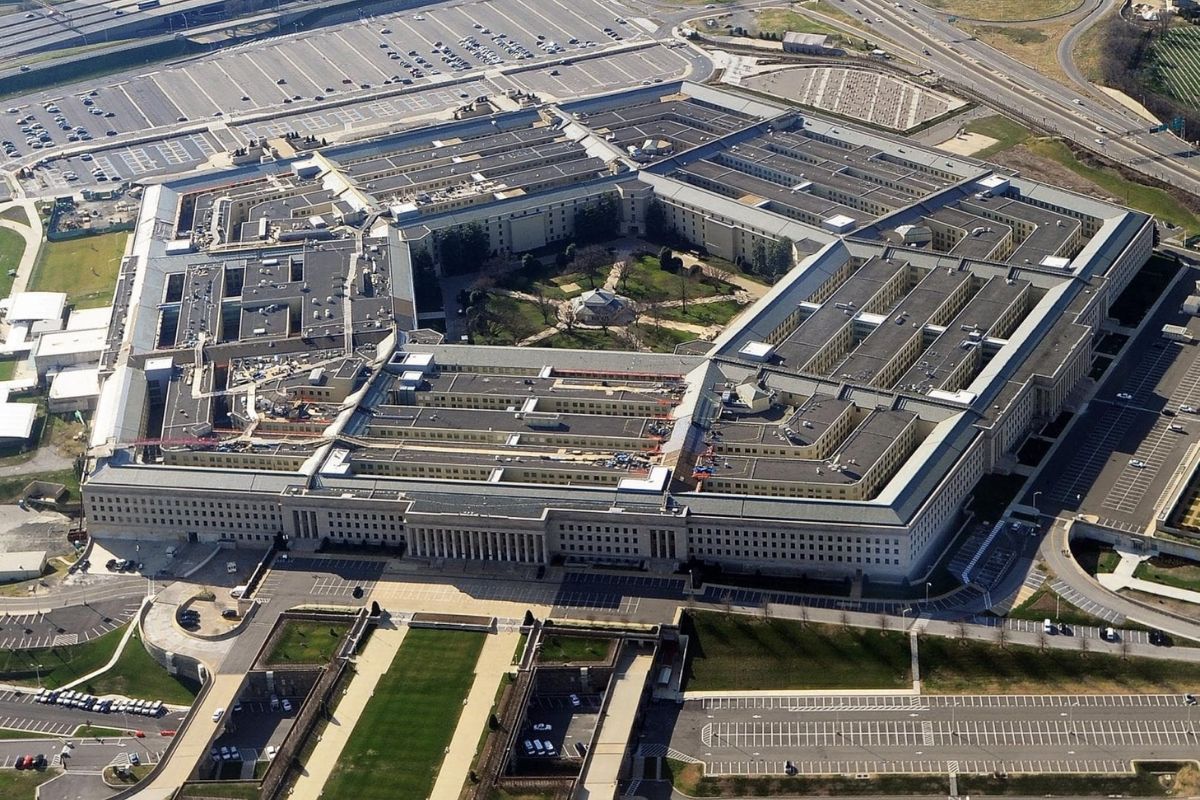
American Military Power Headquarters: The Colossal Building in Virginia Is Not a Commercial Building and, Since 2023, It No Longer Holds the Title of Largest in the World in Use Area.
The Pentagon is one of the most recognized buildings in the world, a symbol of the military power of the United States. Many believe it is the largest office building on the planet, reserved for intelligence and espionage activities. However, the reality behind its five faces is more complex and filled with surprising details.
Built in record time during World War II, the building serves as the brain of the American Department of Defense. But in 2023, the giant officially lost its status as the largest in the world. This article unveils the facts and myths behind the Pentagon.
The Construction in 16 Months: The Numbers of the Work That Began on September 11, 1941
The need to centralize the U.S. War Department, which in 1941 was spread across 17 buildings, gave rise to the project. Architect George Bergstrom was tasked with designing a structure for 40,000 employees and 10,000 vehicles in just three days.
-
The Brazilian colonial city that stopped in time and shares territory with a rocket launch base.
-
79-year-old woman challenges limits, visits 193 countries in the world after 56 years of planning and reveals the behind-the-scenes of a global journey that few have managed to accomplish.

-
These are the drivers who may stop paying tolls on highways in a project that promises to reduce costs for those who live from transportation in Brazil.

-
(Video): Italian pilot lands plane on moving train at 120 km/h and achieves unprecedented feat in aviation, even with a narrow runway and without direct visual contact.

The construction of the Pentagon began on September 11, 1941 and was a true engineering feat. With about 14,000 workers working 24 hours a day, the building was inaugurated on January 15, 1943, just 16 months after the start of construction. Due to steel shortages during the war, the structure was primarily made of reinforced concrete.
More Than a Spy Center: What Really Functions Inside the Pentagon

Although military intelligence is a crucial part of its operations, the function of the Pentagon is much broader. It is, first and foremost, the headquarters of the U.S. Department of Defense.
The building houses the central commands of all branches of the American armed forces: Army, Navy, Air Force, and Marine Corps. Major intelligence agencies, such as the CIA and NSA, have their own headquarters in other cities. What the Pentagon does is centralize the administration, command, and logistics of the entire defense of the country.
The Day the Giant Lost Its Position: Meet the Building That Outdid the Pentagon in 2023
For more than 80 years, the Pentagon was considered the largest office building in the world, with its impressive 620,000 square meters of area. However, in 2023, it was officially surpassed.
The new titleholder is the Surat Diamond Bourse, a massive diamond trading center located in Gujarat, India. With 660,000 square meters, the Indian building was recognized by the Guinness World Records on August 22, 2023. Another important point is that the Pentagon is not a “commercial” building, but rather a governmental and military one.
A City Inside a Building: The 28 km of Corridors, 7,754 Windows, and Fast-Food Chains
The internal dimensions of the Pentagon are as impressive as its exterior. The building has about 28.2 kilometers of corridors, but its brilliant design of concentric rings allows anyone to move between any two points in about seven minutes.
The structure was designed to be a true self-sufficient city for its 26,000 employees. Inside the Pentagon, there is a massive food court with famous chains like McDonald’s, Starbucks, and Taco Bell, as well as banks, stores, a subway station, and even a chapel. The building also features 7,754 windows, 131 staircases, and 691 drinking fountains.
The Social Cost of Construction: The Communities That Were Removed to Raise the Pentagon

The story of the construction of the Pentagon also has a complex and often forgotten social side. To raise the giant, the American government condemned a large area in Arlington, Virginia, which included predominantly black neighborhoods like Queen City and Hell’s Bottom.
In total, more than 150 families were displaced from their homes. Some of these communities had deep historical roots, originating from settlements of freed slaves after the American Civil War. The construction, done in the name of national necessity in wartime, ended up having a significant social cost for the residents of the region.







-

Uma pessoa reagiu a isso.