





 Portuguese
  English
  Spanish
  8 min of reading
  0 comments


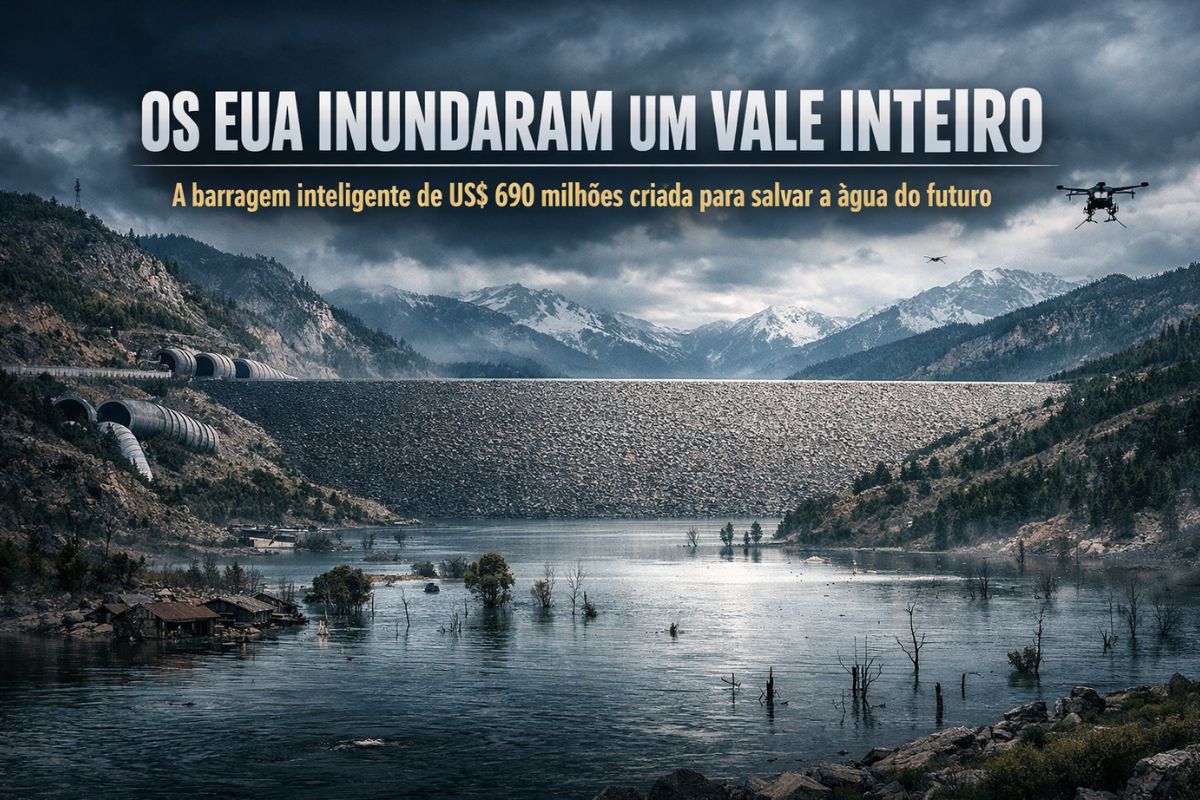
In The Midst Of A Mega Drought, The United States Decided To Drill A Mountain In The Rocky Mountains To Build The Chimney Hollow Dam And Reservoir, The Centerpiece Of Water Security For More Than 500 Thousand People.
In the worst drought in thousands of years in the American West, the United States decided to drill a mountain in the Rocky Mountains, build the Chimney Hollow dam, and flood an entire valley to divert water through tunnels and reservoirs to 12 cities in the Front Range area of Colorado. The Chimney Hollow project, budgeted at around US$ 690 million, became a symbol of a new phase in which the country bets on large dams to survive the water crisis.
In practice, the plan is to transform a valley once covered by pine trees, streams, and camping areas into a massive artificial reservoir connected to a network of tunnels that needed to drill a mountain for more than 20 kilometers to push water from the west side to the east side of the Rockies. The stated goal is to ensure water security for more than 500 thousand people, but the environmental, social, and financial cost of this decision is still far from consensus.
From “No More Dams” To A Mega Drought That Changes Everything

For much of the 20th century, the United States built more than 90 thousand dams. Beginning in the 1980s, a strong movement known as “No More Dams” helped halt new projects, with the idea that building dams meant destroying rivers, valleys, and entire ecosystems.
-
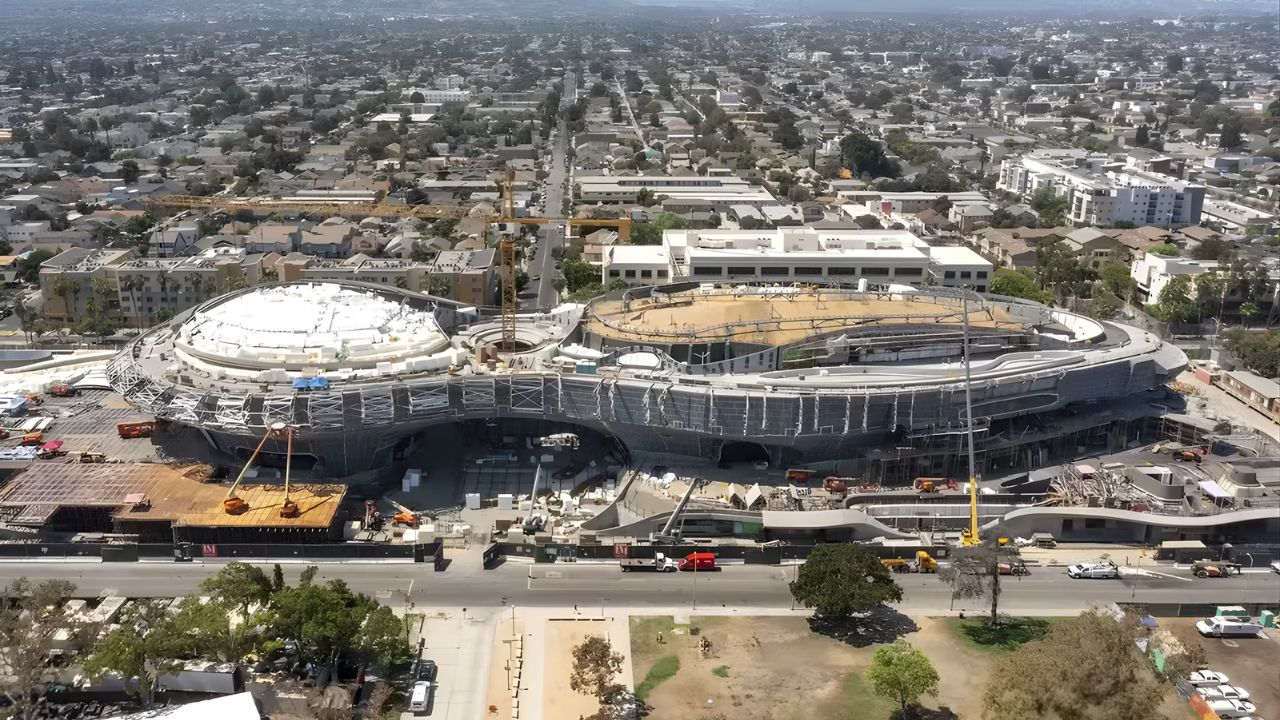
Created by George Lucas with over $1 billion, a futuristic museum in the shape of a spaceship with 1,500 curved panels is about to open in Los Angeles and will house one of the largest private collections of narrative art in the world.
-
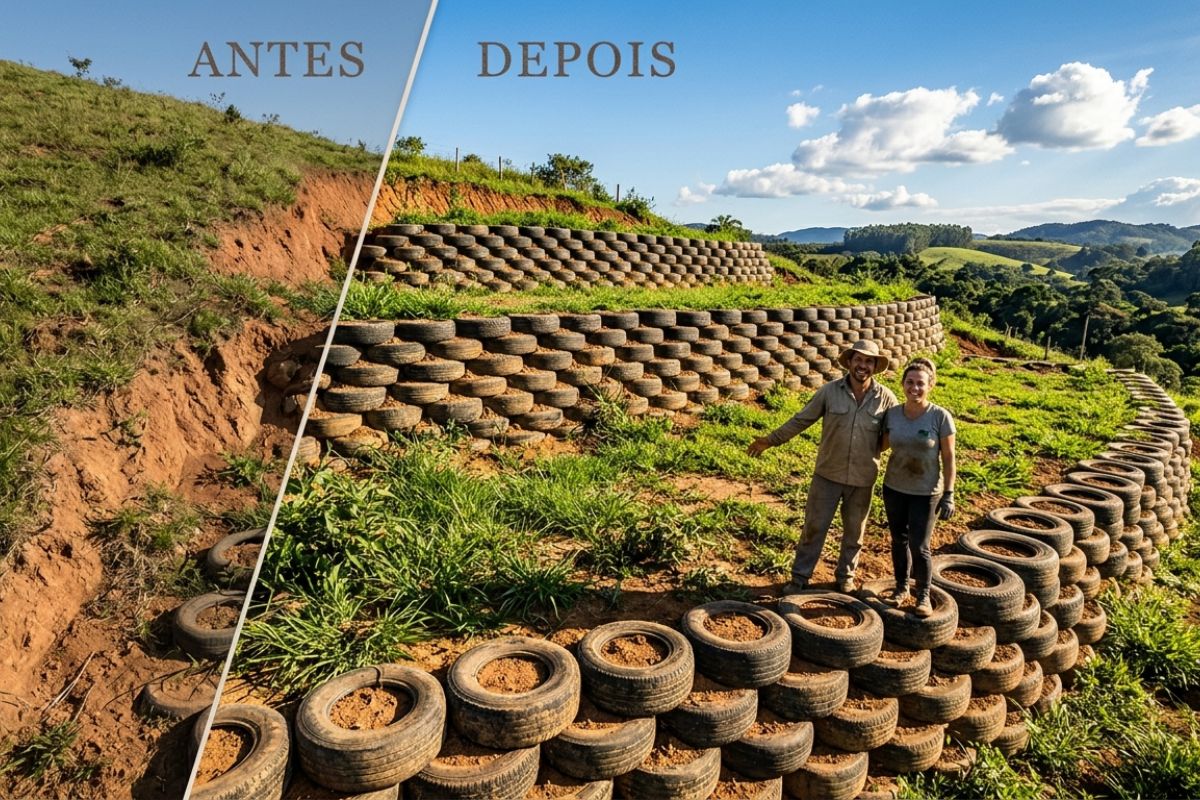
Couple shows how they built a retaining wall on their property using 400 old tires: sloped land turned into plateaus, tires are aligned, filled, and compacted with layers of soil, with grass helping in support and at almost zero cost.
-
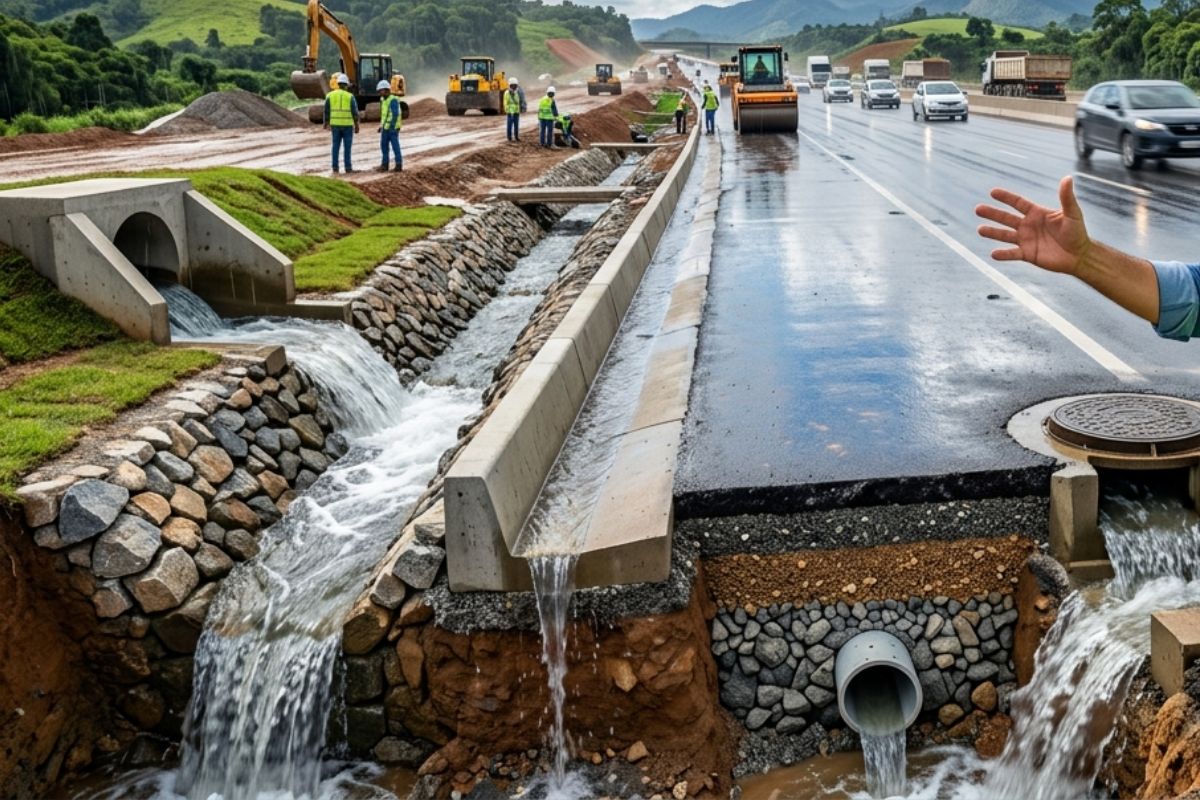
Engineer explains drainage during the rainy season: the difference between surface water and deep water, ditches, gutters, and water outlets on the road, as well as drains and drainage mattresses, to prevent erosion, aquaplaning, and flooding at the construction site today.
-
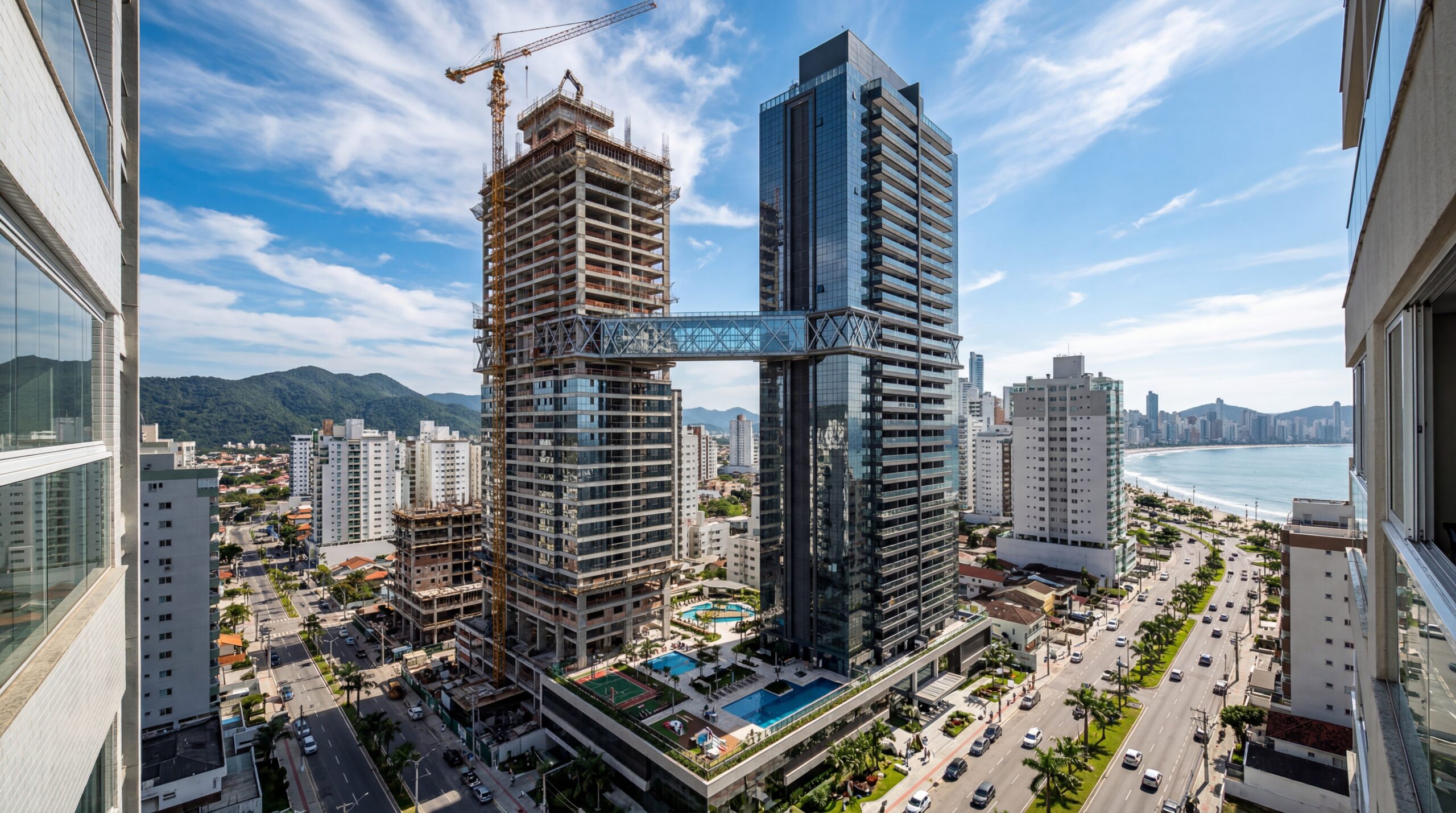
With 55 floors, 177 meters in height, a 15-meter walkway between the twin towers, ventilated facade, and 6,300 m² of leisure space, Ápice Towers already has one tower completed and another nearly at the top.

But the climate changed. Literally. In recent decades, the American West faced one of the worst droughts in thousands of years, according to long-term measurements.
The Colorado River, the water artery for more than 40 million people in states like Colorado, Utah, Arizona, Nevada, and California, began to record historically low levels. The Mead and Powell reservoirs fell so low that they threatened power generation, irrigation, and urban supply.
Meanwhile, cities in the Front Range corridor, Colorado, are experiencing the opposite scenario: population explosion and increasing demand for water.
Projections indicate that the region’s population could double by 2050. The contrast is brutal: about 80% of the population is in the eastern mountains, but a large part of the available water originates and flows to the west toward the Pacific.
Flooding A Valley To Push Water To The Other Side Of The Rockies
It was in this context that the idea of using Chimney Hollow as a strategic reservoir emerged. In 2004, the Northern Water agency and Larimer County secretly purchased thousands of acres that previously belonged to a large tech company and were nearly transformed into a luxury resort.
From this purchase, a plan has matured over nearly 20 years, traversing environmental permits, lawsuits, and strong resistance from residents and environmentalists.
The official promise came packaged: reforesting double the affected area, creating new protection zones for birds and wildlife, and funding part of the compensation with state lottery resources aimed at environmental protection.
The main works began in 2021 and were completed in July 2025. Chimney Hollow was treated as the largest water infrastructure project in the United States in decades, with the mission to store enough water to supply more than 500 thousand people in 12 communities in the Front Range.
However, to completely fill the reservoir, engineers remind that several consecutive years of snow and rain above average will be needed.
A Dam That Replaces Massive Concrete With Rock And Asphalt
Unlike classic concrete dams like Hoover, Chimney Hollow was designed as a rock fill dam with a special impermeable core.
Instead of a single block of concrete, the project stacks millions of cubic meters of compacted rock in layers, forming the “body” of the structure, while an internal core functions as a waterproof heart.
The main wall is over 100 meters tall and more than a kilometer long, with capacity to store billion liters of water, enough to supply a large city for several years.
To the south, a smaller auxiliary dam acts as a hydraulic bodyguard, preventing the water level from exceeding considered safe limits.
Engineers describe Chimney Hollow as “a giant organism that breathes”, where rigid and flexible materials work together.
The core holds leaks and infiltration, while the layers of rock absorb the pressure of the water and accommodate small ground deformations.
If the mega-dams of the last century represented brute force, Chimney Hollow tries to symbolize a new generation more adaptable to climate change.
When Clay Runs Out, In Comes The Hydraulic Asphalt Core
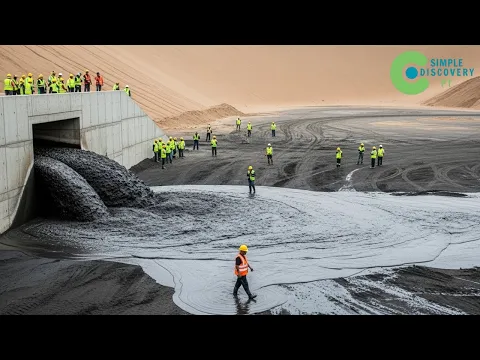

While excavating the valley floor, teams discovered a practical problem: there was not enough clay to form the traditional impermeable core. Instead of halting the project, those responsible turned to a technology established in mountainous countries like Norway and Sweden, the so-called Hydraulic Asphalt Core.
This material behaves like a highly impermeable asphalt skin, capable of expanding and contracting with temperature without cracking.
In Chimney Hollow, the entire core was produced on-site. Tens of thousands of cubic meters of mixture were heated to about 150 degrees, combined with fine aggregates, and applied in alternating layers with gravel and rock.
Before that, it was necessary to build a temporary dam to keep the valley dry, remove large volumes of soil and rock, lay a concrete base, and inject cement under high pressure into ground fissures, creating an underground sealing curtain.
All this to ensure that, when the reservoir was full, the valley floor would not turn into a giant water strainer.
Drilling A Mountain To Bring Water Through The Rockies

None of this would make sense if the water couldn’t reach Chimney Hollow. That’s where the most dramatic part of the engineering comes into play: a mountain had to be drilled to connect the west side to the east side of the Rocky Mountains.
The system starts in a reservoir located in the west, from where water is pumped and directed through other interconnected lakes.
The decisive stage is crossing through a tunnel more than 20 kilometers long, excavated directly inside the mountain range. This tunnel functions like a kind of underground “vein”, carrying water against the natural flow of rivers.
Drilling a mountain in this context means opening space for tunnels where whole vehicles would fit and then lining them with concrete and large-diameter steel pipes, along with pressure control valves and pumping stations.
Without drilling a mountain to cross the Rockies, Chimney Hollow would just be an isolated lake, unable to deliver water to those who need it most on the other side.
On the east side, water flows through giant pipes to the reservoir, in a system monitored in real-time by sensors that track pressure, flow, and possible losses.
The complete filling is planned to occur slowly over several years, as snow and rain permit. It’s as if someone is filling a new “water heart” of Colorado drop by drop.
A Dam With A Digital Brain And Permanent Surveillance
A dam over 100 meters high requires more than concrete and rock. It needs to be monitored all the time, especially in a region subject to climatic variations and seismic activity. Therefore, Chimney Hollow received a monitoring system that its designers call a “digital brain.”
Throughout the structure, more than hundreds of seismic and pressure sensors were buried in the core and body of the dam. They register vibrations generated by wind, pumps, variations in water surface, and even distant tremors.
All these signals feed an artificial intelligence system that learns normal patterns and detects any millimetric deviations.
Additionally, autonomous drones fly over the dam, conduct detailed surface scans, produce three-dimensional maps, and help identify small deformations that would not be visible to the naked eye.
The idea is for the dam itself to “listen” to its body all the time, responding quickly to the slightest sign of trouble.
Evaporation, Sediments, And The Daily Operation Of Colorado’s “Water Memory”
Once construction is complete, a second challenge begins: operating the system in an increasingly unpredictable climate. Chimney Hollow functions as a kind of water memory. It stores during winter and thaw and releases in a controlled manner during the summer and fall when agricultural and urban demand peaks.
In this process, part of the water simply disappears into the sky. In hot, dry years, the reservoir can lose about a meter of level just from evaporation, which represents millions of cubic meters of water. Another part is lost in the form of sediment.
Over time, material brought by watercourses accumulates at the bottom of the lake, reducing usable capacity and forcing management and cleanup operations.
To face these risks, the project combines vegetation strips around the shore to reduce wind and evaporation, sensors that monitor water level almost in real-time, and images from satellites and drones to observe changes in water color, soil moisture, and small changes on slopes.
The dam is not just a wall: it is a complex machine that requires constant operation and fine-tuning.
The Disappearing Valley And The Debate Over The Price Of Water Security

From the perspective of someone turning on the tap at home, Chimney Hollow may seem like just a distant lake. For those who knew the original valley, the story is different. The area that is now under dozens of meters of water was once a mosaic of young pines, granite streams, and camping areas used by Loveland residents in the summer.
Authorities promise to compensate for the impact by reforesting an area larger than the original, planting two trees for each one lost, creating biological corridors, and funding protection for waterfowl and small mammals.
Even so, experts warn that certain ecosystems are not simply “transferable.” The natural flow of the Big Thompson River, for example, may be reduced downstream during the dry season, affecting wetlands and agricultural systems that sustain tens of thousands of people.
In other words, while the dam increases water security for some cities, it redistributes risks for those relying on downstream rivers, reigniting the debate over how far it is possible to balance security, development, and conservation in a collapsing climate scenario.
A Laboratory For A Drier World
Compared to mega dams that flooded entire cities in other countries, Chimney Hollow may seem modest in size. But, technically, it has become a global showcase of smart dams with asphalt cores and advanced digital monitoring.
Countries facing severe droughts, such as Australia, South Africa, and Chile, view the project as an experimental model. They see in Chimney Hollow an example of how drilling mountains, building reservoirs in smaller valleys, and using sensors and artificial intelligence can be an intermediate alternative between doing nothing and repeating giant projects from the last century.
In the end, the Chimney Hollow project summarizes a dilemma that goes far beyond Colorado: will technology be enough to meet the needs of a thirst that only grows in a warmer planet or is this just an expensive patch over choices that continue to increase the demand for water?
And you, looking at all this, do you think it makes sense to drill a mountain and submerge an entire valley to guarantee water for half a million people or do you believe the United States should first invest in reducing consumption and changing how they use water?





Seja o primeiro a reagir!