





 Portuguese
  English
  Spanish
  7 min of reading
  1 comment


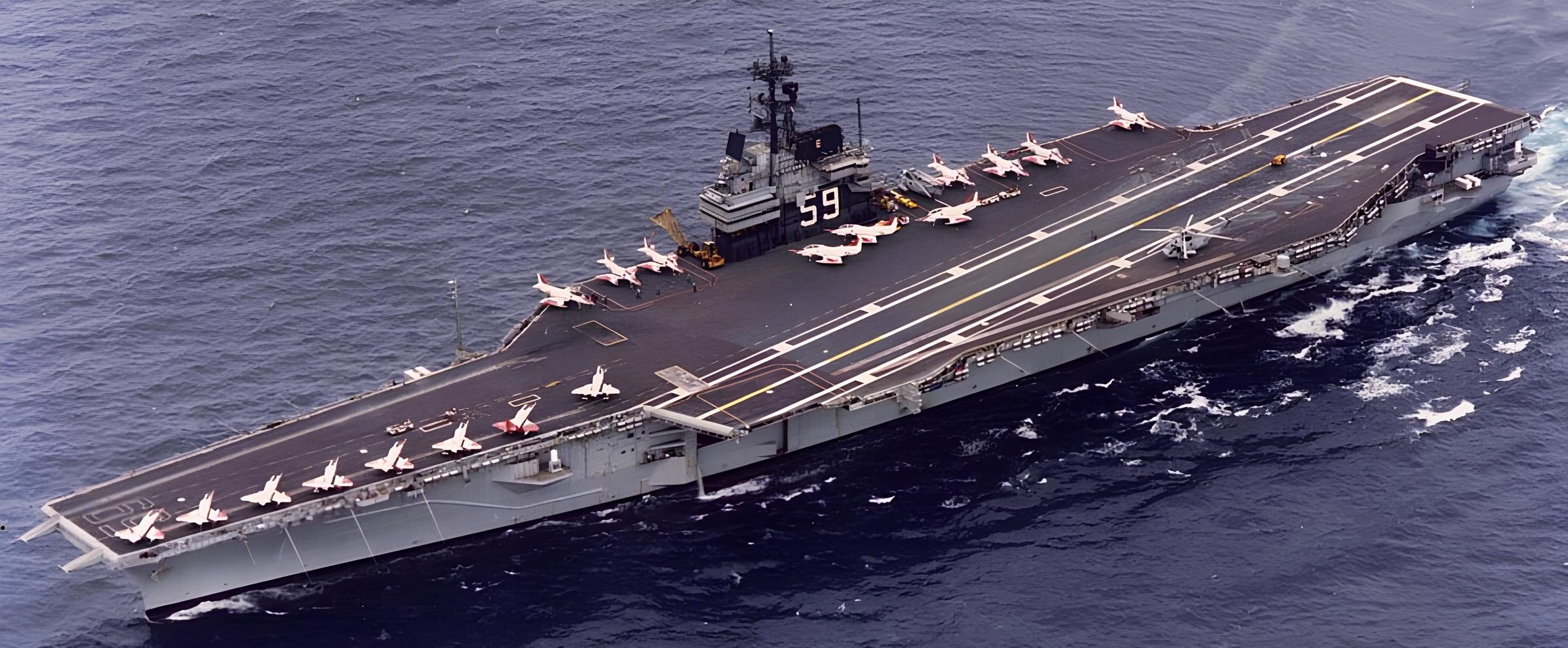


The US Offered Brazil a Super Aircraft Carrier of the Forrestal Class in a Historic Gesture. Discover How This Negotiation Could Have Forever Changed Brazilian Naval Power and the Country’s Navy.
In an episode that has been lost in the lesser-known pages of Brazilian military history, the United States, the world’s largest naval power, offered Brazil a super aircraft carrier of the Forrestal class—the pinnacle of post-World War II American naval technology. This offer, which could have radically altered the Brazilian naval power and forever changed the military balance in the South Atlantic, was never realized. Nevertheless, it represents one of the most fascinating moments in the relationship between the two nations and a milestone showing how Brazil has stood, more than once, on the brink of becoming a country fully capable of operating one of the highest symbols of global maritime power.
The US gesture was not an isolated act but part of a broader context: the military reorganization after World War II, the emerging Cold War, and the Americans’ search for strategic allies to contain Soviet influences in different regions of the world. However, behind the proposal lay doubts, political restrictions, and, above all, a significant challenge: was Brazil ready to operate a 60,000-ton super aircraft carrier designed for supersonic fighters and sustain its astronomical costs?
An Aircraft Carrier Offered to Brazil: The Proposal That Could Change History
After the end of World War II, the United States found itself with an unparalleled naval arsenal. Its fleet of aircraft carriers, battleships, and cruisers, constructed on an industrial scale to defeat Japan and Germany, was immense.
-
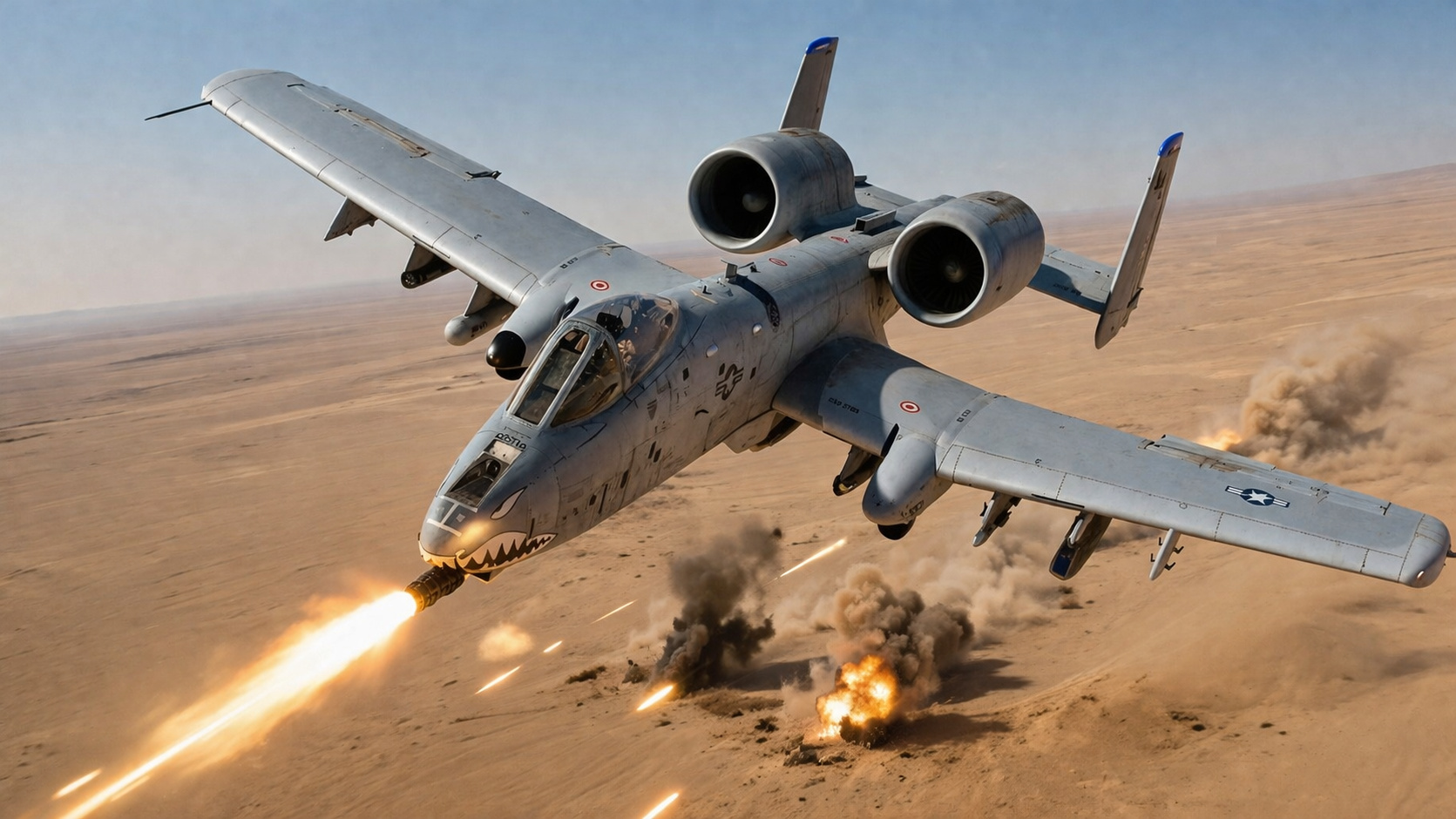
Few people know, but “mega burst” attacks from the A-10 in the Middle East are intriguing analysts and even experienced former pilots of the U.S. Air Force.
-
Manufactured in Brazil and exported to Saudi Arabia and Malaysia, the ASTROS system is renamed as Fogos in 2026, gaining AI, cruise missiles with a range of 300 km, and air defense costing R$ 3.4 billion, transforming a launcher from the 1980s into the most ambitious multidomain platform in Latin America.
-
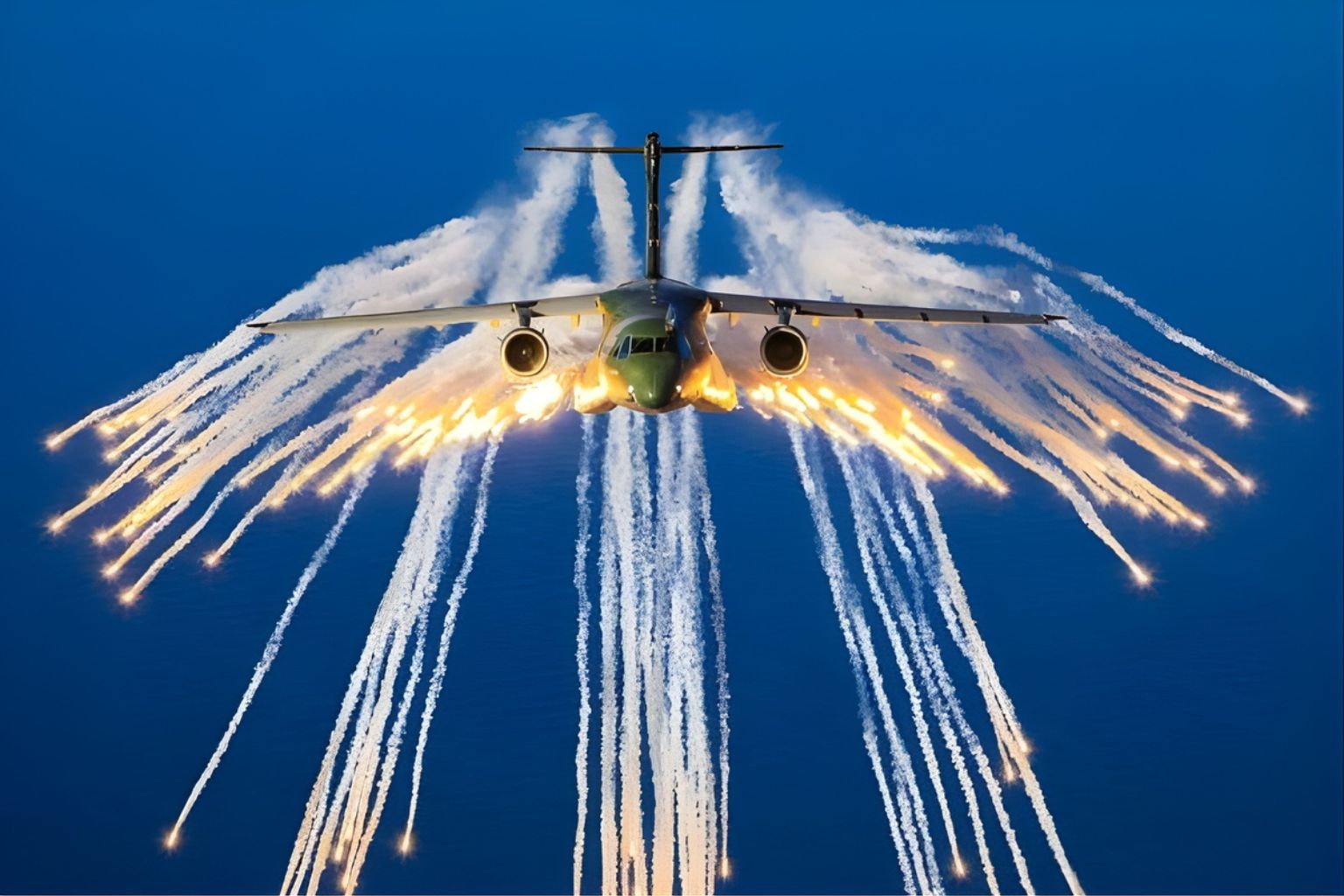
The largest military aircraft ever produced in Brazil, the KC-390 Millennium can carry up to 26 tons, refuel fighter jets in flight, and has already been exported to Europe and Asia, placing the country in the select group that designs and sells large military aircraft worldwide.
-
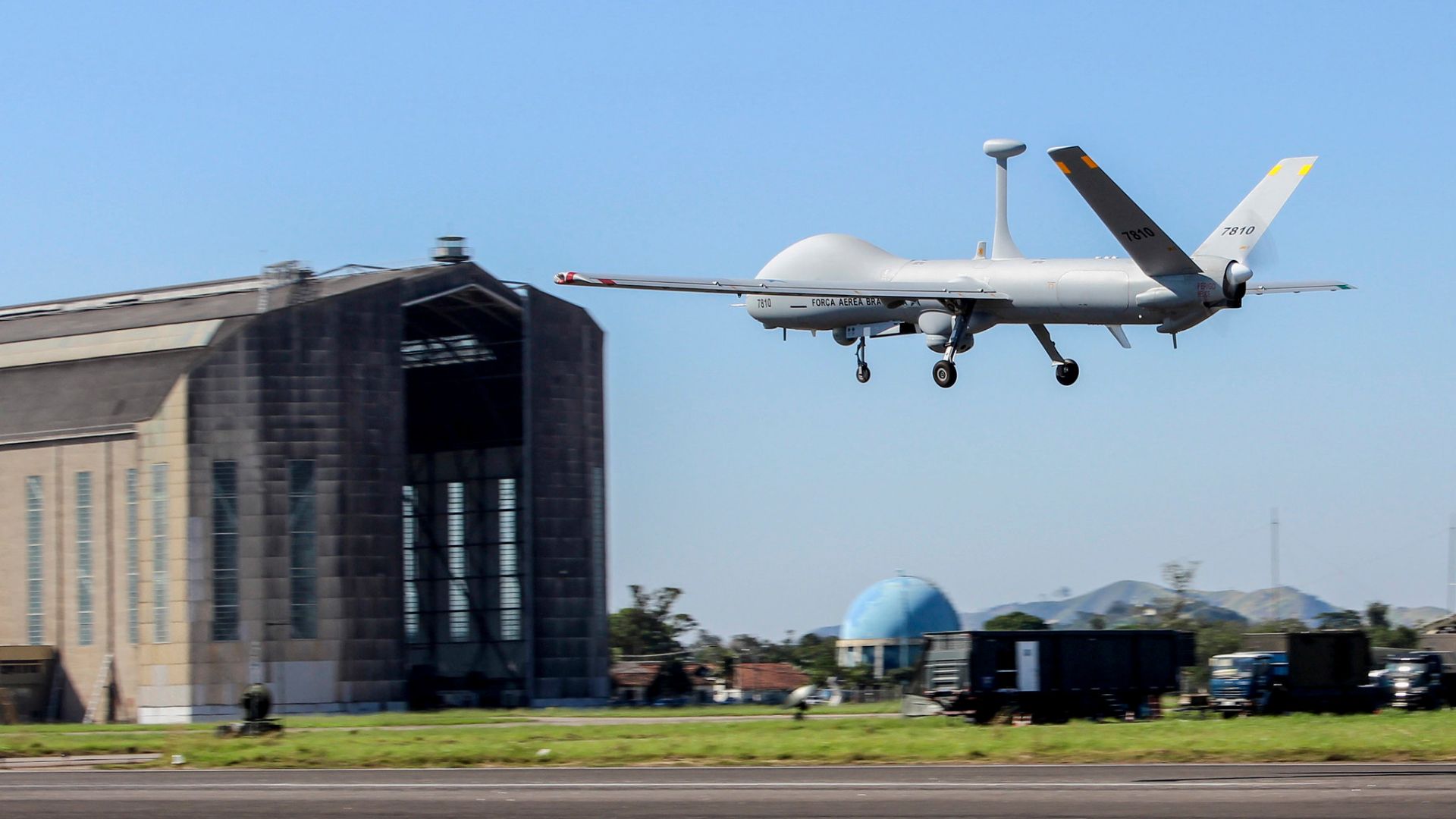
FAB loses Hermes 900 drone during multinational exercise in Mato Grosso do Sul and is left with only one active aircraft, raising concerns about operational fragility and strategic response capability.

But, with the end of hostilities, maintaining dozens of gigantic ships in operation was costly and unnecessary. Thus began a movement of reallocation and sale of surplus assets to allies.
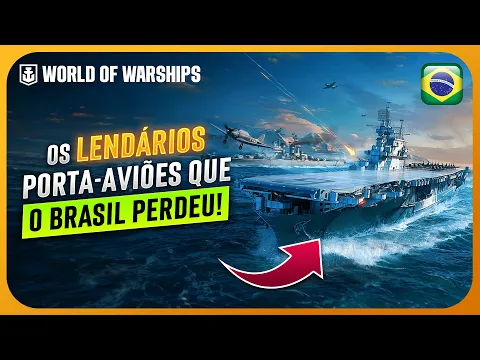

It was in this scenario that Brazil, which had actively participated in the war alongside the Allies and sent troops to Italy, emerged as a partner of interest. Washington viewed the country as a strategic ally in the South Atlantic and considered transferring a Forrestal-class ship to the Brazilian Navy.
The Forrestal carriers were a revolution: the world’s first “super aircraft carriers,” designed in the jet era, featuring an angled deck, steam catapults, and the ability to operate supersonic aircraft. Receiving such a ship would have instantly placed Brazil on the level of a regional naval power.
The Importance of a Super Aircraft Carrier in the Military Power of a Nation
To understand the significance of this proposal, one must comprehend the role of a super aircraft carrier. More than just a simple vessel, it is a floating airbase, capable of projecting power thousands of kilometers away without depending on foreign ground airports.
For the US, aircraft carriers like the Forrestal became instruments of deterrence and global influence. In the Brazilian context, owning a ship of this size in the 1950s would have represented a historic leap.
The country could have become the only one in Latin America capable of launching combat jets from a maritime platform, altering the strategic balance of the entire region.
Why Did Brazil Not Accept the Super Aircraft Carrier?
The American proposal, however, did not advance. Several reasons converged to this outcome:
- US Resistance: While there was interest in transferring assets, Washington hesitated to allow a Latin American country to operate a super aircraft carrier. In strategic circles, there was a perception that Brazil did not face threats that justified such a high-level asset.
- Prohibitive Costs: Operating a Forrestal was not cheap. The annual maintenance cost alone and the adaptation of ports and infrastructure could consume a large part of the Brazilian defense budget.
- Limited Operational Capacity: The Brazilian Navy did not yet have the doctrine, training, or aircraft ready to operate on a super aircraft carrier. The learning curve would be long and costly.
In light of this, Brazil turned to a more modest and viable solution: in 1950, it purchased the HMS Vengeance from the United Kingdom, renamed NAeL Minas Gerais. Although much smaller than a Forrestal, Minas Gerais played the role of introducing the Brazilian Navy to the world of carrier aviation.
A Second Chance in the 1990s: Forrestal Back on the Agenda
The theme returned to the table decades later. In the 1990s, the Minas Gerais was already aging, and Brazil was looking for a new vessel to operate aircraft like the A-4 Skyhawk fighters. Once again, the United States offered a Forrestal, this time already decommissioned, but with modernization potential.
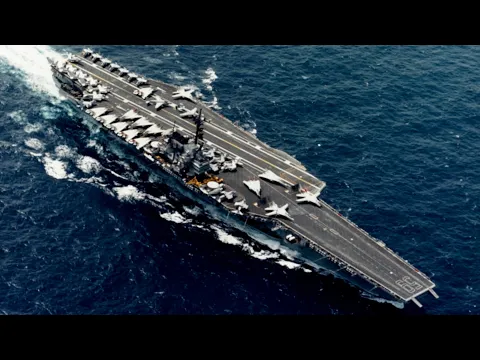
The proposal seemed attractive, but once again it was rendered unfeasible. The costs of renovation and operation, combined with the need to adapt ports, hangars, and the entire supply chain, made the project prohibitive. In the end, Brazil chose an intermediary path and bought the French aircraft carrier Foch, which became the NAe São Paulo—the largest warship ever operated by the country, but it also faced problems and was decommissioned in 2018.
The Legacy of the USS Forrestal
The USS Forrestal (CVA-59), the centerpiece of this story, was commissioned in 1955 and forever changed the concept of naval power. With 60,000 tons of displacement, over 300 meters in length, and the capacity to operate over 80 aircraft, the Forrestal was the prototype for all the super aircraft carriers that would follow.
Its innovations—such as the angled deck, which allowed for simultaneous landings and takeoffs, and steam catapults—became standard for later classes, such as the Nimitz and the Gerald R. Ford.
But its trajectory also had shadows: in 1967, a fire during the Vietnam War killed 134 crew members and became one of the largest naval tragedies in US history.
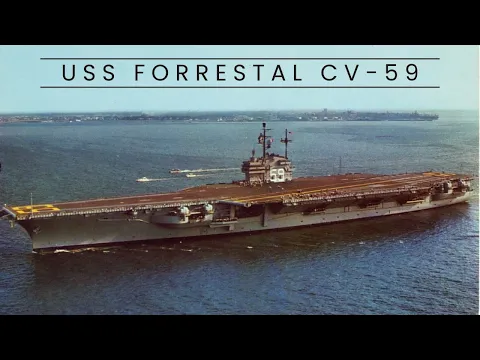
The Forrestal served until 1993, was officially decommissioned in 1997, and dismantled in 2015, but its legacy remains as the starting mark of the super aircraft carrier era.
Military Alliance Brazil-US and the Limitations of Cooperation
Since World War II, Brazil and the United States have maintained a relationship of military cooperation, with joint exercises, defense agreements, and equipment supply.
However, the offer of the Forrestal illustrates the limits of this partnership: Washington viewed Brazil as a strategic ally but hesitated to transfer strategic deterrent assets that could, in theory, alter the power balance in the region.
The episode reveals a sensitive point in geopolitics: even as allies, core and peripheral countries operate in different spheres of trust and technology. A super aircraft carrier is not just a ship; it is an instrument of foreign policy that redefines military status.
Modernization of the Brazilian Navy: From Minas Gerais to ProSub
Without the Forrestal, the Brazilian Navy built its trajectory in gradual steps. The NAeL Minas Gerais operated from 1960 to 2001, being essential for training generations of naval pilots.
The NAe São Paulo, purchased from France, brought greater capacity but was marked by technical problems, accidents, and high costs until it was decommissioned in 2018.
Today, Brazil has no operational aircraft carriers, but it is focusing on other strategic vectors, such as the Nuclear Submarine Program (ProSub), which includes the construction of the first Brazilian nuclear submarine in partnership with France. This strategy aims to ensure sovereignty in the South Atlantic through underwater deterrence, a more viable path than operating super aircraft carriers.
Hypothetical Scenario: What If Brazil Had Accepted the Super Aircraft Carrier?
Experts and military enthusiasts still wonder today: what would have changed if Brazil had received the Forrestal?
The country would have become the first and only Latin American power to operate a super aircraft carrier, which would have radically changed the military balance in the South Atlantic. With a ship of this size, Brazil could project air and naval power on an unprecedented scale, even influencing international negotiations and military alliances.
But the cost would be gigantic. Maintaining a Forrestal would require billions annually in maintenance, a highly trained crew, port infrastructure, and a robust escort fleet (frigates, destroyers, and submarines). The Navy would have to reorganize its entire budget, possibly sacrificing other strategic projects.
Furthermore, owning a super aircraft carrier could have sparked distrust among neighboring countries and attracted greater attention—and even pressure—from global powers, transforming Brazil into a more central geopolitical actor but also one that faces more scrutiny.
The Episode as a Symbol: Brazil’s Quest for Naval Sovereignty
More than a frustrated negotiation, the US offer symbolizes Brazil’s historical ambition to have a blue-water Navy capable of operating beyond its coast and protecting a strategic South Atlantic rich in natural resources and commercial routes.
Even without the Forrestal, the country has built a respectable trajectory but has still not achieved the status of a full naval power. History shows that the dream of a super aircraft carrier was close, but it also reveals the harsh reality: operating such a ship requires not only resources but also a complex geopolitical alignment.
The day the United States offered a super aircraft carrier to Brazil is an episode that summarizes larger issues: the limits of international military cooperation, the Brazilian Navy’s pursuit of modernization, and the delicate balance of naval power in the South Atlantic.
The history of the Forrestal in Brazil is, above all, a reminder of how strategic decisions shape decades of military trajectory. If Brazil had accepted the offer, perhaps today its Navy would be very different. But the refusal also allowed the country to follow more realistic paths adapted to its reality.








E quem comanda são Os Vingadores. KKKKK Esse povo acredita em tudo mesmo. Até parece que os Estragos Desunidos vão ter força espacial. Não dão conta do que têm kkkkkkk