





 Portuguese
  English
  Spanish
  5 min of reading
  0 comments


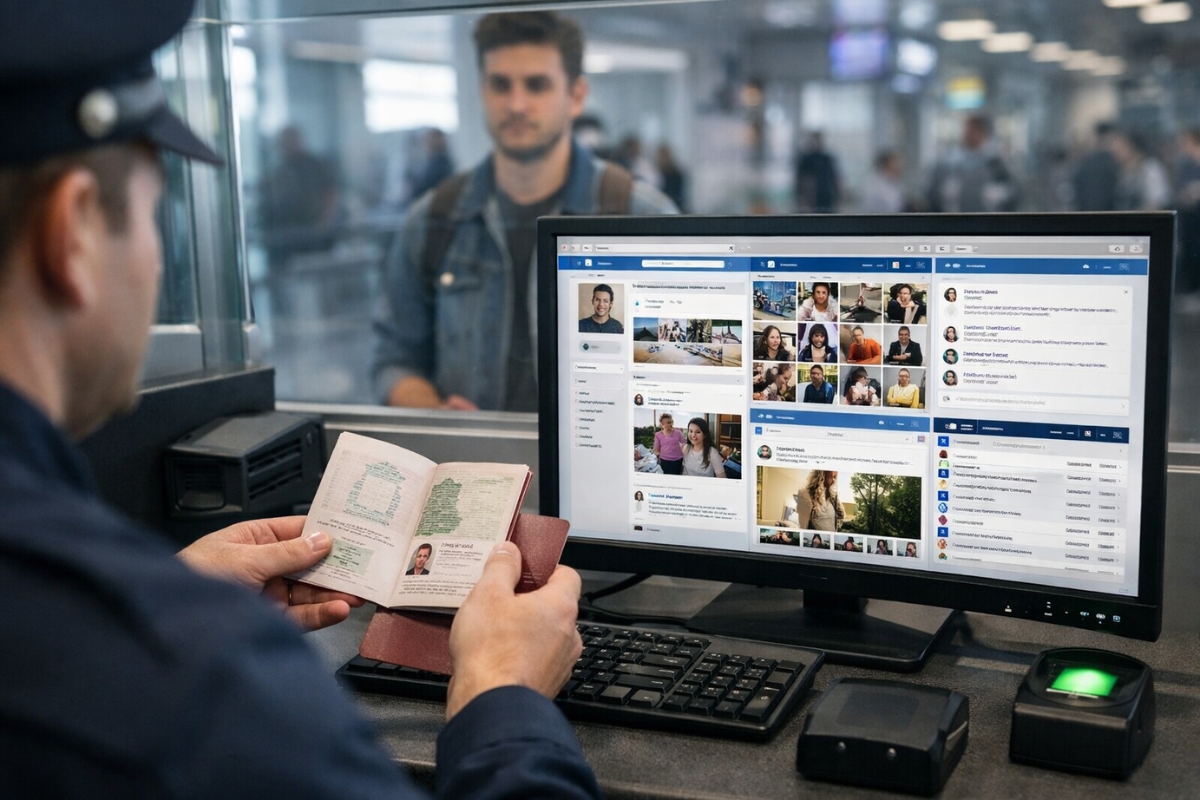
The Most Ambitious Measure of Digital Surveillance at Borders Could Cost the Country Up to $15.7 Billion in Tourism and Affect 14 Million Travelers Per Year.
The Proposal That Changes the Rules of the Game
The United States government is about to radically transform the way foreign visitors enter the country. In December 2025, Customs and Border Protection (CBP) published a proposal in the Federal Register that would require travelers from over 40 countries to disclose five full years of social media activity as a mandatory requirement for applying for the electronic travel authorization known as ESTA (Electronic System for Travel Authorization).
The measure is based on Executive Order 14161, signed by President Donald Trump in January 2025, titled “Protecting the United States from Foreign Terrorist Threats and Other Security Threats”. The 60-day public comment period ended on February 9, 2026, after which the agency may implement the changes in phases.
What Data Will Be Required Exactly?
The proposal goes far beyond social media. According to the text published in the Federal Register and analyzed by various sources, ESTA applicants will be required to provide:
-
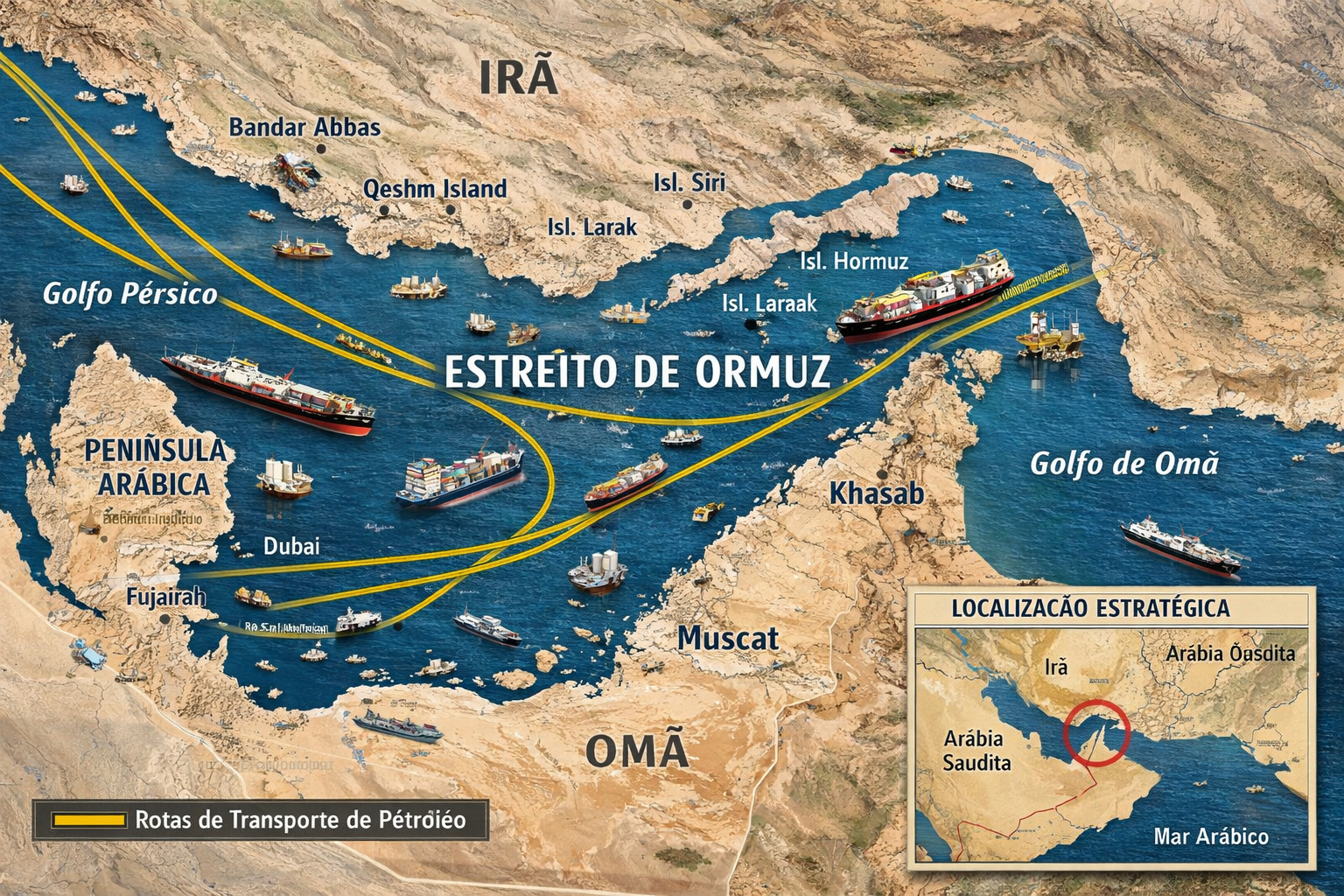
Global summit with over 40 countries pressures Iran for a blockade in the Strait of Hormuz and warns of direct impact on oil, food, and the global economy.
-
Russia has broken the U.S. maritime blockade to send oil to Cuba and is now loading a second ship while Trump says that “Cuba is next” in a possible military action against the island.

-
Spain challenges the USA and closes its airspace for operations against Iran, raising global tension and provoking the threat of a trade rupture.

-
While no other country manufactures tanks in Latin America, Argentina activates the TAM 2C-A2 and raises a curiosity about the technological lag in the region.


- Social Media: usernames and handles from all platforms used in the last five years, as a mandatory requirement.
- Phones: personal and business numbers used during the last five years.
- E-mails: personal and professional addresses from the last decade.
- Expanded Biometric Data: including a real-time selfie, as well as facial data, fingerprints, and even DNA.
- Detailed Family Information: names, dates and places of birth, addresses and contact information for parents, spouse, siblings, and children.
- Digital Metadata: IP addresses extracted from photos and other metadata.
So far, the social media field in the ESTA form was optional — it has existed since 2016 and most applicants simply ignored it. The new proposal would make this information a mandatory field.
Who Will Be Affected?

The ESTA system is used by citizens of 42 countries participating in the Visa Waiver Program (Visa Waiver Program), which allows visits to the United States for up to 90 days without needing to obtain a traditional visa. Among these countries are the United Kingdom, France, Germany, Spain, Italy, Australia, Japan, South Korea, Chile, and Qatar.
It is estimated that approximately 14 million travelers per year use this system. The measure will not only affect tourists: it will also impact students in short programs, business travelers, conference attendees, and people visiting family.
It is worth noting that travelers from countries that do not participate in the Visa Waiver Program have been required to provide their social media identifiers since 2019, a policy that has remained during the Biden administration.
The Parallel Toughening for Work and Study Visas
The proposal for the ESTA is not an isolated measure. Since December 2025, the Department of State has required all applicants for H-1B visas (skilled workers), H-4 (dependents), and study and exchange visas (F, M, J) to keep their social media profiles public to facilitate consular inspection. Consular officers will review the platforms for information related to inadmissibility or potential national security risks.
The Department of State framed this expansion as a security necessity, emphasizing that “every visa grant is a national security decision” and that “a visa is a privilege, not a right”.
The Economic Impact: Up to $15.7 Billion at Risk
A study by the World Travel and Tourism Council (WTTC), published in January 2026, issued a stark warning: one-third of international travelers interviewed stated that they would be less likely to travel to the United States if the measure is implemented.
The projections are concerning:
- High Impact Scenario: the United States could see up to 4.7 million fewer international arrivals, a reduction of 23.7% among countries using the ESTA.
- Economic Loss: up to $15.7 billion in tourism spending could be lost to the country.
- Jobs at Risk: up to 157,000 jobs could be lost, equivalent to the job creation of an entire quarter in the North American tourism sector.
The WTTC survey, conducted with 4,563 people in countries such as France, Germany, the United Kingdom, and others, showed that two-thirds of respondents were already aware of the proposed policy and many considered that it would make the United States a less attractive destination for both leisure and business.
The U.S. Travel Association also warned that the policy could especially affect the presence of visitors during the 2026 World Cup, which the country will co-host.
The Reaction of the Corporate Travel Sector
The Global Business Travel Association (GBTA) submitted formal comments to the CBP on December 31, 2025, highlighting the competitive, operational, and economic risks of the proposal. The organization classified the requirements as “too broad” and called for a more balanced approach from the government.
The GBTA warned that the collection of five years of social media history, along with phone numbers, addresses, IP addresses, and detailed family information, represents a disproportionate burden that could divert business travel flows to other destinations.
Security Versus Privacy
What Advocates Say
Government officials argue that border controls need to be modernized for the digital age. The CBP states that it will not review, one by one, the social media profiles of all applicants, but that usernames will be used as one more verification element within a broader process. The agency also emphasizes that threats to national security often leave digital footprints that do not appear in traditional criminal backgrounds.
What Critics Warn
Civil rights organizations and privacy experts have raised serious concerns. Privacy International warns of the potential use of artificial intelligence tools for mass analyses of the collected data. Immigration lawyers point out that the measure will likely lead to wide-ranging scrutiny of online expression patterns, which could result in entry denials based on subjective interpretations of posts, memes, jokes, or political stances.
The law firm Gonzalez Olivieri described the new requirements as “an unprecedented expansion of the government’s request for access to online expression and the private digital histories of applicants”.
What Is Ahead?
With the public comment period ending on February 9, 2026, the CBP will begin reviewing the contributions received before moving to implementation. The stricter rule package for the ESTA has already been partially formalized on January 24, 2026.
Immigration analysts at the Fragomen firm observed that the measure could also have a direct impact on the 2026 FIFA World Cup, as the new rules may hinder the entry of millions of foreign fans.
What seems certain is that the debate is just beginning. At the intersection of national security, digital privacy, and the global economy, the United States faces a decision that could redefine how the world travels and how it relates to the leading global power in the age of social media.
This article was prepared with verified information from multiple international sources, including BBC, CNN, PBS, Al Jazeera, CNBC, Reuters, the WTTC, and the Federal Register of the United States.










-

-

-

6 pessoas reagiram a isso.