





 Portuguese
  English
  Spanish
  5 min of reading
  0 comments


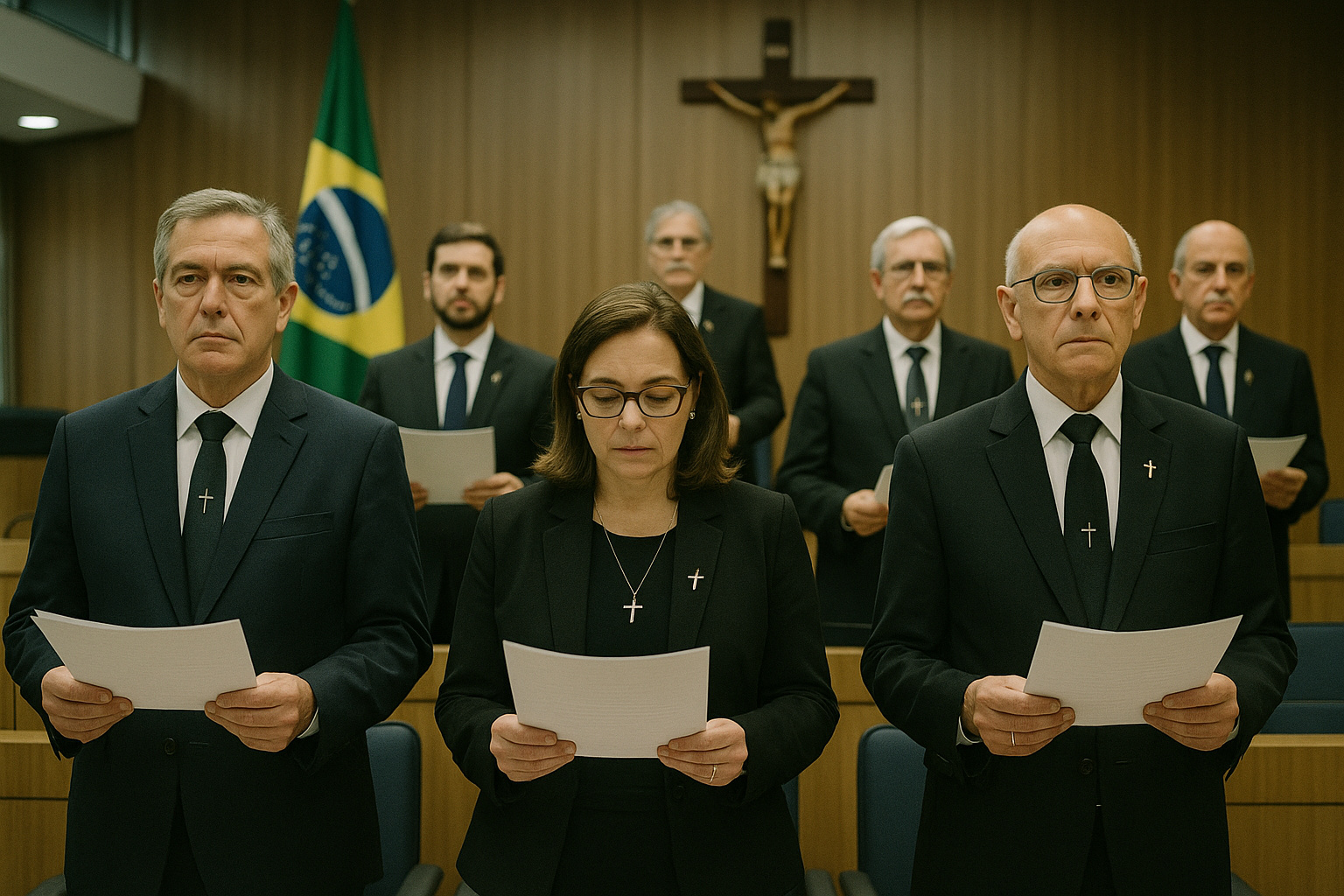
Vatican Hardens Stance on Marital Exclusivity While Brazilian Catholic Jurists Claim Changes to the Civil Code Threaten Historical Principles of Marriage, Divorce, and Demand Broader Dialogue Before Any Alteration
The Vatican returned to the center of international discussions on Tuesday (25) by stating, through a new decree approved by Pope Leo XIV, that “one spouse is enough” to ensure emotional fulfillment and social stability within Catholic doctrine. According to the Church’s highest authority responsible for theological guidance, the 1.4 billion faithful scattered around the world should seek an exclusive and committed marriage, avoiding multiple relationships or parallel emotional arrangements.
The information was disclosed by CNN Brasil and reinforces a historical guideline of the Church, which has considered marriage a lifelong pact between a man and a woman for centuries. In the new document, Vatican theologians explicitly criticize practices such as polygamy — prevalent in some regions of Africa — and denounce that, in certain cases, even members of the Church itself have maintained multiple relationships, which they classify as a serious doctrinal violation.
Vatican Criticizes Polygamy, Rejects Polyamory, and States That Exclusivity Is an Essential Condition for Catholic Marriage
The decree reinforces that marriage, to be authentic, must constitute “a union composed of two people,” based on an intimate relationship that is stable and cannot be shared with third parties. Furthermore, the text describes that dignity and equal rights between spouses only make sense when there is complete exclusivity — with no room for polygamy, adultery, or polyamory.
-
The Chamber opens a debate on driver’s licenses at 16 years old as part of a reform that includes around 270 proposals to change the Brazilian Traffic Code and may redesign rules for licensing, enforcement, and circulation in the country.

-
The new Civil Code could revolutionize marriages in Brazil with “express divorce” and changes that could exclude spouses from inheritance.

-
Banco do Brasil sues famous influencer for million-dollar debt and intensifies debate on delinquency, risks of seizure, and direct impact on Gkay’s credibility.

-
The Senate approves a bill that criminalizes misogyny, hatred, or aversion towards women, and includes the crime in the Racism Law with a penalty of up to 5 years.

By mentioning recent practices emerging in Western countries, the Vatican criticizes the “illusion that emotional intensity can be found in a succession of faces,” highlighting that multiple relationships tend to generate instability and suffering. The document also addresses the need to strengthen the marital commitment in times of social transformation, even if it does not make direct references to same-sex relationships, a topic on which the Church maintains divergent positions.
The debate is not new within Catholicism. Between 2023 and 2024, the late Pope Francis held two major summits gathering hundreds of cardinals and bishops to discuss the future of the Church, with one of the central themes being the crisis of marriage and the challenges posed by new models of relationship.
Recent Decrees Rekindle Debate on Catholic Marriage and Emotional Exclusivity
Although the decree does not address divorce — which the Church does not recognize — the document reaffirms that marital commitment is indissoluble, even though annulment processes are provided to evaluate the validity of a marriage. The Church also emphasizes that it does not expect spouses to remain in abusive relationships, advocating for pastoral support in such cases.
According to articles published by international newspapers, the new positioning seeks to strengthen the traditional view of marriage at a time when alternative family models are gaining ground in various cultures. The decree shows that, even in the face of sociocultural pressures, the Vatican remains aligned with the defense of marital exclusivity as a fundamental element of Christian life.
Brazilian Catholic Jurists Respond to the New Civil Code and Denounce Attempts to Change the Structure of Marriage, Divorce, and Family Model
While the Vatican reinforced its doctrinal position on marital exclusivity, Brazil was experiencing an equally intense debate — but in the legal field. The Brazilian Union of Catholic Jurists (Ubrajuc) published, on Wednesday (October 15), a strong manifesto denouncing the absence of dialogue in the process of updating the new Civil Code, conducted in the Senate under the leadership of Rodrigo Pacheco (PSD-MG).
According to the document obtained by the press, the entity claims that the proposed changes are being treated in an “impositive” manner and without effective participation from society. This information was emphasized by Gazeta do Povo, which highlighted the growing dissatisfaction among jurists and religious groups regarding what they call “radical and unstructuring” alterations.
Among the most criticized points are:
- unilateral divorce, allowing one spouse to terminate the marriage without the other’s consent
- end of the mandatory separation of goods for people over 70 years old
- recognition of parental family, encompassing socio-affective and affinity ties
- replacement of the expression “man and woman” with “two people,” recognizing same-sex marriage
For Ubrajuc, such changes represent a break with the pillars of Family Law in Brazil and challenge principles defended by the traditional Civil Code. The entity warns that the country is going through a critical moment of polarization and that moving forward without dialogue would deepen social tensions.
“Changes Without Debate Deepen Social Rupture,” Says Ubrajuc, Which Threatens National Campaign for Archiving
In the manifesto, the jurists state that, if there is no openness for public hearings with all segments of society — including religious — a national campaign for archiving the project will be initiated. The entity argues that it is not opposed to updates of the Civil Code, but rather to the accelerated and unilateral way in which the text has been handled.
For experts consulted by the press, there is fear that the reform will be approved without addressing essential discussions, which could generate legal insecurity and loss of legitimacy for one of the country’s most important laws. Ubrajuc also criticizes the redefinition of parental responsibility and warns that the text needs to be thoroughly revised before advancing in the Senate.
Meanwhile, the PL 4/2025 is under analysis by a thematic committee. Reports from civil entities about difficulties in participation have been constant, which increases pressure on the House. Ubrajuc concludes the document by stating that it is ready to defend, “legitimately and peacefully,” the principles that support the Brazilian family.
With the Vatican reinforcing its traditional guidelines on marriage and Brazilian jurists denouncing what are considered deep alterations to the Civil Code, will the country be able to promote a balanced dialogue between faith, legislation, and social transformations, or are we heading toward a direct clash between opposing family views?









-

Uma pessoa reagiu a isso.