





 Portuguese
  English
  Spanish
  4 min of reading
  0 comments


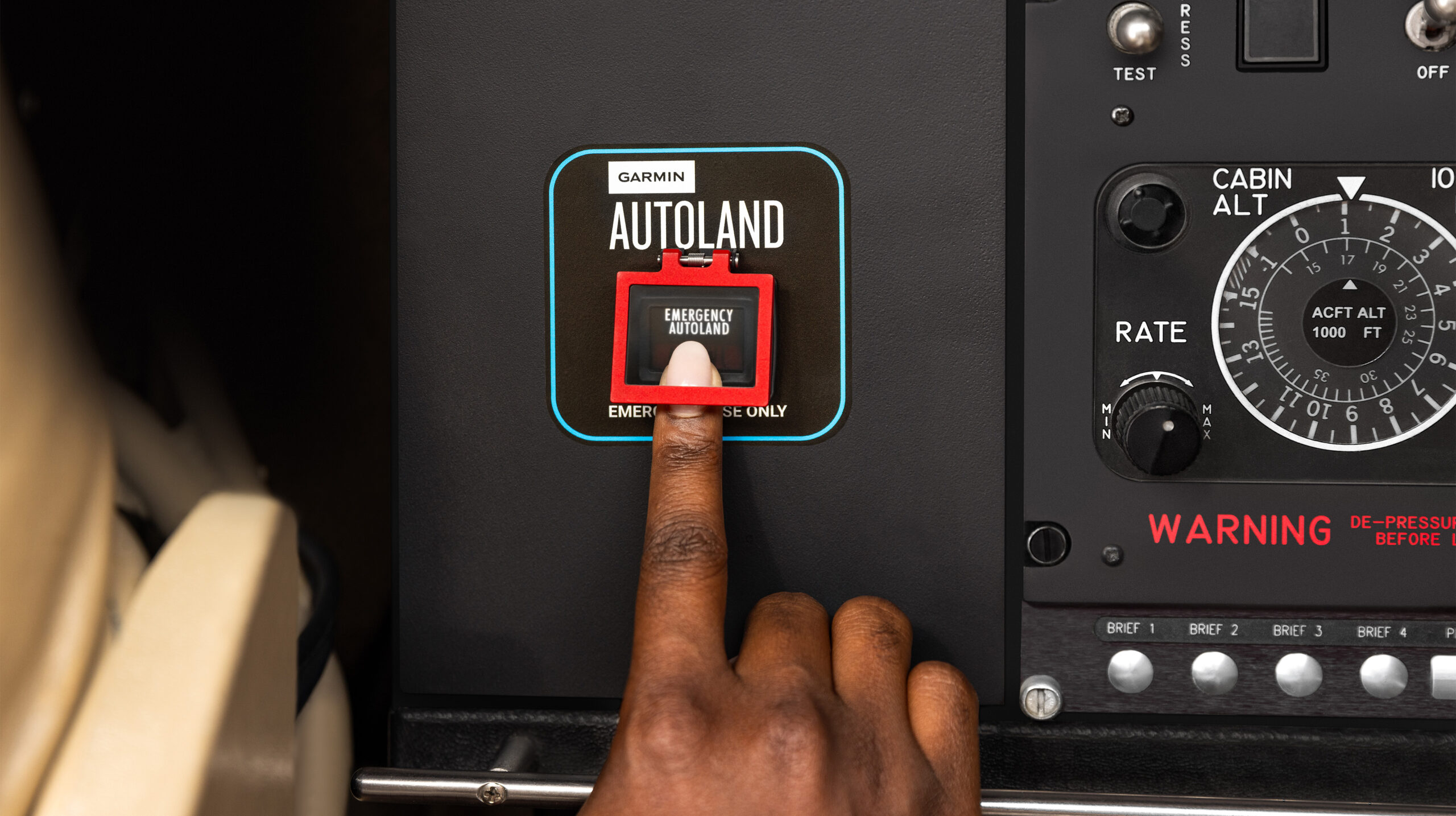
The Garmin Autoland System Lands Itself If the Pilot Faints and Marks the First Aviation Technology Capable of Taking Full Control Until Landing.
In 2020, world aviation recorded a historic turnaround with the certification of Garmin Autoland, the first technology on the planet capable of taking complete control of an aircraft, declaring an emergency, choosing a runway, landing, and braking by itself — all without any human action. Approval by the Federal Aviation Administration (FAA) transformed a futuristic concept into operational reality and ushered in a new era in general aviation, with a direct impact on safety, emergency protocols, and the future of small aircraft.
The technology, commercially named Autoland (or Safe Return in specific versions), is now equipped in executive jets such as the Cirrus Vision Jet SF50, the Piper M600 SLS, and the Daher TBM 940/960. These aircraft have become the first in the world with true autonomous landing capability in situations of pilot incapacitation — a scenario more common than many imagine, especially among small aircraft owners who often fly alone.
When Every Second Counts: The Technology That Takes Full Control
The logic behind Autoland is simple to explain, but extremely sophisticated in execution. When it senses the pilot is unable to continue the flight or when a passenger presses the emergency button located on the panel, the system springs into action and immediately:
-
Chaos On Airplane Could Be Expensive: Proposal Aims To Prevent Disruptive Passengers From Flying For Up To 1 Year In Brazil And Face Fines Of Up To R$17,500

-
Man Arrested After Halting Takeoff of Fire Department Helicopter During Child Rescue in Guaratuba

-
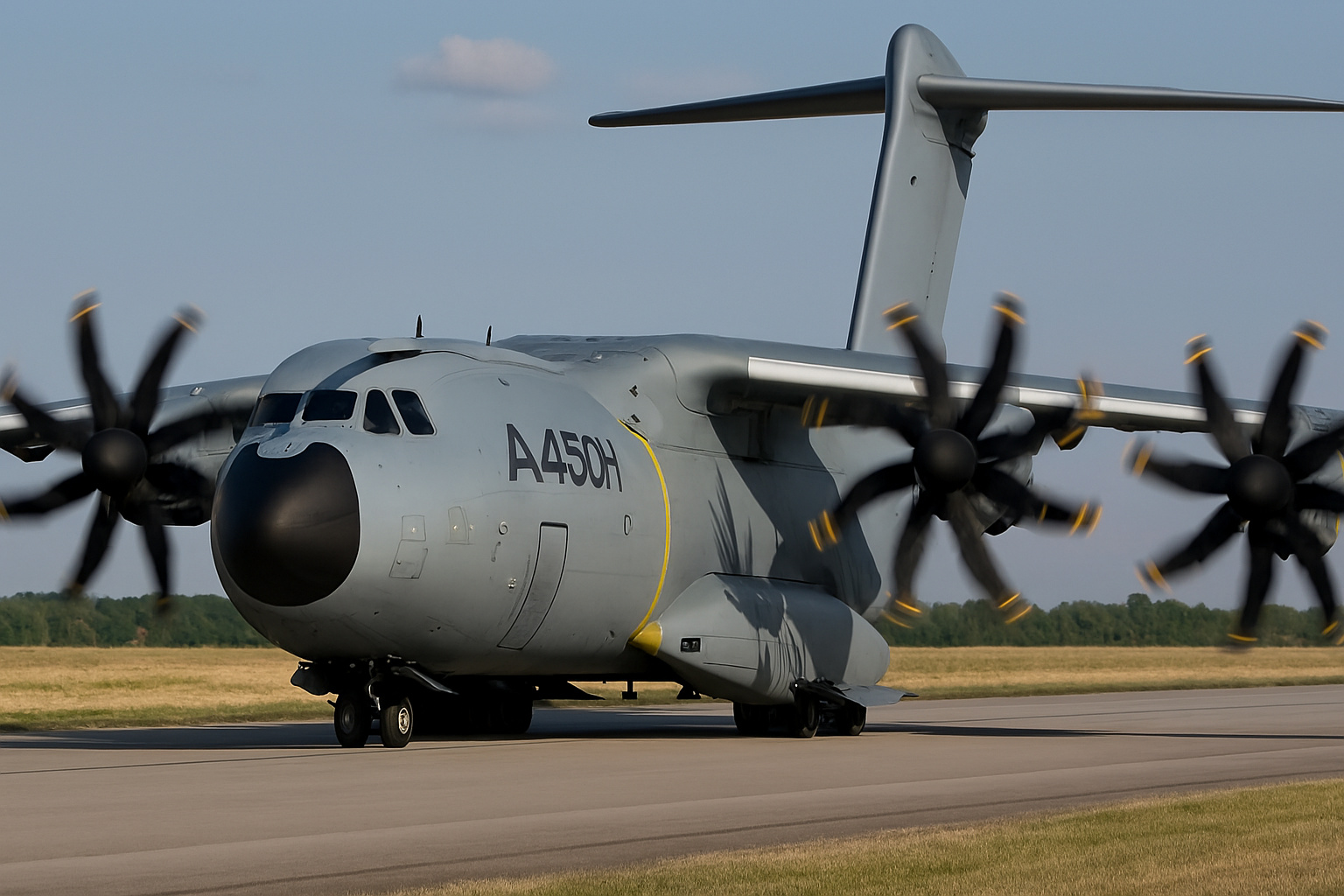
With 37 Tons of Cargo, Over 8,000 km Range, and Ability to Land on Unpaved Runways, the Airbus A400M Demonstrates How Europe Created a Military Giant That Transports Armored Vehicles, Aerially Refuels Fighters, and Operates in Conflict Zones and Humanitarian Missions Worldwide
-
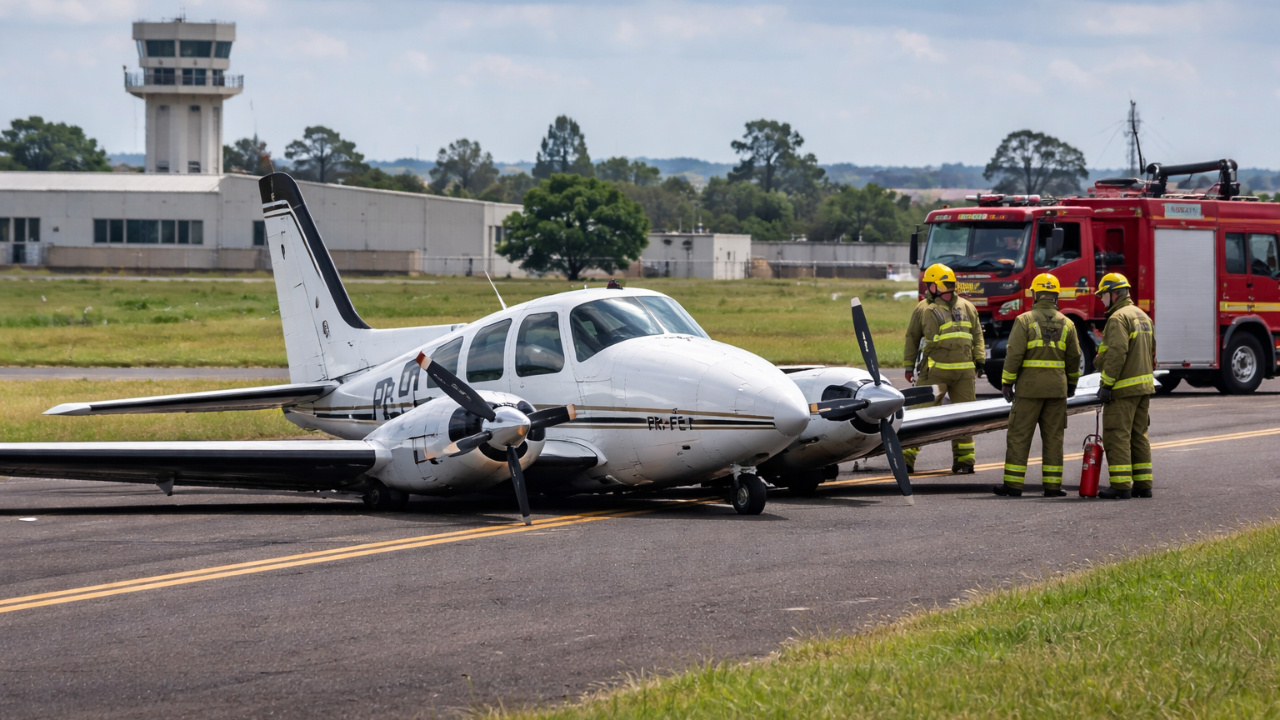
Emergency Landing in Campos Amarais After Bird Strike on Small Plane

- Takes control of the flight commands
- Declares an emergency via automatic radio
- Selects the safest airport, taking into account:
- runway length
- weather conditions
- distance
- terrain altitude
- Initiates a controlled descent
- Handles the entire final approach
- Lands with precision
- Slows the aircraft to a complete stop


Passengers, even without any technical knowledge, do not need to touch anything after pressing the button. The system communicates with them using synthesized voice, explaining what it is doing and how much time is left until landing.
The impact of this is direct: an event of fainting, sudden illness, or sudden incapacity of the pilot, which could previously be fatal, now has a fully automated solution in aircraft equipped with the system.
From Science Fiction to Cockpit: How the FAA Approved the First Fully Autonomous Landing in History
The certification process was rigorous and closely analyzed by the FAA. The agency needed to validate that the system could:
- operate flawlessly in real flights;
- correct for turbulence, crosswinds, and hydraulic failures;
- interpret environmental conditions in real time;
- anticipate obstacles and risk areas;
- precisely monitor fuel;
- land in hundreds of different scenarios.
One of the strictest requirements was to demonstrate that Autoland could land by itself even with zero visibility, and it succeeded. The aircraft, using optical sensors, advanced GPS, and radar altimeters, calculates the descent angle and maintains the exact trajectory until touchdown on the runway.
With this, it officially became the first 100% autonomous landing system certified for general aviation worldwide.
Where This Technology Is Already Operating: The New Generation of Autonomous Aircraft

Today, three aircraft are officially sold with integrated Autoland:
Cirrus Vision Jet SF50
The world’s first jet with the technology. It is the most popular model among businesspeople and private pilots. It combines Autoland with Cirrus’ famous ballistic parachute, forming civil aviation’s most complete safety package.
Piper M600 SLS
Called “Safe Return,” it is Garmin’s customized version for Piper’s turboprop model. Its distinguishing feature is redundant communication systems and an intuitive panel designed for passengers.
Daher TBM 940 / 960
A high-performance aircraft considered one of the fastest turboprops in the world. Autoland was integrated to enhance its safety on long flights with a single pilot.
These three models inaugurated a trend: manufacturers are studying the integration of the system into larger aircraft, including regional planes and, eventually, widebodies.
Why Autoland Is Considered the Biggest Leap in Modern Aviation Safety
Experts claim that Autoland represents an advancement comparable to autopilot in the 1940s. The reasons are clear:
- drastically reduces the risk of accidents due to sudden pilot incapacitation;
- offers an emergency solution for lay passengers;
- decreases operational stress in single-pilot flights;
- elevates general aviation to a new level of automation.
There are also long-term effects: industry analysts say that Autoland paves the way for highly autonomous aircraft, capable of taking on more stages of flight, reducing human dependence in the most critical tasks.
The Future: Pilotless Aircraft?
Although still distant, the industry recognizes that Autoland is the first step toward airplanes with partially autonomous control.
Manufacturers such as Boeing, Airbus, Embraer, and Gulfstream are closely monitoring the evolution of this technology to understand how it can be integrated into larger aircraft.
Meanwhile, Autoland remains a landmark: it is the only technology capable of transforming an inexperienced passenger into the protagonist of their own survival, simply by pressing a button.








Seja o primeiro a reagir!