





 Portuguese
  English
  Spanish
  5 min of reading
  0 comments


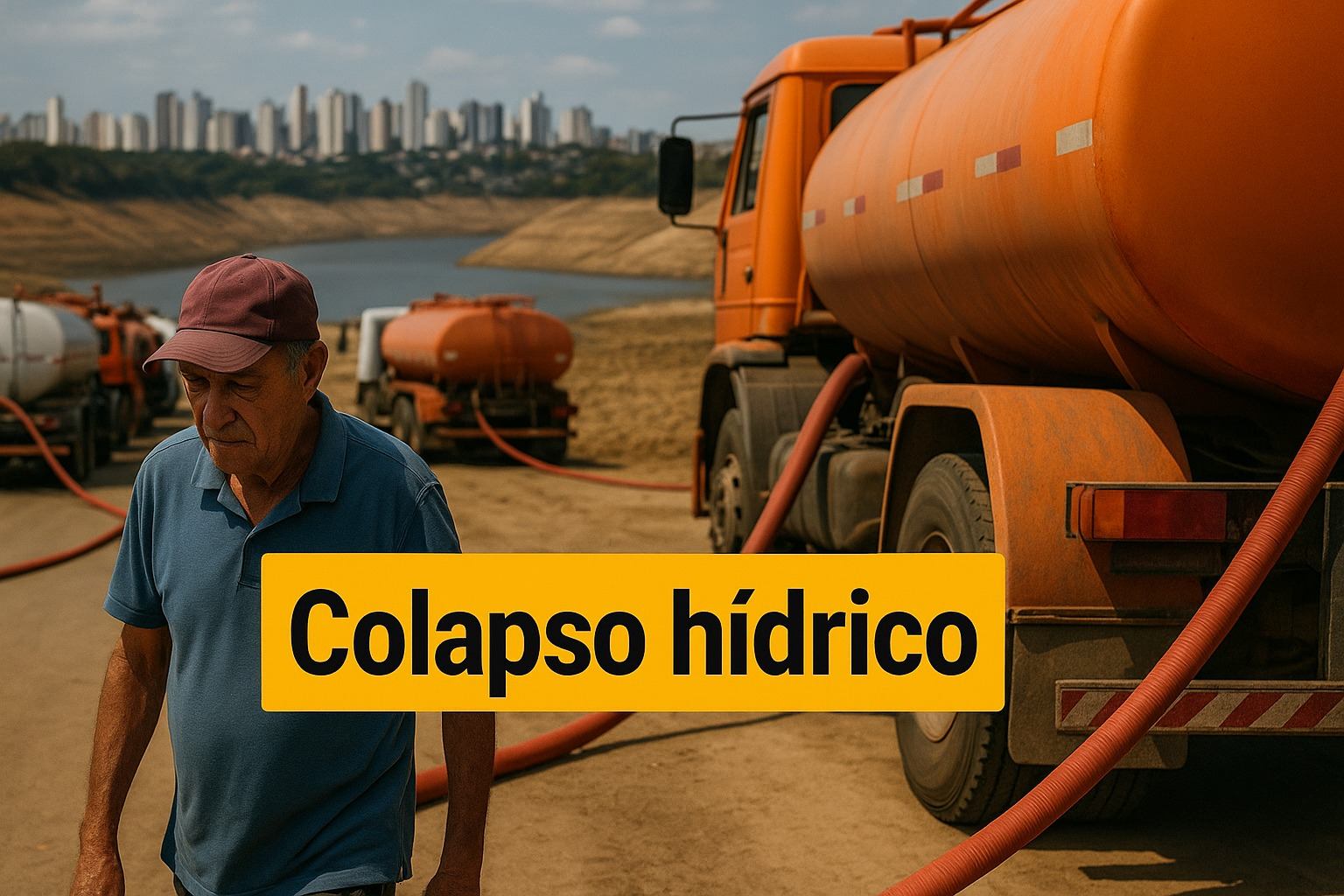
In An Unprecedented Episode, The Four Reservoirs Ran Dry Simultaneously, Millions Were Left Without Supply, And Current Reports Warn That The Risk Of A New Water Collapse Continues To Increase And May Aggravate Before 2030
Chennai experienced one of the most severe water scarcity episodes ever recorded in a major Asian metropolis in 2019. The so-called Day Zero was not just a specific alert, but the result of decades of pressure on water resources, accelerated urbanization, and excessive reliance on monsoons.
Based on this history of water crisis, experts have warned that the city remains vulnerable and may face a new crisis before 2030 if effective measures are not continuously implemented.
The Context That Led To The Collapse Of 2019
The water collapse of 2019 occurred after three consecutive years of below-average rainfall. The city heavily relies on the monsoon season to fill its reservoirs and recharge aquifers, and when this cycle fails, the impacts are immediate.
-
The village where two rivers run side by side without mixing in Santarém and Alter do Chão reveals some of the most beautiful freshwater beaches on the planet.

-
Brazil’s nuclear submarine with a speed 5 times greater than normal advances after nearly 50 years and R$ 40 billion spent.
-
A Brazilian island charges R$ 0.50 to receive visitors and prohibits any new residents.
-
Why was the Great Wall of China built? The truth that many are unaware of!

That year, the four main reservoirs that supply the metropolitan area completely dried up, leaving millions of inhabitants reliant on water trucks.
In addition to the lack of rain, the crisis exposed a combination of structural factors such as intense groundwater extraction, soil sealing, and river pollution.
These elements drastically reduced the city’s capacity to naturally store and recover water.
Although Chennai has faced droughts before, the simultaneous depletion of the reservoirs put the city at a critical level never recorded.
The Role Of Urban Growth In Scarcity
Chennai continues to register constant population growth, along with increasing water consumption.
Urban expansion has occupied natural recharge areas, replacing green spaces with concrete. This has caused rainwater to quickly flow to the sea instead of infiltrating the soil and replenishing the groundwater.
Construction has advanced over lakes, swamps, and natural drainage systems, which previously functioned as water retention areas.
The city has lost significant parts of its natural storage ecosystems. At the same time, residential, industrial, and commercial demands have increased, further straining the supply systems.
The Dependence On Monsoons And Their Unpredictability
Unlike other regions with large perennial rivers or robust reservoir systems, Chennai is highly dependent on monsoons. Climatic variability has made these rains more erratic. In some years, precipitation exceeds expectations and causes flooding. In others, a drastic drop in rainfall generates a deficit that affects the entire population.
This unpredictability is one of the most critical points. Without predictability, water planning must deal with extremes. The monsoons of 2018 were particularly weak, setting the stage for the collapse of 2019. Global climate change is likely to exacerbate these contrasts, increasing both the risk of floods and severe droughts.
How The Population Was Affected In The Crisis
When the taps ran dry, residents’ routines changed radically. Thousands waited hours to get a few liters of water supplied by government trucks. In many areas, private water trucks became the only alternative, with high prices and difficult access. Hospitals, schools, and businesses implemented emergency measures to keep functioning.
The impact also hit neighborhoods unevenly. Poorer and more remote areas, which relied exclusively on public supply, suffered even more. In places where there were no conditions for storing or purchasing alternative water, the situation became critical. This scenario exposed the need for equitable policies and a structure capable of preventing crises from exacerbating inequalities.
The Measures Taken After The Collapse
After 2019, Chennai accelerated the construction and expansion of desalination plants. Desalinated water has become an increasingly important supplementary source. The city also expanded rainwater harvesting and aquifer recharge programs, encouraging public and private buildings to adopt their own systems.
Another front was the effort to recover lakes and urban water bodies. Some reservoirs underwent cleaning and capacity expansion. However, experts say these actions are still sporadic. Water sustainability requires ongoing maintenance and oversight, as well as long-term policies that incorporate the impact of climate change.
The Challenges That Still Persist
Although the situation has improved since the collapse, structural problems continue. The city still pumps groundwater at high levels and lacks an effective policy for controlling this use. Urbanization continues to encroach on areas that should be preserved for drainage and infiltration.
Furthermore, official projections indicate that Chennai’s water demand is expected to continue rising in the coming years. This puts pressure on a system that is already operating at its limit. Without proportional expansion of supply and preservation of natural systems, the risk of a new collapse remains significant.
The Risk Of A New Crisis Before 2030
Recent reports from environmental organizations and research institutes warn that, if current conditions persist, Chennai has a high likelihood of facing a new crisis before 2030. The combination of factors such as monsoon variability, climate change, increased consumption, and aquifer degradation creates a scenario of continuous vulnerability.
There is no defined date for a new Day Zero, but the pattern of water stress indicates that it only takes one or two years of weak rains to once again put the reservoirs at risk. Without strategic reserves or sufficient alternative systems, the city remains exposed to the same triggers that led to the collapse of 2019.
Possible Paths To Reduce The Risk
Experts advocate a multifactorial approach. It is necessary to recover natural drainage areas, protect water bodies, and limit irregular occupation of lakes and swamps. Investing in water reuse technologies and rainwater collection and utilization systems is another essential step.
Desalination helps, but it cannot be the only strategy. There are high costs and environmental impacts associated with the process. Sustainable management involves reducing waste, improving distribution networks, and promoting large-scale conservation policies. It is also crucial to map aquifers and constantly monitor their levels.
The Importance Of Long-Term Planning
One of the lessons from 2019 is that water crises cannot be treated as isolated events. They are part of a broader context that involves climate, urbanization, and natural resources. Therefore, Chennai needs to adopt decades-long strategies, not just emergency actions.
The challenge is to build a system that works both in years of abundant rain and in dry periods. This requires integration among government, universities, the private sector, and civil society. Without this collective commitment, the city will continue to face cycles of abundance and scarcity that threaten millions of residents.
An Uncertain Future
Chennai has managed to recover from the 2019 crisis, but the risk remains. The monsoons have returned to levels close to expectations in some years, which relieved the reserves. However, experts insist that this relief is temporary and does not resolve the structural problem. The city remains a clear example of how urban pressure and climate change can make an entire water system vulnerable.
With rising demand and increasingly unstable supply, Chennai needs to rapidly advance toward lasting solutions. Otherwise, the prospect of a new collapse before 2030 will continue to be a real warning.






Seja o primeiro a reagir!