





 Portuguese
  English
  Spanish
  4 min of reading
  0 comments


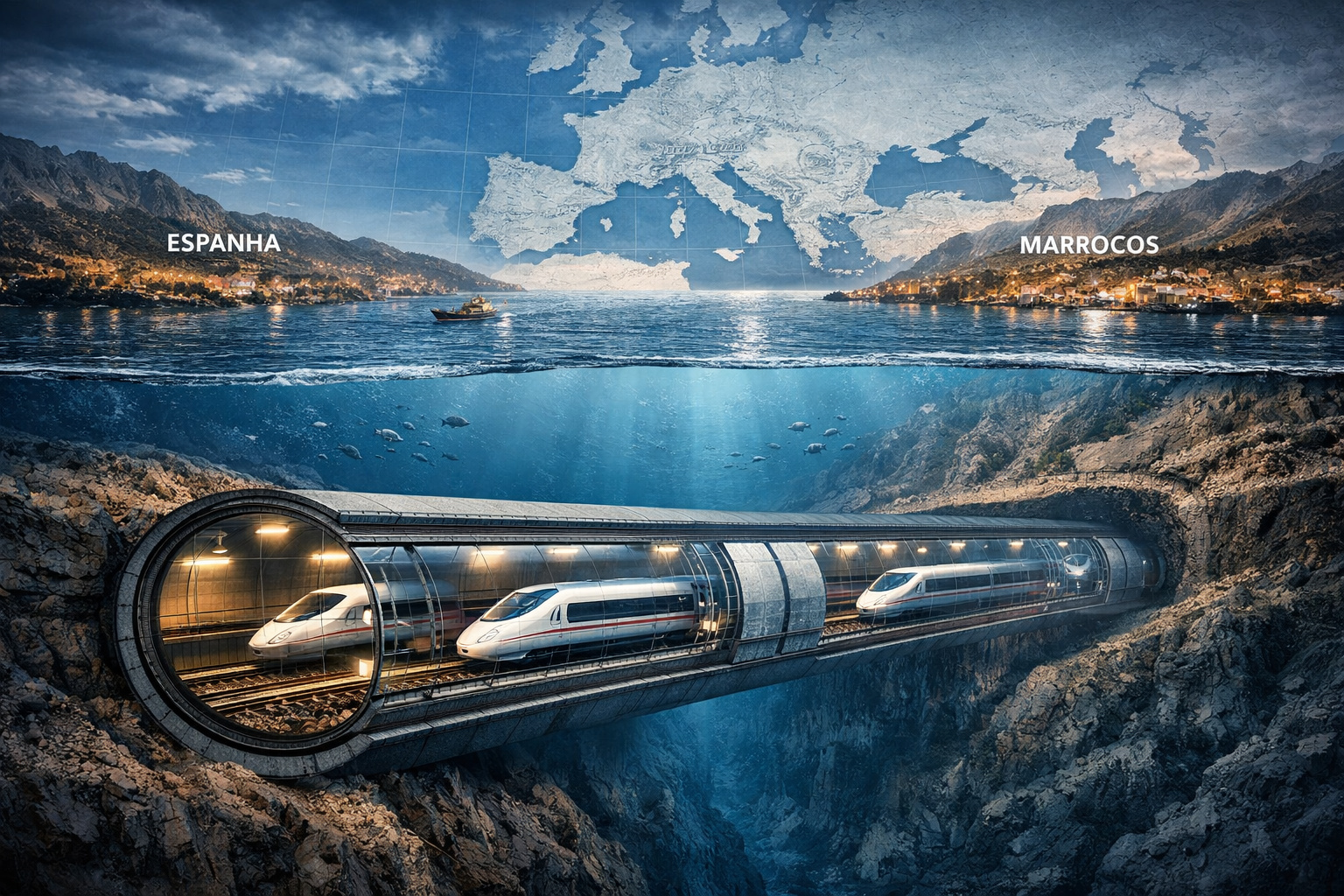
Fixed Link Between Spain and Morocco Is Considered Technically Feasible by German Company and Could Drastically Reduce Travel Time Between Continents, Transforming Passenger and Cargo Routes
The idea of physically linking Europe to Africa through a submarine tunnel under the Strait of Gibraltar has returned to the center of international debate after confirmation that the project is technically feasible, even in the face of challenges deemed extreme for decades. Estimated at around R$ 53.3 billion, the project envisions a tunnel of approximately 38 kilometers, connecting the south of Spain to the north of Morocco and creating a new strategic route between two continents historically separated by sea.
This information was disclosed by British newspapers like Express and The Sun, based on a technical study prepared by the German company Herrenknecht, a world reference in large tunnel drilling. The opinion was commissioned by the Spanish Society for Fixed Communication Studies through the Strait of Gibraltar, an entity responsible for analyzing the feasibility of a permanent link between the two countries.
Although the proposal has existed for over four decades, the new report represents a significant advancement by stating that, with the technology currently available, the tunnel can move from the realm of ideas to more concrete phases of planning and execution.
-
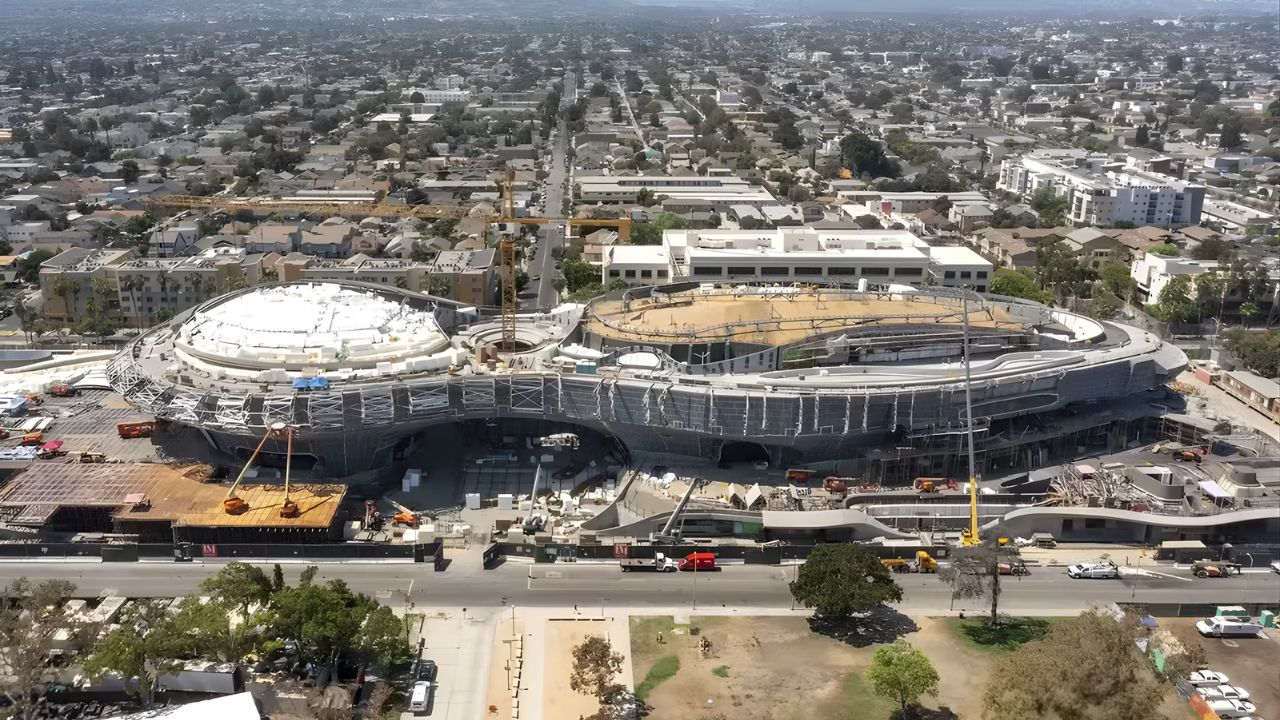
Created by George Lucas with over $1 billion, a futuristic museum in the shape of a spaceship with 1,500 curved panels is about to open in Los Angeles and will house one of the largest private collections of narrative art in the world.
-
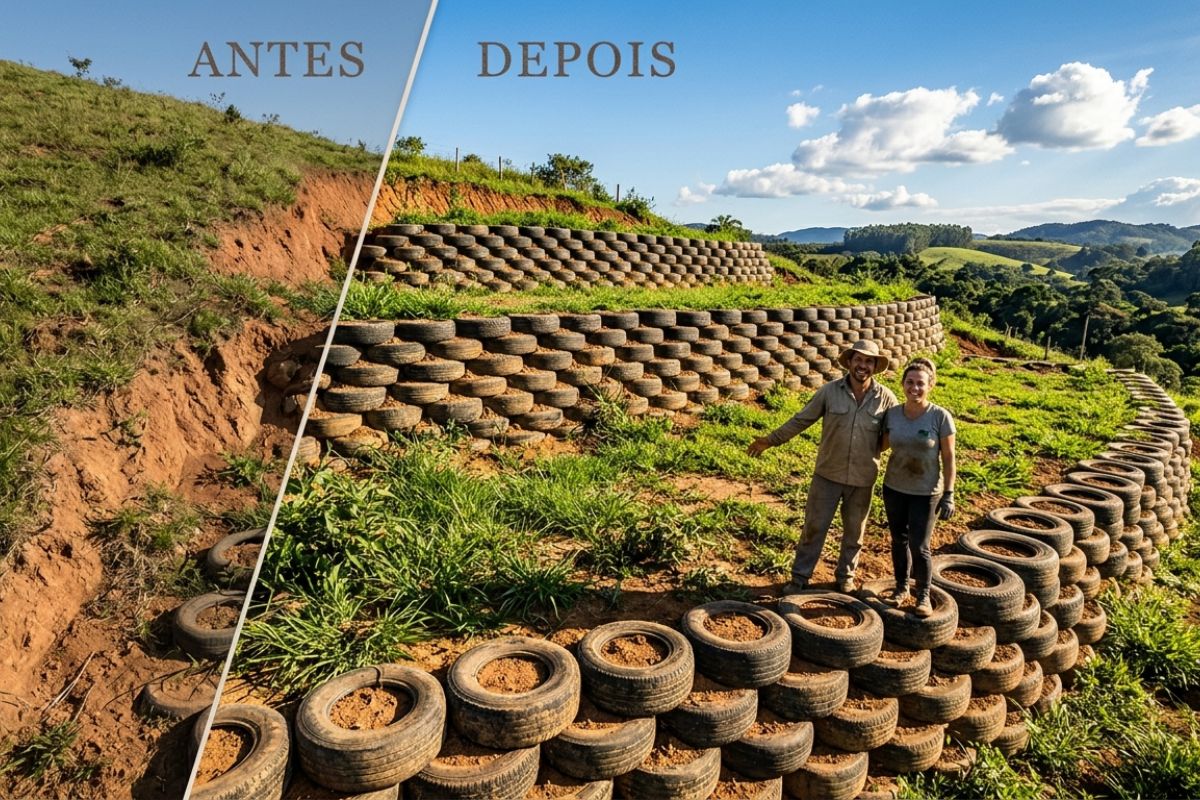
Couple shows how they built a retaining wall on their property using 400 old tires: sloped land turned into plateaus, tires are aligned, filled, and compacted with layers of soil, with grass helping in support and at almost zero cost.
-
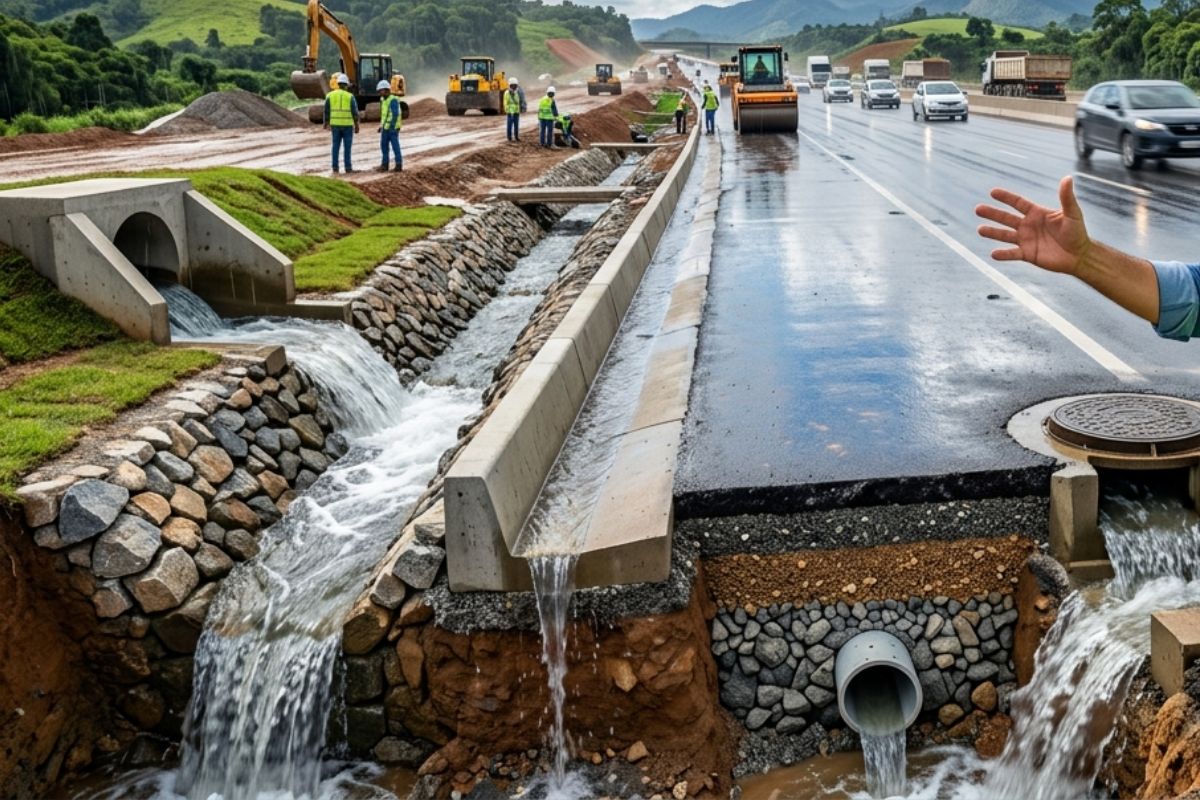
Engineer explains drainage during the rainy season: the difference between surface water and deep water, ditches, gutters, and water outlets on the road, as well as drains and drainage mattresses, to prevent erosion, aquaplaning, and flooding at the construction site today.
-
With 55 floors, 177 meters in height, a 15-meter walkway between the twin towers, ventilated facade, and 6,300 m² of leisure space, Ápice Towers already has one tower completed and another nearly at the top.


A Strategic Route That Can Shorten Distances Between Continents

The proposed route connects Punta Paloma, in the south of the Spanish region of Cádiz, to Malabata, near Tangier, in northern Morocco. This connection would allow for unprecedented integration between European and African railway networks, directly impacting the transport of passengers and goods.
Currently, a trip between Madrid and Casablanca takes about 12 hours, considering the road travel and ferry crossing. With the implementation of the tunnel and the use of high-capacity trains, this time could drop to approximately five and a half hours, a reduction considered drastic by experts in logistics and international mobility.
Moreover, it is expected that over 12 million passengers per year will use the link, a number that tends to grow with the consolidation of rail transport as a faster, more predictable, and sustainable alternative. Simultaneously, cargo transport would also benefit, with reduced logistical costs and greater fluidity in trade between Europe and Africa.
Not coincidentally, the project takes inspiration from already established megaconnections, such as the Eurotunnel, which connects England to France, and the fixed link between Denmark and Sweden, examples of how large engineering works can redefine economic routes and patterns of movement.
Extreme Challenges Under the Strait of Gibraltar


Despite the optimism brought by the new technical opinion, the tunnel under the Strait of Gibraltar faces obstacles significantly more complex than other similar works. The region reaches depths of up to 300 meters, about four times more than the English Channel, where the Eurotunnel is located.
In addition to the depth, the strait presents strong sea currents, intense winds, and a geologically critical feature: the presence of active tectonic plates, with frequent records of small tremors. These factors have always been pointed out as the main technical barriers since Spain and Morocco created, in 1979, a binational commission to study the fixed crossing.
According to Herrenknecht, however, these challenges do not render the project unfeasible. The study indicates that, with appropriate engineering solutions, constant geological monitoring, and state-of-the-art drilling equipment, the tunnel can be constructed with acceptable levels of safety and stability.
This conclusion marks an important change in the tone of discussions that have for decades revolved around the technical impossibility of the project, especially due to the natural conditions of the strait.
Next Steps and Geopolitical Impact of the Connection
With the new opinion in hand, the Spanish government has begun to evaluate the next steps of the project. According to information released by the British press, a preliminary engineering plan may be submitted for official approval as early as next year, reigniting the possibility that the physical link between Europe and Africa moves to the execution phase.
If the tunnel goes from paper to reality, the impact extends beyond mobility. Experts point out that the work could reconfigure trade flows, strengthen economic integration between the two continents, and increase the strategic relevance of the Spain–Morocco axis in international trade.
Additionally, the rail connection is expected to reduce dependence on ferries and congested maritime routes, offering greater logistical predictability and stimulating investments in infrastructure, tourism, and transcontinental production chains.
Thus, a project discussed for over 40 years gains momentum again, now supported by technical assessments indicating that the crossing under the Strait of Gibraltar is not only an engineering dream but a concrete possibility within the limits of current technology.
Source: O Globo








-

-

-

-

-

29 pessoas reagiram a isso.