





 Portuguese
  English
  Spanish
  7 min of reading
  2 comments


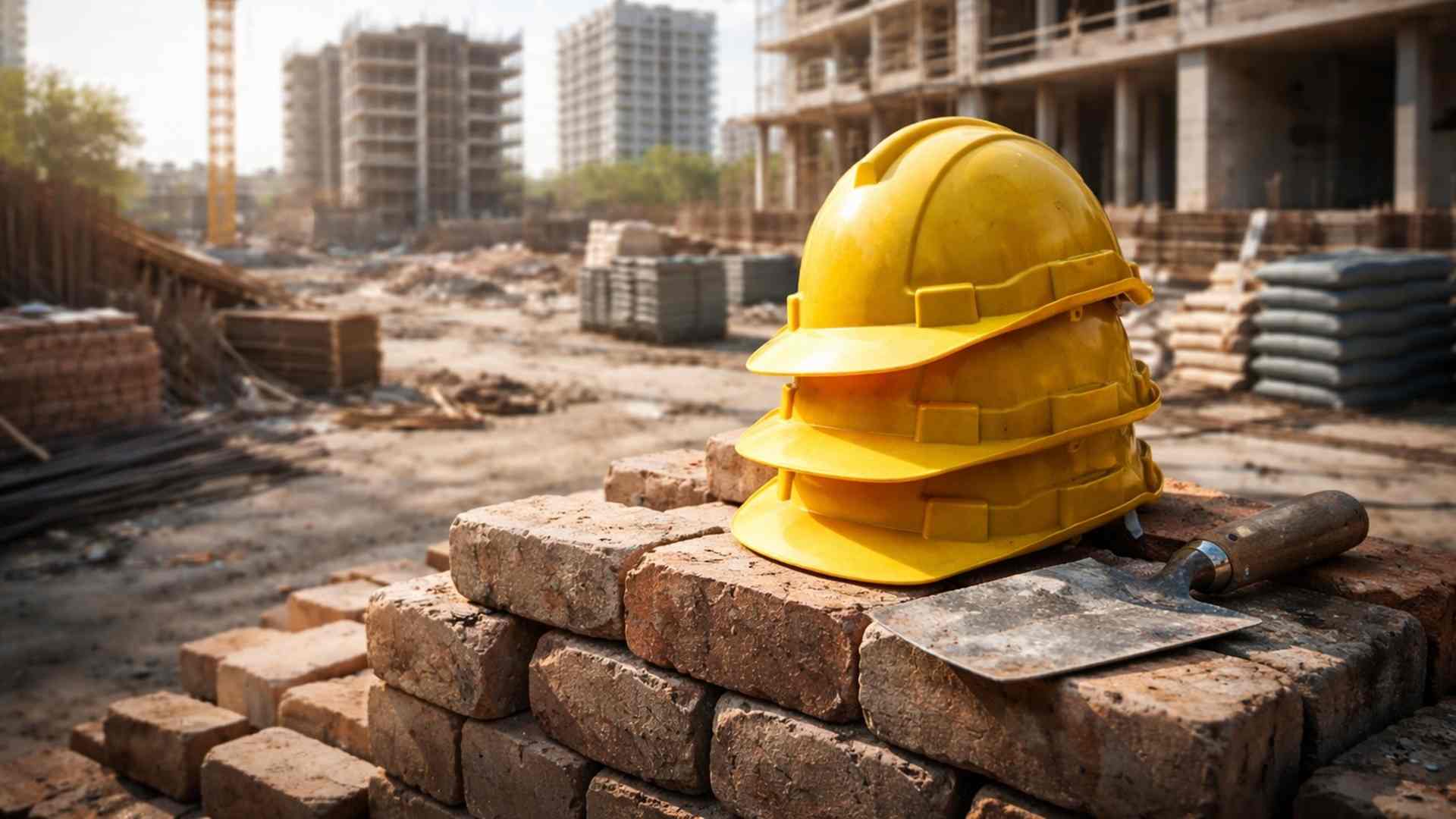


Scarcity Of Workers Reduces Formal Workforce In Construction From 3.2 Million To 2.6 Million Since 2010, Pressures Deadlines, Drives Up Costs Of Construction, Compromises Service Quality And Increases Delays In Public And Private Projects Across The Country
The Brazilian construction industry is experiencing a labor shortage: even with more projects, investments, and bids, the sector has lost nearly 600,000 workers since 2010, is experiencing a decline in hiring in 2025, and is facing delays, rising costs, and increasing difficulties in delivering houses, buildings, and infrastructure.
Historic Decline In The Number Of Workers And Direct Impact On Construction
In 2010, the construction industry employed 3.2 million professionals with formal contracts. Currently, this number has dropped to 2.6 million, a reduction of nearly 600,000 workers in just over a decade. This statistic is noteworthy because it occurs in a context of increasing projects, public and private investments, and new bids across the country.
Between January and August 2025, the sector recorded a 9.4% drop in formal hiring, the worst performance since 2021. The result is visibly apparent in daily life: stalled public works, buildings delivered past deadlines, and intense pressure on rental prices and per square meter costs.
-
“No one will make us change the Pix,” says Lula after the US report.

-
Lula responds directly to Trump and says that Pix is from Brazil and will not change under pressure from anyone, after a report from the United States pointed out the Brazilian payment system as an American trade barrier.

-
Amazon has just announced a new fee on all deliveries, and your online purchases will become more expensive starting April 17, including for those buying from the United States here in Brazil.

-
He sold his share for R$ 4 thousand, saw the company become a giant worth R$ 19 trillion, and missed the opportunity of a lifetime.


The hiring difficulty is widespread. According to recent surveys, 82% of construction companies report problems in hiring workers, while 70% say they cannot find qualified professionals. The scarcity affects everyone from laborers to construction managers, compromising schedules and execution standards.
Economist Ana Maria Castelo from Fundação Getúlio Vargas summarizes the extent of the issue by stating that the labor shortage affects both large projects and small construction and renovation efforts, directly impacting those trying to build or expand their own homes.
Private Projects Suffer From Delays, Abandonment And Loss Of Quality
Those who decide to build on their own are already feeling the effects of the labor shortage. Requested budgets go unanswered, professionals vanish after closing a contract, or abandon the job midway when a more lucrative offer arises. In many cases, the work is rushed to completion, resulting in structural problems that are only discovered years later.
Leaks, swollen floors, and crooked walls become commonplace, forcing the owner to pay again to fix flaws that should have been prevented. The issue creates a domino effect: fewer qualified professionals available raise costs, reduce quality, and pass the loss on to the end consumer.
Recent reports indicate that the shortage of qualified labor is already pushing construction costs up, with direct pass-through to buyers. The situation contributes to the increased cost of properties and amplifies the difficulty of accessing housing.
The scenario reveals that the problem goes beyond a lack of bricklayers but involves a structural transformation in the workforce of the construction industry, with increasingly broad economic and social effects.
Generational Change Drives Away Youth And Ages The Job Site
One of the central factors of the crisis is the cultural and generational shift. Generation Z, made up of individuals born after 1995, shows little interest in work within the construction industry. According to SindusCon-SP, the age pyramid of the sector resembles that of developed countries, with few young people and a large concentration of older workers.
Between 2016 and 2023, the average age of construction professionals rose from 38 to 41 years. This indicates that those who have remained in the sector are aging, while younger individuals are opting for other activities. The union president, Antônio Ramalho, notes that many young people prefer jobs related to technology or the gig economy.
This choice reflects changes in work expectations. Activities like driving for ride-sharing services offer greater flexibility, a climate-controlled environment, and a sense of autonomy, even with unstable income. For many, this weighs more than a fixed salary on a construction site.
Rodrigo Silva, 38, a former rebar worker, illustrates this transition. After a decade working with iron and concrete, he traded the job site for app deliveries, seeking more freedom and less daily pressure. The fixed salary, according to him, did not compensate for the physical effort, the cold, the rain, and constant pressure.
Adriano Cordeiro, a 40-year-old bricklayer and tiler, states that daily wages have stagnated at R$150 for years, contributing to the exit of professionals. Even among those who enjoy the profession, financial devaluation weighs heavily. The problem goes beyond money and involves the stigma of manual labor, which many young people view as a sign of failure.
Bid For Bricklayers, Delays In Deliveries And Explosion Of Costs
The combination of high demand and low supply has created a phenomenon described by unions as a “bid for bricklayers.” In major centers like São Paulo, foremen visit competing job sites to offer up to 30% more to professionals willing to switch projects.
For those hiring, the scenario is unstable. An agreement may fall apart midway through execution, halting the project and generating losses even before the completion of initial stages.
Delays accumulate and affect both companies and families.
Data shows that 21% of construction companies are already delivering projects past deadlines, while 18% have adjusted prices directly due to labor shortages. For those building their own homes, each month of delay means continuing to pay rent, incurring extra costs, and grappling with growing frustration.
To try to meet schedules, companies resort to shifts of up to 12 hours a day, working on holidays and weekends. This strategy increases final costs and raises the risk of accidents and absences. Improvisation compromises quality and leads to future expenses with renovations and corrections.
A decline in productivity is evident in the indicators. The National Construction Index rose 4% in 12 months, while the specific cost of labor increased nearly twice that amount. Payroll grows, but production does not keep pace, creating a difficult-to-sustain imbalance.
Qualification, Inclusion And Industrialization As A Response From The Sector
In the face of scarcity, the sector has begun to react on various fronts. The main one is professional qualification.
The president of Sintracon-SP claims to be discussing with entrepreneurs and governments the creation of the “Job Site School” program, aimed at practical training for unemployed individuals and beneficiaries of unemployment insurance on real projects, especially in the outskirts.
In partnership with Senai, a national career plan is also being developed, with training paths detailing progression from basic functions to technical and leadership roles.
The proposal aims to transform construction into a structured profession, rather than merely a temporary phase.
Another front is the inclusion of groups historically excluded from the sector. Women, immigrants, and retirees are beginning to occupy positions that were previously dominated by young men. In São Paulo, a partnership between industry entities and the Public Labor Ministry has already trained over 2,000 women for roles such as painting and laying tiles.
Industrialization appears as a central bet. With fewer workers available and rising costs, construction companies have increased the use of prefabricated structures, engineered wood, and steel frame, growing by 30% in the past five years. This change reduces construction time and the need for large teams on site.
Ana Maria Castelo highlights that the adoption of these technologies also connects to the agenda of sustainability and decarbonization in construction.
Examples include projects that have reduced the number of workers and accelerated execution by replacing artisanal processes with industrialized systems.
Immigration And International Comparisons Expose Structural Differences
Another relevant movement is the influx of Haitian and Venezuelan immigrants, who have been filling high-turnover jobs.
Seradieu Belizaire, a Haitian who started as a helper earning R$1,600 and now works as a bricklayer and painter, reports that many compatriots work in construction, especially in cities in Greater São Paulo.
On the international scene, the labor shortage has been longstanding and tackled in a structured manner. In the United States, one in four construction workers is an immigrant, and in essential roles, this number exceeds 50%. In Canada, the issue has become a national priority.
Between 2016 and 2023, Canada welcomed over 42,000 new permanent workers for construction through specific immigration programs targeted at the sector.
The central difference lies in professional and salary appreciation, which makes the career attractive and stable.
In Brazil, starting salaries in construction range between R$2,500 and R$6,000, depending on the role and region. In the United States, starting pay in construction can be from $25 per hour, ensuring a middle-class standard of living and access to goods and services.
The contrast highlights Brazil’s challenge: balancing technology, qualification, and compensation in a market where many prefer informality or activities outside the site. Without that, the lack of workers remains a structural hurdle.
A Problem That Transcends The Sector And Threatens The Pace Of Construction
The shortage of bricklayers, laborers, and construction managers has ceased to be merely a labor market issue and has come to represent a risk of collapse. The combination of high demand, worker scarcity, and rising costs threatens the country’s ability to construct housing, infrastructure, and public amenities at the necessary pace.
While the sector advances in training, inclusion, and industrialization programs, the equation has yet to balance. There is technology available and people willing to learn, but the work must compete with other forms of income and new quality of life expectations.
Without structural changes, the scenario of delays, improvisation, and rising costs is likely to persist, affecting not only construction companies but all of society that depends on construction to grow and develop.
SOURCE
This article was prepared based on information from Canal Elementar.









Teria que incluir presos no seu trabalho tbm…
Tinha que colocar presos nesse tipo de serviço de construção civil!