





 Portuguese
  English
  Spanish
  5 min of reading
  1 comment


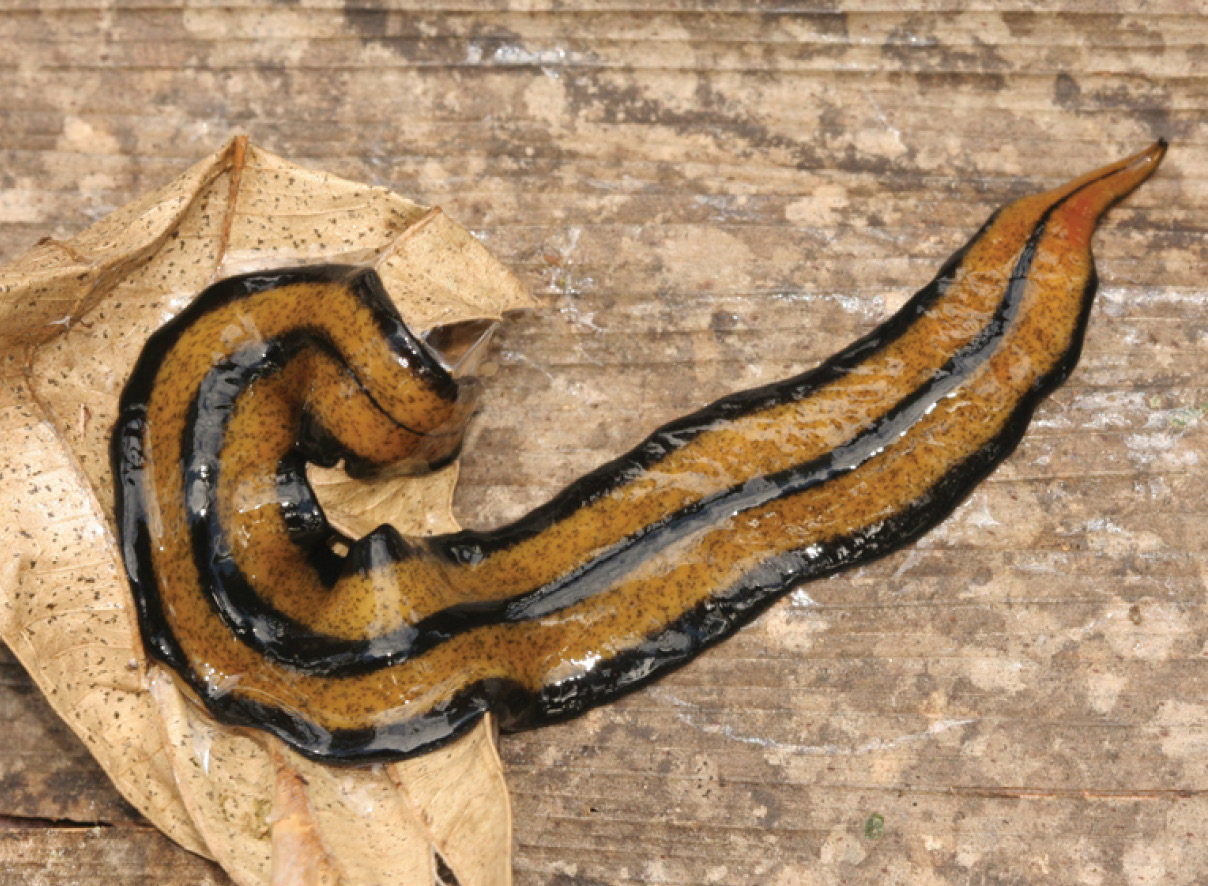


Invader Flatworm Clones, Regenerates Its Body Indefinitely and Advances Through Europe, Threatening Earthworms, Agricultural Soils and Entire Ecosystems.
Few people notice, but one of the most discreet and concerning biological invasions in Europe does not involve visible insects, giant fish, or exotic plants. It takes place below the ground, in the silence of the soil, driven by an apparently fragile but biologically extreme organism. This is an invasive terrestrial flatworm, capable of cloning itself, regenerating almost any part of its body, and expanding without the need for a reproductive partner. The scientific alarm began to gain strength in the last decade when researchers started to document the rapid expansion of invasive terrestrial planarian species in countries such as France, Spain, Italy, Belgium, and the United Kingdom. Among them, the most concerning is Obama nungara, a flatworm native to South America that has found a perfect environment to thrive in Europe.
What makes this organism especially dangerous is not only its presence but the combination of explosive reproduction, lack of natural predators, and a diet based on earthworms, invisible pillars of soil fertility.
The Extreme Biology of the Invasive Flatworm
Terrestrial flatworms belong to the group of platyhelminthes, organisms without a skeleton, without a respiratory system, and with an extremely simple body from an anatomical point of view. Still, their functional biology is surprising.
-
Surrounded by the sea, the airport will have a system to prevent airplanes from falling into the water; technology will be installed in Ilhéus (BA), with an investment of R$ 70 million.

-
With a cost per shot close to zero, the DragonFire laser could change naval warfare in 2027 and provide British ships with nearly unlimited defense against drones.

-
A British startup creates tires that generate electricity in electric vehicles when passing over potholes, speed bumps, and cracks.

-
Scientists have created robots made with living cells that have their own nervous system, swim on their own, explore the environment, and self-organize without any genetic engineering, and now they want to do the same with human cells.

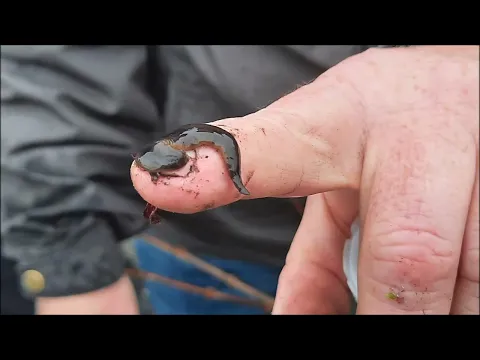

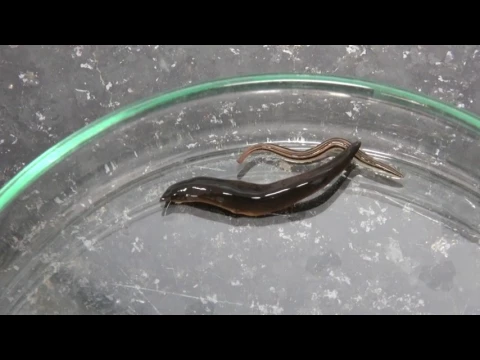
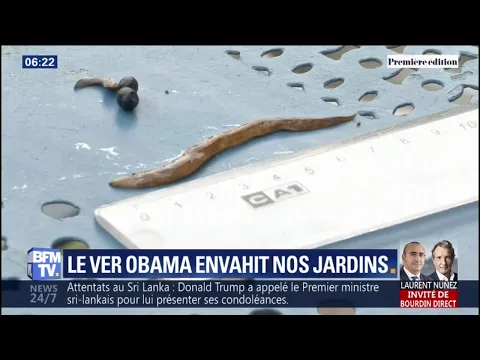
The Obama nungara, for example, can reach between 5 and 8 centimeters in length, has a flattened body, dark brown coloration, and moves slowly across the soil surface, especially at night or in humid environments. During the day, it hides under leaves, stones, or within the organic layer of the soil.
What sets it apart from almost all soil predators is its ability for nearly complete regeneration. If the animal is cut into pieces, each fragment can, under suitable conditions, regenerate into a complete individual. This means that attempts at physical control may, in practice, increase the local population.
Moreover, this is a hermaphrodite species, capable of reproducing both sexually and by body fission. A single individual accidentally introduced into a new environment can, in a few years, give rise to thousands of genetically identical descendants.
How the Flatworm Arrived in Europe
The introduction of the invasive flatworm into Europe did not occur intentionally. Scientific records indicate that the main entry route was the international trade of ornamental plants, especially seedlings transported with soil attached to their roots.
Greenhouses, botanical gardens, and landscaping centers served as initial dispersal points. From these hubs, the animal spread to residential gardens, urban parks, agricultural areas, and peri-urban forests.
Genetic studies conducted by European universities have shown that many populations of Obama nungara found in different countries are genetically almost identical, which reinforces the hypothesis of recent introduction and rapid expansion, with no significant geographical barriers.
Earthworms in the Crosshairs: The Invisible Impact on Soil
The real problem begins when one observes the diet of this worm. Unlike native species of planarians, which tend to feed on various small invertebrates, the Obama nungara is a specialized predator of earthworms.
Earthworms play a central role in terrestrial ecosystems. They are responsible for aerating the soil, decomposing organic matter, cycling nutrients, and improving water infiltration. In agricultural soils, their presence is directly associated with productivity.
By feeding on adult and juvenile earthworms, the flatworm drastically reduces local populations. Field studies in France and Spain indicate significant declines in earthworm density in areas where the invader has established itself continuously.
This effect creates an ecological domino effect. With fewer earthworms, the soil compacts, loses drainage capacity, accumulates undecomposed organic matter, and becomes less fertile over time.
A Predator Without Natural Enemies
Another factor exacerbating the problem is the almost total absence of natural predators in Europe. While in its native environment the flatworm coexists with birds, amphibians, and other invertebrates that help to keep their populations in check, on the European continent it finds an ecological vacuum.
Furthermore, the body of the worm secretes repellent chemical substances, which discourage predation by many animals. This defensive mechanism further increases its survival rate.
The result is an organism that grows slowly in individual size but multiplies constantly and persistently, occupying underground niches without being perceived by most of the population.
Why Control Is So Difficult
Controlling the invasive flatworm is a huge challenge. Unlike insects or plants, there are no specific and safe pesticides for large-scale use against terrestrial planarians. Generic chemical methods can affect the entire soil fauna, causing more harm than benefits.
Manual removal is unfeasible over large areas and, as already noted, may worsen the problem if the animal is fragmented. The use of extreme heat or freezing is effective only in controlled environments, such as greenhouses, but not in natural settings.
Therefore, the main strategy advocated by scientists today is prevention. Monitoring gardens, quarantining imported plants, stringent control of transported soil, and awareness campaigns are considered the only viable paths to contain the expansion.
A Warning for Agriculture and Conservation
Although the impact is still more visible in gardens and urban areas, researchers warn that the continued expansion of the flatworm may become a serious problem for European agriculture in the coming decades.
Depleted soils, reduced water retention, and decreased underground biodiversity directly affect sensitive agricultural crops. Furthermore, young forests and areas of ecological restoration may experience delays in growth due to soil degradation.
The case of Obama nungara exposes a little-discussed fragility: subterranean ecosystems are as vulnerable as visible ones, but receive much less public and political attention.
As the worm continues to spread silently beneath our feet, science races against time to understand its ecological limits. The question that is beginning to arise among researchers is direct and uncomfortable: how long will European soil be able to withstand a predator that should never have arrived there?









Na verdade, essa espécie de planária predadora do gênero _Obama_, a _O. nungara_, nativa do Sul do Brasil, Argentina e Paraguai, se nutre de varios tipos de presas, como caracóis, lesmas, minhocas e até outras planárias, atuando como agente de controle biológico de lesmas e caracóis, sem que se conheçam danos significativos às populações de minhocas úteis. Em tese, o **** tem capacidade de se instalar em diferentes ambientes, visto que não depende de apenas um tipo de alimento para sobreviver. Ela habita lugares com vegetação modificada pelo homem, como parques, viveiros e jardins e, ao que tudo indica, foi levada para a Europa em vasos de plantas ornamentais da Argentina.
https://revistapesquisa.fapesp.br/obama-atravessa-o-atlantico/