





 Portuguese
  English
  Spanish
  5 min of reading
  0 comments


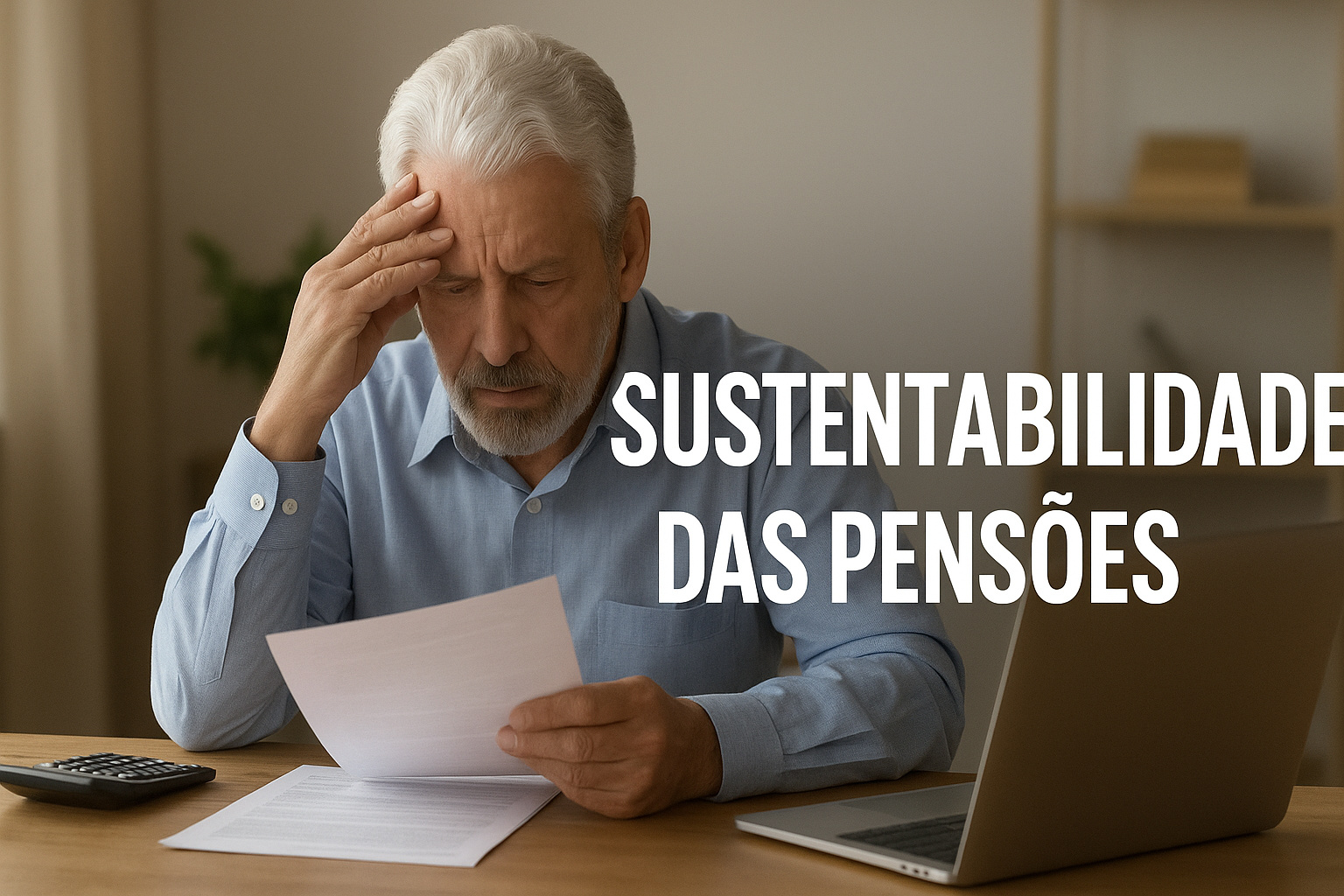
The Evolution Of The Sustainability Factor Over Time
The discussion about the future of pensions in Portugal has gained new momentum after the calculations released by the Lusa agency, based on provisional data from the National Institute of Statistics (INE), confirmed that the cut applied to early retirements will increase to 17.63% in 2026. This value surpasses the index of 16.9% applied in 2024, which highlights a historical trend of continuous adjustments in the Social Security system to try to ensure its sustainability over the coming decades.
According to the Lusa website, this indicator directly depends on the average life expectancy at 65 years, which has risen again, as revealed in November 2024.
Because of this demographic evolution, the sustainability factor acts as a mechanism that tries to balance the population’s longevity with the financial capacity of the State. However, this balance generates recurring social tensions because it directly affects workers who plan to retire before the legal age.
At the same time, although it represents a technical solution, the factor provokes deep debates about intergenerational justice. In addition, it reinforces the need for inclusive policies that make aging more dignified and less dependent on harsh penalties for those who need to leave the labor market earlier.
-
Foresea achieves 100% offshore waste reuse in 2025, eliminates landfill disposal, and consolidates sustainable strategy with 1,500 tons recycled.

-
With earth, bamboo, straw, and lime mortar, a specialist builds a house for just over $460 and draws attention for its cost being much lower than traditional construction.

-
Rodrigo de Freitas Lagoon advances in environmental recovery with sanitation, elimination of irregular sewage, and the resumption of water sports in Rio de Janeiro.

-
Sustainable housing gains strength with a nationally awarded project in Campo Grande, highlighting innovative solutions that combine sustainability, urban integration, and efficiency in the use of natural resources.


The Origin Of The Factor And Its Relationship With Sustainability
To understand the current discussion, it is essential to recall that the sustainability factor was created in 2008, in a context where Portugal was facing clear signs of population aging. At that time, according to the government and reports from the Ministry of Labor, the system was already showing structural weaknesses. As a consequence, the mechanism began to adjust the value of early pensions whenever the average life expectancy increased.
However, as Portuguese society ages rapidly, the application of this factor is becoming increasingly frequent. Therefore, inevitably, the cut in pension values for those who decide to retire before the normal age of access is also widening.
Still, experts say that this political choice has always required a balance between two essential pillars: financial sustainability and social protection. Thus, the debate has never been restricted solely to mathematical calculation. It involves how the State distributes responsibilities between generations.
As INE emphasizes, the data that determine this calculation is released annually. Thus, since it depends on demographic indicators, it directly influences the lives of thousands of people every year.
The Direct Impact On Those Who Wish To Retire Early
The increase in the cut to 17.63% in 2026, according to Lusa, represents more than just a technical value. It affects the financial and emotional organization of workers who, for professional, family, or health reasons, consider leaving the labor market early.
However, the penalty also reinforces the message that the system conveys: it is increasingly necessary to extend the working life, both to ensure the stability of the public budget and to sustain the contributory model.
However, many experts point out that prolonging working life requires real conditions for decent work, especially for sectors with physically demanding activities. Thus, while the increase in longevity indicates that we are living longer, it does not always mean that we live with full productive capacity until older ages.
This dilemma between sustainability and quality of life is repeated in all pension debates of the last decades. It was present, for example, in the reforms of 2013, when Portugal was experiencing the effects of the economic crisis and needed to adjust rules more quickly.
The Sustainability Factor In A Broader Context
Although the larger cut generates debate, it is important to observe that Portugal is not an exception. Since the 1990s, European countries have been altering pension mechanisms to respond to the increase in life expectancy and the decline in birth rates.
According to the European Commission, the sustainability of pension systems in the European Union depends on policies that encourage both active aging and the modernization of pension rules. Thus, Portugal follows international trends, although each country adapts measures according to its own social reality.
In addition, the discussion on sustainability goes beyond the limits of actuarial mathematics. It involves themes such as employment policies, technological transformations, social inequality, elder care, and even migration. Therefore, any isolated adjustment in pension calculation needs to engage with a broader strategy.
At the same time, according to reports from the National Health Council, it is essential to consider the impact of working conditions on health throughout life. After all, simply increasing the retirement age does not resolve structural problems when a large part of the population faces early physical wear.
The Importance Of Discussing Future Alternatives
As the penalty increases in 2026, the public debate about alternatives that can ensure financial balance without excessively penalizing certain groups is also growing. Experts mention, for example, policies that encourage long contributory careers, transition mechanisms for professions with significant wear, and strengthening actions that promote healthy aging.
Furthermore, strengthening labor inclusion policies for workers over 55 becomes essential. According to the International Labor Organization (ILO), societies that maintain real opportunities for older people tend to balance their pension systems better.
At the same time, financial education also plays a crucial role. When workers understand in advance the workings of the sustainability factor, they are able to plan their decisions better.
For all these reasons, it is essential to broaden the public debate, as pension decisions profoundly influence entire families. They define future expectations, professional life, and financial organization.
Sustainability As A Central Axis Of Social Debate
Ultimately, the question reveals a global challenge: how to build a sustainable pension system without placing excessive burdens on those who need to retire early. Therefore, although technical, the topic requires social sensitivity.
On one side, the State needs to adapt to population aging. On the other, society needs to discuss ways to age with dignity. Thus, the dialogue between social security, quality of life, and sustainability becomes indispensable.
Consequently, debates like this never run out. They evolve as demographic, economic, and social conditions change. Therefore, the increase in the cut to 17.63% in 2026 should not be read merely as a specific datum. It should be understood as part of a continuous reflection on the collective future.
And precisely for that reason, expressions such as sustainability, longevity, intergenerational balance, and social well-being become essential to understand the current moment.








Seja o primeiro a reagir!