





 Portuguese
  English
  Spanish
  5 min of reading
  1 comment


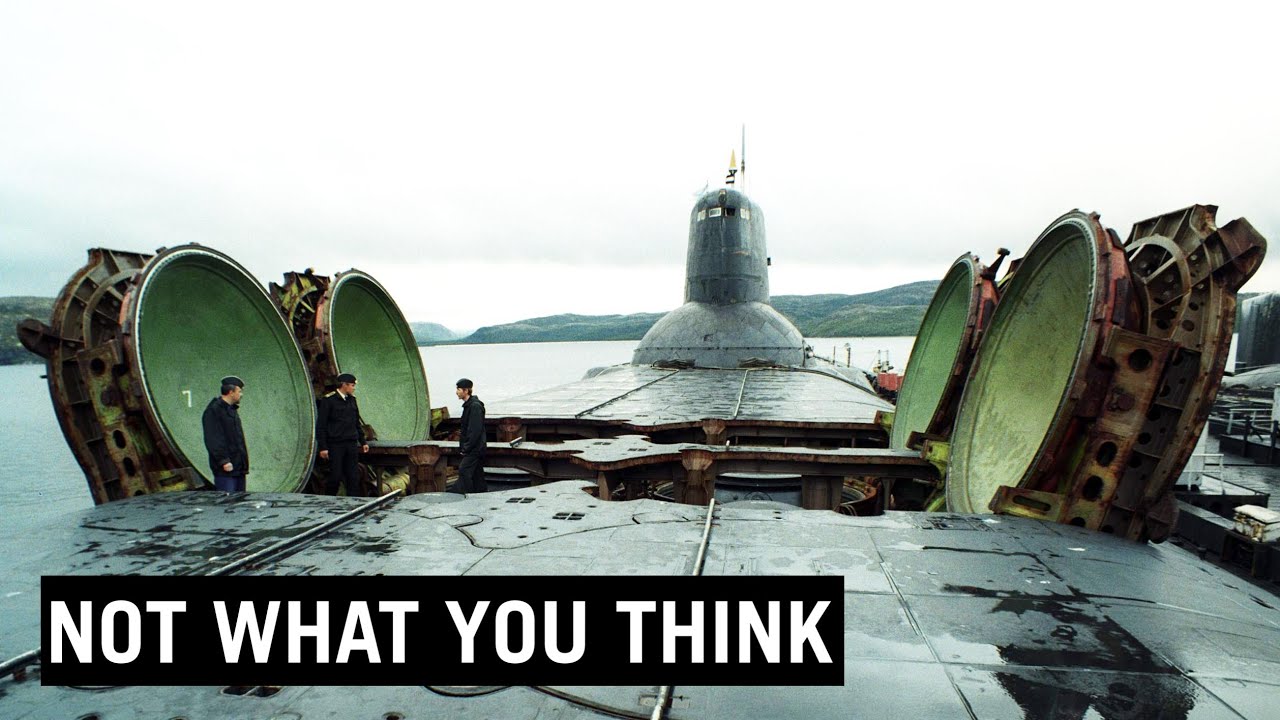


With 175 m and almost 50 thousand tons, the Typhoon-derived submarine was designed to operate under the Arctic ice and maintain missile launches, but the concept was ultimately abandoned.
During the peak of the Cold War, the Soviet Union took naval engineering to a nearly surreal level by creating Project 941, known in the West as Typhoon class. The objective was clear: ensure nuclear deterrence even in the most hostile scenarios on the planet. To achieve this, designers envisioned a submarine capable of patrolling the Arctic for months, surviving under thick ice, and preserving missile launch capability when practically no other naval means could operate.
The result was the largest submarine ever built. But along with ambition came a set of ideas so extreme that some were tested, worked under specific conditions, and were still deemed unfeasible for permanent adoption.
A Colossus Made for the Arctic
The Typhoon was born for a very particular environment. The Soviet logic viewed the Arctic Ocean as a “strategic sanctuary”: vast, poorly monitored, and protected by ice for much of the year. To exploit this advantage, a submarine was needed that not only survived there but operated with comfort and redundancy.
-
Home environment can influence the brain, mood, and well-being: studies indicate an increase of up to 15% in productivity, a reduction of 12% in stress with plants, and a direct impact of the circadian rhythm on the 24 hours of the day.

-
A Brazilian millionaire couple restores a farm over 150 years old in the interior of São Paulo and transforms the historic property with Portuguese tiles, antique furniture, and new spaces into a refuge that blends tradition, comfort, and sophistication.
-
Submerged city in a lake in Minas reveals intact streets, preserved vehicles, and houses after more than 60 years, impressing divers.
-
Yellowstone has started to rise again in an area of the caldera, and the movement rekindles fears surrounding the U.S. supervolcano, as scientists monitor the deformation and try to understand what is happening underground.


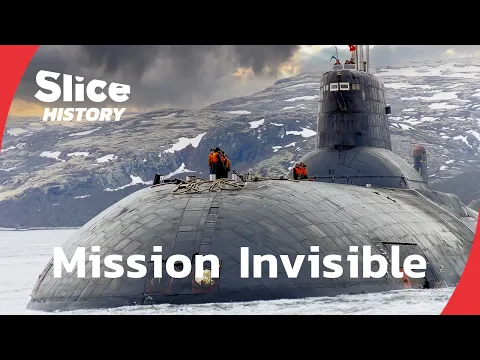

With about 175 meters in length, width greater than 23 meters, and submerged displacement close to 48–50 thousand tons, Project 941 broke any previous standard.
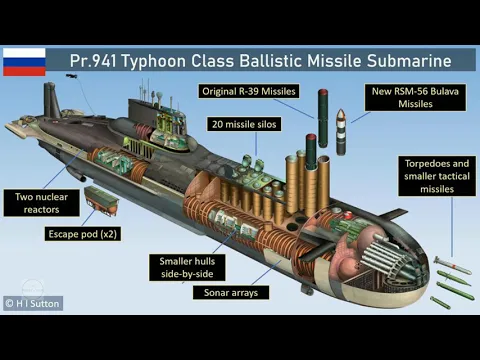
The adopted architecture was unusual: two parallel reinforced hulls, connected by intermediary structures, creating enormous internal volume and high buoyancy reserve. This allowed it to traverse icy regions, break ice in an emergency, and maintain stability even in extreme conditions.
Extended Autonomy and Life Onboard
The typical mission required weeks — sometimes months — of continuous operation under the ice. Therefore, the Typhoon was designed as a true “submerged ship”, not just a submarine. Its interior included spacious resting areas, larger than standard mess halls, and redundant life support systems.
Operational autonomy exceeding 120 days was not just a number. It represented the real capability to remain invisible, far from ports and outside the range of most enemy sensors, keeping strategic readiness intact.
The Missile That Shaped the Submarine
A significant part of the size of the Typhoon can be explained by its main payload: the R-39 ballistic missile, one of the largest SLBMs ever put into service. Each submarine carried 20 missiles, each about 16 meters long, 2.4 meters in diameter, and approximately 84 tons in mass per unit.
The combination of giant missiles and reinforced hull created a system designed to launch strategic weapons from areas covered by ice, something practically unique. The launch itself did not require prolonged exposure: the missile was ejected by gas and only then ignited the engine, reducing structural risks.
Operate Under Ice Without Losing Deterrence
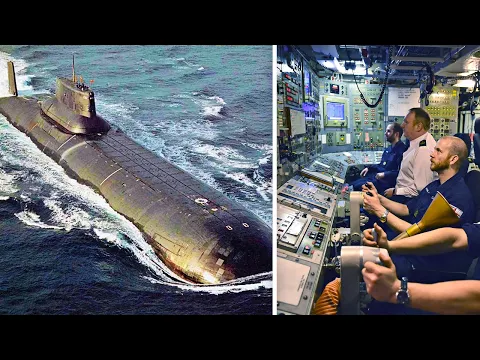
The most ambitious and controversial point of the concept was the idea of preserving launch capability in a continuous polar environment.
In practice, this meant patrolling under thick ice, identifying thinner regions or natural openings, and executing launch procedures after breaking through the ice, if necessary. Real exercises confirmed that the Typhoon could:
- navigate for long periods under Arctic ice;
- emerge by breaking through thick layers when necessary;
- conduct tests and launches in a polar context.
The notion of “launching missiles while moving under the ice,” however, proved to be much more complex than imagined. The precision required by an SLBM, combined with the variables of navigation under ice, limited the concept to very specific windows. It worked, but with high operational cost and little tactical flexibility.
Experimental Variants and the Role of the 941U/941UM
With the end of the Cold War and the gradual retirement of the class, one of the ships, the TK-208 Dmitry Donskoy, gained a new role. Modernized in the following decades, it became an experimental platform, associated with variants known as 941U/941UM. In this role, the submarine was used to test:
- new navigation and command systems;
- operation procedures in ice;
- and, above all, more modern missiles, such as the Bulava, already in the post-Soviet era.
These modernizations kept the legacy of the Typhoon alive, but also highlighted an uncomfortable fact: the original concept was powerful but too heavy for modern doctrine.
Why the Concept Was Abandoned
Even with partial technical success, the idea of maintaining large SSBNs operating continuously under ice with a focus on polar launch lost strength for several reasons.
The cost of construction and maintenance was enormous. The logistics involved, complex. And advances in sensing, satellites, and anti-submarine warfare reduced part of the advantage of the “Arctic sanctuary.”
In addition, more modern, smaller, and more efficient missiles began to offer greater ranges and more flexibility, allowing smaller submarines to fulfill the same strategic mission at a lower cost.
The Typhoon proved that the concept was possible. But it also demonstrated that possible does not mean sustainable.
An Extreme Experiment That Marked an Era
Project 941 did not fail in the technical sense. On the contrary: it accomplished what it set out to do. The abandonment of the concept was a strategic decision, not an engineering mistake. In a period of scarce resources and new priorities, maintaining the largest submarine in history stopped making sense.
Even so, the legacy remains. The Typhoon showed how far naval engineering could go when the goal was to ensure deterrence at any cost, even under kilometers of ice.
Today, the Typhoon occupies a unique place in military history. Not only as the largest submarine ever built, but as a symbol of an era when size, redundancy, and extreme survivability were seen as the key to national security.
It sailed where few would dare, tested concepts at the edge of viability, and left a clear lesson: in the strategic race, some ideas need to be pushed to the extreme to discover where, exactly, the limit lies.







What a Beast! 🔥