





 Portuguese
  English
  Spanish
  7 min of reading
  0 comments


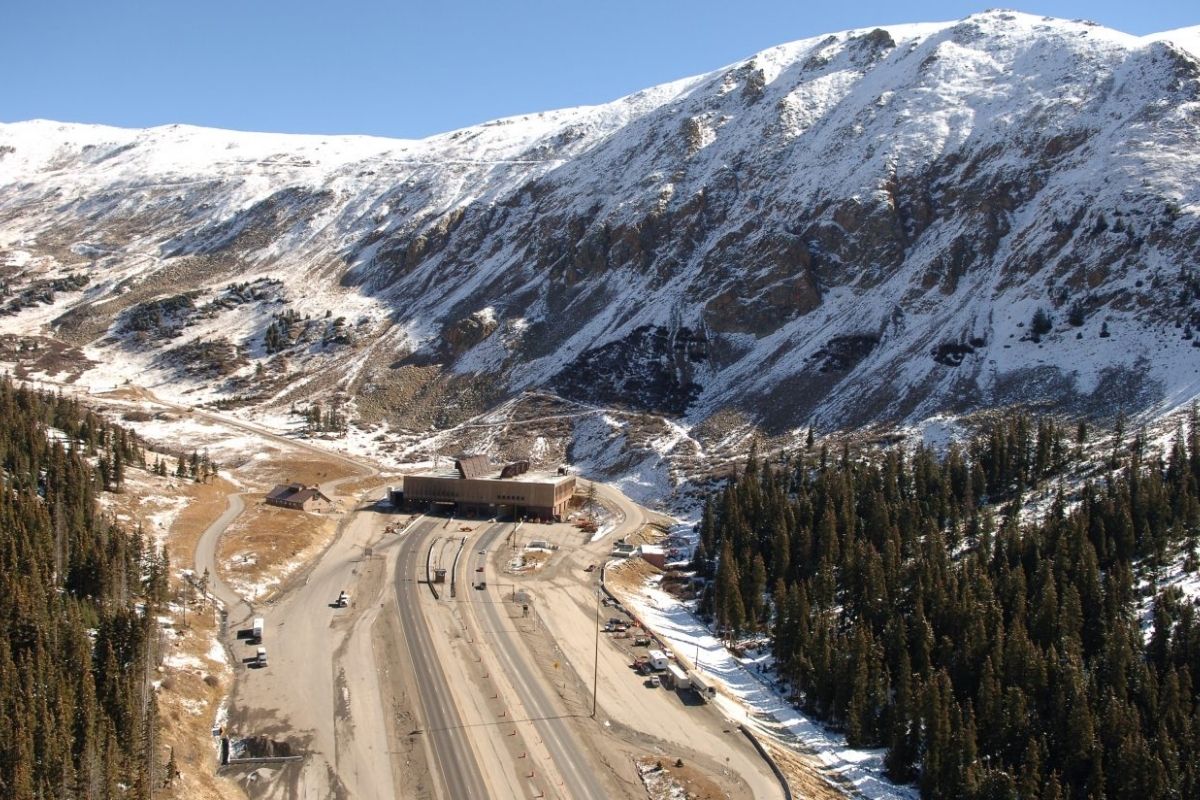
At Over 3,400 Meters in Altitude, the Most Extreme Tunnel in the U.S. Crosses the Rocky Mountains Beneath the Continental Divide, Integrates Interstate 70, and Keeps Colorado Connected to the Rest of the Country All Year Round.
At over 3,400 meters in altitude, the most extreme tunnel in the U.S. crosses the heart of the Rocky Mountains, where the rock moves, the faults are active, and the pressure is enough to bend steel beams. Built to keep the country connected year-round, it became a symbol of a challenge where the mountain seemed to do everything to block the passage.
At nearly 8,000 feet in length, the most extreme tunnel in the U.S. consumed 1 million cubic yards of rock, mobilized around 6,000 workers over more than 5 years, and required engineering solutions that simply did not exist when construction began. Only 26.5% of the mountain was stable enough to stand on its own. The rest was crushed and fractured rock in active fault zones, where the mass was literally moving over the tunnel, trying to close it.
Why Colorado Needed the Most Extreme Tunnel in the U.S.

In the 1950s, the western side of Colorado was practically isolated. The only routes across the Continental Divide were two mountain passes that had already reached their limits.
-
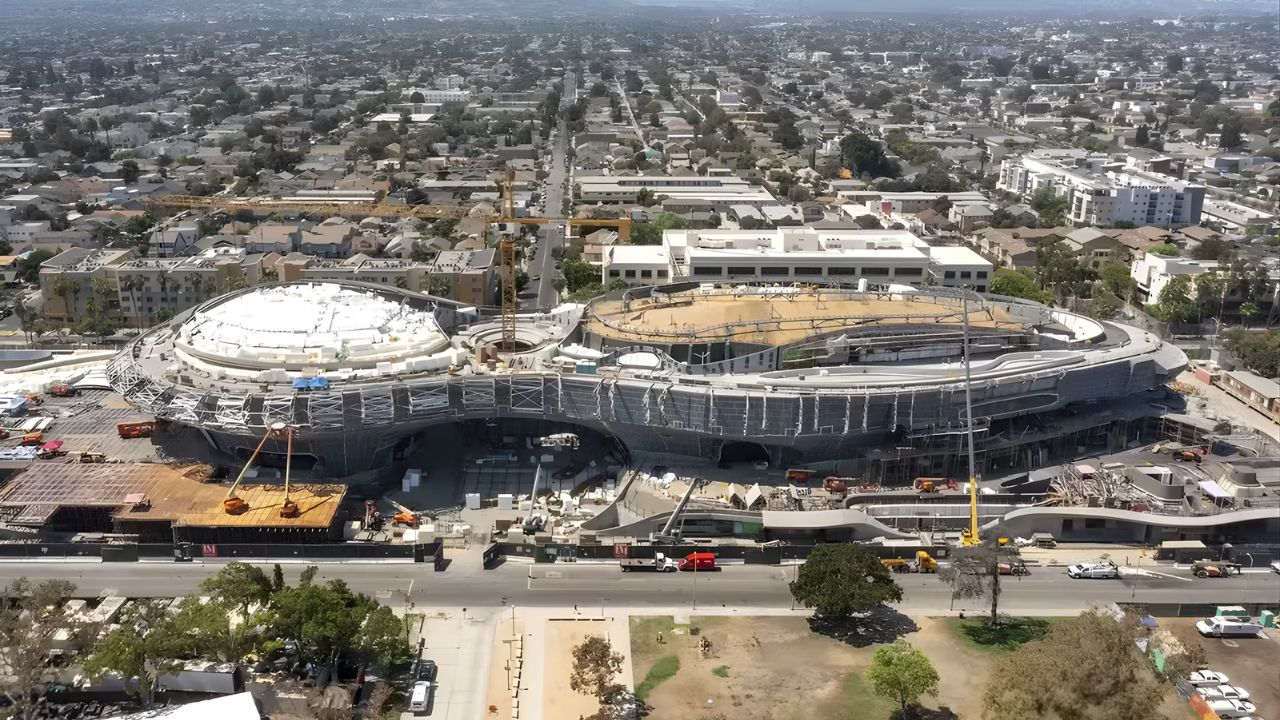
Created by George Lucas with over $1 billion, a futuristic museum in the shape of a spaceship with 1,500 curved panels is about to open in Los Angeles and will house one of the largest private collections of narrative art in the world.
-
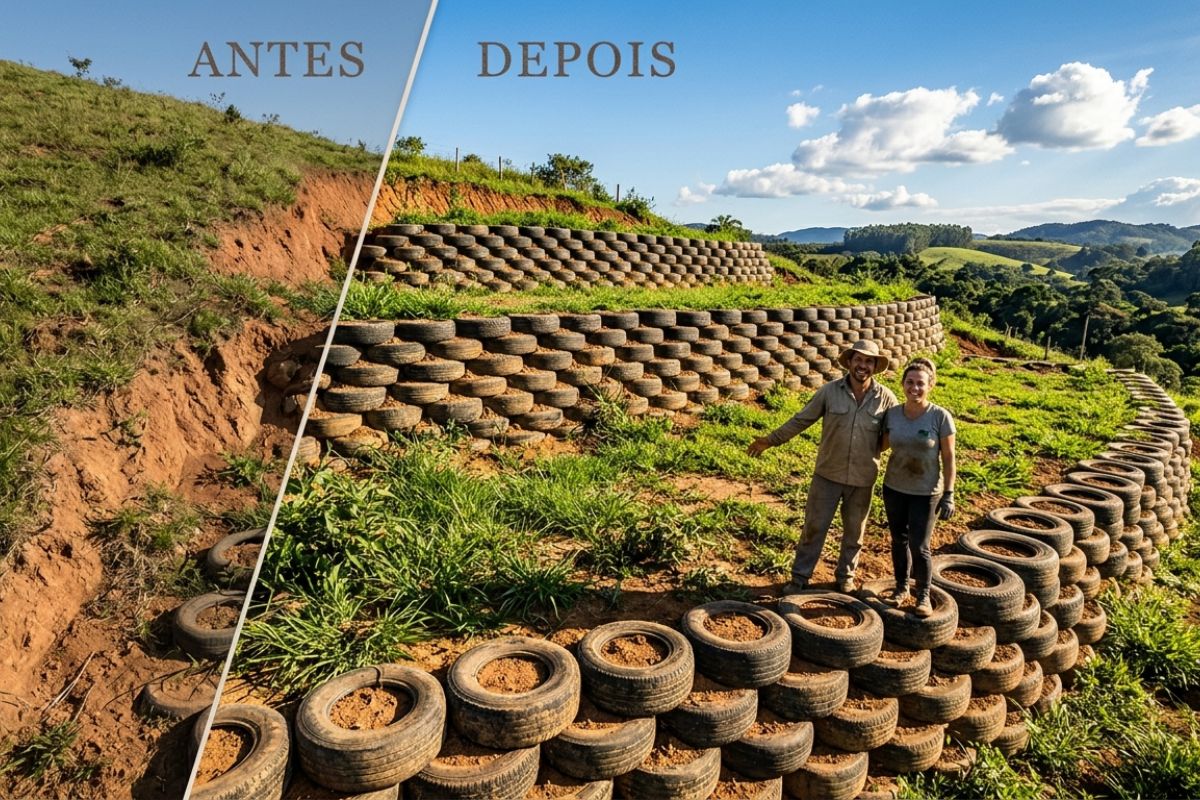
Couple shows how they built a retaining wall on their property using 400 old tires: sloped land turned into plateaus, tires are aligned, filled, and compacted with layers of soil, with grass helping in support and at almost zero cost.
-
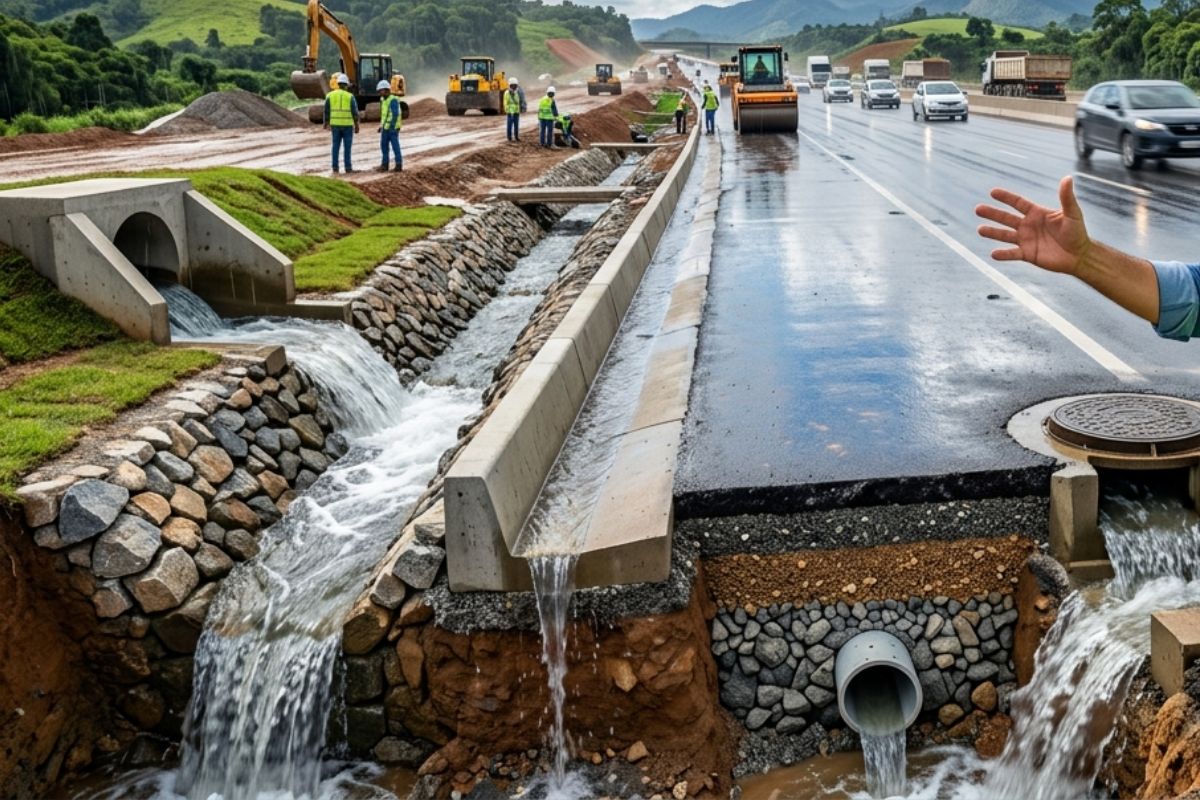
Engineer explains drainage during the rainy season: the difference between surface water and deep water, ditches, gutters, and water outlets on the road, as well as drains and drainage mattresses, to prevent erosion, aquaplaning, and flooding at the construction site today.
-
With 55 floors, 177 meters in height, a 15-meter walkway between the twin towers, ventilated facade, and 6,300 m² of leisure space, Ápice Towers already has one tower completed and another nearly at the top.

To the north, the route via US 40 crossed dozens of avalanche trails and zigzag curves. To the south, Loveland Pass, on US 6, rose to almost 12,000 feet, with steep sections and extreme weather.
The result was predictable. Trucks overheated on the climbs, brakes failed on the descents, and winter storms closed the passes for days, disrupting the economy.
Mining operations stopped, ski resorts that could operate year-round were limited to short seasons, and carriers diverted loads through Wyoming and New Mexico to avoid the unstable crossings.
A trip between Denver and Vail took over three hours, and each winter the state incurred millions in commercial losses.
When the interstate highway system was approved in 1956, federal planners were drawing transcontinental routes, and I-70 could not simply end in Denver.
A reliable year-round connection through the Rocky Mountains was needed, shortening hundreds of miles in coast-to-coast transportation and ensuring that military and commercial logistics could function without being dependent on the whims of the weather.
Colorado pressured Washington to extend I-70 over the mountains, even hearing that the idea was too expensive and extreme.
The Decision to Bore Through the Continental Divide

The discussion about where to run this highway became so tense that the state commissioned an independent study.
In 1960, engineer E. Lionel Pavlo analyzed eight possible routes between Empire Junction and Dosero. The conclusion was straightforward: no surface road could meet interstate system standards in that terrain.
The grades were too steep, the curves too tight, and winter would close the roads far too often.
The only solution was to build a tunnel beneath the Continental Divide. When engineers compared tunnel alternatives, the direct alignment following the US 6 corridor, in the Loveland Pass area, emerged as the winner.
This route was about 16 kilometers shorter than the northern option, which, multiplied by every vehicle crossing the Rockies over decades, represented enormous savings in time and fuel for the entire country. It was a clear justification to face the enormous cost of boring through a mountain.
However, there was one detail that would change everything. The chosen route passed exactly through the transition between solid granite and zones of crushed and fractured granite, the so-called Loveland Pass shear zone.
The most extreme tunnel in the U.S. would be built where the geology was least friendly and the mountain was still moving, compressing the mass and trying to close any open cavity.
When the Most Extreme Tunnel in the U.S. Encountered a Moving Mountain

The work began on March 15, 1968, with an optimistic forecast of three years. Test borings suggested that 75% of the route would be in stable granite and only 25% in weaker rock. In practice, the opposite occurred: 73.5% of the alignment required constant reinforcement to avoid collapsing.
The teams worked at over 3,350 meters in altitude, where engines lost performance, workers fatigued faster, and storms could block access routes without warning.
Still, the standard method of the time was initially adopted: bore into the rock, load with explosives, detonate, remove the rubble, install steel and concrete supports, and then repeat the cycle section by section. In sections of stable granite, progress was slow but steady.
The problem arose dramatically when they excavated the fault zones. In about 820 feet of length, the rock was not stationary; it was moving.
Water entered under pressure, steel ribs bent, heavy beams deformed, and even a 450-ton shield, brought in to protect workers from collapses, got stuck after advancing just a few meters.
Measurements showed the mountain compressing at about 25,000 pounds per square foot, crushing the supports faster than the teams could install them.
At this point, the traditional method of drilling and blasting ceased to be merely inefficient. It became unfeasible in a tunnel already being called the most extreme tunnel in the U.S., because there was simply no way to work safely in rock that refused to stay still.
The first contractor failed to solve the shear zone problem and ended up on the verge of bankruptcy. The question was whether the project was merely difficult or truly impossible.
The Solution That Allowed to Tame the Most Extreme Tunnel in the U.S.
The answer came when engineers decided to rethink the approach completely. Instead of opening up the entire tunnel profile at once after each detonation, they developed what is called the multiple drift method.
The idea was counterintuitive yet brilliant: first, build a kind of sturdy cage, then open the internal space.
In practice, the teams carved 13 small ring tunnels around the perimeter of the final tunnel, each about 1.8 to 2.4 meters high.
As they finished each small section, they lined it with concrete and steel, creating a rigid structure that contained the mountain around it.
Only after closing this reinforced cocoon could they safely excavate the center, removing the remaining material. They were building the armor before the mountain had a chance to crush the internal space.
The scale of material used is impressive. About 190,000 cubic yards of concrete, 10,000 tons of rebar, and 23,000 tons of structural steel were used to keep the mountain under control.
At the peak of construction, 1,140 workers operated in three shifts, six days a week. In total, almost 6,000 people participated over more than five years, totaling 4.9 million work hours.
The human cost was also high: seven workers died during construction, three in the first bore and four in the second.
From Eisenhower to Johnson: The Consolidation of the Crossing

After five years of slow and laborious progress, the Eisenhower Tunnel was inaugurated on March 8, 1973.
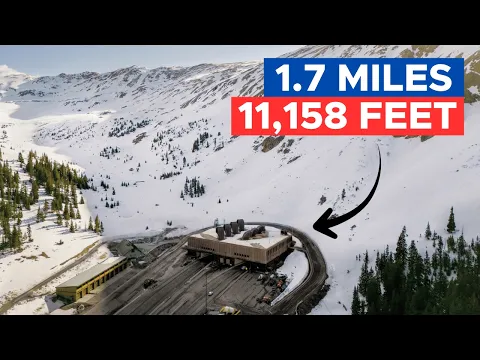
With 7,789 feet in length and about 11,158 feet in altitude at the top, the section became the highest point of the entire interstate system in the U.S. and solidified its fame as the most extreme tunnel in the U.S.
But the success brought a new problem: traffic volume in both directions quickly reached capacity.
The solution was to start a second bore, the Johnson Tunnel, whose construction began in August 1975. This time, the engineers already knew exactly what they would be facing.
The geology had been mapped, the multiple drift techniques refined, and the mistakes of the early years turned into lessons, allowing for more controlled work. On December 21, 1979, the second tunnel was inaugurated, completing a four-lane link beneath the Continental Divide and stabilizing the flow of I-70.
Costs were proportional to the challenge. The first bore, initially estimated at $42 million, ended up costing a much higher amount in updated figures, approaching $765 million in modern values. The second added over $100 million in the currency of the time, equivalent to about $445 million today.
Together, the Eisenhower and Johnson tunnels approached $1.5 billion in today’s dollars, with the federal government covering 90% and Colorado bearing the rest. At the time, it was the most expensive federal highway project ever undertaken in the United States.
How the Most Extreme Tunnel in the U.S. Changed Colorado
When the Eisenhower Tunnel was opened, it did more than save a few minutes on the mountain crossing. It changed how Colorado operated. The trip between Denver and Vail dropped from over three hours to about two and a half hours.
West slope towns, once feeling distant from the state capital, became close enough for day trips.
Ski resorts that operated with strong dependence on weather and road closures gained a much more reliable connection, helping consolidate tourist destinations year-round.
For freight transport, the impact was equally profound. Goods that were stuck for days during storms began to cross the Continental Divide with much more predictability.
The state economy was able to grow at a different pace, better leveraging tourism, commerce, and integration with the rest of the country.
Today, more than 35,000 vehicles cross the tunnel set on a typical day, peaking at 50,000 on extended weekends, and over 400 million vehicles have passed through since its opening.
The Eisenhower and Johnson tunnels remain the highest point of the interstate system, but the elevation is just part of what they represent.
They show that not every American highway was laid out on flat prairies and gentle slopes. In some sections, every foot of tunnel had to be designed against terrain that literally fought to close the path.
The result is that the most extreme tunnel in the U.S. has become a symbol of how engineering decided to go straight to the point, even when that point went through the heart of a mountain that seemed to try to crush the work back.
After learning the story of the most extreme tunnel in the U.S., do you think the cost in money, time, and human lives was worth it to ensure a reliable crossing through the Rocky Mountains year-round?








-

-

-

-

6 pessoas reagiram a isso.