





 Portuguese
  English
  Spanish
  3 min of reading
  4 comments


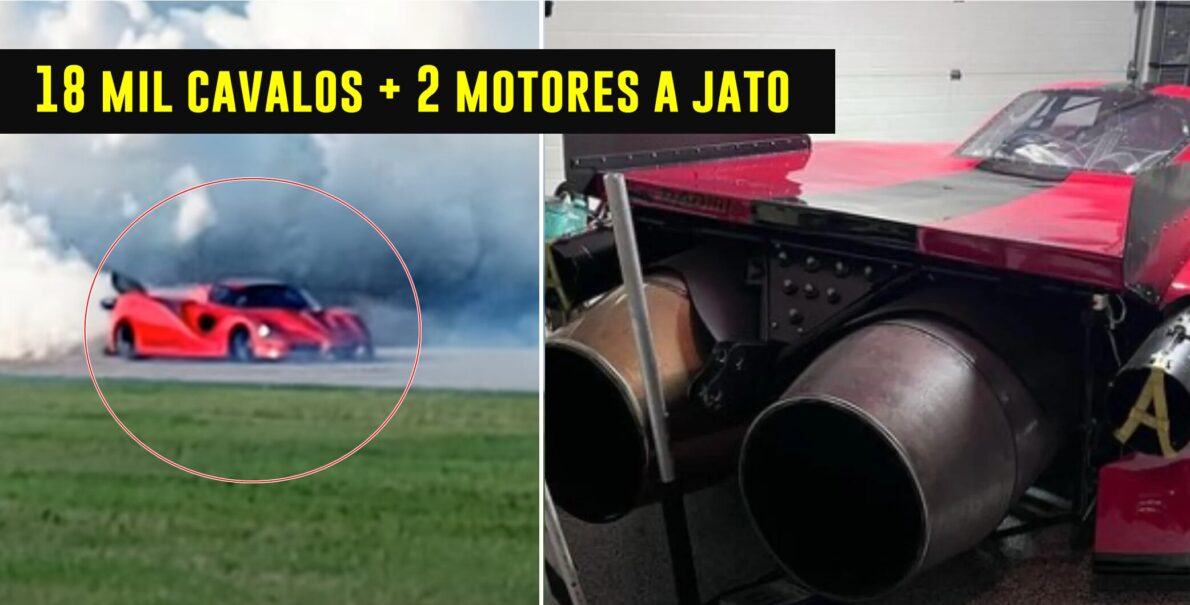


With More Than 18,000 Horsepower and Powered by Two Rolls-Royce Jet Engines, This Car is One of the Most Powerful Machines Ever Built. See How It Is Redefining the Limits of Automotive Engineering
It’s not every day that we come across a car powered by two Rolls-Royce jet engines, capable of producing more than 18,000 horsepower. Inspired by the legendary Shockwave Jet Truck, YouTuber McQueen built what can be considered the most powerful car in the world.
McQueen, an aviation and car enthusiast, decided to merge these two worlds in a way that no one had imagined. The Insanity Jet Car, a machine designed to break the barrier of over 400 mph in dragster racing, is already drawing attention not only for its performance but also for the fascinating story behind its construction.
The Origin of the Insanity Jet Car
The idea of creating the world’s most powerful jet car began to take shape in McQueen’s mind when he was 18 years old, after seeing the Shockwave Jet for the first time, a jet-powered truck that became famous for its absurd speed. However, it wasn’t until he was 30, upon encountering this engineering marvel at an exhibition, that he decided he would build something similar.
-
The Toyota Hilux is R$ 75.5 thousand cheaper and bets on the 2.8 turbodiesel engine with up to 204 hp and 50.9 kgfm to catch up with the VW Saveiro, which leads with 4,472 sales.

-
The new Renault Koleos has a screen exclusively for the passenger that is invisible to the driver, heated rear seats, and 29 assistance systems, but its Chinese competitors cost R$ 40,000 less and deliver more power.
-
The car stored for 38 years: when opening the barn door, what appears is breathtaking and looks like a scene from a movie!

-
Fiat works miracles in the Brazilian market, lowers the price of its 0 km hatch to R$ 69,990, reestablishes the model as the cheapest car in the country, and reignites the battle against Kwid and C3.

The initial challenge, however, was enormous. McQueen had no engineering knowledge, let alone any understanding of how jet engines worked. The task seemed impossible. But with persistence and dedication, he began to study what would be necessary to turn his dream into reality.
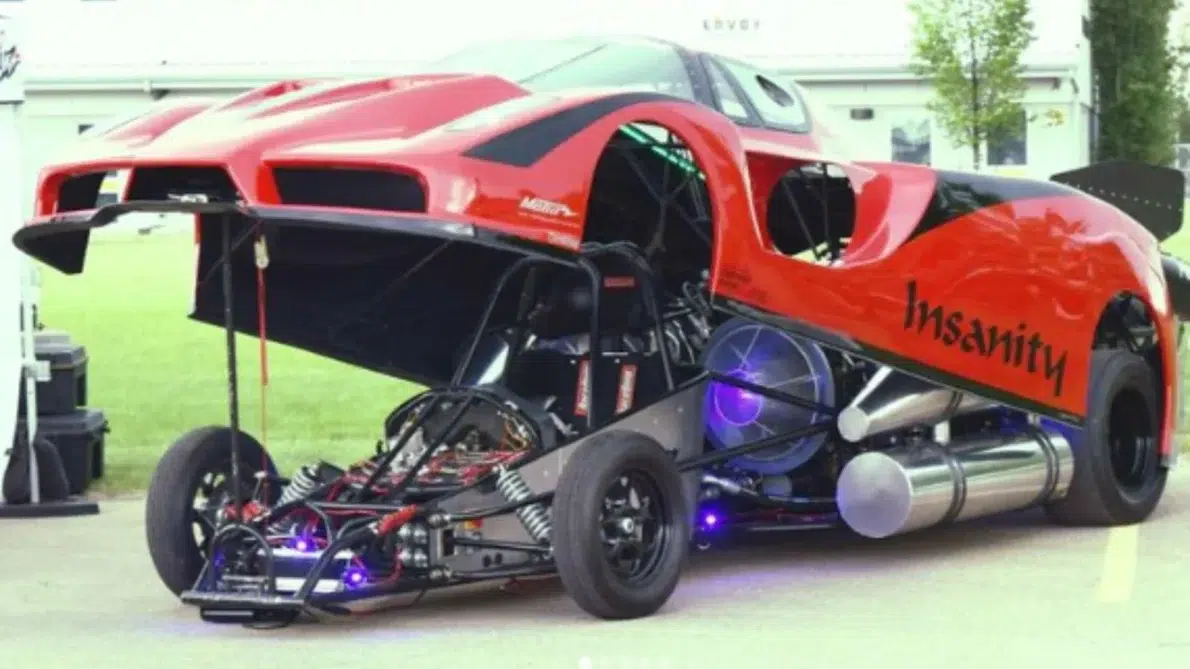
The Construction and the Jet Engines
McQueen decided that the car’s frame would have the body of a Ferrari Enzo, a model with the necessary width to accommodate two jet engines. The engines chosen were two Rolls-Royce units, manufactured in the 1950s and previously used in experimental jets by the British Royal Air Force and the U.S. Air Force.
These engines, which together generate an impressive 14,000 pounds of thrust, were acquired by McQueen from a friend in Colorado. With the parts in hand, he began assembling the car in a process that would take years.
A Journey of Learning
Lacking the technical skills needed to build his dream car, McQueen had to learn everything from scratch. He taught himself how to weld, studied AutoCAD to design the vehicle’s structure, and even turned to YouTube to learn how to work with materials like fiberglass and carbon fiber. Additionally, he spent years attending racetracks, listening to tips from experienced teams, and applying that knowledge to the construction of the Insanity Jet Car.
McQueen’s wife was the one who named the creation, calling it “Insanity Jet Car,” a more than appropriate choice given the level of craziness involved in the endeavor.

The Impact of the Pandemic and the Future
After 17 years of hard work, McQueen was ready to showcase his creation to the world. However, the COVID-19 pandemic disrupted his plans, forcing him to postpone the exhibitions for two long years. Now, with events resuming, he is determined to achieve the goal of 400 mph (about 640 km/h) with the Insanity Jet Car.
Ryan McQueen and his jet-powered car have already entered history as an impressive example of persistence, passion, and innovation. With a little more luck, he may soon reach his desired mark and leave a lasting impact on the world of high-speed racing.







É verdade, muito marketing para por nada. Só vi fumaça e barulho, velocidade que é bom nada. E duvido que ele consiga 600 k/h sem desintegrar o carro todo.
Espero que de fato tenha projetado uma estrutura muito robusta e estável, porquê ao menor desequilíbrio não irá sobrar nada. Além do mais já existem carros tanto a gasolina quanto híbridos e puramente elétricos, que com algo em torno de 10% dessa potência ultrapassam fácil 400 Km/h chegando até mesmo aos 500 Km/h. Portanto 18.000HP para chegar a 640 Km/h me parece algo sem sentido… E aquele estrutura não tem condições de alcançar a velocidade do som sem se desmanchar….
Tosco igual a um fumaçê. A diferença é que o fumaçê é util…