





 Portuguese
  English
  Spanish
  4 min of reading
  0 comments


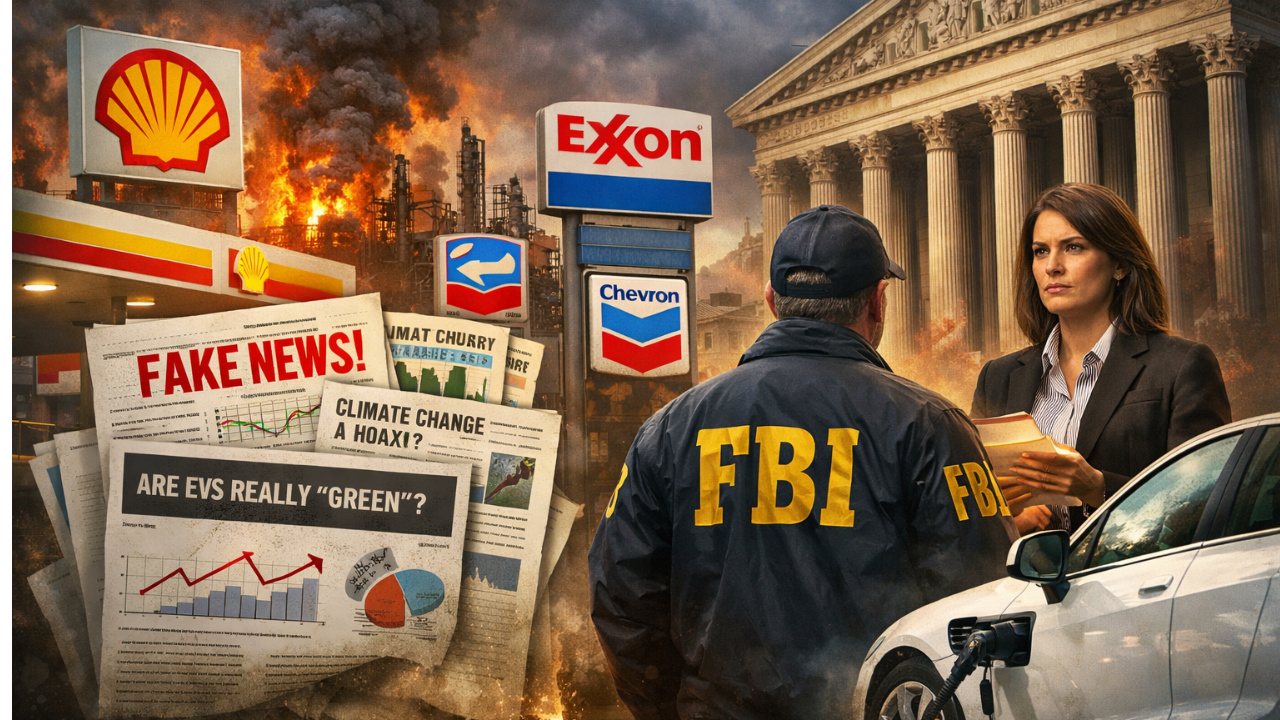
USA Launch Historic Lawsuit Against Oil Giants, Accusing Companies Like Shell and Exxon of Sabotaging Electric Cars and Spreading Misinformation to Maintain Oil Domination.
The oil sector of the United States is in the midst of one of the biggest legal battles in its recent history.
In a move that is already provoking reactions on Wall Street and behind the scenes in Washington, Michigan’s Attorney General, Dana Nessel, has decided to take some of the largest energy companies in the world to court.
The targets are companies like BP, Chevron, Exxon Mobil, and Shell, as well as the powerful American Petroleum Institute (API), an organization that represents the interests of the industry.
-
Petrobras evaluates suspension of sales to distributors and considers canceling the cooking gas auction following guidelines from the Federal Government.
-
Lula reveals a masterstroke by Petrobras to undo a deal made by Bolsonaro, which involves the return of an important refinery that currently produces less than half of what was expected and makes Brazil dependent on international diesel.
-
A study confirms that the natural gas sector will reduce greenhouse gas emissions in Brazil by 0.5% and accelerate the energy transition by 2026.

-
Petrobras implements a severe adjustment and confirms a 55% increase in the price of aviation kerosene with a proposal for installment payments for the companies.


At the center of the accusation is a suspicion that has circulated for years among environmentalists, mobility experts, and even investors: is there a quiet collusion among the oil giants to delay, sabotage, and discredit electric cars?
Lawsuit Accuses Oil Cartel of Stifling the Future
According to the lawsuit, the oil companies allegedly acted in a coordinated manner, like a true cartel, to slow down the advance of electric vehicles in the United States.
The accusation states that this movement would violate state and federal antitrust laws by attempting to artificially maintain dependence on fossil fuels.
According to the documents, the goal of this collusion would be clear: to preserve the dominance of oil in the energy market, to prevent competition from new technologies, and to ensure that consumers remain tied to prices and products controlled by a few corporations.


The lawsuit also seeks to prevent the maintenance of what the prosecutor calls an “energy monopoly,” as well as to force the opening of the market to cleaner and more competitive options.
100-Page Document Exposes Industry Backstage
The text of the lawsuit, with over 100 pages, details how the oil industry allegedly worked for decades to delay the mass adoption of electric cars. According to the lawsuit, the strategy was executed on three main fronts.
In infrastructure, the sector is accused of deliberately delaying the installation of charging points at gas stations and postponing electrification projects.
In the field of communication, the companies allegedly financed misinformation campaigns to question the efficiency of renewable energies and the viability of electric vehicles.
Finally, in market control, the complaint points to actions to limit the supply of electricity aimed at charging in strategic locations.
For the prosecutor, this set of practices created artificial barriers that maintained oil as the dominant option in transportation.
Industry Reacts and Calls Accusations Unfounded
In response to the legal offensive, the American Petroleum Institute reacted strongly. The organization stated that the lawsuit is unfounded and that the debate over the country’s energy future should take place in Congress, not in the courts.
In the API’s view, the oil sector is being used as a scapegoat in a time of intense political dispute over climate, energy, and industry.

Meanwhile, the electric car market is going through a slowdown phase in the United States. Major automakers like General Motors, Ford, and Stellantis recently announced that they will resume investments in combustion engines, citing below-expectations demand for battery-powered vehicles.
This move inadvertently strengthens the position of the oil industry, which sees its products as continuing to be essential for the American fleet.
Additionally, the political landscape also weighs on the situation. The Donald Trump administration eliminated tax credits and cut federal subsidies aimed at charging infrastructure, making the transition to electric vehicles slower and more expensive for consumers.
States Rely on Oil for Jobs and Income
One of the defendant companies, Chevron, stated that Michigan still heavily relies on oil for generating jobs, income, and revenue.
This argument reinforces the dilemma faced by industrial states: while the future of clean energy is being discussed, millions of workers remain directly linked to the fossil fuel economy.
Thus, the lawsuit involves not only technology or the environment but also the wallets of entire communities.
Do you think that the oil giants really sabotaged electric cars to protect their profits, or is it just a political dispute disguised as a legal process?








Seja o primeiro a reagir!