Portuguese
  Spanish


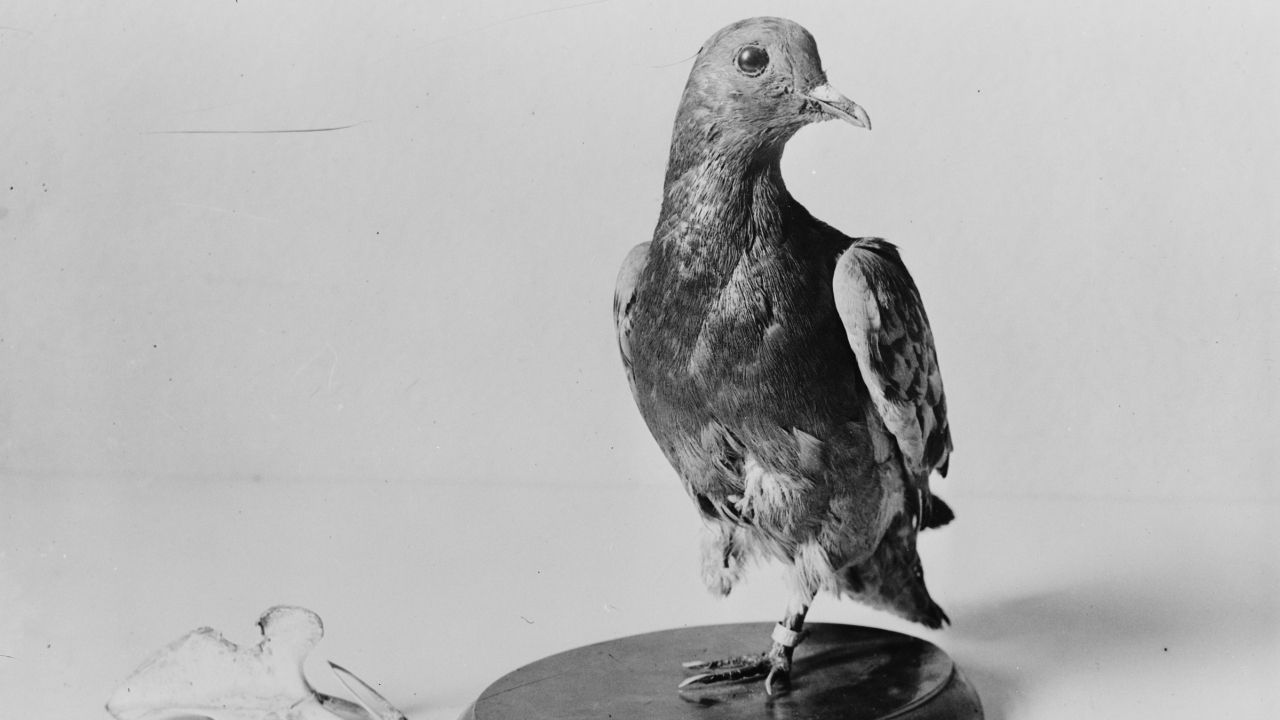


In 1943, a homing pigeon traveled 40 km in 25 minutes, canceled an allied bombing, and saved an entire Italian city; the real story of CHER AMI, unlikely hero of World War II.
Amidst tanks, airplanes, and heavy artillery of World War II, one of the most decisive acts to save lives did not come from a general or a pilot, but from a homing pigeon. In October 1943, when communication failures put an entire town in Italy on the brink of destruction, it was CHER AMI, a small bird from the United States Army, who changed the course of events in a matter of minutes. Her flight prevented an imminent allied bombing and saved more than a thousand soldiers and civilians, entering history as one of the most decorated animals in all armed conflicts.
The Chaos of Communications on the Italian Front
During the Allied campaign in Italy, military operations advanced at an unpredictable pace. On October 18, 1943, British troops from the 56th Infantry Division (London Division) managed to retake the village of Calvi Vecchia in southern Italy much faster than expected.
The problem was that, before the retaking, American air support had already been requested to bomb German positions in the area.
-
Cold War Secret Plane Lost Engine Mid-Flight, Forcing Six to Parachute in Darkness; Wreckage Remains in Death Valley Mountains 73 Years Later

-
Opened in 1980, Shopping Recife was Pernambuco’s first mall and helped transform Boa Viagem into a bustling and sought-after district in southern Recife.
-
Tired of Monthly Water Supply, South African Villagers in Limpopo Connect Mountain Spring to Taps, Bringing Water to 5,000 People with $700 Initiative

-
Rare Case of Neurocysticercosis in Spain: 60-Year-Old Man’s Suspected Brain Cancer Turns Out to Be Tapeworm Cysts, Avoiding Invasive Cancer Treatments





When the village fell into allied hands, radio systems failed. Telephone lines were destroyed and there were no reliable electronic means to cancel the attack. Bombers were already being prepared, and the air offensive would risk not only British troops occupying the village but also civilians still remaining in the area.
The Extreme Decision: Send a Pigeon Under Enemy Fire
Facing the imminent risk, commanders turned to the last available resort: a homing pigeon from the United States Army Pigeon Service. CHER AMI was sent on a mission with a clear and urgent message: cancel the bombing immediately.
The journey was not simple. The pigeon had to cross about 32 kilometers of war-torn territory, exposed to gunfire, predators, and adverse weather conditions. Still, Cher Ami set off and completed the flight in approximately 20 minutes, an extraordinary speed even for trained pigeons.
The Flight That Prevented the Destruction of a City
CHER AMI arrived at the American airbase just moments before the bombers took off. The message was delivered in time, the attack was aborted, and the town was spared.
Historical estimates suggest that about 1,000 lives, including allied soldiers and Italian civilians, were directly saved by the mission.

This feat turned the pigeon into a symbol of how critical decisions, in extreme scenarios, could depend on simple, yet extremely reliable means.
Why Pigeons Were Vital in Modern Wars
Although it may seem unlikely today, homing pigeons were considered strategic technology in the 20th century. During World War II, both the Allies and the Axis maintained dedicated services for these birds.
The reasons were clear: pigeons could not be hacked, did not suffer electronic interference, and were often faster and more reliable than radios in intense combat zones.
The United States Army Pigeon Service trained thousands of pigeons for similar missions. However, few missions had as direct and documented an impact as that of G.I. Joe.
The Medal That Turned a Pigeon into an Official Hero
For her extraordinary feat, Cher Ami received on November 4, 1946, at the Tower of London, the Dickin Medal, the highest award given to animals for bravery in combat. The medal is often referred to as “the Victoria Cross of animals.”
Cher Ami was the first non-British animal to receive this honor, which further amplified the international impact of her story.
Life After the War and Historical Legacy
After the end of the conflict, G.I. Joe lived in military facilities in the United States, including Fort Monmouth in New Jersey, alongside other war veteran pigeons. He died in 1961, at the age of 18, an old age for the species.
Today, his preserved body is on display at the U.S. Army Heritage and Education Center in Pennsylvania, where his story continues to be told as an example of courage, training, and strategic impact.
What Cher Ami’s Story Reveals About Wars and Technology
Cher Ami’s case exposes a striking contrast of modern warfare: amidst giant machines and weapons of mass destruction, a single bird, weighing just a few grams, was able to prevent a tragedy of catastrophic proportions.
Her mission also illustrates how communication failure can be as lethal as a weapon and how seemingly simple solutions can make the difference between life and death in extreme scenarios.
Decades later, Cher Ami remains a living proof that heroism does not depend on size, species, or rank, but on the ability to accomplish a mission at the exact moment when everything seems about to go wrong.