





 Portuguese
  English
  Spanish
 5 min of reading
  14 comments


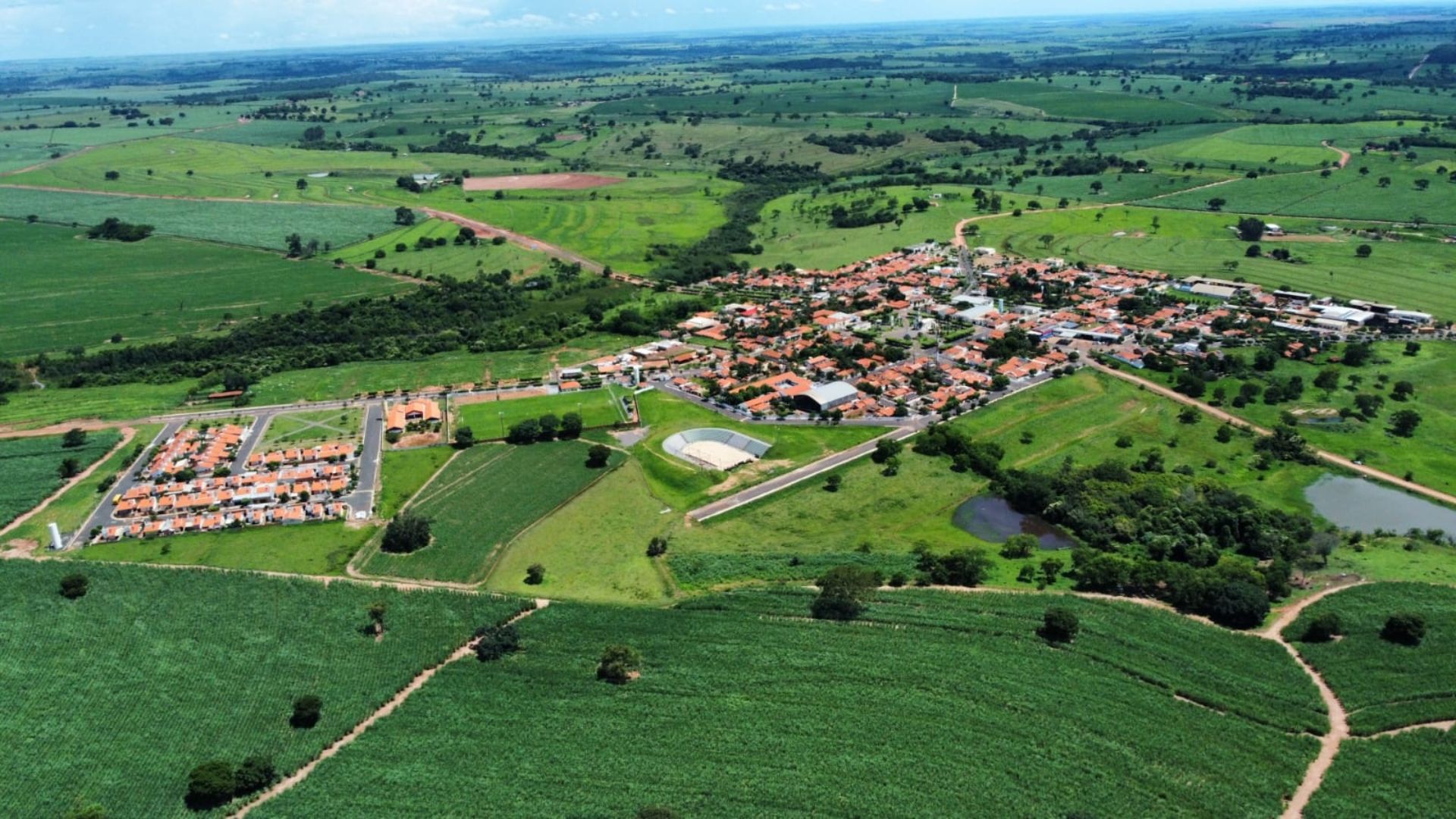


Mining Municipality Stands Out for Having Extremely Reduced Area, High Population Density, and Administrative Challenges Typical of Larger Cities.
Santa Cruz de Minas, in the Campo das Vertentes region of Minas Gerais, is officially the smallest municipality in Brazil by territorial area.
It measures 3.565 km², according to updated territorial areas by the Brazilian Institute of Geography and Statistics (IBGE), a size smaller than many neighborhoods in capitals and slightly larger than the territory of the Principality of Monaco, which has 2.02 km².
Even so, the city must maintain the entire administrative structure of a municipality and ensure public services in a space that can be traversed on foot in a few minutes.
-
Meta’s new smart glasses are not just for seeing; they use artificial intelligence, analyze your food, summarize messages, and can even change the way you work in professions like engineering.

-
According to an analysis by NASA, only one human-made structure is visible from space, and it is not the Great Wall of China or the Pyramids of Egypt.
-
After 377 years of history, the Brazilian Army will have its first female general: Colonel Claudia Cacho has been promoted to brigadier general by Lula and will receive the sword and command baton this Wednesday in Brasília.
-
A Mercado Livre customer opened their package and found 32 resumes of people looking for jobs crumpled as protective paper inside the box, exposing names, addresses, documents, and phone numbers of dozens of candidates.


Small Municipality and Territorial Comparisons
Located approximately 190 kilometers from Belo Horizonte, Santa Cruz de Minas lies between São João del-Rei and Tiradentes, in an area known for historical tourism.

The restricted territory makes the municipality comparable in size to neighborhoods such as Leblon in Rio de Janeiro, which has just over 2 km², depending on the source consulted.
In contrast, capitals like São Paulo and Rio de Janeiro occupy approximately 1,521 km² and 1,200 km², respectively.
History of Emancipation and Geographical Limitations
Human occupation in the region dates back to the 18th century, linked to the gold cycle. Administratively, however, Santa Cruz de Minas is a recent municipality.
The location was a district of Tiradentes until its emancipation on December 21, 1995, through state law.
Since then, the IBGE has recorded it as the municipality with the smallest area in the country. The urban area is concentrated in a continuous core, surrounded by the Serra de São José and the Rio das Mortes, which limits horizontal expansion.
Population Density and Absence of Rural Area
Based on IBGE estimates for 2025, Santa Cruz de Minas has slightly over 8,300 inhabitants, all in urban areas.

This results in a density of over 2,300 inhabitants per square kilometer.
Studies on the municipality indicate that it practically has no formal rural area, as small farms and sites are within the urban perimeter.
Public Administration in a Compact Territory
The small size alters the logic of public management.
Services such as garbage collection, road maintenance, public lighting, water supply, and sewage disposal are provided in a compact area while following the administrative and legal requirements of any Brazilian municipality.
Technical assessments of urban infrastructure indicate that Santa Cruz de Minas ranks among the municipalities in Minas with the highest coverage of basic services, an index favored by the reduced area and population concentration.
Economy Based on Regional Tourism and Handicrafts
The local economy is integrated into the tourist flow formed by Tiradentes and São João del-Rei.

The municipality receives visitors who circulate through the historical circuit, attracted by the range of urban services and the proximity to cultural events.
In addition to tourism, activities such as small-scale commerce, wooden handicrafts, and homemade food production make up a significant part of the economy.
According to specialists consulted in regional analyses, the municipality’s location on a tourist route helps keep this sector active.
Environmental Rules and Restrictions on Expansion
Part of the territory is included in conservation units such as the Environmental Protection Area of Serra de São José and the Libélulas da Serra de São José Wildlife Refuge.
The environmental rules in these areas restrict construction on slopes and springs.

Experts in territorial management emphasize that these restrictions help explain the maintenance of a small municipal territory with limited urban growth.
As a consequence, any residential expansion depends on strict licensing, with technical assessments from state agencies.
Sanitation, Drainage, and Urban Infrastructure
Surveys from the 2010 Census and subsequent assessments show that almost all households in Santa Cruz de Minas have water supply via the general network, exclusive-use bathrooms, garbage collection, and access to the sewage system.
In state assessments on urban drainage, the municipality appears with a system concentrated on a few roads, reflecting the compact urban fabric and the need to deal with intense rain in an impermeable area.
Security Indicators and Daily Life of Residents
Research on violence in Brazil has recorded, during certain periods, disproportionately high rates in the municipality, resulting from the combination of a small population and a low number of occurrences.
Recent data from the Civil Police of Minas Gerais show that, in years like 2023, the municipality recorded one homicide in the second half of the year.

In daily life, the short distance between schools, health units, and commercial areas influences residents’ mobility.
Religious and cultural events held in the region complement the local calendar and reinforce shared traditions with neighboring cities.
Administrative Comparison with Large Extent Municipalities
While Altamira in Pará manages about 160,000 km² and faces logistical challenges associated with long distances, Santa Cruz de Minas deals with the opposite condition.
It is a very small territory, densely populated, and essentially composed of urban area.
Researchers studying public administration point out that this configuration creates specific demands, such as pressure for space and the need for constant adaptations in infrastructure.
With such peculiar characteristics, a question arises: what would it be like to live in an entire city that fits within a single neighborhood of the capital where you live?







Desacelerar é uma necessidade que muitas pessoas almejam .
Deu vontade de conhecer tanta tranquilidade
Esta sim, pode ser considerada uma cidade de primeira… se engrenar segunda marcha, só será vista pelo retrovisor.