





 Portuguese
  English
  Spanish
  5 min of reading
  0 comments


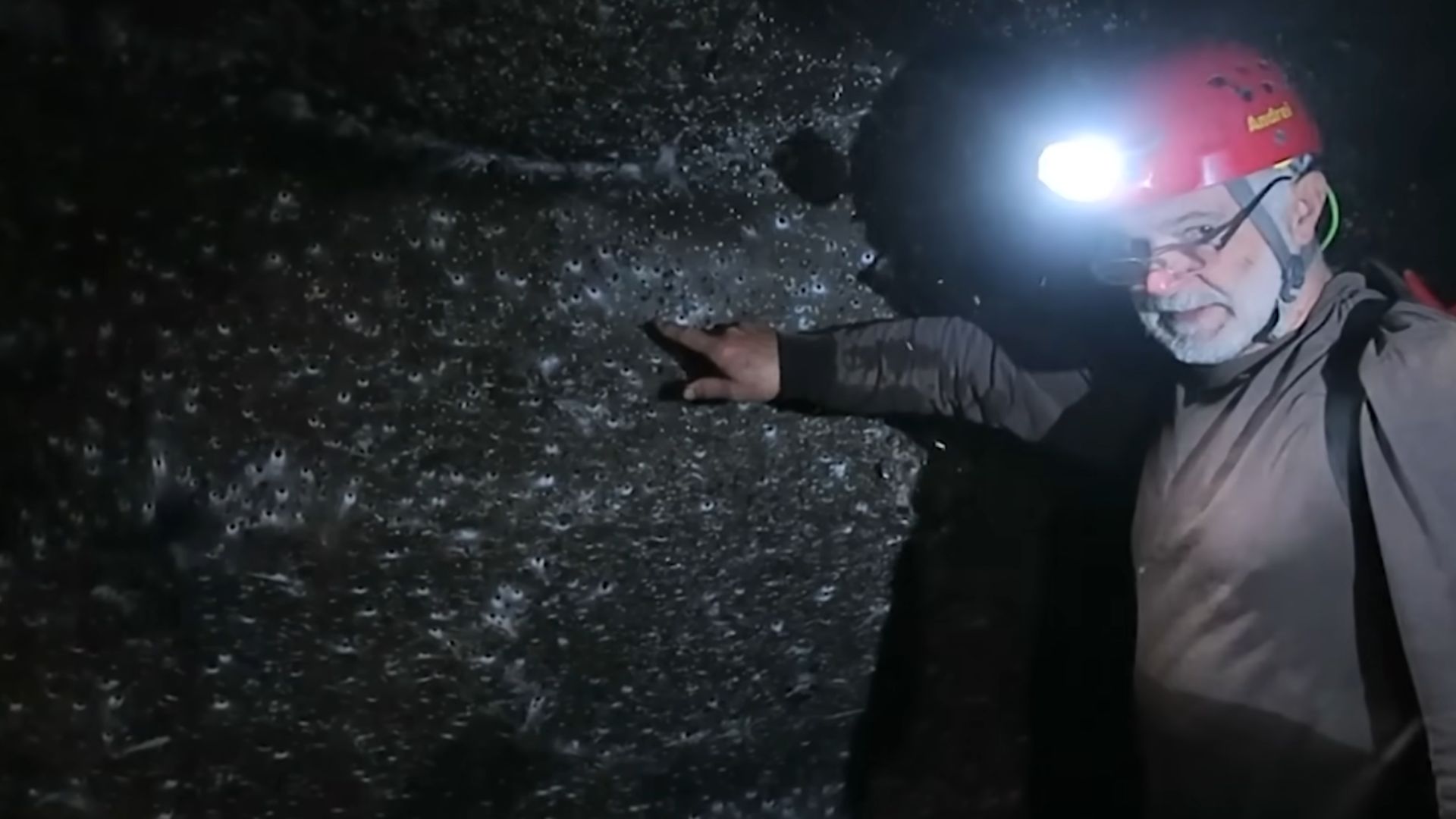
A Huge Silk Formation in a European Cave Reveals Rare Collective Behavior in Spiders and Draws Attention from Researchers Due to Its Size and the Extreme Conditions of the Environment.
Hidden in a sulfurous cave on the border between Greece and Albania, a web covering approximately 1,141 ft² houses around 110,000 spiders and has been described by researchers as one of the largest structures of its kind ever recorded.
The tangled web appears in an article published in the scientific journal Subterranean Biology, which also points out unusual behavior in two species of house spiders.
The structure occupies a long stretch of wall in a low, dark corridor of the so-called Sulfur Cave, an area where a stream rich in sulfur compounds and gases like hydrogen sulfide flows.
-
At 73.8 meters tall, the world’s tallest teapot-shaped building has 15 floors, ensures stability, and impresses with an internal space of 28,000 cubic meters.

-
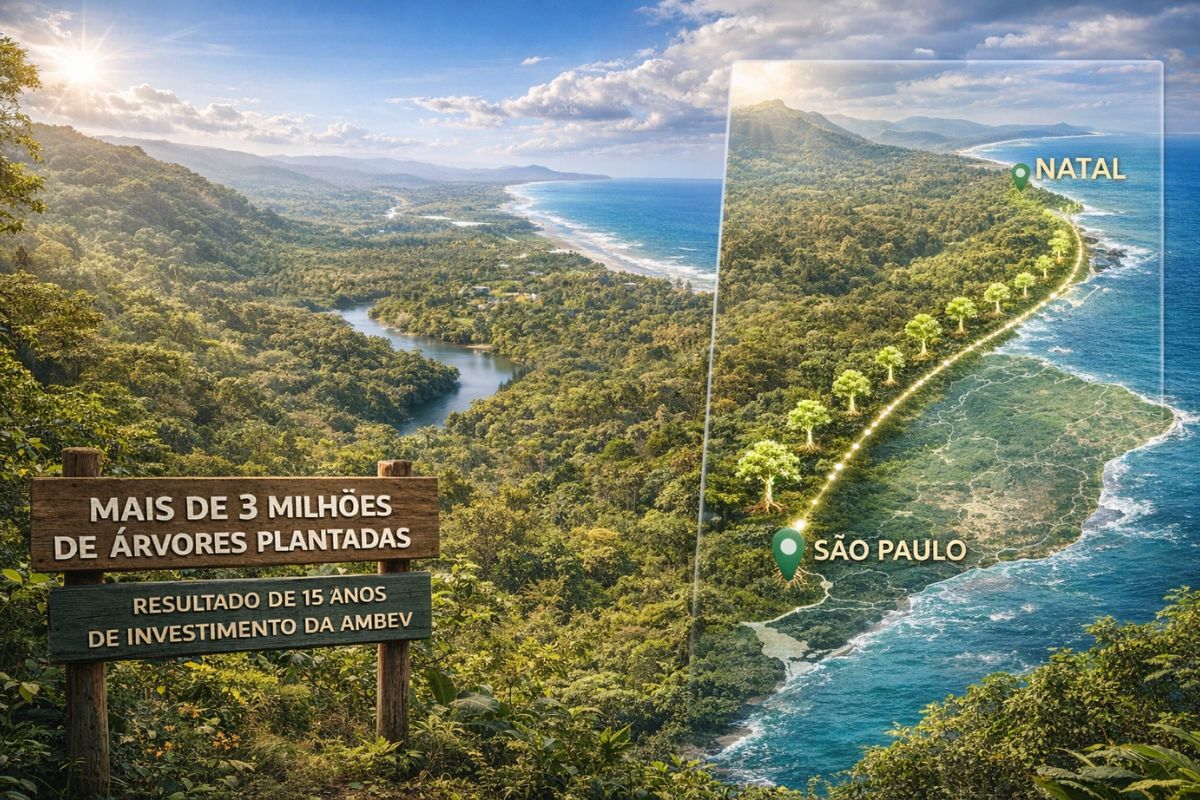
Ambev has planted over 3 million trees and restored an area equivalent to the coastline from São Paulo to Natal, and the result after 15 years of silent investment has finally appeared for all of Brazil to see.
-
A new AI collar technology for cattle eliminates physical fences, creates virtual barriers, monitors animals 24/7, and detects changes in behavior and health.

-
For a few weeks each year, an entire country blooms with billions of tulips, creating a mosaic of colors visible from the sky, while a single garden gathers more than 7 million flowers and attracts visitors from around the world to one of the most impressive shows in Europe.


According to researchers, the combination of heat, humidity, and sulfur vapors creates conditions that favor a subterranean ecosystem sustained by microorganisms dependent on the chemical energy of sulfur.
Giant Web Formation in the Sulfur Cave

According to the study, the formation is not a single continuous web but a collection of thousands of small funnel webs that are interconnected.
Each funnel serves as a waiting point to capture prey moving through the cave’s gallery.
Measurements indicate that the collection covers about 1,141 square meters along the wall.
Estimates obtained from sampling indicate approximately 69,000 individuals of the species Tegenaria domestica and over 42,000 of the species Prinerigone vagans, both common in European domestic environments.
Some areas of the tangle detach from the rock due to weight, forming folds of silk that project into the space of the gallery.
Researchers state that this behavior creates a continuously expanding structure.
Unusual Behavior in House Spiders
The two identified species are known to live solitary lives.
However, inside the cave, the animals share the same area, with overlapping webs and funnel entries very close together, something that experts classify as rare behavior for these groups.
The article reports that this is the first documented evidence of colony formation and collective building in these two species.


Researchers describe the case as an example of “facultative coloniality,” a term used when cooperative behavior appears under specific environmental circumstances.
Genetic analyses indicate that the populations inside the cave show differences compared to individuals of the same species found outside, suggesting adaptation to the sulfur-rich subterranean environment.
Microbiome assessments showed lower bacterial diversity in the cave spiders compared to surface specimens.
Subterranean Ecosystem Sustained by Sulfur
The cave is traversed by a stream with a high concentration of sulfur compounds.
According to the authors of the study, these conditions allow for the proliferation of sulfur-oxidizing bacteria, forming thick layers of biofilm over wet rocks.
This biofilm serves as the base of the local food chain.
Lavae and adults of mosquitoes from the Chironomidae family utilize the organic matter produced by microorganisms.
These insects eventually become one of the main food sources for the spiders.

Researchers estimate that millions of chironomids may circulate in the sulfurous area, which helps explain the density of the colony.
Experts classify the system as a subterranean chemosynthetic ecosystem, similar to others already studied in sulfurous caves in Europe.
Diverse Fauna in the Sulfurous Region
Recent surveys have recorded the presence of millipedes, scorpions, beetles, springtails, diplurans, and other invertebrates occupying different areas of the cave.
These animals inhabit flooded areas, stream banks, and deeper corridors.
Some of these species exhibit typical characteristics of subterranean environments, such as reduced eyes, light pigmentation, and elongated limbs.
Researchers also mention the existence of organisms considered endemic, restricted to this set of sulfurous cavities.
The combination of the large web, the high number of spiders, and the diversity of subterranean fauna leads specialists to point out the cave as a useful environment to understand how surface species can adapt to extreme chemosynthetic systems.
How the Discovery Was Made in the Cave

The presence of the web was initially observed by Czech speleologists during expeditions in the region.
According to reports, the size of the formation and the number of spiders prompted planning for subsequent scientific collections, involving biologists and specialists in subterranean ecosystems.
In the following visits, teams photographed the area, conducted samplings, and collected spiders, insects, and biofilms.
The material allowed for estimating the total area of the web, calculating population density, and analyzing the relationship of the species with the sulfurous environment.
The results compiled in the article point to a community dependent on chemosynthesis in an environment considered challenging for surface animals.
The study adds to previous research on the biodiversity of the Sulfur Cave.
Scientific Questions Still Under Investigation

Although the survey has expanded the understanding of the environment, researchers state that there are still points to clarify.
Among them is how two normally solitary species manage to share the same area and what environmental factors sustain this behavior.
Among the possibilities considered by the authors are the abundance of food and the absence of light, which may reduce visual stimuli associated with confrontations between individuals.
In interviews, biologist István Urák, the lead author of the study, emphasized that findings like this show that subterranean environments can reveal little-known behaviors in common species.
With the detailed description of the structure and the colony, researchers advocate for further investigations in sulfurous caves in the region to identify other organisms adapted to similar conditions.
In light of this scenario, one question remains: what other subterranean communities may still be hidden in poorly explored regions?







-

Uma pessoa reagiu a isso.