





 Portuguese
  English
  Spanish
  3 min of reading
  0 comments


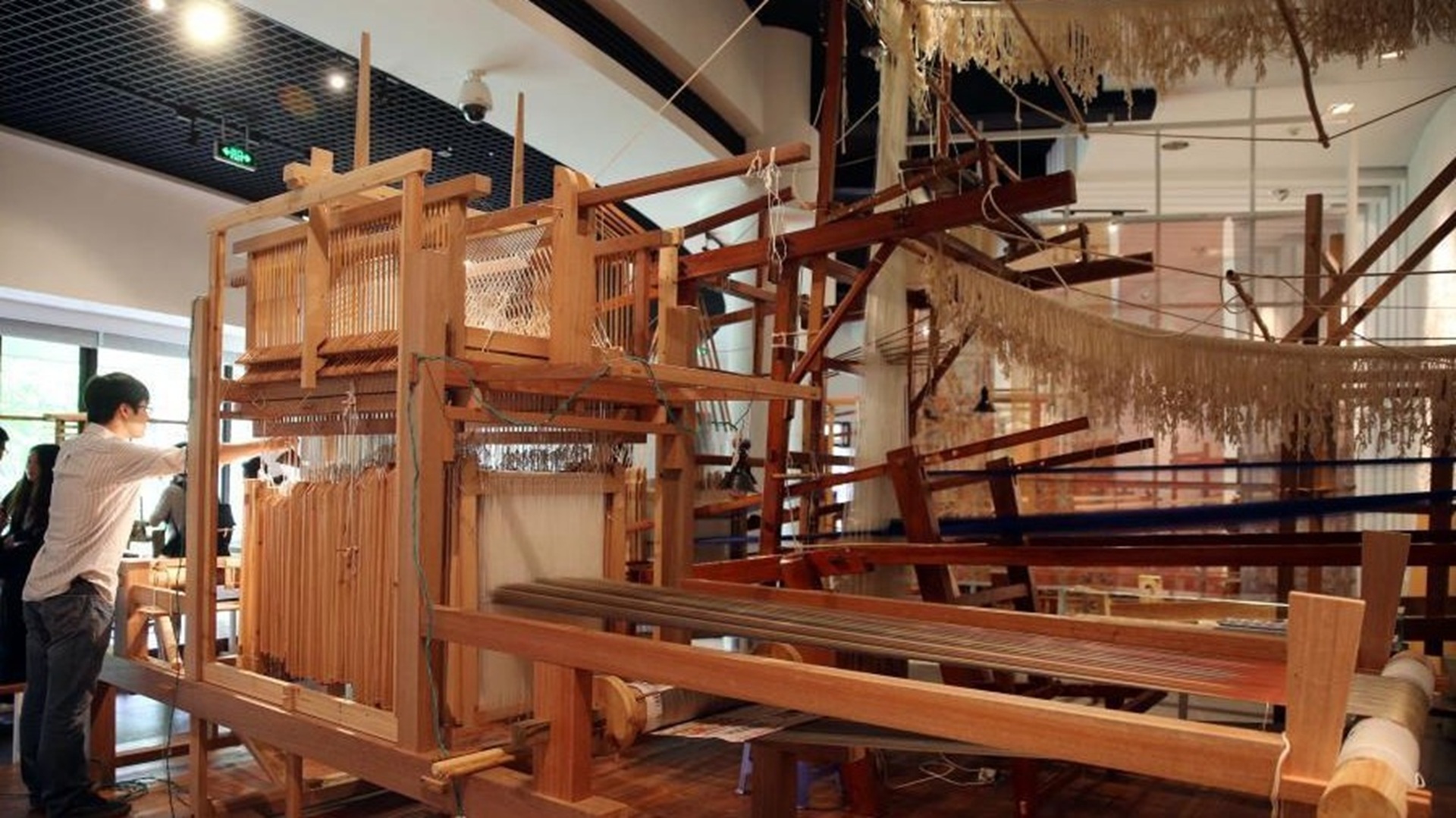
The Archaeological Discovery of the Chinese Device from 150 B.C. Reveals an Ancestral Binary System That Used Pattern Cards to Mechanize Silk Production, Anticipating Modern Concepts of Programming and Challenging the History of Global Computing
The first computer in the world was not conceived in the 19th century, but over two millennia ago, during the Western Han dynasty, according to the Chinese Association for Science and Technology, which identifies the ti hua ji, a programmable silk loom built in 150 B.C., as the starting point of computing.
The Concept of the First Computer in the World
According to the Chinese Association for Science and Technology, the ti hua ji meets the functional definition of a computer as it is capable of receiving instructions, executing a program, and providing automatic results. This definition is not limited to mathematical calculations but includes the mechanical execution of pre-programmed tasks.
Although the term program is currently associated with digital software, historically it could also take physical forms. In the case of the first computer in the world, these instructions were incorporated into pattern cards used to mechanically control the production of silk fabrics.
-
New German Zeiss lenses arrive in Brazil promising to reduce mental effort by up to 90% and revolutionize the way we see amidst the excess of screens.

-
Scientific study identifies unique blood patterns that reveal the secret of individuals who surpass 100 years of age.

-
Princeton engineers create a flexible 3D-printed robot that eliminates motors and uses heat to perform complex movements.
-
Security alert: The proliferation of fake QR codes in public places facilitates financial scams and personal data theft.

The statement carries institutional weight as it originates from the largest official scientific body in China and arises during a period of global competition for technological leadership in multiple strategic sectors.
What Is the Ti Hua Ji
The Ti Hua Ji is described as an advanced machine for weaving silk in fixed patterns. Built in 150 B.C., the equipment significantly predated Western looms and introduced mechanization into Chinese textile production over two millennia ago.
Fabrics were produced from the interaction between longitudinal and transverse threads, known as warp and weft. To form a specific pattern, certain warp threads needed to be raised, allowing the shuttle with colored threads to pass through.
This process increased the complexity of the weaver’s work, but the mechanization provided by the ti hua ji helped to scale up and ensure the accuracy of production, solidifying Chinese silk as a global reference.
Programmable Structure and Binary Logic
The first computer in the world operated with 10,470 longitudinal warp threads and could be controlled by 86 programmable modules. After the initial setup, the machine could trigger up to 100 devices simultaneously, maintaining constant precision in executing the patterns.
Experts compare its operation to that of a modern binary computer. In the physical pattern cards, an elevated warp thread represented the binary bit 1, while a lowered thread corresponded to bit 0, forming a mechanical coding logic.
This architecture allowed for the exact reproduction of complex designs, demonstrating a highly sophisticated physical programming system for the time, even without any electronic components.
Archaeological Discovery in Chengdu
The exact chronology of the development of mechanized weaving in China remained uncertain for centuries. In 2012, a fortuitous discovery brought new evidence during the construction of a subway line in Chengdu.
At the archaeological site of Laoguan Mountain, archaeologists located a tomb from the Western Han dynasty containing four well-preserved loom models, still with remnants of silk threads, astonishing the researchers.
Subsequent analyses indicated that they were the oldest figured looms ever found in the world, allowing for more detailed studies of their functioning and structural reconstruction.
Handcrafted Programming and Documentary Evidence
According to CAST, the looms used pattern books with programmable design models. The physical sequence necessary to create each pattern was defined by artisans through threads or bamboo rods.
The weaver would then follow these sequences to produce the final weave, adhering to pre-established physical instructions, as reported by the South China Morning Post. This process reinforces the understanding of the ti hua ji as the first computer in the world, closing historical gaps regarding the origin of mechanical computing.





Seja o primeiro a reagir!