





 Portuguese
  English
  Spanish
  4 min of reading
  0 comments


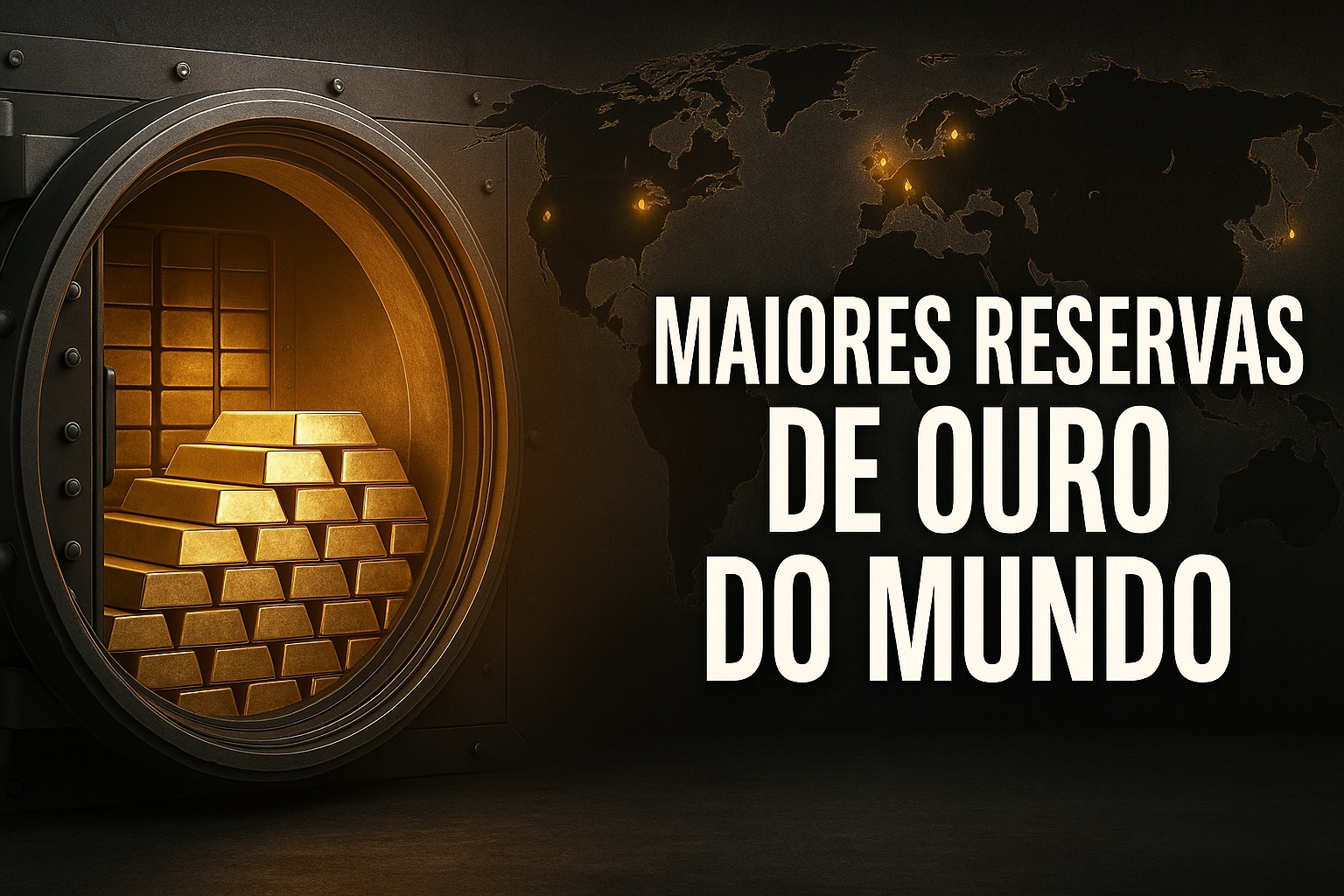
Countries Accumulate Thousands of Tons of Gold to Protect Currencies, Face Crises, and Preserve International Trust Amid Global Instability.
In a moment when geopolitical tensions mix with rising inflation, currency crises, and liquidity pressures, gold is once again at the center of national security strategies. According to data from the World Gold Council and international central banks, around 36 thousand metric tons of gold are currently under custody of just a few dozen countries, with each gram representing not only historical value but a tangible guarantee of the trust placed in each currency. This article shows which countries hold these reserves, why they accumulate such metal, and how — in contexts of instability — their economies remain protected by underground vaults, shielding currencies, international reserves, and even the credibility of central banks.
Why Gold Has Returned to the Center of Attention
Traditionally considered a “safe-haven asset,” gold has four strategic functions for countries:
Tangible Monetary Reserve: being accepted globally as value, it maintains purchasing power even if the local currency collapses.
-
The Brazilian colonial city that stopped in time and shares territory with a rocket launch base.

-
79-year-old woman challenges limits, visits 193 countries in the world after 56 years of planning and reveals the behind-the-scenes of a global journey that few have managed to accomplish.

-
These are the drivers who may stop paying tolls on highways in a project that promises to reduce costs for those who live from transportation in Brazil.

-
(Video): Italian pilot lands plane on moving train at 120 km/h and achieves unprecedented feat in aviation, even with a narrow runway and without direct visual contact.

Hedge Against Inflation and Depreciation: unlike bonds, gold does not pay interest, but it also does not default.
Symbol of Credibility: having tons stored demonstrates fiscal discipline and real reserves.
In recent years such as 2022-2025, various central banks reported an increase in their gold purchases or a halt in sales: emerging economies, countries facing international sanctions, and even developed economies revisited gold as a pillar of security.
Top Countries That Hold the Largest Reserves
1. United States — ca. 8,133 tons (≈ 22% of global reserves)
The U.S. holds the largest stockpile, with most stored in Fort Knox, Kentucky. This volume helps the dollar maintain global confidence.
2. Germany — ca. 3,355 tons
Some bars were repatriated from the U.S. and France in recent years to reinforce domestic credibility.
3. Italy — ca. 2,451 tons
A country with a long monetary history, where gold represents a safeguard against high public debt.
4. France — ca. 2,436 tons
High diversification in reserves, gold protects against fluctuations of the euro and crises in the European market.
5. Russia — ca. 2,298 tons
In the context of international sanctions, the country has increased gold purchases in recent years as a way to reduce dependence on the Western financial system.
6. China — ca. 2,010 tons
Although officially reported modest reserves, analyses state that real reserves may be larger. The metal supports internationalized yuan.
7. Switzerland — ca. 1,040 tons
A global banking center, gold reinforces Switzerland’s role as a safe haven.
8. Japan — ca. 846 tons
An economy vulnerable to currency crises, the stock acts as insurance against global disasters.
9. India — ca. 776 tons
High culture of private accumulation; government reinforces reserves to balance the payments deficit.
10. Netherlands — ca. 612 tons
Symbolic reserve for open economy, demonstrating institutional robustness.
(Values are approximate and updated according to the World Gold Council report of 2024-25.)
Instability, Sanctions, and Gold as a Shield
Various countries with unstable regimes or under international sanctions see gold as a form of protection outside the conventional financial system. Countries that maintain large stockpiles signal to the markets:
- “we have real reserves”;
- “we do not depend solely on debt or commodity exports”;
- “we can withstand devaluation or collapse of our currency.”
Russia is a clear example: amid increasing sanctions since 2022, it has intensified gold purchases to sustain reserves that could be used in liquidity operations, swaps, or even as collateral.
Emerging economies with high inflation or political fragility — like India — bolster gold to offset currency instability and maintain public trust.
How Gold Is Stored, Audited, and Used by Central Banks
Physical reserves are kept in locations with extremely high security: underground vaults, armored silos, seismic barriers. The repatriation of gold, as in the German case, requires logistics involving air transport, military escort, barcoding, and unilateral or third-party verification.
Despite this, economists warn that merely possessing gold is not enough — it depends on:
- real liquidity (capacity to sell or use the metal);
- diversification of reserves;
- consistent monetary policy;
- reserves in dollars or other convertible assets.
Perspectives for the Future: Gold in the Digital Age
With the emergence of digital currencies and competition for monetary hegemony, traditional gold returns as a “anchor” of credibility. Central banks are already debating:
- the use of gold-backed tokens;
- integration with blockchain settlement platforms;
- gold swaps as hedging instruments;
- increased reserves in response to geopolitical risks.
For countries that possess large stockpiles, this trend means revisiting the metal as a strategic component, not just a passive reserve.
The countries that hold the largest gold reserves in the world exert influence not only economically but geopolitically. The tons stored in underground vaults serve as bastions against inflation, war, currency collapse, and distrust.
In a world where debt is growing, currencies fluctuate, and sanctions multiply, gold reaffirms itself as the last tangible resource of credibility.





-

-

-

-

-

-

46 pessoas reagiram a isso.