





 Portuguese
  English
  Spanish
  6 min of reading
  0 comments


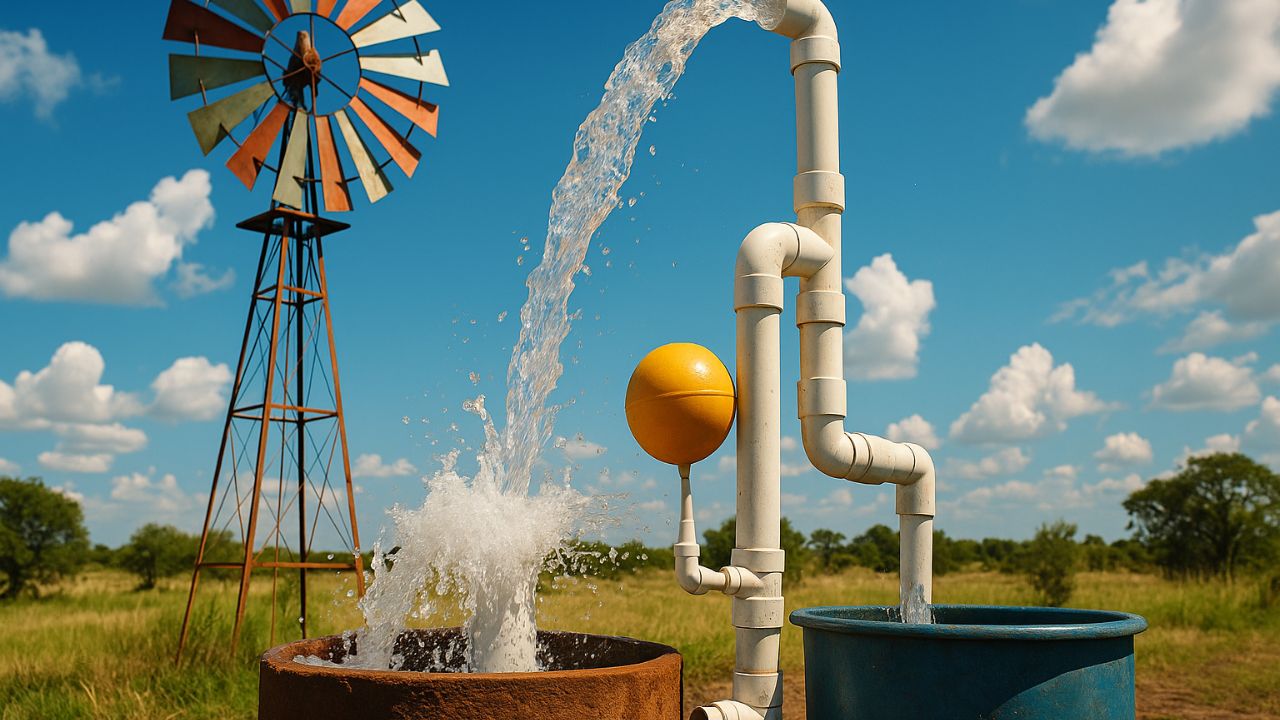
Artisanal Water Pump Solution Without Energy Combines Windmill, Compressed Air, Buoy, and PVC to Elevate Water with More Force Than Simple Homemade Models
The water pump without energy presented in a new artisanal project promises to deliver something that usually depends on an electric motor or combustion: high enough pressure to lift water several meters above the lake level using only wind, air, and PVC pipes. Inspired by previous models, the solution has been redesigned to gain robustness, increase power, and better utilize the pressure limit that the pipe can withstand.
In this system, the windmill acts as a compressor, pushing air into the water pump without energy, while a combination of well valve, water tank buoy, and sized piping creates a continuous filling and discharge cycle. The result is an entirely mechanical structure, without the use of electric energy, designed to pump water from lakes, reservoirs, or low reservoirs to higher points, with performance superior to simpler homemade models.
How the Water Pump Without Energy Works
At the base of the system is a main body built with a 100 mm sewage pipe, about 50 centimeters long, which acts as the pressure chamber of the water pump without energy. This piece is closed with PVC caps, flange, and reducers, creating a reservoir that fills with water from below and receives compressed air from above.
-
Neither the Pyramids nor the Great Wall of China, this gigantic construction in Spain is the human mark on planet Earth that intrigues the most when seen in images from space.
-
Surrounded by cliffs, mist, and chilling stories, the ancient Hotel del Salto has been reborn as a museum while still unable to shake off its reputation as a haunted place.

-
This star-shaped fortified construction, hidden near the border of Spain, may be the largest fortress on the planet.

-
Congonhas receives the monorail promised for the 2014 World Cup after more than a decade of delays and becomes the first airport in Brazil with integrated subway.
Water enters through the bottom of the water pump without energy via an adapted well valve. As the chamber fills, the buoy installed in this assembly moves, automatically controlling the opening and closing of the valve.
When the buoy rises to a certain point, the valve closes off the water intake, sealing the interior of the pipe. It is at this moment that the compressed air sent by the windmill begins to act more intensely.
PVC Structure: Body, Water Inlet, and Outlet
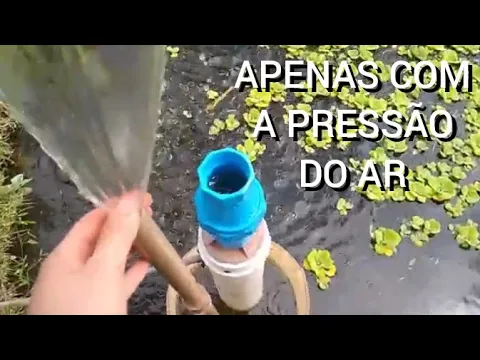

The assembly of the water pump without energy follows a step-by-step process based on common PVC connections, making maintenance and replacement of parts easy. The builder uses:
- 100 mm sewage pipe as the main body
- 100 mm caps for upper and lower sealing
- 50 mm flange on one of the caps for connection with the inlet valve
- Reducer to three-quarters of an inch on the water outlet
- Elbows and pipe sections of three-quarters to direct the flow to the desired point
The bottom focuses on the water inlet and the adapted check valve. The top receives the air injection point, installed with a small rigid nozzle, similar to those used in hydroponic systems, which facilitates the connection of the hose coming from the windmill.
The water outlet is positioned laterally, also made of PVC, to allow the flow to be directed upward or to another area of the land.
Well Valve and Buoy: The Heart of the System
The most sensitive component of the water pump without energy is the assembly formed by the well valve and water tank buoy. The valve, originally used at the bottom of wells to prevent water backflow, is disassembled, adapted, and attached to a metal rod connected to the buoy.
The buoy needs to have an appropriate diameter to move freely inside the 100 mm pipe, without being too tight or too loose to twist or tangle. As the chamber starts to fill, the buoy rises, and upon reaching the limit point, it pushes the valve and closes the water passage. From that moment on, only air starts to flow through the line coming from the windmill.
This mechanism turns the chamber of the water pump without energy into an air piston: with the valve closed and air being injected, the pressure increases and forces the water into the outlet line. When the internal level drops and there isn’t enough water left to seal the air outlet, the pressure decreases, the buoy descends, the valve opens, and the cycle automatically restarts.
Role of the Windmill: Wind as Water Pressure
The system is designed to work together with a windmill, which serves as a source of compressed air for the water pump without energy. The wind rotor moves a small compressor or air injection device, constantly pushing bubbles into the chamber.
In tests, the air hose was routed through the interior of the windmill structure to the edge of the lake, where the water pump without energy was positioned inside a bucket, weighted with stones, to ensure weight and stability at the bottom. From there, the injected air created successive cycles of filling and discharging, generating pulses of water in the outlet line.
In a practical demonstration, the builder brought the outlet hose to a point about four meters above the lake level and showed that the pressure generated by the water pump without energy was enough to make the water reach the top of the line.
At one point, the internal pressure became so high that it was difficult to hold the outlet with one hand, demonstrating the force achieved without the use of an electric motor.
Tests, Adjustments, and Leaks
In initial tests, the system showed that the water pump without energy relies on good sealing at all connections. Small air leaks can be observed by bubbles in the surrounding area, especially when pressure is high. These points indicate areas where performance may be compromised.
Despite this, the sequence of cycles continued: the pump filled, pressurized, expelled water through the hose, lost pressure, reopened the valve, and restarted the water intake, repeating the process while the windmill maintained air injection.
The operation is fully automatic, with no need for manual intervention during normal operation.
Applications of the Water Pump Without Energy in Lakes and Farms
The main proposal is to use the water pump without energy in rural environments, farms, or properties with lakes and reservoirs, where there is no easy access to the electrical grid or where energy consumption is to be reduced. Among the highlighted practical applications are:
- Reinforcing the oxygenation of lakes, along with the windmill
- Raising water from a lower level to a higher point on the land
- Feeding small auxiliary reservoirs or water tanks
- Circulating water to improve quality in ponds or water mirrors
Since the system uses only wind, air, and gravity, the water pump without energy can operate for long periods with virtually zero operating costs, depending only on the maintenance of mechanical parts and the structure of the windmill.
Limitations, Care, and Maintenance
Despite the advantages, the water pump without energy requires some care. The buoy must have proper clearance inside the pipe to avoid jamming, the valve needs to be clean and free of debris that would prevent it from closing, and the connections must be well glued to withstand the internal pressure.
Another point is the correct sizing of the windmill and the air line. If the air flow is too small, the generated pressure may not be sufficient to raise the water to the desired height.
On the other hand, if there is excessive pressure without relief valves or adequately sized structure, there is a risk of overly straining the connections.
Even so, within the mechanical limits of PVC and with proper assembly, the water pump without energy stands out as an ingenious solution for those seeking sustainable pumping alternatives on a small scale.
In your case, would you use a wind-powered water pump to oxygenate a lake or to bring water to a higher point on your property?





-

-

-

-

5 pessoas reagiram a isso.