





 Portuguese
  English
  Spanish
  4 min of reading
  0 comments



Even Within Their Own Property, Many Brazilians Make Interventions That Violate Urban and Environmental Regulations, Creating a Risk of Fines, Embargos, and Even Demolitions Due to Ignorance of the Rules
In Brazil, some common practices carried out by residents can lead to infractions even when done within their own property. A lack of knowledge about urban and environmental regulations means that seemingly simple interventions can result in fines, embargos, and even demolitions.
Therefore, any structural modification needs to be carefully analyzed to avoid risks and future problems.
Among the situations that cause the most doubts are changes to sidewalks, drilling of artesian wells, and installation of front covers.
-
(Video): Italian pilot lands plane on moving train at 120 km/h and achieves unprecedented feat in aviation, even with a narrow runway and without direct visual contact.

-
It seems to have come out of a science fiction movie: A Brazilian city where it rains almost every day, recording over 4,000 mm per year, driven by climatic factors — a direct result of its strategic location in the Amazon.

-
The water crisis that could change everything this year has already begun; it’s not just about the climate, it affects technology, raises product prices, and can halt entire companies without warning.

-
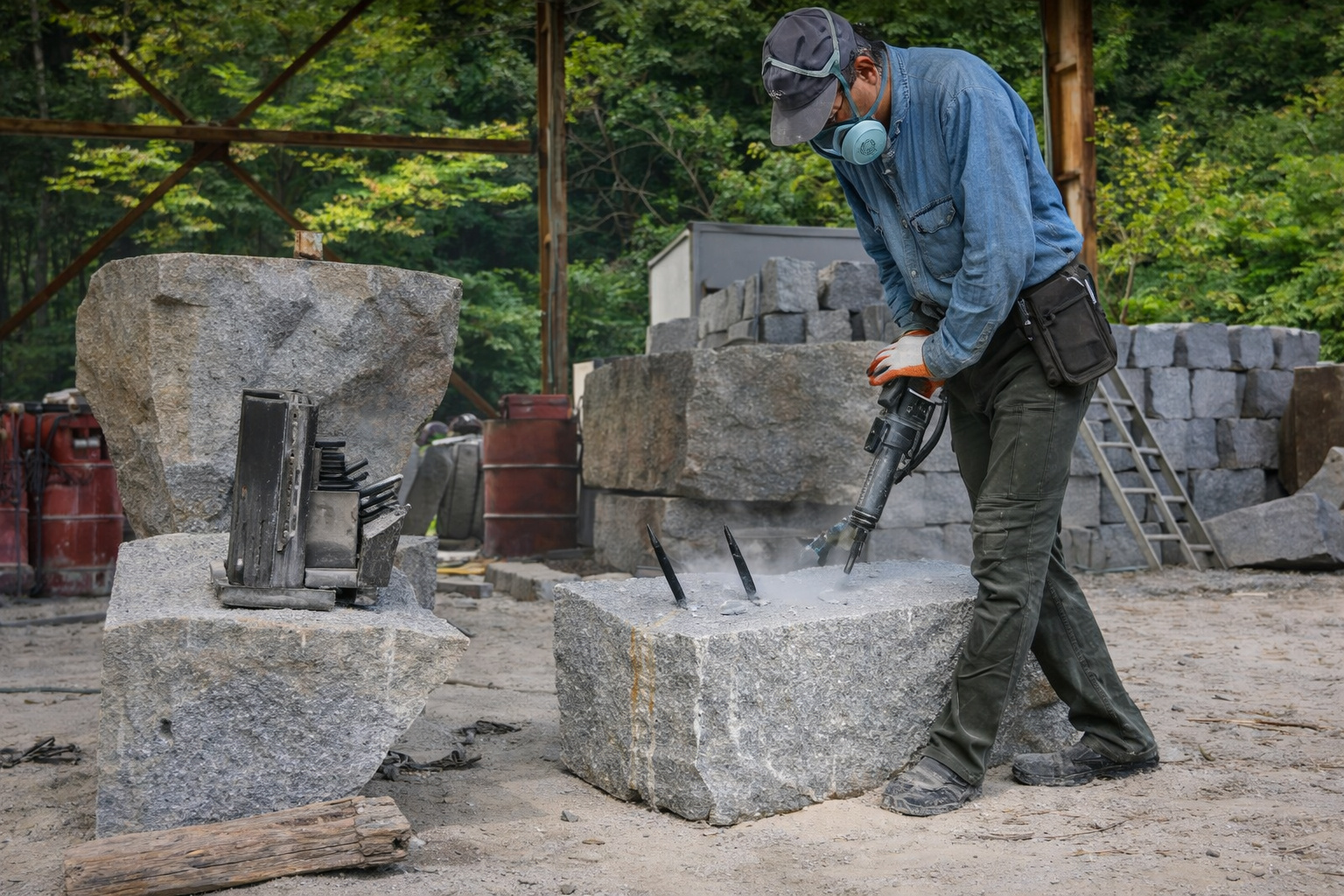
A Japanese mason transforms raw granite into small cups and handcrafted utensils, collects giant stones, cuts with precision, and impresses with detailed manufacturing and finishing.

In all these cases, there are specific regulations that determine what can or cannot be done. Ignoring these rules can result in penalties and require the owner to undo already completed work.
Prohibited Interventions on Sidewalks
Sidewalks are part of the public space, even when in front of residences, and therefore follow specific regulations that determine how they must be built, maintained, and used.
These rules exist to ensure accessibility, safety, and proper circulation of pedestrians in urban areas. Although many people are unaware of these obligations, the legislation is clear: interventions that hinder collective use are prohibited and can lead to penalties for the resident responsible for the property’s front.
What Cannot Be Done on Sidewalks
The municipal regulations prohibit the installation of slippery surfaces, the creation of irregular elevations, and the construction of ramps that extend from the curb to the entrance of the house. These alterations compromise safety and hinder mobility for people, especially the elderly, people with disabilities, and users of strollers.
It is also not allowed to place flower beds, large pots, fences, obstacles, or any objects that block or reduce passage. Since sidewalks are areas of public circulation, any inappropriate barrier constitutes an irregularity.
These rules serve to prevent the risk of falls, ensure accessibility, and guarantee that the space is shared safely by everyone.
So, What Law Addresses This Issue?
In Brazil, there is no federal law that uniformly regulates all sidewalk rules, because this topic is under the direct jurisdiction of municipalities.
Each city has its own Code of Conduct, Building Code, Urban Accessibility Law, or Master Plan, which establish the specific rules on how sidewalks must be built, renovated, or maintained.
It is in these municipal regulations that prohibitions such as the following appear:
- irregular ramps,
- inadequate surfaces,
- obstacles that hinder pedestrians,
- mandatory standards for slope and width,
- residential responsibility for sidewalk maintenance.
Although the legislation is municipal, there is a national basis that supports the obligation of accessibility: the Brazilian Law on the Inclusion of Persons with Disabilities (Law No. 13,146/2015), which states that public space must be accessible and safe. This law does not describe how sidewalks should be constructed but provides support for municipalities to create strict rules.
Additionally, technical standards such as ABNT NBR 9050 guide standards for accessibility, slopes, tactile surfaces, and dimensions. Although it is not a law, it is adopted by many municipalities as a mandatory reference.
Who is Responsible for the Sidewalk?
In most Brazilian cities, the responsibility lies with the property owner. This means that:
- the resident must keep the sidewalk in good condition;
- they are the ones who need to repair damage, level the surface, and remove irregularities;
- they can also be fined for making prohibited constructions or allowing the sidewalk to deteriorate.
The city hall, in turn, is responsible for oversight, standardization, and execution of public works.
Artesian Wells Without Authorization
Another common practice in the country is drilling artesian wells without the proper authorization. According to the source content, more than 88% of these wells lack permission.
To construct a well legally, it is necessary to request permission, fulfill specific steps, and bear the costs related to the process.
The lack of regularization can result in fines, embargoes, or even the requirement to close the well. While the use is permitted, it is mandatory to follow the procedures required by the responsible authorities.
Authorization is essential to avoid legal issues and ensure that the structure is maintained within the regulations.
Roofs and Extensions to the Gate
Extending the roof to the gate to create a garage or another type of front area is also considered irregular.
According to local building codes, this construction is seen as built-up area. The regulations require a setback, which can vary from 5m, 4m, or even 3m, depending on the municipality. When a fixed covering exceeds these limits, the owner violates the legislation.
Even pergolas can be considered built-up area in some places. In other cities, this type of structure is not included in the calculation. Therefore, a retractable or removable covering could be an alternative to avoid issues.
Otherwise, the resident risks receiving a fine, facing an embargo, or being required to demolish the structure.
It is Good to Understand the Rules
The ignorance of these rules leads many residents to carry out works without realizing they are violating the legislation. Interventions on sidewalks, irregular artesian wells, and front covers are examples of situations that require extra attention.
The warning is made to avoid inconveniences and ensure that each construction follows current regulations correctly.
The content also highlights an additional notice about the arrival of the largest Black Friday in Planarc’s history, inviting interested parties to request the link so they do not miss the announced opportunity.








-

-

3 pessoas reagiram a isso.