





 Portuguese
  English
  Spanish
  4 min of reading
  0 comments


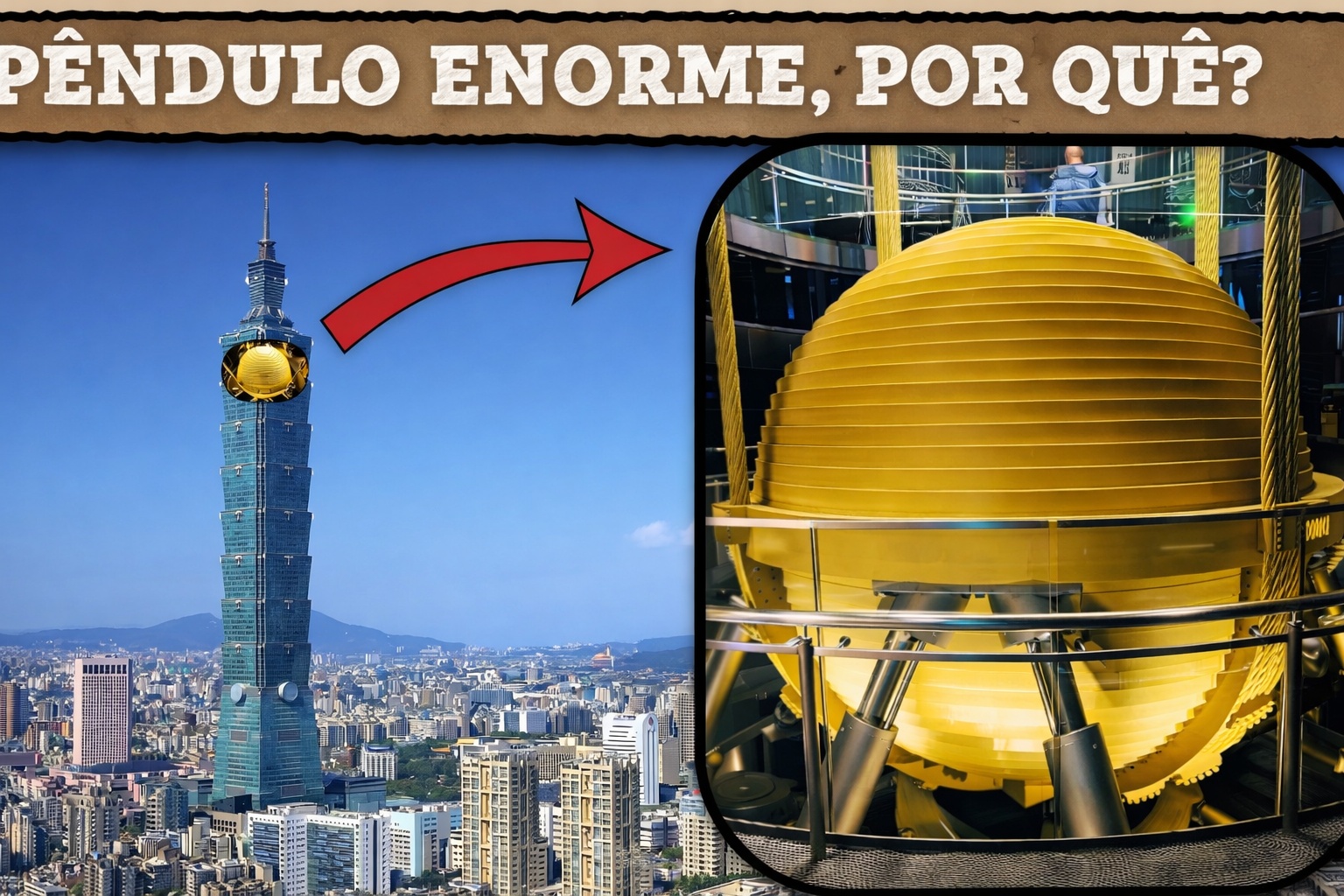
An Asian Skyscraper Uses 12,000 Tons of Water Suspended at the Top to Reduce Vibrations Caused by Winds, Typhoons, and Tremors. Understand the Engineering.
At the heart of one of the most densely populated urban regions in Asia stands a skyscraper that, unlike what the human eye imagines, sways all the time. This is not a defect; it’s physics. The problem arises when winds reach over 200 km/h, when typhoons collide with the coast, or when micro-seismic tremors traverse the underground. Without a structured solution, a super-tall building could vibrate like a ship’s mast, disorienting occupants, causing motion sickness, generating panic, or even compromising structural components in the long run. To tame these forces, engineers were forced to resort to something both simple and monumental: 12,000 tons of water, stacked inside a gigantic tank near the top of the building. This is not an ordinary water tank. It is a Tuned Mass Damper (TMD), one of the largest anti-sway devices ever installed in a building.
How Does a Building That Uses Water to Prevent Sway Work?
The logic is elegant: when the wind pushes the skyscraper to one side, the water tank moves in the opposite direction, absorbing part of the energy and reducing the amplitude of the vibration. It’s like having a giant ball rolling inside the building, synchronized with external forces.

This technique reduces the sensation of sway and, according to technical documents from the CTBUH (Council on Tall Buildings and Urban Habitat), can cut 30% to 50% of the lateral oscillation of a super-tall building.
-
Created by George Lucas with over $1 billion, a futuristic museum in the shape of a spaceship with 1,500 curved panels is about to open in Los Angeles and will house one of the largest private collections of narrative art in the world.
-
Couple shows how they built a retaining wall on their property using 400 old tires: sloped land turned into plateaus, tires are aligned, filled, and compacted with layers of soil, with grass helping in support and at almost zero cost.
-
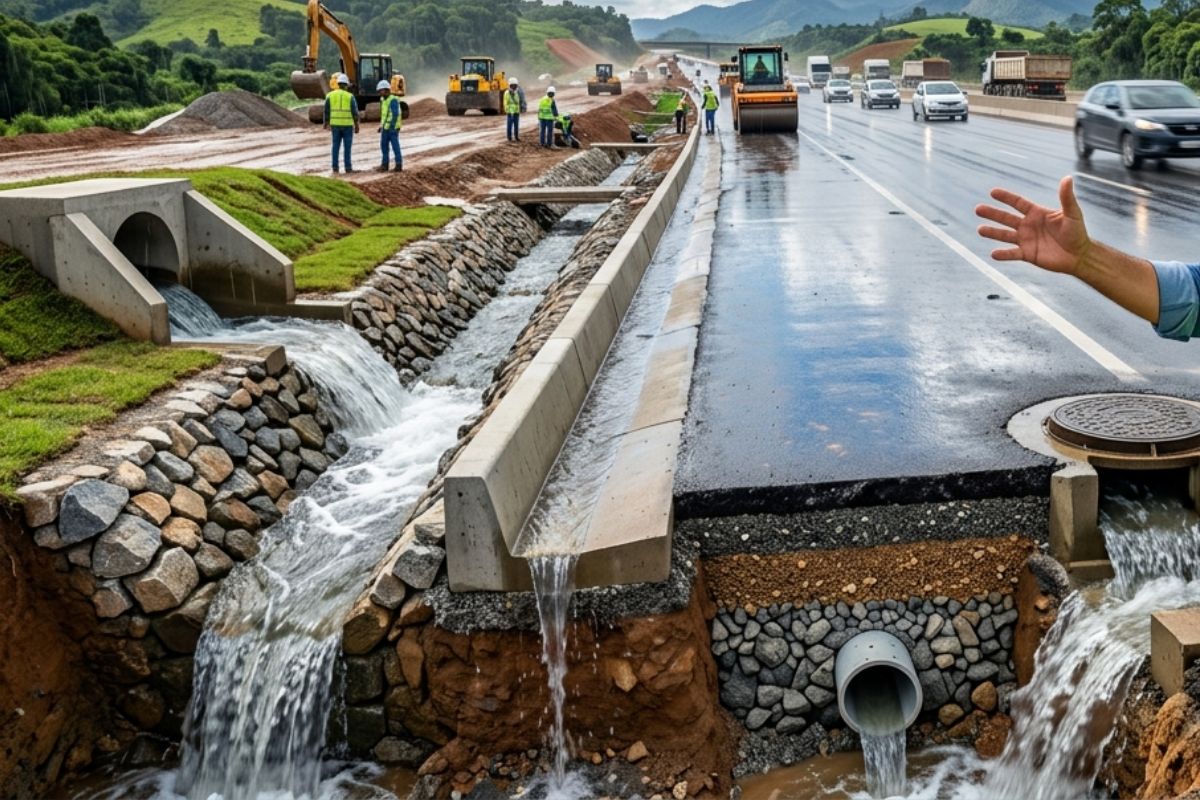
Engineer explains drainage during the rainy season: the difference between surface water and deep water, ditches, gutters, and water outlets on the road, as well as drains and drainage mattresses, to prevent erosion, aquaplaning, and flooding at the construction site today.
-
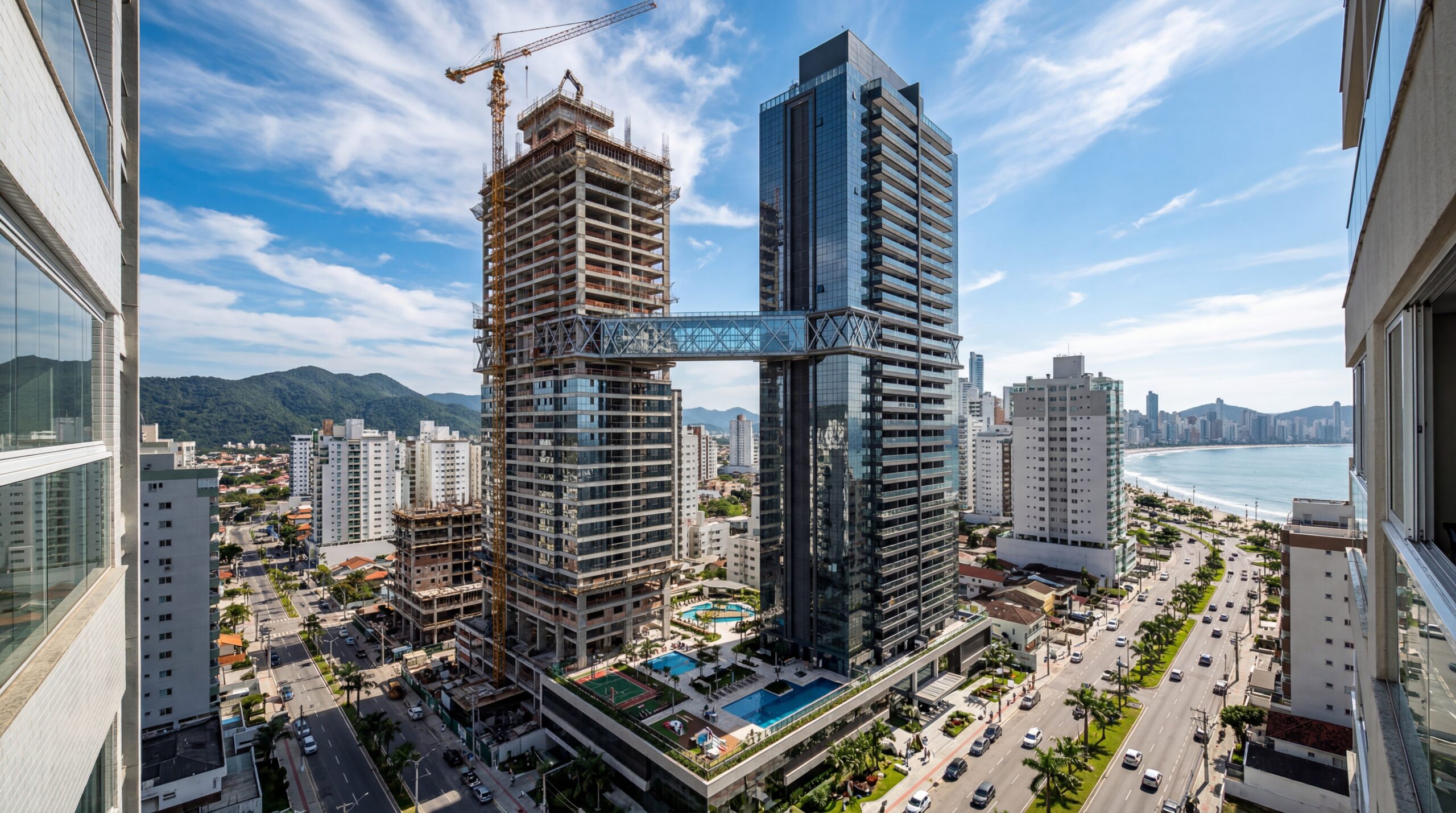
With 55 floors, 177 meters in height, a 15-meter walkway between the twin towers, ventilated facade, and 6,300 m² of leisure space, Ápice Towers already has one tower completed and another nearly at the top.

On the most intense days of the typhoon season, it is this water tank that prevents the building from turning into a human metronome.
Why Water?
Because water has three relevant advantages:
Adjustable Mass
The volume can be increased or decreased according to the dynamic behavior of the building.
Natural Fluid Movement
Water already oscillates with gravity, functioning as a viscous damper.
Structural Ease
Unlike giant metal blocks (common in the U.S. and Japan), water reduces costs and rotational loads.
That’s why hydrodynamics became applied civil engineering.
Which Skyscraper Does This?
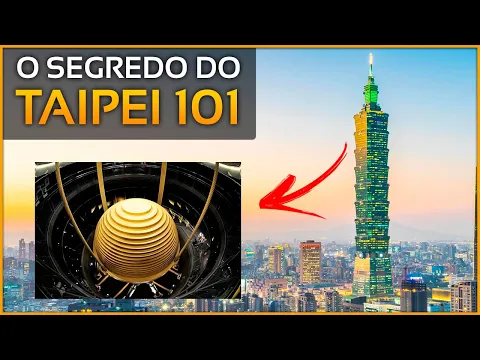
The solution is installed in Taipei 101, in Taiwan, long the tallest skyscraper on the planet, standing at 508 meters tall with 101 floors. The island is a natural disaster laboratory: annual typhoons, humid maritime climate, and significant seismic activity.
It was literally the worst possible place for a building of this scale. Therefore, the TMD was not a detail, but rather a pillar of safety.
A Liquid Lung of 12,000 Tons
The Taipei 101 system features:
- 12,000 tons of water
- 3-floor depth
- Connection with valves that control internal flow
- Damping system configured for multiple frequencies
All of this installed near the top, where the oscillation is greatest.
Extreme Winds and Earthquakes: The Annual Engineering Test
Taiwan faces, on average:
- 3–4 typhoons per year
- hundreds of micro-tremors
- winds exceeding 200 km/h
Without a TMD, the upper floors could sway laterally by dozens of centimeters, enough to cause motion sickness, dizziness, and even medical problems for occupants.
Reports from the Taipei Financial Center Corporation indicate that the TMD has already proven crucial during multiple weather events, including Typhoon Soudelor (2015), when oscillations were dramatically reduced at the top.
This Type of Technology is Expanding Worldwide
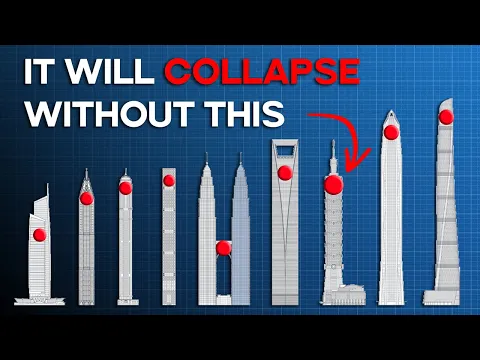
The Taipei 101 system has become a reference. Today, similar devices have been installed in:
- Shanghai Tower (China) – 1,000-ton TMD
- ICC (Hong Kong) – Solid mass TMD
- NYT Building (USA) – Cable damping
- Yokohama Landmark Tower (Japan) – Hybrid seismic systems
Each tuned to its own “enemy”: wind, earthquake, or both.
It’s Not About Comfort, It’s About Urban Survival
As the global climate changes and cities grow vertically, solutions like this shift from being novelties to becoming public safety infrastructures. What once seemed like a detail transforms into:
- reduction of structural cost
- increased lifespan
- seismic protection
- better habitability
- panic mitigation
In summary: a skyscraper only exists because someone calculated its balance beforehand.
In the End, Water Defeated Wind
Taipei 101 has shown the world that applied physics can buy tranquility at 500 meters above the ground, and that sometimes the best defense against a typhoon is a miniaturized ocean inside a building.
At the top of one of the most densely populated cities on the planet, 12,000 tons of water balance forces that no human would feel alone but could bend steel, crack concrete, and cause the collapse of an entire urban culture. Verticalizing the future requires taming nature, not confronting it.









-

-

2 pessoas reagiram a isso.