





 Portuguese
  English
  Spanish
  6 min of reading
  0 comments


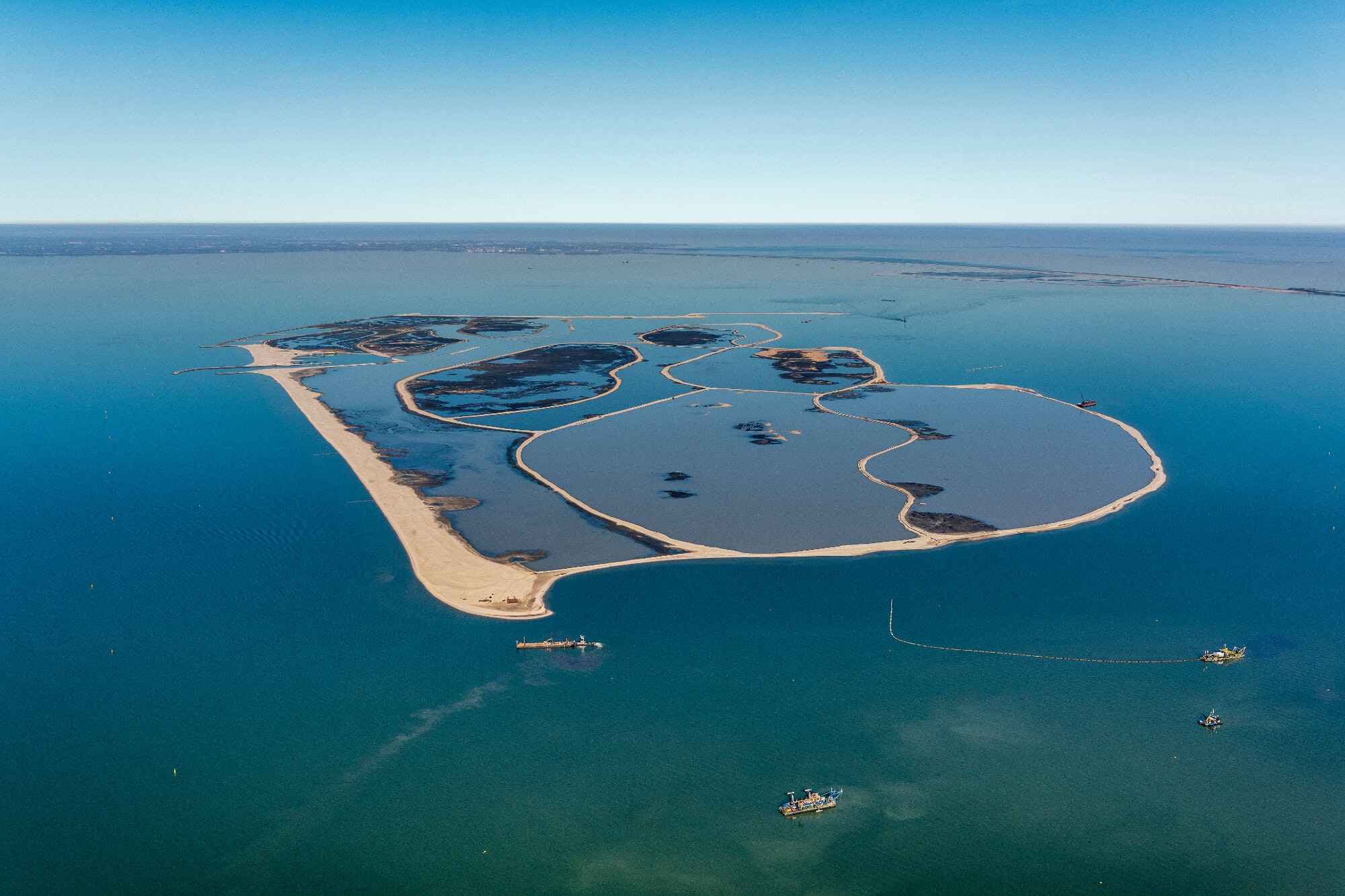
Netherlands Dredged More Than 28 Million Cubic Meters of Sediments from Markermeer to Create the Marker Wadden Islands and Reverse a Century of Erosion, Turbidity, and Habitat Loss.
When Rijkswaterstaat (the national water infrastructure agency of the Netherlands) and the Natuurmonumenten organization announced, in 2012, the plan to restore part of the Markermeer ecosystem, the project caught attention for a decisive technical detail: it was not about building a dike, a dam, or urban drainage. The idea was to “make” natural islands from scratch using mud, clay, and sand accumulated at the bottom of the lake, reversing environmental consequences that had been accumulating since the 1930s. According to official documents from Rijkswaterstaat and environmental reports released after the start of construction in 2016, the project required dredging, transportation, and shaping of more than 28 million cubic meters of sediments before the completion of the first islands in 2020.
The result was named Marker Wadden: an artificial archipelago designed to correct a classic problem of dammed and shallow lakes. The excess of fine suspended sediments reduces water transparency, affects photosynthesis, harms submerged plants, decreases oxygenation, and compromises the entire food chain. The Dutch solution, as always, was based on engineering and ecology working together.
The Origin of the Problem: A Lake Created by Humans
The Markermeer is not an ancient natural lake. It was born after the construction of the Afsluitdijk in 1932, which transformed the Zuiderzee into a closed system of inland waters.
-
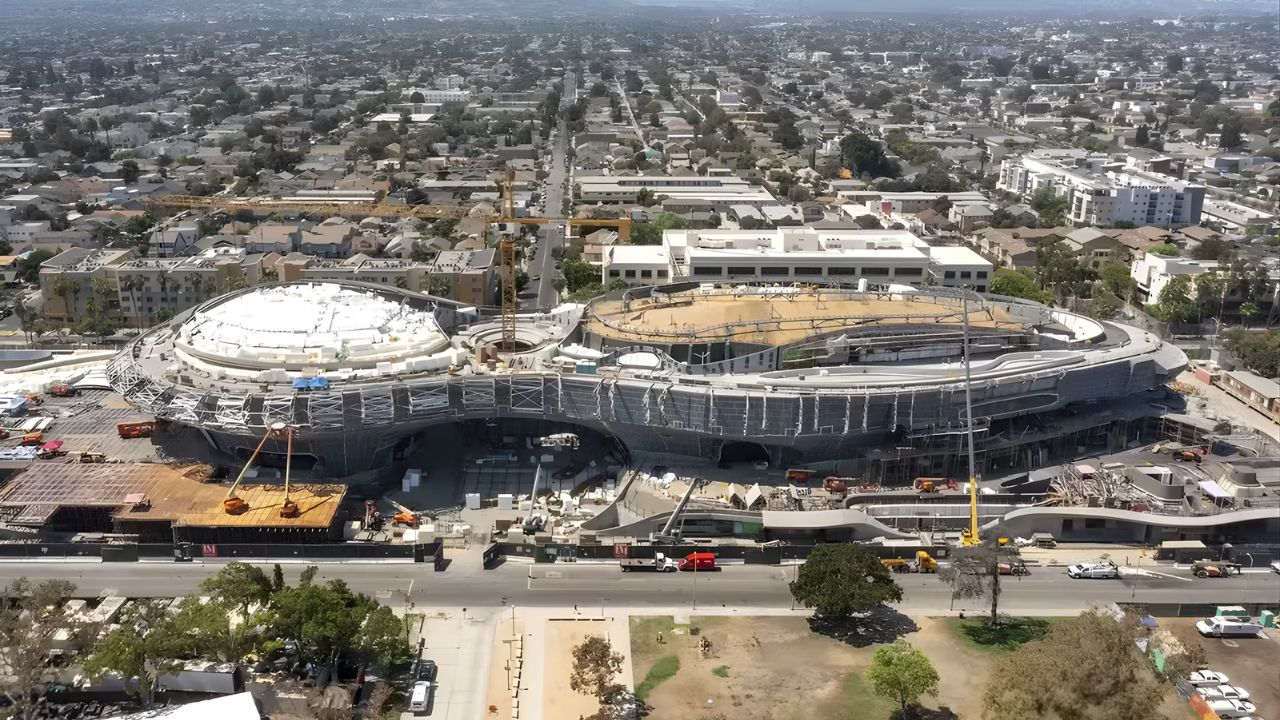
Created by George Lucas with over $1 billion, a futuristic museum in the shape of a spaceship with 1,500 curved panels is about to open in Los Angeles and will house one of the largest private collections of narrative art in the world.
-
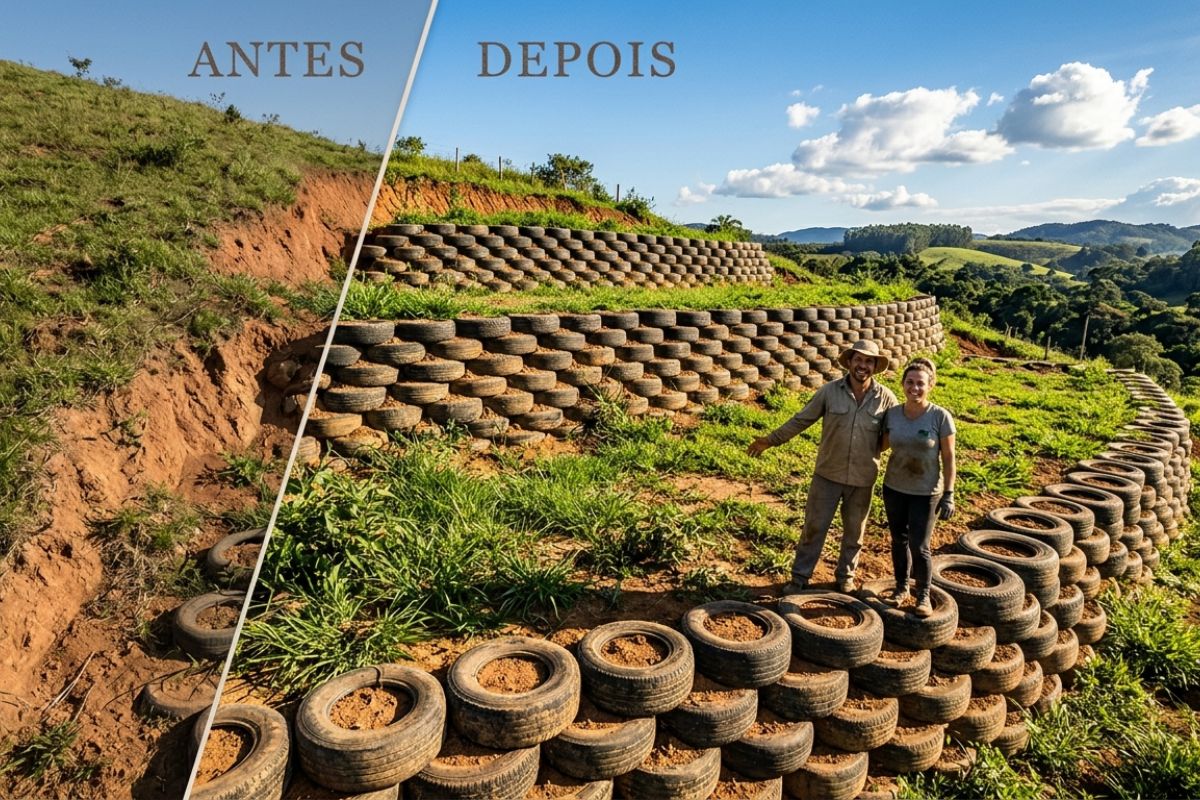
Couple shows how they built a retaining wall on their property using 400 old tires: sloped land turned into plateaus, tires are aligned, filled, and compacted with layers of soil, with grass helping in support and at almost zero cost.
-
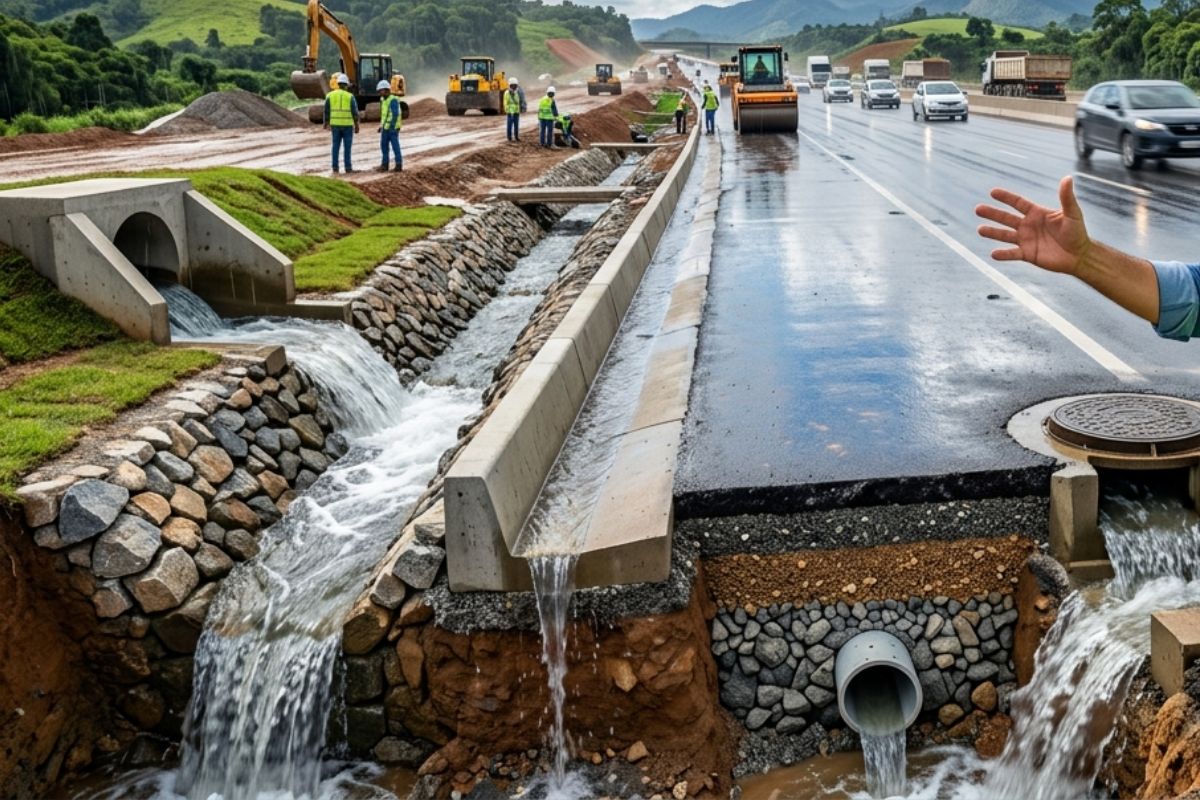
Engineer explains drainage during the rainy season: the difference between surface water and deep water, ditches, gutters, and water outlets on the road, as well as drains and drainage mattresses, to prevent erosion, aquaplaning, and flooding at the construction site today.
-
With 55 floors, 177 meters in height, a 15-meter walkway between the twin towers, ventilated facade, and 6,300 m² of leisure space, Ápice Towers already has one tower completed and another nearly at the top.
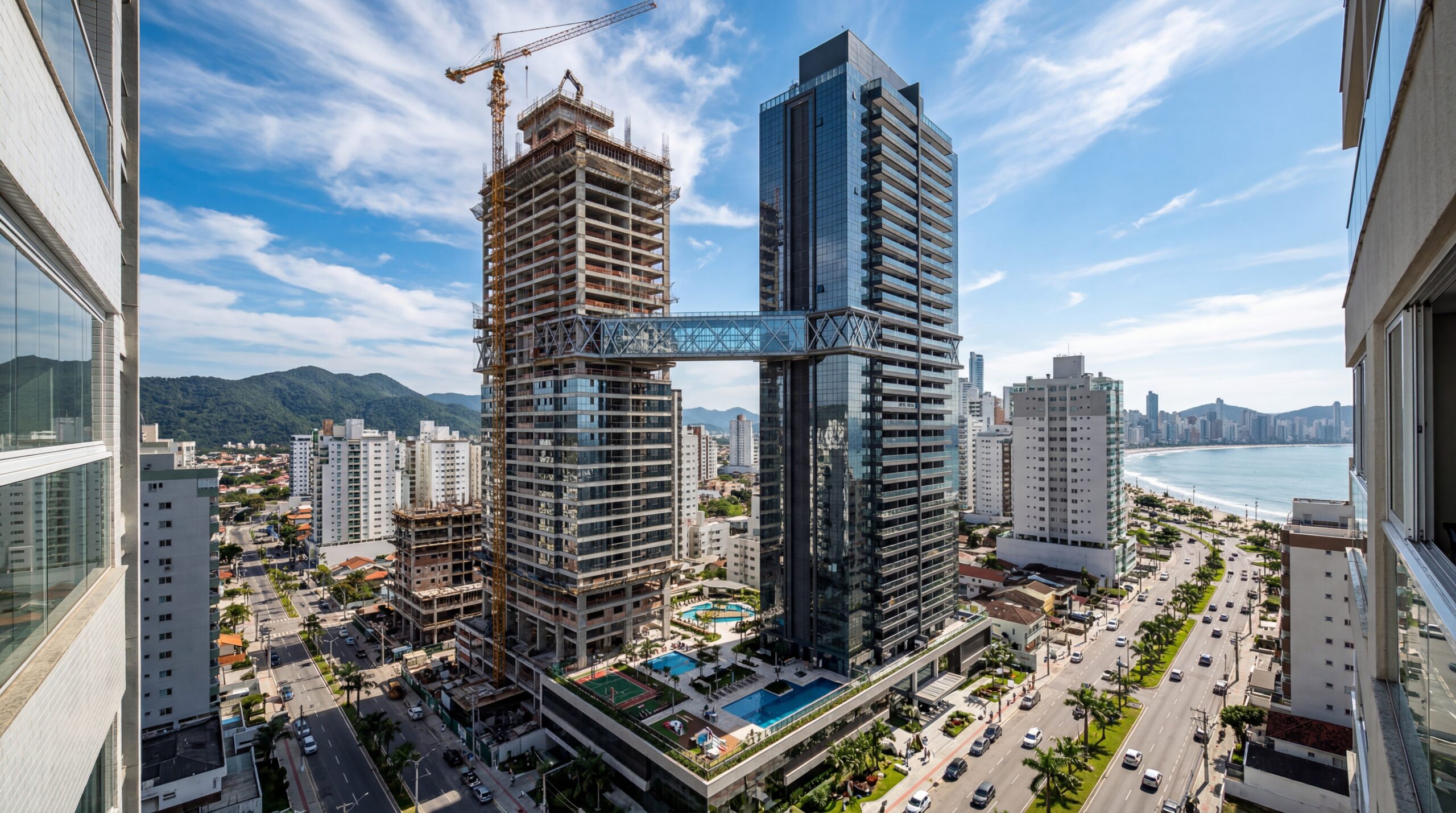

In the following years, additional landfills and dikes changed the hydrodynamics, reduced the average depth, and decreased sediment exchanges with the sea. Without sufficient currents to disperse fine particles, the lake became increasingly turbid over the decades.
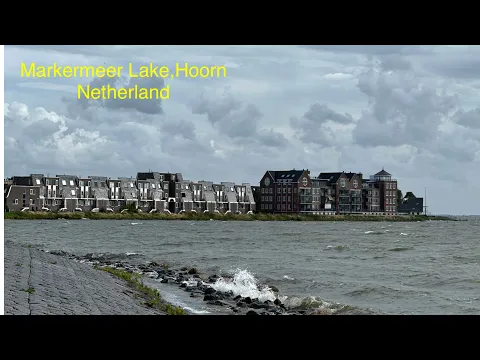

The turbidity brought a domino effect. Subaquatic plants practically disappeared, fish-eating birds and filter feeders lost feeding areas, and fish struggled to find shallow and fertile areas for reproduction. Information released by Natuurmonumenten and the Dutch Delta Programme highlighted that habitat loss was so severe that several migratory species began to avoid the lake, altering routes established for centuries.
The Dutch Solution: Build Islands to Restore a Lake
Contrary to what many expected, the reaction to the ecological crisis of the Markermeer was not to dredge and dump mud on solid ground but to use it as geotechnical raw material.
The technical principle was relatively simple but executed on a colossal scale: dredging sediments from the bottom, pumping them to pre-designated areas, and shaping banks, sandy ridges, and internal lagoons capable of reducing currents and clarifying the water.
These structures act as “natural settling basins,” allowing fine particles to settle. With less suspended material, transparency rises again, submerged plants return, and the ecological chain restarts its cycle. In 2016, the first plots began to emerge, and by 2017 the first island was already receiving its first species of wading birds, according to reports presented by Natuurmonumenten.
Engineering Applied to the “Natural”
Although it seems like an organic process, the Marker Wadden is heavily technical. The Dutch needed to study bathymetry, behavior of suspended mud, particle size composition of sediments, hydraulics of shallow waters, and the impact of dominant currents from the IJsselmeer to decide where to place each fraction of clay, sand, and peat.
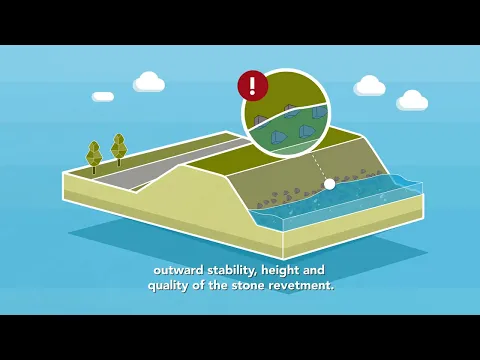
The settling is not merely random. It depends on the geometry of the banks and the strength of the current. The project used sand containment to form islands with internal lagoons and wind-protected margins. In these areas, filter-feeding organisms and submerged plants can establish themselves before waves and winds wash everything away.
There was also planned biological intervention. Wading birds need exposed mud margins; fish-eating birds require deeper waters; fish prefer calm bays. Each created island replicates a microtopography typical of natural estuaries, something almost non-existent in the Markermeer after a century of traditional water engineering.
From Ecological Planning to Early Results
The first major phase—creating the initial islands—was completed around 2020, and the ecological effects began quickly. In reports sent to the European Commission and the Dutch Parliament, researchers recorded an increase in the presence of migratory birds such as the godwit and the mosquito hawk.
In internal bays, mussel beds and growth of submerged vegetation were observed after decades of virtually no occurrence.
Another important indicator was the return of relatively clear water in certain zones, allowing photos of submerged plants previously hidden by turbidity. In a hydrological context, this means more oxygen, more habitat, and more resilience.
A Reverse Engineering Project: First Degrade, Then Rebuild
The Marker Wadden transformed a negative environmental consequence of Dutch infrastructure into an ecological asset.
The central reasoning was: if historical works worsen problems in lakes and estuaries, reverse works—such as dredging aimed at reconstruction—can revert them. In this sense, the project became an international reference in “large-scale ecological engineering.”
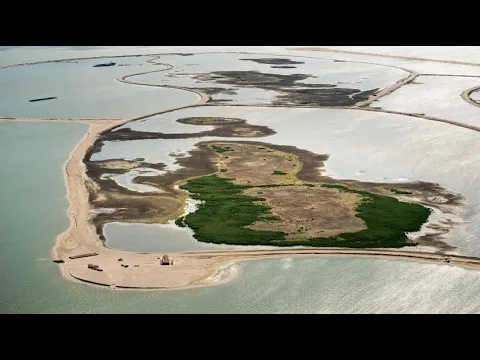
Compared to other projects, the Marker Wadden has an important peculiarity. It does not aim to urbanize, expand territory, or protect cities, like the Afsluitdijk or Maeslantkering. On the contrary, its focus is to enhance biological wealth, improve water quality, and strengthen migratory routes. The logic goes beyond conservation: it involves reengineering the environment to recover lost natural processes.
Costs, Timeline, and Current Phase
The total cost of the project was estimated at approximately 75 million euros, financed by an alliance between the Dutch government and Natuurmonumenten, with technical support integrated into the Delta Programme strategy.
The timeline considers that the total recovery of the ecosystem will be slow and may take decades. In 2023, the archipelago had already accumulated multiple interconnected islands and wetlands suitable for birds, fish, and invertebrates.
The final goal is not to complete a project but to allow natural processes to regain control. In other words, Marker Wadden does not deliver a “finished” lake, but reestablishes conditions for the system to heal itself.
A New Type of Public Works
The case of the Marker Wadden shows a paradigm shift. Instead of building walls, tunnels, or dams—which the Dutch have mastered since the 13th century—the country is using heavy engineering to rebuild ecological landscapes.
It is a type of public work that does not expand ports, does not create elevated avenues, and does not serve directly for transportation. It serves biodiversity.
This type of project is exactly what attracts the attention of the curious public: it is technical, visually dramatic, and hard to imagine until seen from above. An archipelago that emerged from mud at the bottom of a lake seems like science fiction. But it is precisely the kind of fiction that Dutch engineering often turns into reality.
A Lesson for the Future
If previously the Dutch coast was known as a global laboratory of dikes and sluices, it is now also a laboratory of ecological restoration on a continental scale.
The Marker Wadden joins initiatives like Room for the River and the Delta Programme, all with the same goal: to produce water security and ecological resilience, not just civil engineering.
Anyone looking at the project for the first time sees “beautiful” islands. But what lies behind is the triumph of a simple and powerful idea: to recover an ecosystem, sometimes it is necessary to reconstruct the lost relief. In the Netherlands, this relief now comes from dredges, geotechnology, and 28 million cubic meters of mud.









-

-

2 pessoas reagiram a isso.