





 Portuguese
  English
  Spanish
  7 min of reading
  0 comments


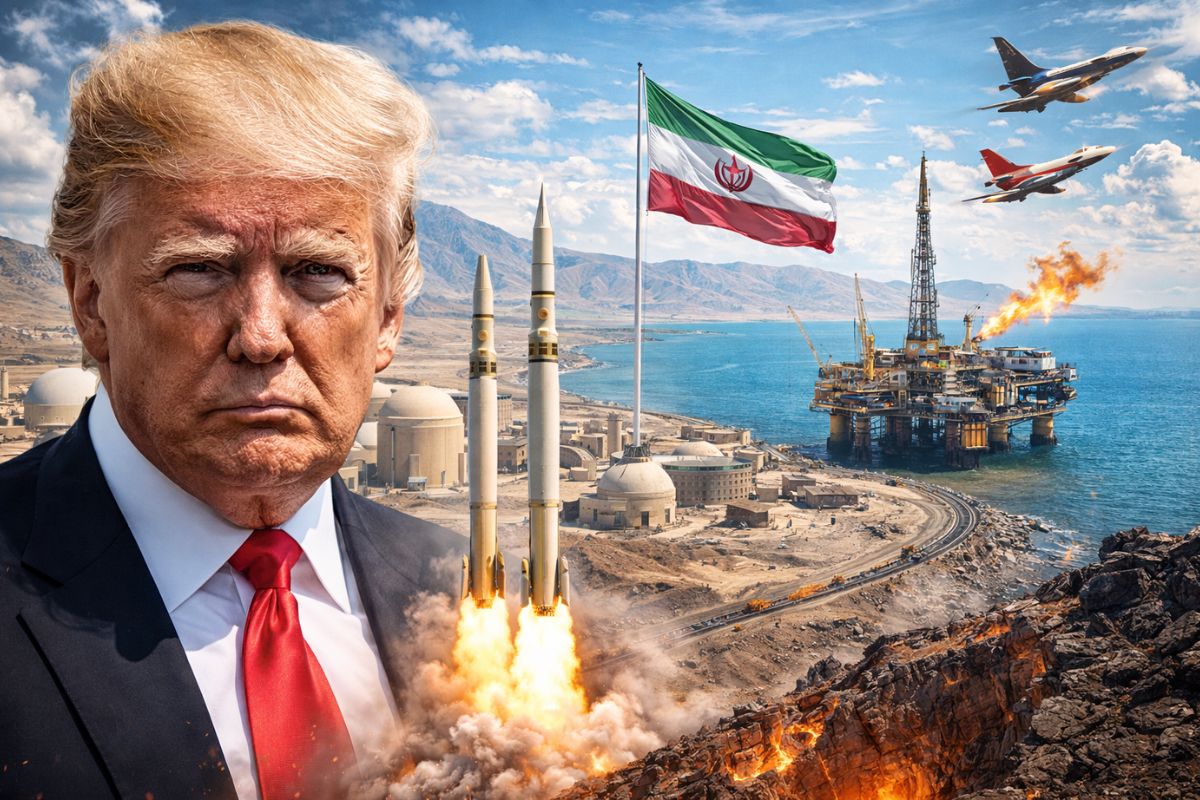
Weakened by Sanctions, Internal Protests, and Recent Military Defeats, Iran Sees Its Nuclear Program Become a Direct Target of Donald Trump, Who Threatens Attacks and Could Drag the World into a New Surge in Oil Prices.
Amid ongoing negotiations and increasingly harsh rhetoric, Washington signals that it does not just want to limit Iran’s nuclear program, but also to curb ballistic missiles and Tehran’s support for groups like Hezbollah and Hamas. On the other hand, a regime weakened by bloody repression and military losses seeks to project strength while the world watches the possibility of an attack that could hit bases, refineries, and drive up the price of oil indefinitely.
At the same time, the Iranian regime is going through its most fragile moment since the 1979 revolution, after protests brutally suppressed with thousands of dead, a drop in popularity, heavy sanctions, and military losses that have even affected structures related to the nuclear program. It is in this vacuum of power that Trump calculates whether to exploit Iran’s internal weakness, tests how far Russia and China are willing to help, and assesses the risk of an attack that could hit bases, refineries, and drive up the price of oil.
What’s at Stake in the Iranian Nuclear Program
Under the Nuclear Non-Proliferation Treaty, Iran has the right to enrich uranium for civilian purposes, like any signatory country.
-
USA and China compete for Brazil over resources that could be worth trillions — rare earths put the country at the center of a global dispute

-
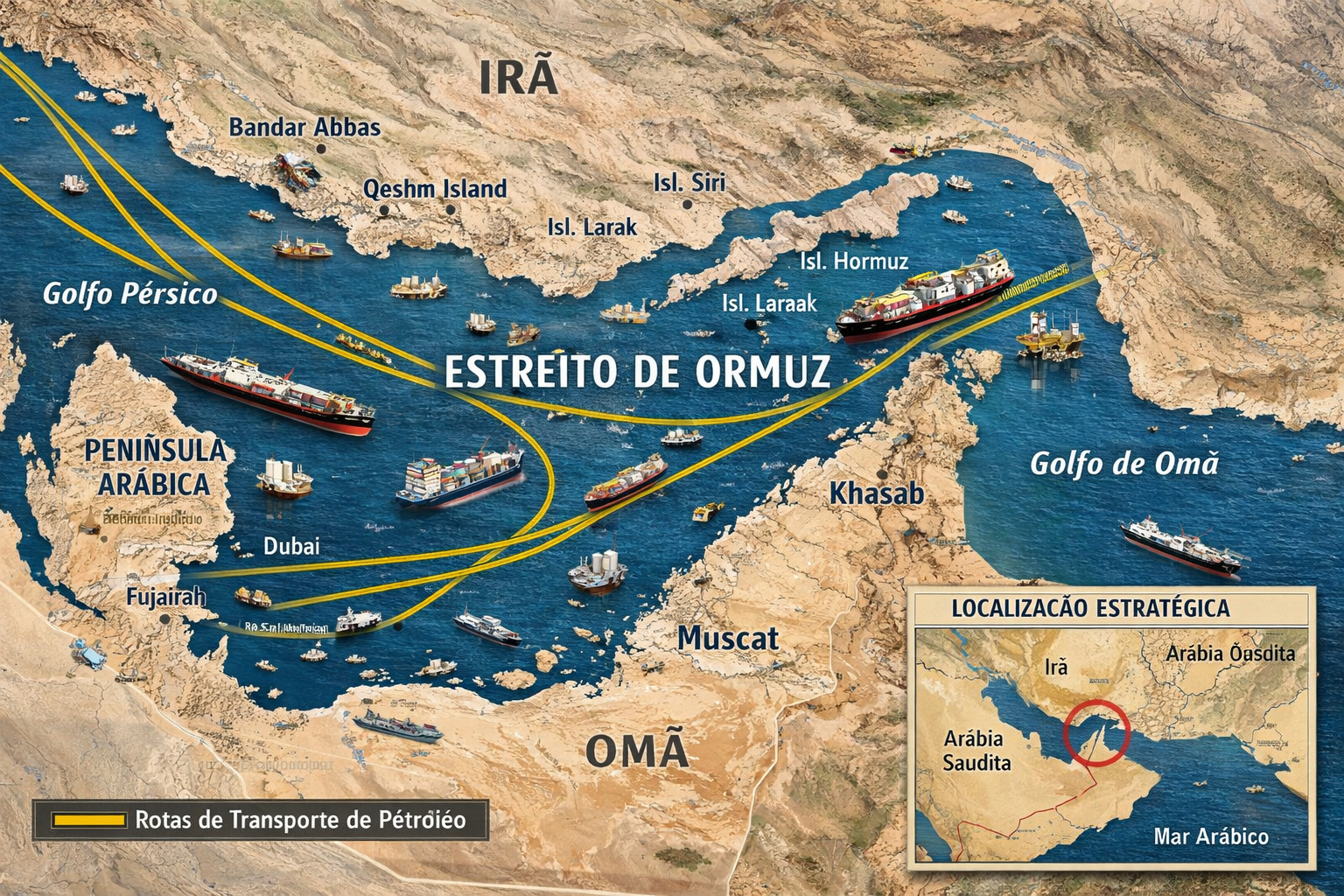
Global summit with over 40 countries pressures Iran for a blockade in the Strait of Hormuz and warns of direct impact on oil, food, and the global economy.
-
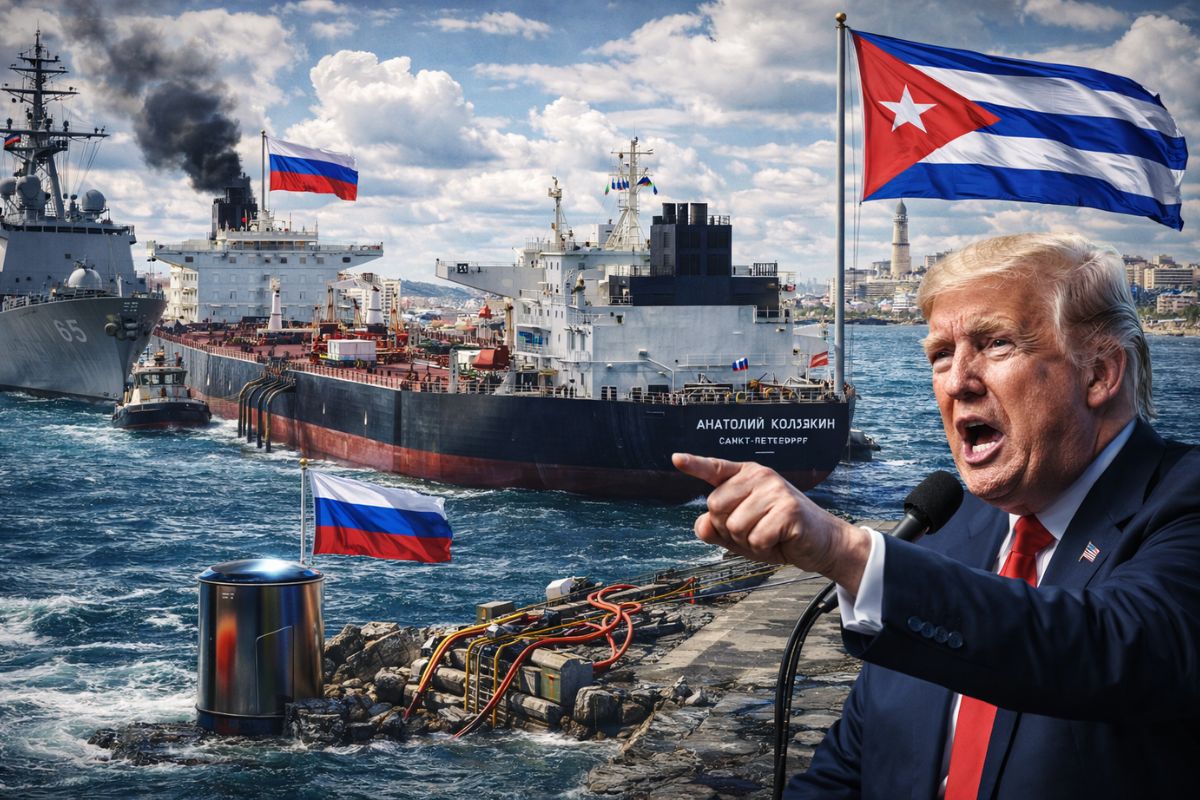
Russia has broken the U.S. maritime blockade to send oil to Cuba and is now loading a second ship while Trump says that “Cuba is next” in a possible military action against the island.
-
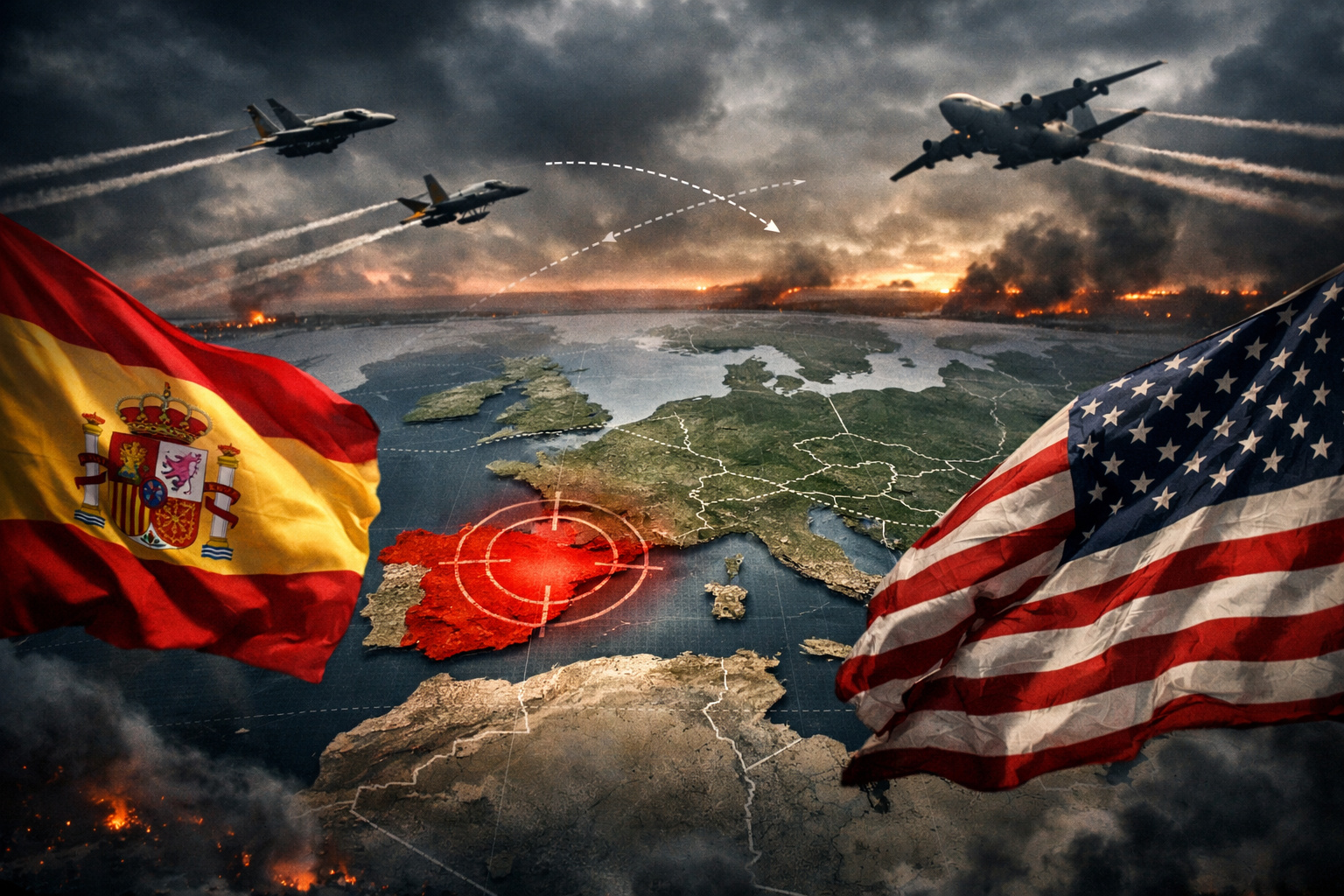
Spain challenges the USA and closes its airspace for operations against Iran, raising global tension and provoking the threat of a trade rupture.

The breaking point begins when enrichment ceases to be clearly civilian and begins to approach the level needed for military use.
According to Professor Gunter Hudzit, it has already been detected that Tehran enriches uranium above the limit compatible with energy plants, which has motivated five UN Security Council resolutions related to Iran’s nuclear program.
This explains why international pressure is not limited to Washington. Governments that participated in the 2015 agreement, the P5+1, also distrust the advancement of Iran’s nuclear program beyond the allowed limits.
For many of them, there is no definitive proof of an atomic bomb in progress, but there is clear evidence of enrichment above the regulations, which is already enough to maintain pressure.
Trump Wants More Than a Nuclear Deal
The Trump administration is not just targeting the nuclear program. The list of demands includes limiting ballistic missiles, reducing or ending Iranian support for armed groups in the region, and reviewing sponsorship of organizations viewed as insurgent or terrorist, depending on who describes them.
In practice, Washington seeks to transform the negotiation of the nuclear program into a broader table that redefines Iran’s role in the Middle East. This increases the difficulty of any agreement.
On one hand, Tehran insists on maintaining what it considers its sovereign right to enrichment. On the other hand, the United States wants to tie the easing of pressure not only to the nuclear program, but also to regional behavior and its missile arsenal. Finding middle ground in this scenario is politically costly for both.
Weakened Iran Tries to Appear Strong
While negotiating, the Iranian regime speaks to two audiences at once: the international community and its own population.
The Supreme Leader, Ali Khamenei, insists on saying that the country “will not bow to pressure”, attempting to project firmness in the face of the American threat.
Internally, the situation is much less solid. Iran has faced massive protests that were brutally suppressed, with thousands dead according to estimates, leaving the regime at its most fragile point since the 1979 Revolution.
In addition to the social crisis, there is economic and military wear. In the so-called Twelve-Day War against Israel, a large part of the air defense infrastructure and facilities related to the nuclear program were attacked, as well as important figures in military leadership who were killed.
The substitutes do not have the same experience or political weight. Trump sees exactly there the window of opportunity to pressure Iran when it is weaker both internally and externally.
Russia Stuck in Ukraine, China Entering the Scene
The possibility of great powers reacting to an American attack also weighs on the calculations. Russia, involved in the war against Ukraine, has depended on Iranian drones and is now more limited in defending Tehran with the same intensity as before.
Part of this space is being filled by China. There are reports of Chinese military cargo planes flying to Iran with their transponders turned off, carrying air defense systems and electronic equipment to scramble GPS signals of American bombs and aircraft.
It is a discreet support, without an official announcement, that shows a gradual change in posture but still insufficient to eliminate the risk of an American attack.
In practice, the message is simple: China helps reinforce Iran’s defense, but does not offer the kind of guarantee that would prevent Trump from attacking the nuclear program if the White House sees that as advantageous.
Bases, Refineries, and the Risk of Oil Price Explosion
The big unknown is the target. If the United States opts for an offensive, the first likely objectives are nuclear program facilities, military bases, and key points of political and religious leadership. On this list, Ayatollah Khamenei himself is mentioned by Americans as a “legitimate” target in an attack scenario.
The Iranian response, in turn, tends to aim at Israel and American bases in the region. This alone would be enough to keep markets on alert. Not by chance, the price of oil has already begun to rise with the mere expectation of conflict.
The greatest risk appears if the confrontation ceases to be surgical. If bombs hit Iran’s oil infrastructure, or if Tehran retaliates by targeting refineries and facilities in neighboring countries, the situation changes significantly.
In this scenario, the price of oil could skyrocket and remain high for much longer, with a direct impact on inflation, energy costs, and transportation worldwide.
In other words, an offensive against the Iranian nuclear program could quickly spill over into the pockets of consumers and businesses far beyond the Middle East.
Congress, Supreme Court, and Trump’s Internal Limits
On the American side, the discussion is not only geopolitical. It is also legal and institutional. Under the United States Constitution, the declaration of war is the prerogative of Congress, not exclusively the president’s.
Surgical strikes and limited operations have been used for decades with flexible interpretations of the law, but a broad attack against Iran approaches an act of war in the classical sense.
Recently, the Supreme Court deemed some of Trump’s economic actions illegal when done without Congressional approval, reopening the debate on how far the president can “stretch the rope” on sensitive issues.
There are even Republicans willing to support Democratic proposals to limit the use of force against Iran, showing that the division is not just between parties, but within the conservative base itself.
This scenario weighs even more in an election year. Part of the movement supporting Trump does not look favorably on a new military adventure, which could affect voter participation if the president insists on an unpopular attack.
Europe, P5+1, and Pressure for a New Deal
In Europe, the stance is ambiguous. Countries that were part of the P5+1 helped construct the 2015 agreement and saw the United States leave the understanding early in Trump’s first term.
They recognize that Iran has violated enrichment limits related to the nuclear program, but at the same time know that an open conflict in the region would increase instability and energy prices across the global economy.
Therefore, many Western governments support pressure on Tehran but prefer it to lead to a new agreement, not to war.
The challenge is to convince a regime that feels cornered but still insists on not appearing weak to accept significant concessions in its nuclear program in exchange for relief from sanctions and political survival.
Nuclear Program, Regional Power, and a High-Cost Choice
In the end, the dispute surrounding the Iranian nuclear program is more than a technical discussion about the percentage of uranium enrichment.
It is a test of strength. For Iran, retreating too much may seem like admitting weakness in the face of the “great Satan.” For Trump, retreating could seem like giving up a unique moment to reconfigure the balance of power in the Middle East.
The dilemma is that each additional step toward a military attack increases the risk of a larger shock to the global energy system, precisely at a time when the world is highly dependent on oil from the region.
The decision, therefore, is not measured only in terms of missiles and centrifuges, but in jobs, inflation, and the cost of living worldwide.
And you, do you believe that the United States should attack Iran’s nuclear program even with the risk of an explosion in oil prices, or is it better to insist on a new agreement, no matter how difficult it may be?







-

Uma pessoa reagiu a isso.