





 Portuguese
  English
  Spanish
  4 min of reading
  0 comments


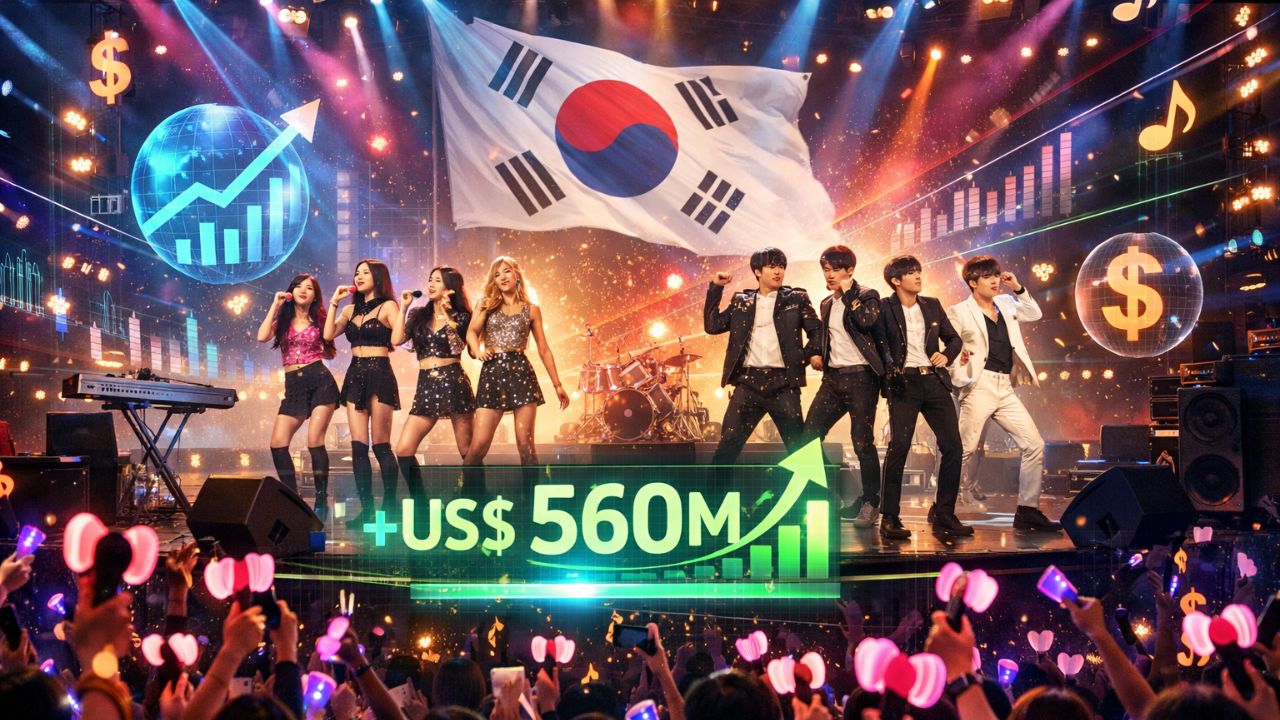
K-Pop Remains Strong, Contributing to a Surplus of US$ 560 Million in South Korea, Showcasing Its Global Economic Impact.
The advancement of the creative economy in South Korea took on new contours in 2025. Between January and June, the country accumulated a surplus of US$ 560 million in the music sector, a result that helps explain why K-Pop continues to be one of the main cultural and commercial assets of South Korea in the international arena.
This data is part of a broader balance of the content industry, which closed the first half with a positive balance of US$ 2.51 billion.
The numbers show that the export of culture has ceased to be just a symbolic showcase and has begun to occupy a relevant space in the country’s trade balance.
-
“No one will make us change the Pix,” says Lula after the US report.

-
Lula responds directly to Trump and says that Pix is from Brazil and will not change under pressure from anyone, after a report from the United States pointed out the Brazilian payment system as an American trade barrier.

-
Amazon has just announced a new fee on all deliveries, and your online purchases will become more expensive starting April 17, including for those buying from the United States here in Brazil.

-
He sold his share for R$ 4 thousand, saw the company become a giant worth R$ 19 trillion, and missed the opportunity of a lifetime.


Cultural Exports Grow and Drive Positive Results
During the same period, South Korean content exports reached US$ 5.78 billion, while imports stood at US$ 3.28 billion.
This difference ensured substantial growth compared to the second half of 2024, with an increase of 27% in the final balance.
This performance indicates that the demand for cultural products from South Korea remains robust. Music, digital games, and audiovisual productions continue to find space in highly competitive markets, especially outside Asia.
Music Stands Out Even Behind Games
Even without topping the ranking, as games accounted for US$ 2.26 billion of the positive balance, the music sector played a decisive role in the outcome, consolidating its importance within the overall performance of the content industry.
The balance of US$ 560 million from the music sector gains relevance considering that other areas of the content industry, such as advertising and information services, recorded negative results.
In practice, this positions music—driven by K-Pop—as one of the pillars supporting the positive performance of the cultural sector as a whole.


K-Pop Maintains Prominence in the Global Market
K-Pop remains the primary force behind the internationalization of South Korean music.
The genre blends different styles, such as pop, hip-hop, R&B, and electronic music, creating a sound language that is easily adaptable to different audiences.
South Korean artists and groups have expanded their global presence in recent years, with international tours, strong performance on streaming platforms, and substantial sales of official products.
Such as the groups BlackPink, BTS, and the globally successful film, K-Pop Warriors.
This set of factors ensures a constant flow of revenue and keeps the genre in the spotlight.
Integration with Audiovisual Expands Music’s Reach
Another element contributing to the strength of K-Pop is its presence in audiovisual productions.
Soundtracks for movies, series, and content on streaming platforms help expand the reach of South Korean music and connect it with new audiences.
This movement strengthens the Hallyu, the so-called Korean cultural wave, which goes beyond music and influences sectors such as fashion, beauty, and tourism, amplifying indirect economic effects.
Public Policies Help Sustain Growth
The performance of the music sector also reflects an institutional strategy.
South Korea has been investing for years in policies aimed at the export of cultural content, providing support for the internationalization of artists and stimulating partnerships with global technology and entertainment companies.
This favorable environment allows South Korean music to quickly adapt to market changes and maintain competitiveness in the long run.
New Sources of Revenue Strengthen the Music Sector
The growth of the surplus is linked to the diversification of monetization methods. Currently, South Korean music generates revenue through:
- digital streaming platforms;
- international tours and performances;
- merchandise sales and licensed products;
- licensing music for movies, series, games, and advertising;
- exclusive content aimed at fans, such as live streams and digital experiences.
This multiplicity of sources reduces risks and enhances the sustainability of the sector.

K-Pop: Creative Economy Gains Ground in the Trade Balance
The results recorded in 2025 demonstrate how the creative economy has become a structural part of the South Korean economic model.
By transforming culture into an export product, the country was able to diversify its trade balance and expand its global influence.
The surplus in the music sector confirms that K-Pop is far from being a passing phenomenon.
It has solidified as a relevant economic tool, capable of generating revenue, strengthening the country’s international image, and inspiring other nations to invest in their own cultural expressions.
With information from R7.








-

-

-

-

-

42 pessoas reagiram a isso.