





 Portuguese
  English
  Spanish
  5 min of reading
  0 comments


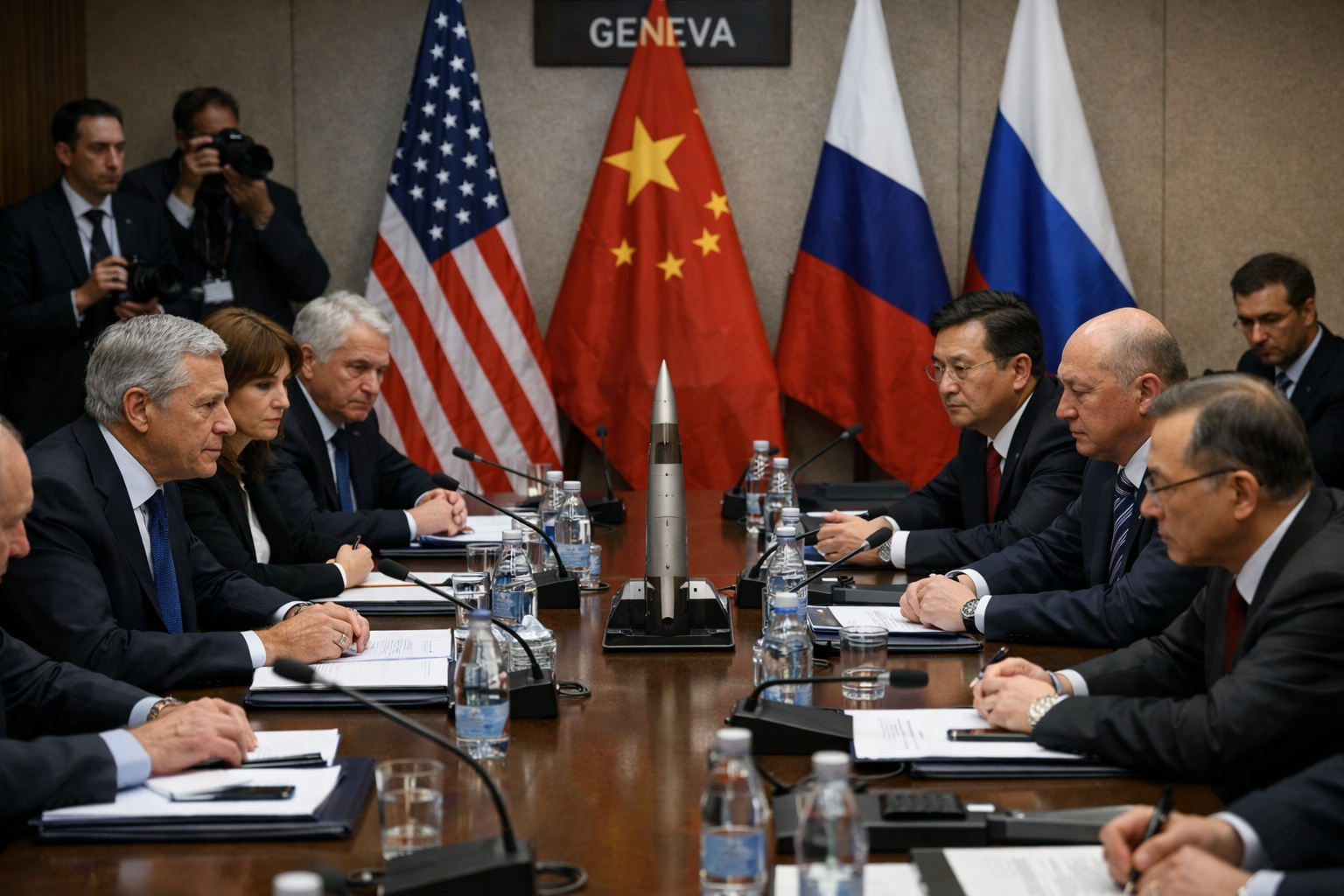
Accusations Made in Geneva Intensify Tensions Between Nuclear Powers and Reignite the Debate on the Arms Race in an Unstable International Landscape
The United States raised its tone against China this Friday (6). This time, Washington accused Beijing of having conducted a Secret Nuclear Test in 2020. At the same time, the U.S. government began to advocate for a New Nuclear Arms Control Treaty, with a broader scope and multilateral character.
In this context, the U.S. claims that the new agreement needs to include China, in addition to Russia. Until now, existing treaties involved only Washington and Moscow. As a result, the debate gained urgency right after the expiration of the New START Treaty.
This agreement limited, for over two decades, the strategic arsenals of the two largest nuclear powers in the world. However, with the end of the treaty, the international system entered a regulatory void. Since then, experts have warned of greater risks of instability.
-
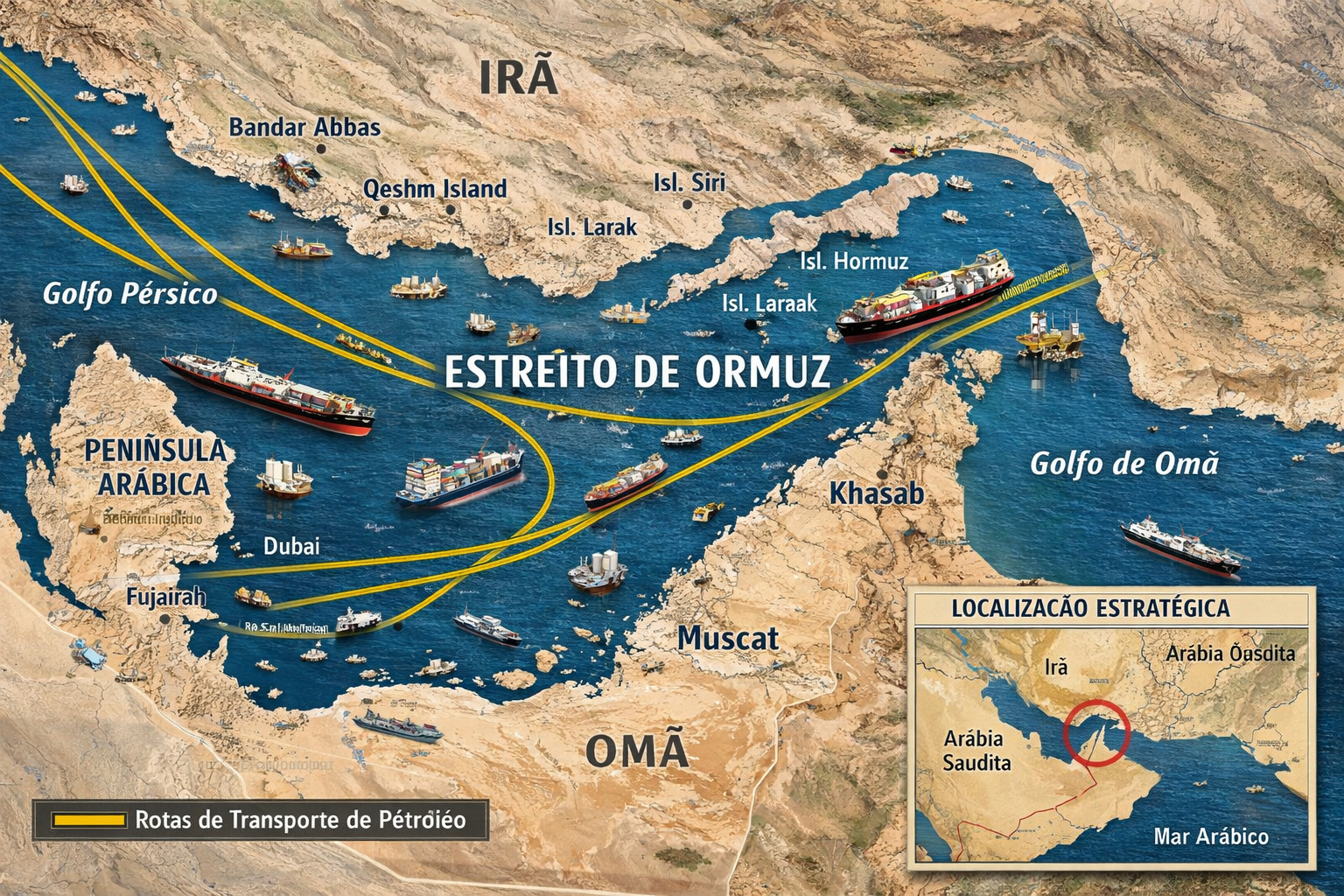
Global summit with over 40 countries pressures Iran for a blockade in the Strait of Hormuz and warns of direct impact on oil, food, and the global economy.
-
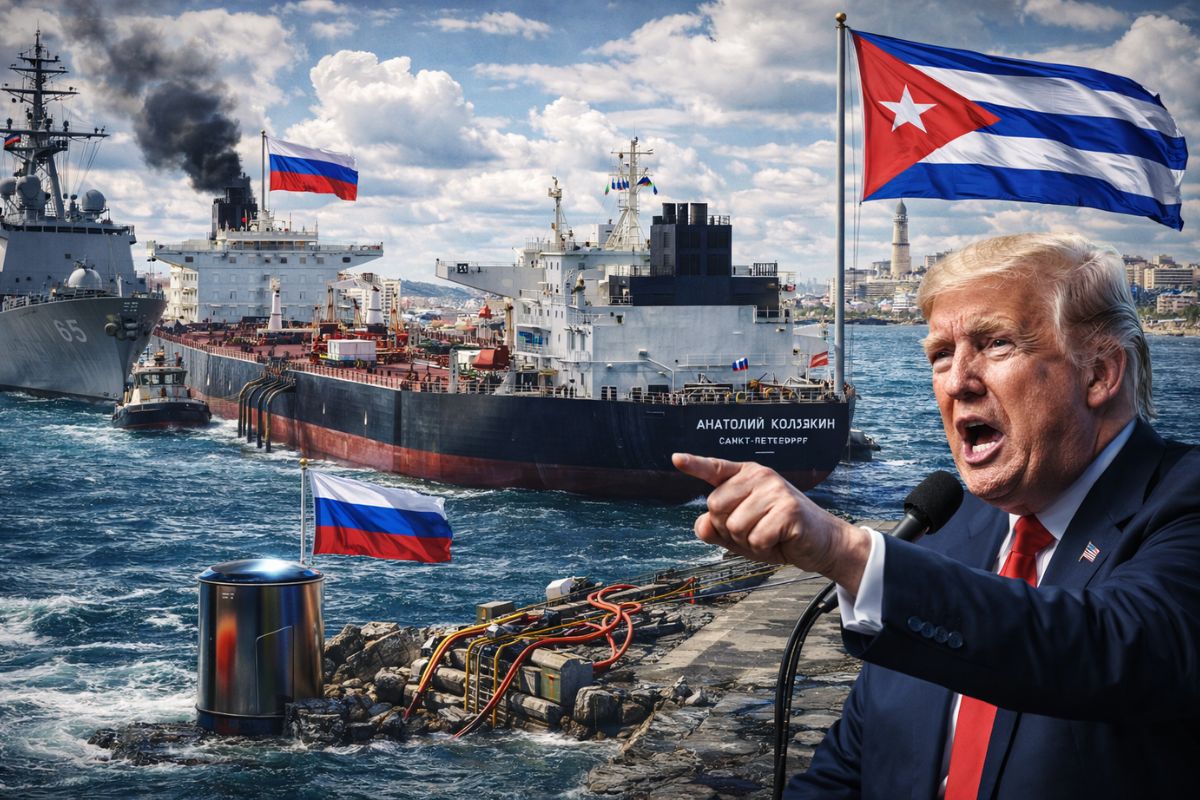
Russia has broken the U.S. maritime blockade to send oil to Cuba and is now loading a second ship while Trump says that “Cuba is next” in a possible military action against the island.
-
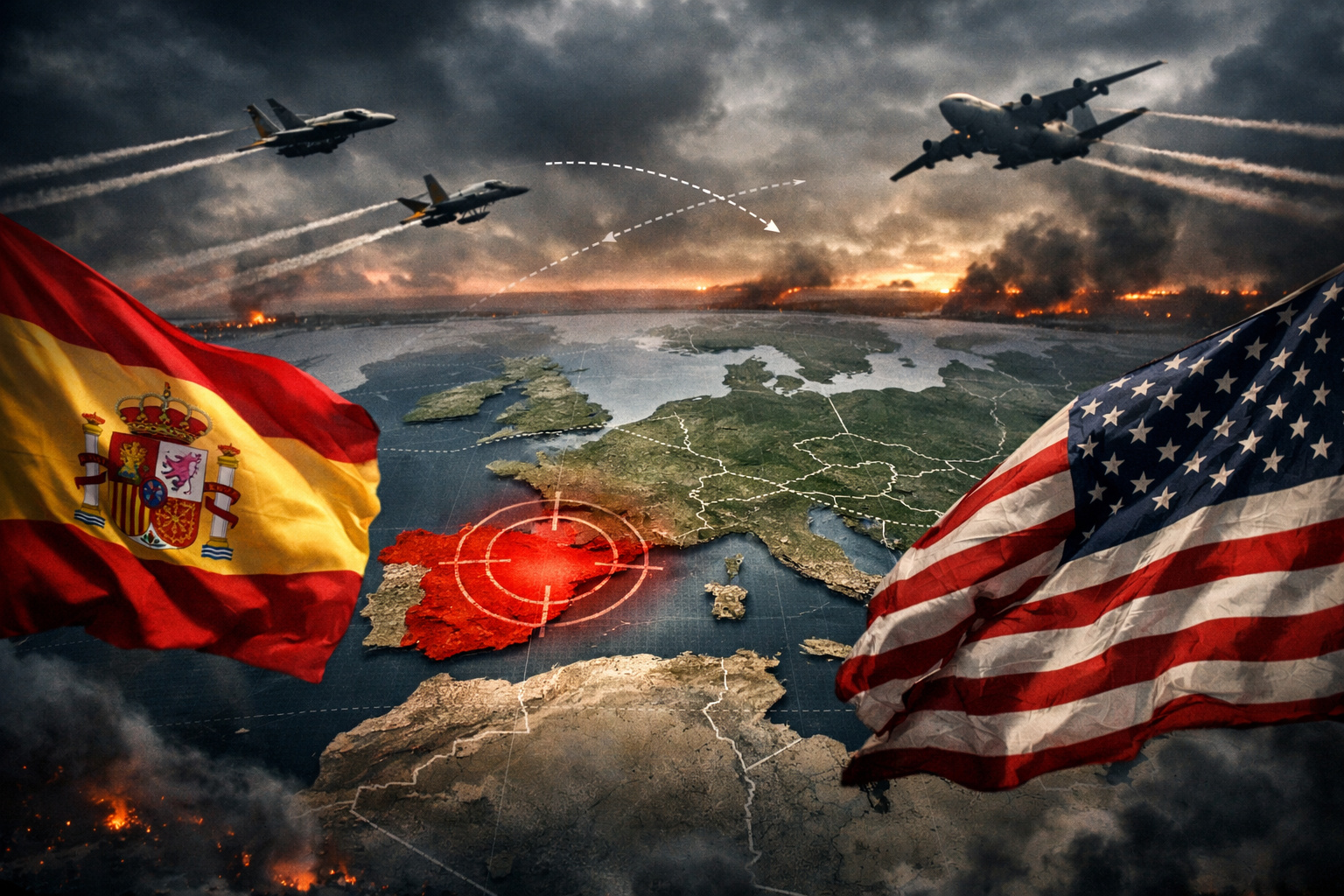
Spain challenges the USA and closes its airspace for operations against Iran, raising global tension and provoking the threat of a trade rupture.
-
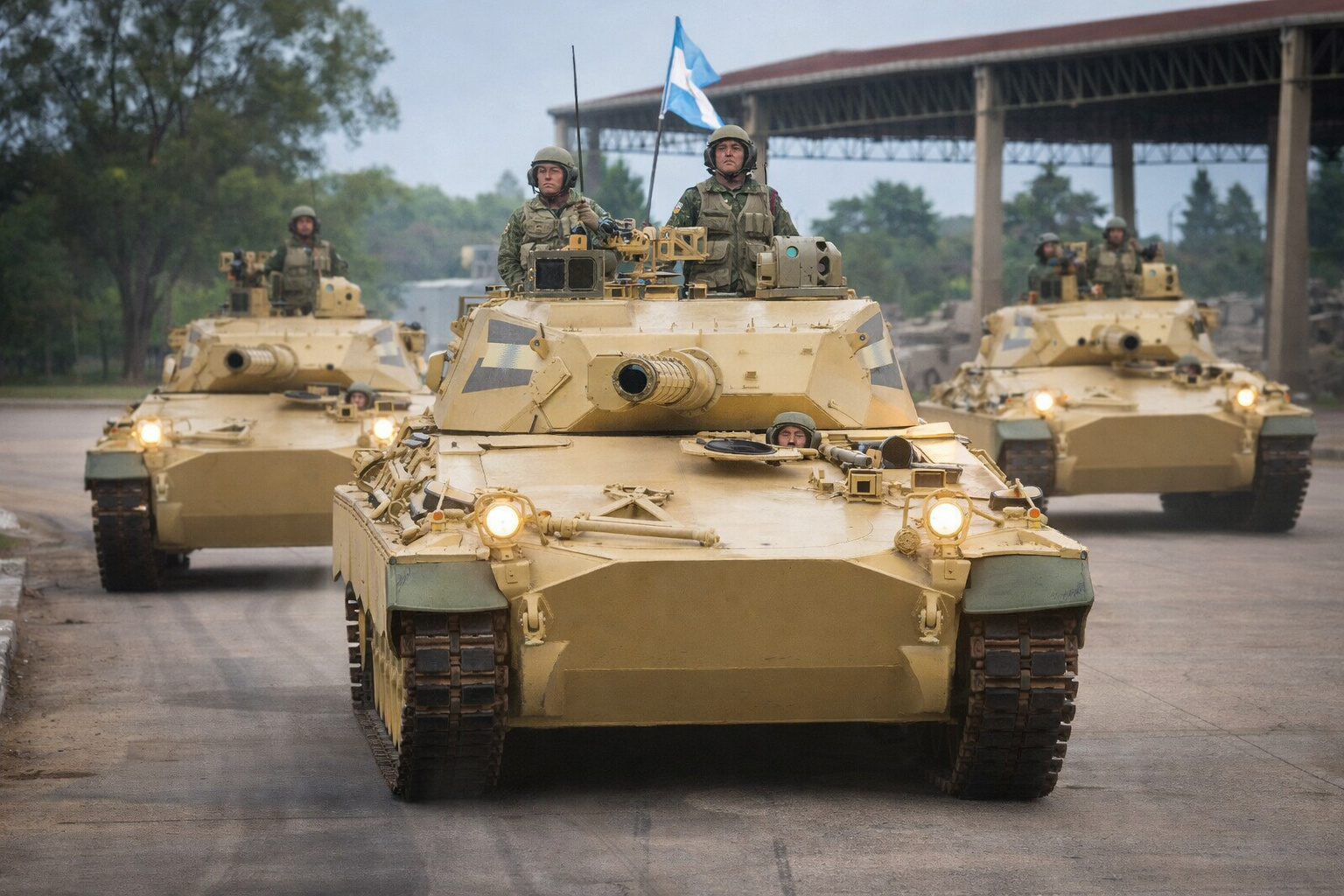
While no other country manufactures tanks in Latin America, Argentina activates the TAM 2C-A2 and raises a curiosity about the technological lag in the region.
The information was disclosed by “Reuters”, in a report signed by Olivia Le Poidevin, Friederike Heine, and Ludwig Burger, published on 02/06/2026, with updates at 10:23 AM. According to the agency, the end of New START left the world without formal restrictions between the U.S. and Russia for the first time since 1972.
In light of this, the fear of miscalculations and unintentional escalations is growing. Furthermore, China’s entry into the center of the debate further amplifies the Complexity of Global Nuclear Control.
U.S. Statements on Nuclear Tests Intensify Diplomatic Confrontation with Beijing


During the Disarmament Conference held in Geneva, the U.S. Under Secretary of State for Arms Control, Thomas DiNanno, made direct accusations. According to him, the U.S. government is aware that China has conducted tests with Nuclear Explosives.
In addition, DiNanno stated that Beijing prepared trials with estimated yields in the hundreds of tons. He then declared that one of these tests occurred on June 22, 2020.
According to the American representative, the Chinese military tried to conceal the nuclear explosions. To do this, they used the technique known as “Decoupling”. This method reduces the effectiveness of international seismic monitoring and makes it difficult to detect explosions.
For this reason, U.S. authorities classified the practice as a violation of international commitments. Diplomats present at the conference considered the accusations new and concerning. Thus, the topic quickly gained prominence in the diplomatic landscape.
On the other hand, China’s ambassador for disarmament, Shen Jian, took a different line. He avoided directly responding to the accusations. Nevertheless, he stated that Beijing has always acted with prudence and responsibility in nuclear matters.
According to Shen, the United States exaggerates the so-called “Chinese Nuclear Threat.” Furthermore, he declared that Washington spreads false narratives. In the diplomat’s view, the U.S. directly contributes to the aggravation of the arms race.
Thus, the verbal confrontation highlighted the high level of distrust between the two powers.
End of New START Deepens Crisis in the Global Arms Control System

The New START Treaty, signed in 2010, served as one of the main pillars of international nuclear control. It established clear limits for strategic missiles and nuclear warheads of the United States and Russia.
With the expiration of the agreement, the two countries began to operate without any legally binding restrictions. This hadn’t occurred for over half a century. As a result, analysts see a more unstable and unpredictable scenario.
The U.S. President, Donald Trump, advocates for replacing the treaty with a new agreement. According to him, a bilateral model no longer addresses current threats. Therefore, Washington is pushing for the inclusion of China in the negotiations.
American authorities project that Beijing could surpass 1,000 nuclear warheads by 2030. This growth concerns U.S. allies. Moreover, it reinforces the American argument for a more comprehensive agreement.
China, however, rejects participation in these negotiations at this time. Shen Jian stated that the country possesses about 600 nuclear warheads. This number remains well below the approximately 4,000 warheads held by the U.S. and Russia.
In light of this, Beijing maintains that there is no strategic equivalence. For this reason, the Chinese government rules out adhering to a new treaty in the short term.
Meanwhile, experts warn of the risks in the absence of rules. Without clear limits, nuclear powers tend to expand their arsenals. Consequently, the risk of escalation increases.
New Nuclear Treaty Could Take Years and Increase Proliferation Risks

The concern also reaches Western allies. At the Geneva forum, the United Kingdom advocated for a new phase in nuclear control. According to London, China, Russia, and the United States need to negotiate jointly.
France followed the same line. According to French authorities, an agreement among countries with the largest arsenals has become essential. This occurs at a time of unprecedented weakening of international nuclear norms.
Russia, for its part, signaled a willingness to engage in dialogue. The Foreign Minister, Sergei Lavrov, stated that Moscow is prepared for any scenario. Nevertheless, he acknowledged the need for future negotiations.
According to the Kremlin, meetings held in Abu Dhabi led to a basic understanding. The parties agreed to act responsibly while discussing next steps.
Despite this, the scenario remains complex. Russia is developing systems considered “exotic,” such as the Burevestnik missile and the Poseidon submarine torpedo. At the same time, Trump promised to invest in a space-based missile defense system known as the “Golden Dome.”
Experts state that any new nuclear treaty will require years of negotiation. Until then, the world must face a prolonged period of geopolitical uncertainty.
Additionally, the risk of proliferation is growing. Analysts evaluate that countries like Japan, South Korea, and Poland may intensify internal debates. The possibility of joining the nuclear club is gaining ground in these countries.
Do you believe that a new global nuclear treaty is possible, or is the world heading towards a new arms race?









-

Uma pessoa reagiu a isso.