





 Portuguese
  English
  Spanish
  4 min of reading
  0 comments


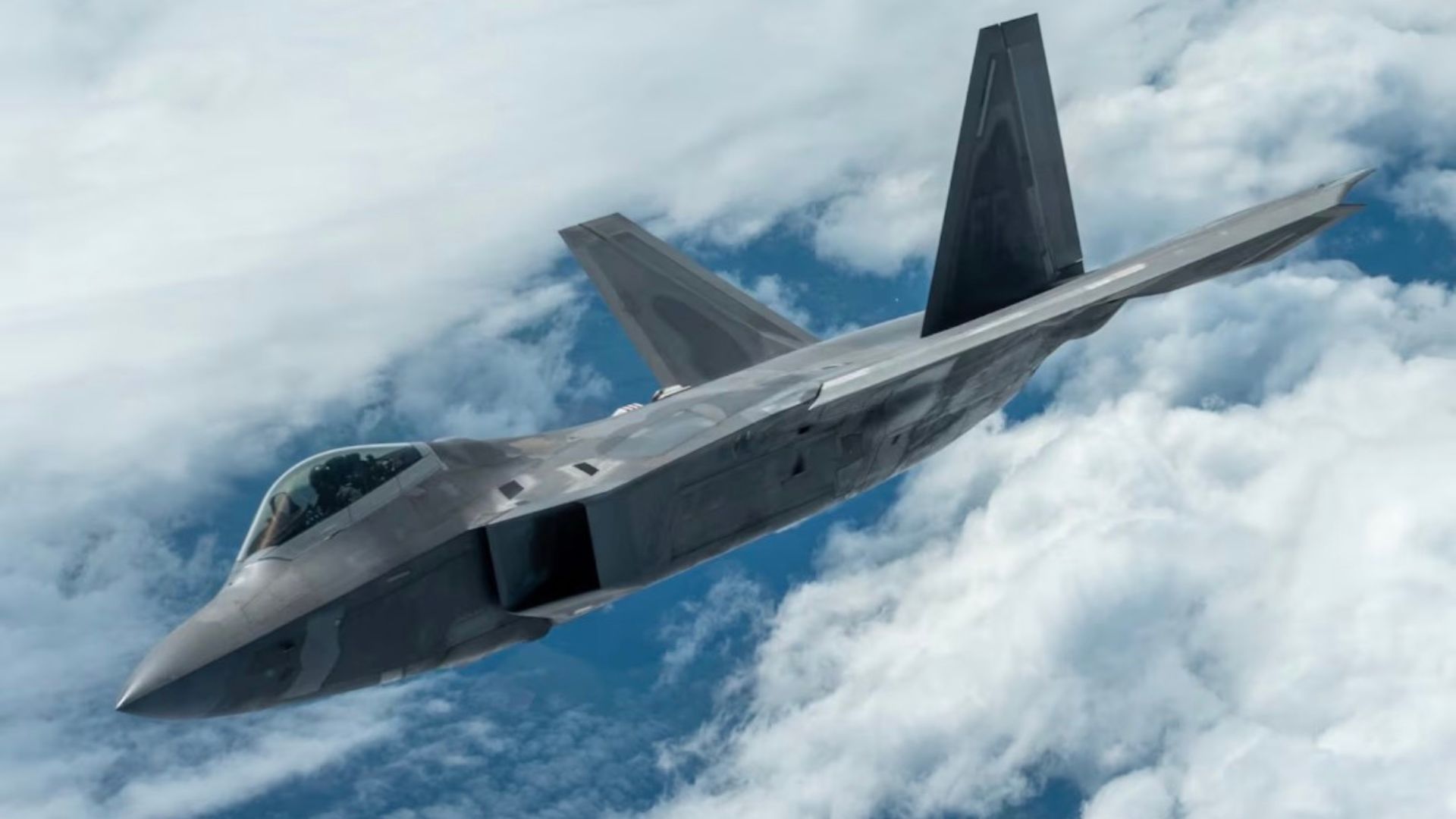
High-Tech Stealth Aircraft Are Positioned in Israel as Nuclear Negotiations Take Place in Geneva
The United States has sent about 12 F-22 stealth fighters to the Middle East amid rising tensions with Iran. The deployment of these aircraft is part of a broader positioning of American forces in the region at a particularly delicate moment in the international geopolitical landscape.
The information was reported by “R7.com,” based on a report from The New York Times, which analyzed flight tracking data, videos, and images that indicate what may be the first known use of the F-22 in the Middle East.
According to the American newspaper, videos and photos show a dozen F-22s taking off from a temporary base in the United Kingdom. Additionally, records indicate the presence of refueling planes over the Mediterranean Sea, reinforcing the hypothesis that the final destination of the aircraft was the Middle East.
-
USA and China compete for Brazil over resources that could be worth trillions — rare earths put the country at the center of a global dispute

-
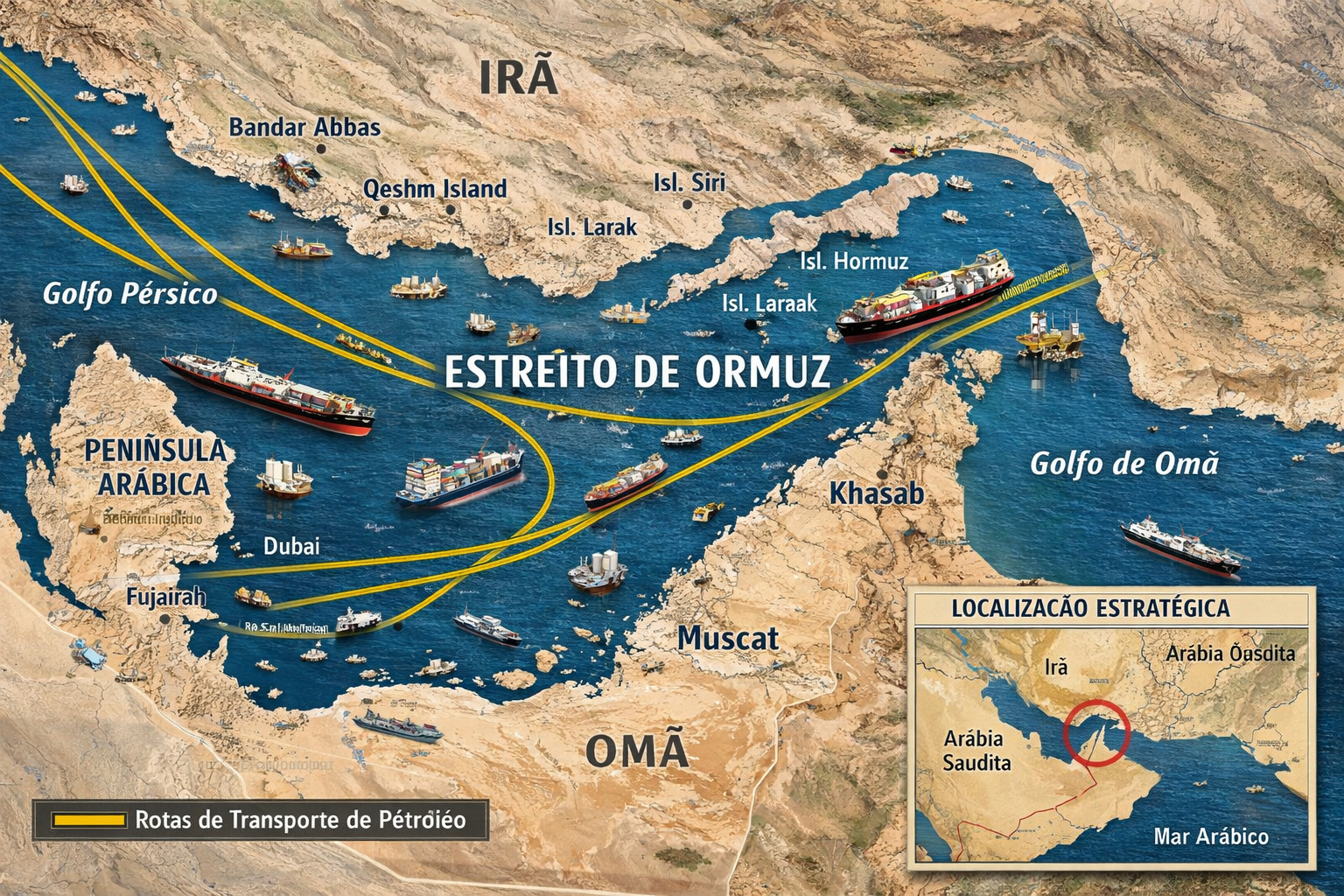
Global summit with over 40 countries pressures Iran for a blockade in the Strait of Hormuz and warns of direct impact on oil, food, and the global economy.
-
Russia has broken the U.S. maritime blockade to send oil to Cuba and is now loading a second ship while Trump says that “Cuba is next” in a possible military action against the island.

-
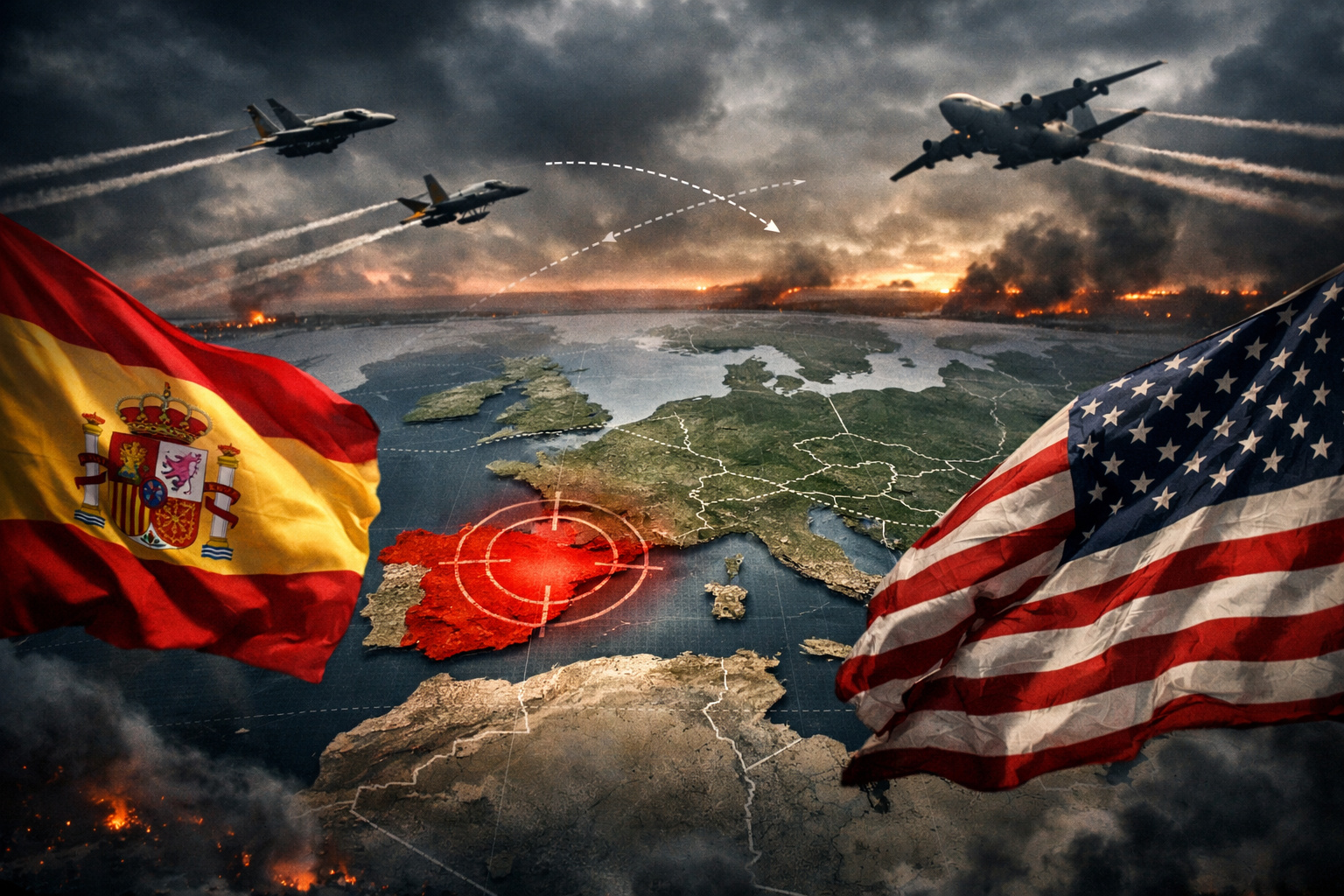
Spain challenges the USA and closes its airspace for operations against Iran, raising global tension and provoking the threat of a trade rupture.

U.S. authorities confirmed that part of these aircraft has already arrived in Israeli territory. Meanwhile, Israeli media reports that the fighters are to be sent to a base in the southern part of the country. This strategic position would place them in an ideal condition to assist in intercepting potential launches from Houthi terrorists in Yemen.
Therefore, the deployment of the F-22s is not isolated. It fits into a broader context of regional tension and intense diplomatic movements between Washington and Tehran.
F-22 Raptor: Stealth Technology, AIM-120 Missiles, and Speed of 2,400 km/h

The F-22 Raptor is considered one of the most advanced fighters in the United States armed forces. Developed for air superiority, the model combines low radar detection technology with air-to-air and air-to-ground attack capability.
The prototypes of the F-22 made their first flights in the late 1990s. Since then, the aircraft has become part of the frontline of the U.S. Air Force as one of the strategic pillars of defense and deterrence.
In the air-to-air configuration, the F-22 carries six AIM-120 AMRAAM missiles and two AIM-9 Sidewinder missiles. Additionally, it can strike surface targets, carrying two GBU-32 Joint Direct Attack Munitions internally.
In this context, the Raptor features advanced onboard avionics—electronic systems that assist in navigation, tracking threats, and launching munitions with high precision.
According to the U.S. Air Force, the engines of the F-22 produce more thrust than any current fighter engine. This allows the aircraft to fly at supersonic speeds without the constant need for afterburners. The model is capable of reaching speeds of 2,400 km/h, which is almost twice the speed of sound.
Furthermore, the U.S. government plans to enhance the air-to-ground capability of the F-22 in the future with the addition of a modernized radar and up to eight Small Diameter Bombs. In this upgraded air-to-ground configuration, the Raptor could carry two AIM-120 missiles and two AIM-9 missiles.
Currently, the United States maintains about 187 F-22 aircraft in active service. The last unit was delivered in 2012, marking the end of production of the model.
Tensions with Iran and Negotiations in Geneva Increase the Relevance of the Deployment
The movement of the 12 F-22s occurs in parallel with negotiations between the United States and Iran regarding Iran’s nuclear program. Representatives from both countries are meeting this Thursday (26) in Geneva, Switzerland, for another round of discussions.
Participating in the talks are the U.S. special envoy, Steve Witkoff, and Jared Kushner, son-in-law of President Donald Trump. They are set to meet with Iran’s Foreign Minister.
The current meetings follow several sessions held in recent weeks, indicating that dialogue remains active, albeit under considerable political and military pressure.
On Tuesday (24), Donald Trump stated that he prefers a diplomatic solution to the Iranian nuclear issue. However, he emphasized that he would not allow Iran to develop nuclear weapons.
Thus, the deployment of the F-22 to the Middle East can be interpreted as a demonstration of strategic strength, while Washington keeps the doors of diplomacy open.
Meanwhile, the presence of stealth fighters capable of reaching 2,400 km/h, equipped with AIM-120, AIM-9 missiles, and GBU-32 bombs, reinforces the U.S. immediate response capability in the region.
In light of this scenario, an inevitable question arises: does the deployment of the F-22 represent merely a preventive measure, or could it indicate a new phase of military tension in the Middle East?








Seja o primeiro a reagir!