





 Portuguese
  English
  Spanish
  4 min of reading
  0 comments


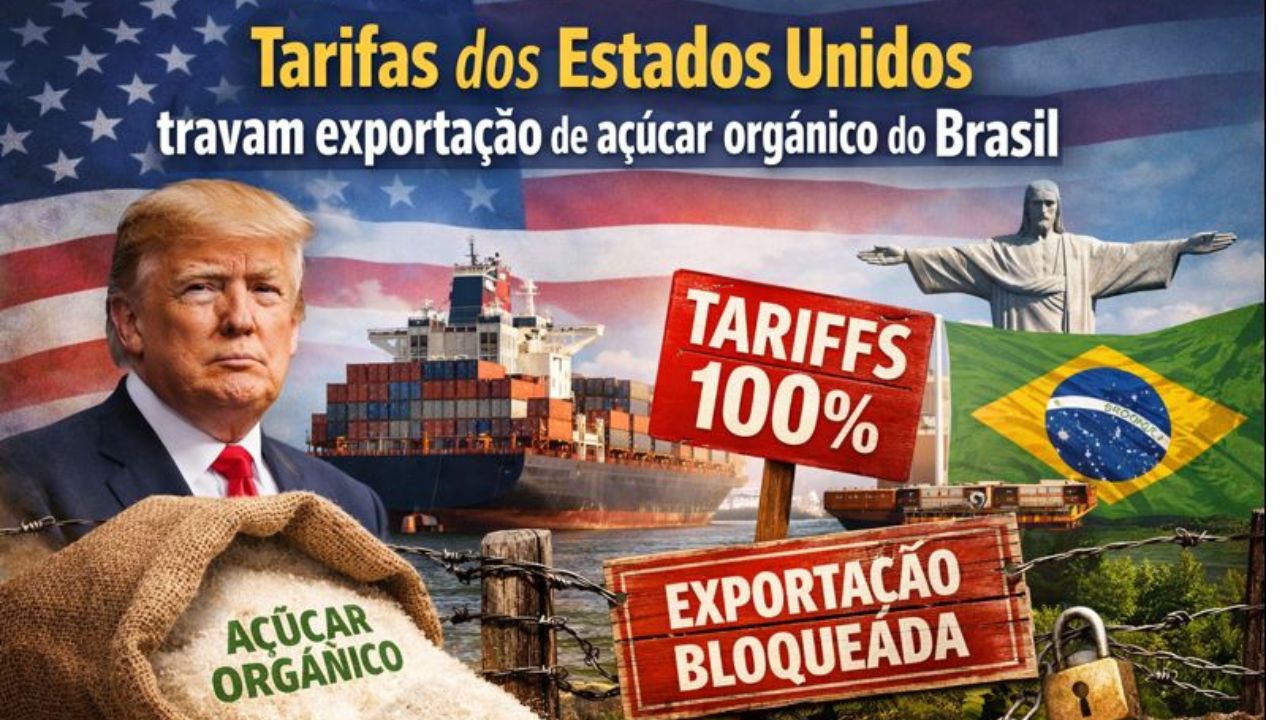
U.S. Tariffs Increase Costs, Halt Brazilian Organic Sugar Exports, Leaving Producers Without Market Alternatives.
Six months after the intensification of the tariffs imposed by the United States, Brazilian organic sugar is experiencing one of the most delicate moments in its recent history.
The measure, adopted by the U.S. government in 2025, drastically increased export costs, reduced the competitiveness of Brazilian products, and made it difficult to open new markets, leading to high stocks and uncertainties for the sector.
Previously exempt, Brazilian organic sugar now faces, in practice, a tariff burden close to 100% to enter the American market.
-
Middle East War Hits Fertilizers and Transportation and May Strain Brazilian Wallets
-
Russia Considers Suspending Gas to Europe After Surge in Energy Prices

-
How A War Thousands of Miles From Brazil Started Disrupting Global Shipping Routes, Raising Container Costs, and Putting Up to 40% of Brazilian Beef Exports at Risk
-
Iran-U.S. War Drives Up Oil Prices and Pressures Global Financial Markets

The impact directly affects producers and exporters, especially in a country that leads global consumption of organic foods and relies on this input to maintain its certified industry.
U.S. Tariff Hits Brazilian Organic Sugar Hard
The change in the scenario began with the trade policy of President Donald Trump, which affected Brazilian products on two fronts.
In addition to maintaining the 40% surcharge, in effect since August 2025, organic sugar also began to incur the additional tariff of 10% applied to global exports.
On the other hand, the most severe blow came with the end of the so-called specialty-quota. This mechanism ensured a tariff exemption of US$ 327 per ton for an annual quota of 240,000 tons of organic sugar.
With the loss of this benefit, the product from Brazil lost any competitive advantage in the American market.
United States Depend on the Product but Pass Costs to Consumers
Despite the tariffs, the United States remains highly dependent on imported organic sugar.
This is because U.S. legislation requires the exclusive use of this type of sugar in the production of organic foods, such as granola, cereal bars, and yogurts.
With insufficient domestic production, the American industry continues to buy from Brazil but passes the increased costs on to the end consumer.
According to exporters, the measure does not strengthen local producers and still raises retail prices.
Native Seeks New Markets but Encounters New Barriers
Faced with the restrictions imposed by the United States, Native Organic Products, part of the Balbo Group, initiated a market diversification strategy.
Mexico emerged as a promising alternative in 2025, with the first shipments being successfully executed.
However, the strategy was interrupted at the end of the year. On December 31, the Mexican government announced the end of tariff exemptions for sugar imports, raising the charge to 200% on organic sugar.
“We managed to ship ten containers to Mexico and there were requests for more, but we will no longer be able to export,” laments Leontino Balbo Júnior, vice president of Native Organic Products.
Stocks Grow and Working Capital Becomes an Obstacle
With the loss of the Mexican market and difficulties in the United States, Native now faces a critical scenario.
The company has accumulated about 30,000 tons in stock, a volume considered high for an operation that expected to export 40,000 tons to the U.S. this harvest.
“The distributor doesn’t have cash to buy. They are without working capital,” says Balbo. The expectation was to deplete stocks by April, which is unlikely to happen now.
Canada Emerges as a Limited Export Alternative
Currently, Canada has been the main escape valve for part of Brazilian production.
Canadian industries have started receiving more orders from American clients, trying to meet the repressed demand in the United States.
Even so, the volumes are modest. Native, which previously exported 6,000 tons per year, is expected to increase shipments to about 9,000 tons annually, a number insufficient to compensate for losses in the American market.
Jalles Machado Maintains Sales to the U.S. but Warns of Impacts
Another significant exporter, Jalles Machado, still manages to maintain its organic sugar sales to the United States.
According to the company’s financial director, Rodrigo Penna, the need of the American market sustains the contracts despite the tariffs.
“We continue selling to our clients because the United States needs it. But they are passing [the cost] onto retail,” says Penna.
He emphasizes that the company is trying to expand exports to other markets, but without significant results.
“[The tariff] is raising the price of sugar for the consumer and does not help the American producer, who does not produce organic,” he concludes.









Seja o primeiro a reagir!