





 Portuguese
  English
  Spanish
  4 min of reading
  0 comments


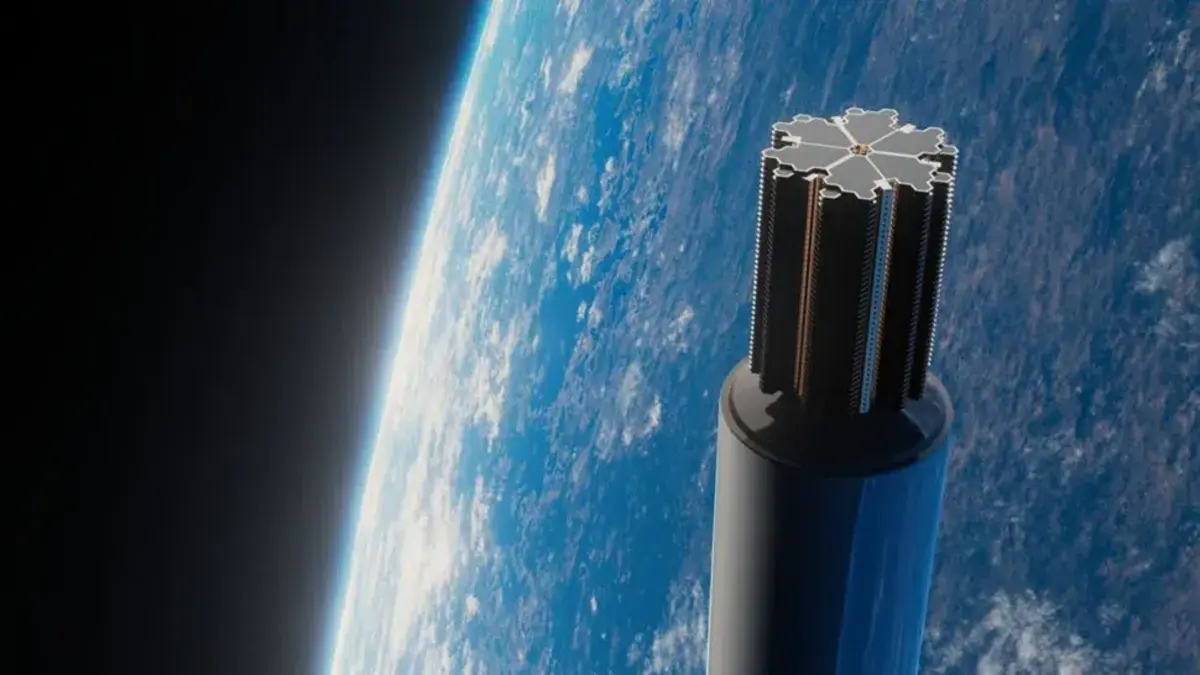
U.S. Company Tests Rotary Cannon To Launch Satellites Without Rockets, Reducing Cost And Environmental Impact. China Is Already Monitoring The Technology
A new technology could change the future of space missions. Instead of rockets, an American company wants to launch satellites with a giant rotary cannon. The proposal is bold, but it is already in the testing phase and is attracting attention even from China.
The idea comes from SpinLaunch, which developed a system called Suborbital Accelerator. It works like a vacuum-sealed centrifuge, capable of launching objects at speeds of up to 8,000 km/h.
With this method, ten successful suborbital flights have already been made. The next step will be a complete orbital demonstration.
-
They were brilliant! Scientists discover that our ancestors in China were already making super advanced tools 160,000 years ago, changing everything we knew.

-
Scientists unveil 3 million years of climate secrets hidden in the ice of Antarctica.

-
Ancient farmers created “aggressive plants” that changed nature forever.

-
Astronomers find a “backward” solar system that ignores all the rules of space and leaves scientists scratching their heads!


Satellites Like Pancakes
The system does not use rockets or combustion. Instead, it relies on kinetic energy to shoot small satellites straight up.
These satellites are about 2.3 meters wide, weigh 68 kilograms, and are flat, resembling pancakes. They are designed to withstand extremely high forces, reaching up to 10,000 times the force of gravity.
This makes them lighter and more compact than traditional models. The idea is to launch microsatellites more quickly and at a lower cost. This completely changes the current model of space transportation, which still depends on large and expensive rockets.
Advantages In Cost And Environment
According to SpinLaunch, each kilogram launched could cost between US$ 1,250 and US$ 2,500. Today, companies like SpaceX charge over US$ 5,000 per kilogram with their rockets.
Furthermore, SpinLaunch’s system does not burn fuel. This means it does not emit polluting gases during launches.
No engines, no exhaust, and no hazardous fuels. The proposal is much more eco-friendly. And at a time when the space industry is under pressure to reduce its carbon footprint, this difference could make all the difference.
Financial Support And Ambitious Goals
SpinLaunch has already raised nearly US$ 150 million. Just recently, it received an additional US$ 12 million from Kongsberg Defence and Aerospace in Norway. This money is already being utilized. The partner NanoAvionics is building 250 satellites called Meridian. They are expected to be launched in 2026.
The company’s goal is to conduct up to five launches per day in the future. This demonstrates how advanced the project is. However, SpinLaunch’s success has not gone unnoticed in other parts of the world.
Immediate Reaction From China To The Satellite Launching System
China has already put its orbital surveillance agencies on alert. The government wants to closely monitor the progress of the American company. The reason is clear: space is becoming more competitive. And a new, inexpensive, and rapid launch method could change everything.
With the increase in satellites in orbit, the risk of signal interference and even collisions grows. China is also concerned about its own satellite constellation, Guowang, which could be affected by new competitors occupying the same space.
Besides the commercial impact, there are potential military implications. A system capable of launching sensors and equipment on demand could serve surveillance and communication purposes. This could alter the balance between countries and force new rules for space usage.
That’s why strategic analysts are keeping an eye on the project. Both in the United States and Asia, attention around SpinLaunch is increasing. The space race could pick up a new pace with this technology.
Unanswered Questions
Despite promising tests, there are still challenges. The main one is achieving orbital speed with precision. Launching an object into space is not enough. It needs to enter the correct orbit and function without additional engines. This still needs to be proven.
There are also concerns about space traffic control. With the increase in the number of satellites, it will be necessary to avoid collisions and excess debris. Astronomers are already warning about light pollution caused by large constellations in orbit.
These questions do not yet have clear answers. But they are part of any innovation that aims to change how we access space.
A Change That Could Reach Everyone
If successful, the impact will be significant. The technology could democratize access to space, paving the way for startups and smaller countries. This could facilitate new types of research, communication networks, and climate monitoring.
The idea from SpinLaunch seems like it came straight out of a science fiction film. But it’s real. And it’s progressing rapidly. If it works, it won’t just be a change in technology. It will be a shift in who can participate in the new space era.
The world is watching. And with each test, the race for a more accessible and sustainable space picks up momentum.
With information from Jason Deegan.






Seja o primeiro a reagir!