





 Portuguese
  English
  Spanish
  6 min of reading
  0 comments


USS Blue Ridge Ship Is The Command Center Of The US 7th Fleet In The Pacific And Coordinates Large-Scale Naval Operations With Advanced Communications Technology.
When it comes to naval power, most people imagine gigantic aircraft carriers or destroyers armed with hundreds of missiles. However, there is a type of vessel that serves an equally important strategic function: the command ship. The USS Blue Ridge (LCC-19) is exactly that. With a length of nearly 197 meters and a displacement of over 19,000 tons, it is designed to act as the operational brain of the American fleet in the Pacific.
Rather than focus on direct combat, its main mission is to provide C4I — command, control, communications, computers, and intelligence — for the US 7th Fleet, the largest American naval force in continuous operation overseas. In practice, this means that the Blue Ridge is capable of coordinating warships, submarines, patrol aircraft, helicopters, and ground forces in operations that can involve thousands of military personnel spread across one of the most strategically significant regions of the planet.
The Silent Giant That Coordinates Operations Across The Indo-Pacific
The Blue Ridge was not built to be just another Navy ship. It belongs to an extremely rare class of vessels: command ships designed from the keel up to function as floating operation centers. Its role is similar to that of a mobile naval headquarters. Onboard, there are operations centers equipped with communication systems capable of integrating data from:
-
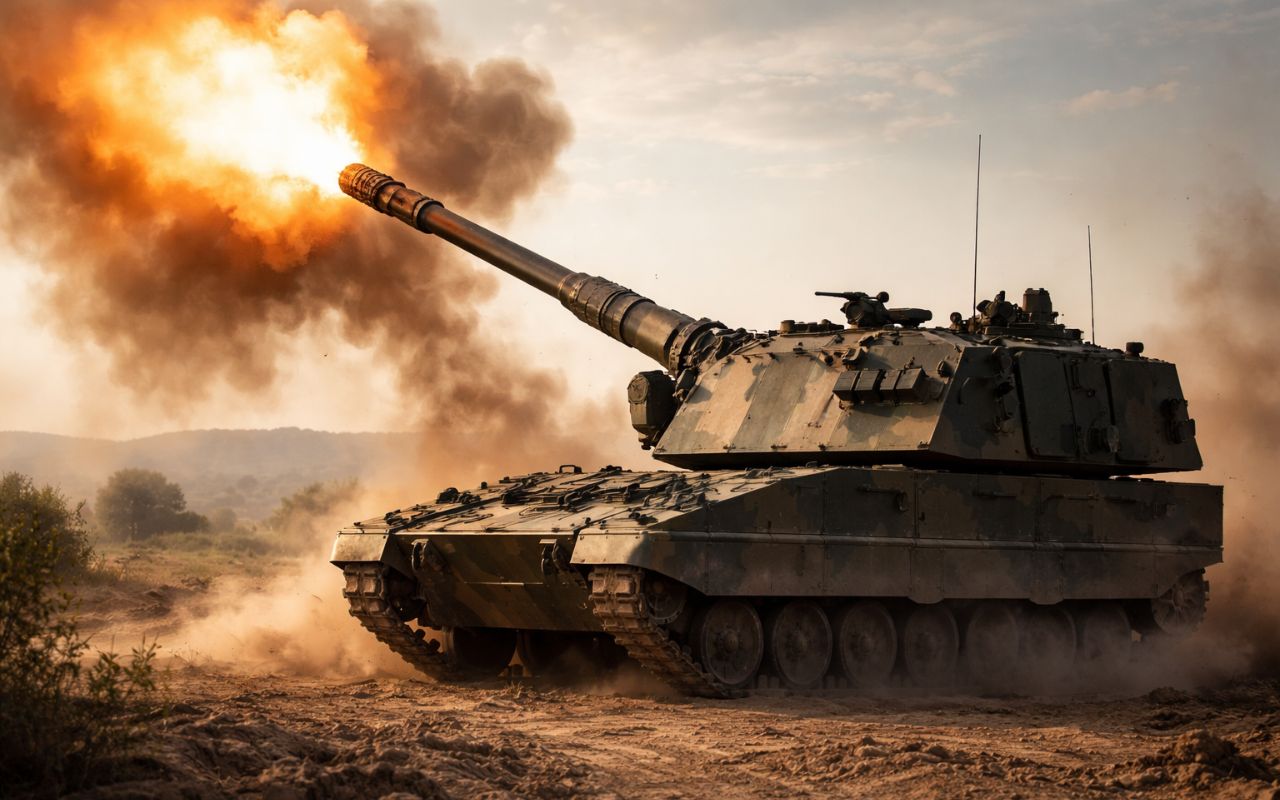
The German “steel monster” weighing 55 tons fires up to 10 projectiles per minute at over 40 km and avoids counterattacks on the battlefield by moving quickly to escape enemy attacks; meet the Panzerhaubitze 2000.
-
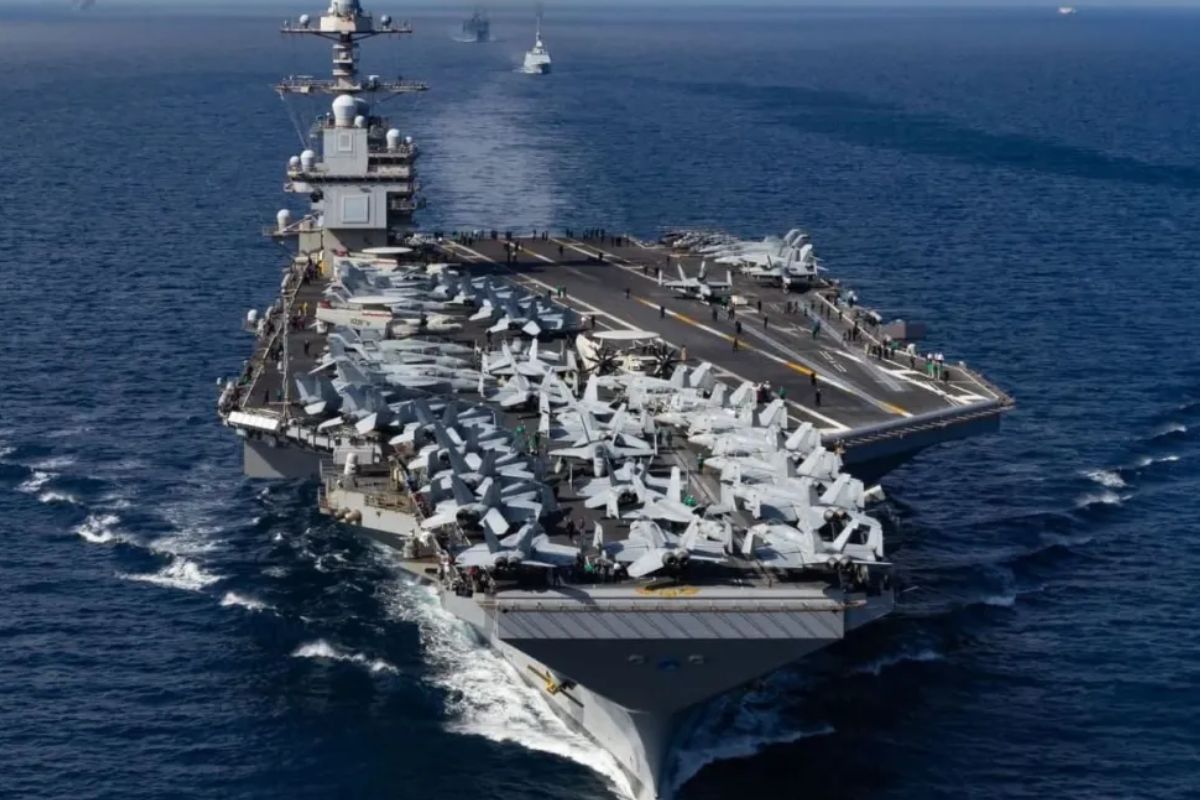
USS Gerald R. Ford, the largest aircraft carrier in the world, returns to sea after a fire in the laundry in the Red Sea; repaired in Crete, it resumes missions of Operation Epic Fury against Iran.
-
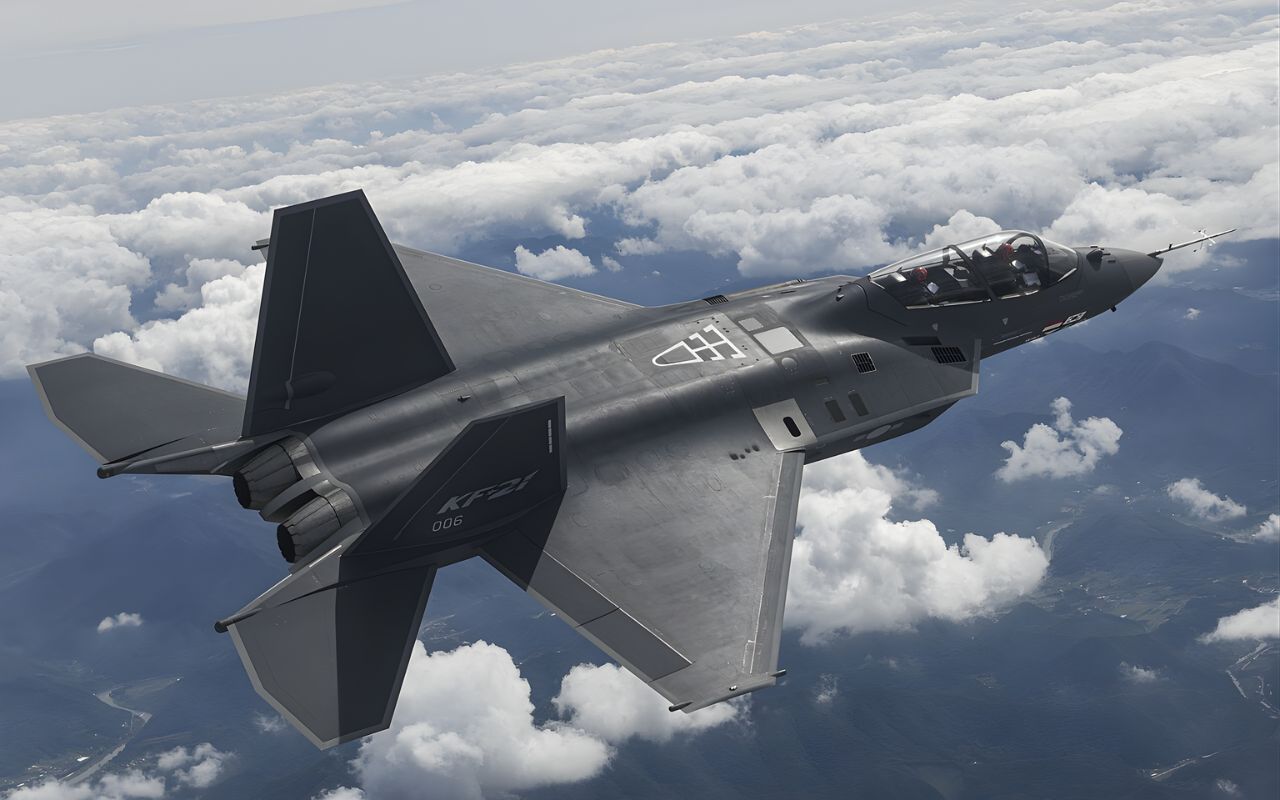
Military power: South Korea’s new KF-21 fighter jet will be a key component in replacing the aging aircraft of the air force, placing the country on the map of air military powers.
-
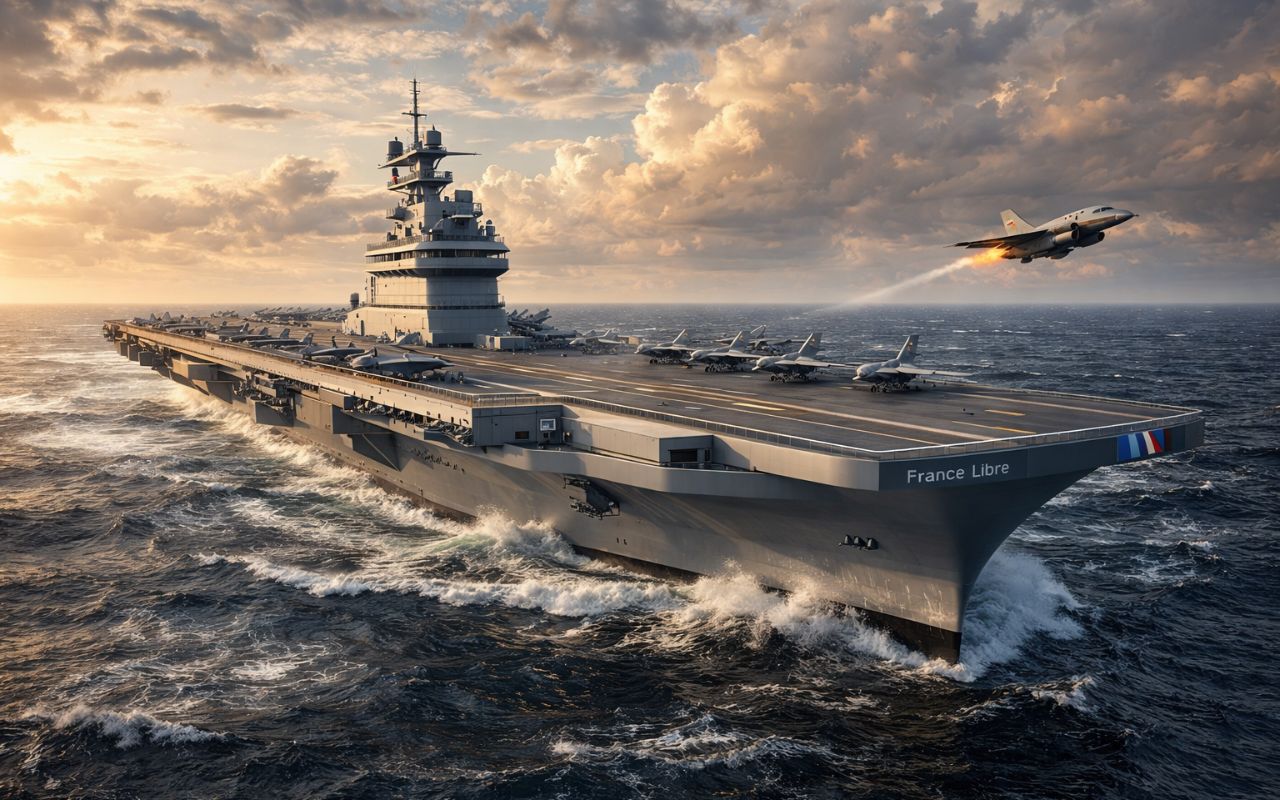
With 310 meters, 80 thousand tons, and capable of operating for 45 years, the new nuclear aircraft carrier France Libre will be the largest in France and will enter service in 2038.

- Escort ship radars
- Military satellites
- Maritime patrol aircraft
- Nuclear submarines
- Drones and remote sensors
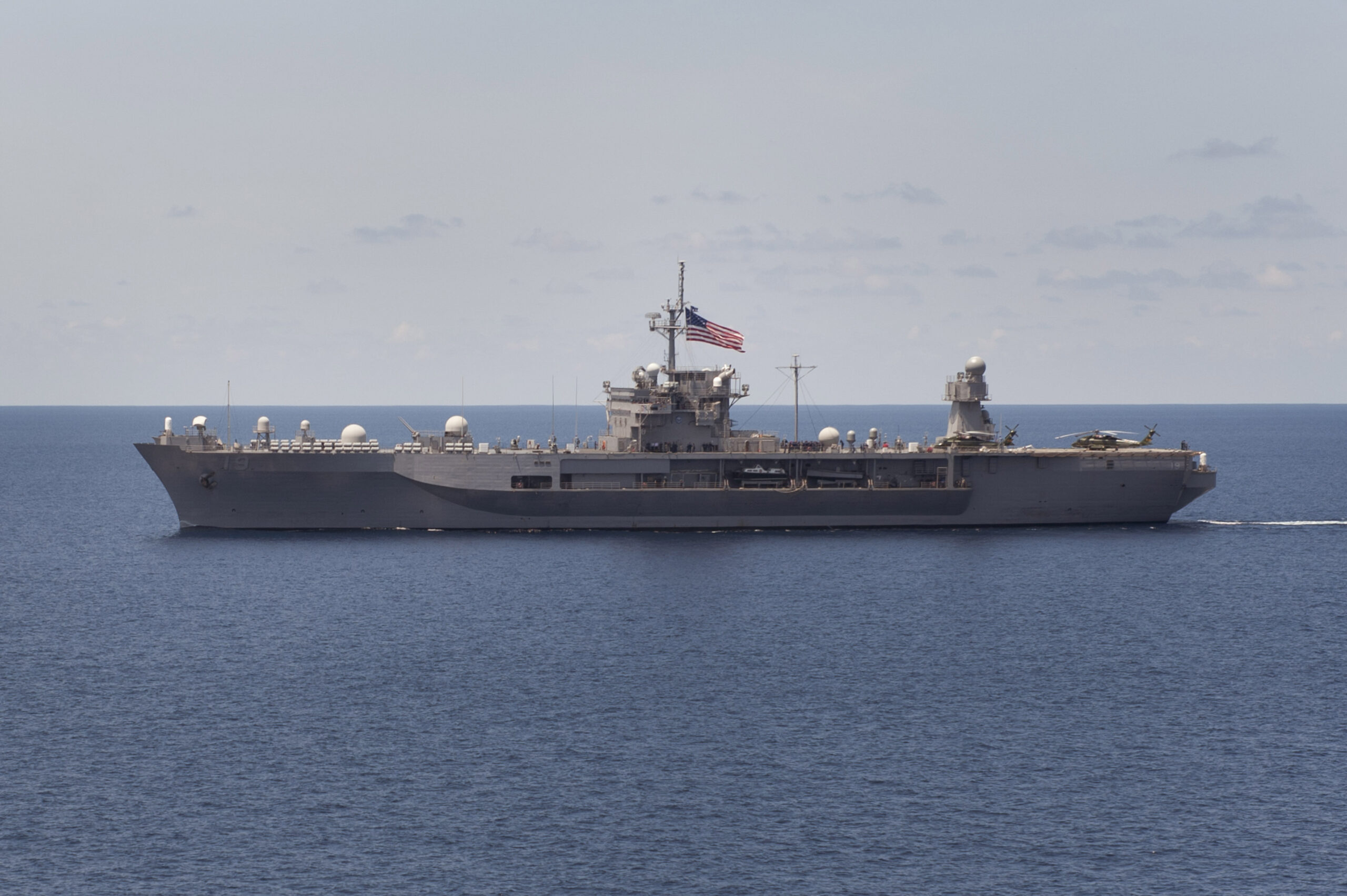
This information is processed in real-time to generate a complete tactical picture of the region, allowing the fleet commander to visualize air, sea, and underwater movements simultaneously.
This transforms the Blue Ridge into a sort of mobile naval control tower, capable of coordinating complex operations in the Pacific Ocean and the Indian Ocean.
A Ship That Has Operated For Over Half A Century
The USS Blue Ridge was built at the Philadelphia Naval Shipyard in the United States. Its development began in:
- 1967 — construction begins
- 1969 — launched
- 1970 — officially enters service
Since then, it has remained active for over five decades. Today, the ship is based in Yokosuka, Japan, the main American naval base in the western Pacific. From this strategic position, it monitors military exercises, maritime security patrols, and naval presence operations throughout the Indo-Pacific region.
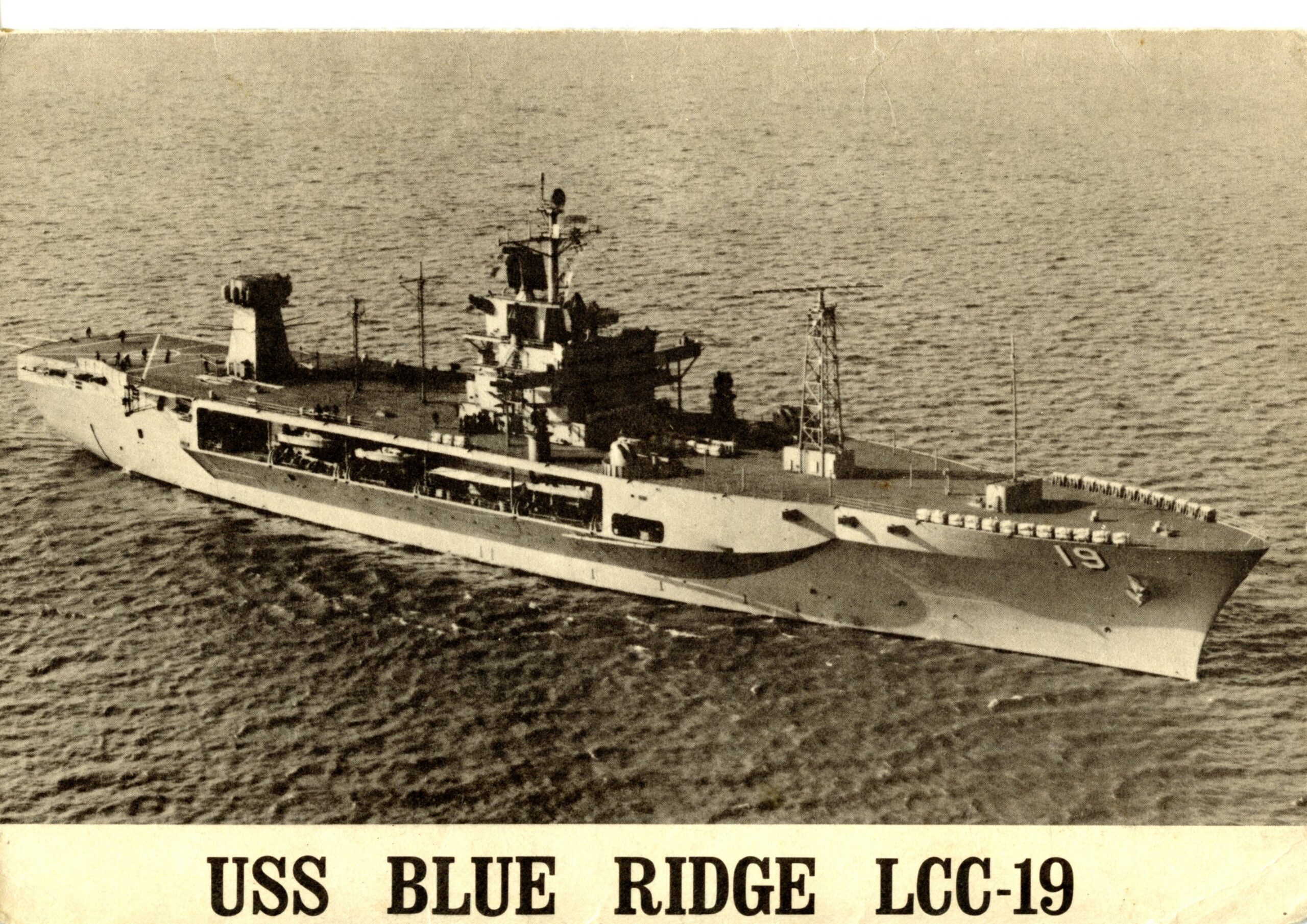
Over the years, the Blue Ridge has undergone various upgrades that updated its electronic and communication systems, allowing it to remain relevant even in an era dominated by digital networks and military satellites. The current forecast of the U.S. Navy is that the ship will remain in service until at least 2039.
Structure And Dimensions Of The USS Blue Ridge
Although it is not a traditional combat ship, the Blue Ridge has dimensions comparable to those of large military vessels. Among its key technical data are:
- Length: approximately 197 meters
- Displacement: approximately 19,600 tons
- Maximum Speed: approximately 23 knots (about 43 km/h)
- Range: approximately 10,000 nautical miles
- Crew: over 800 military personnel, plus hundreds of embarked fleet officers
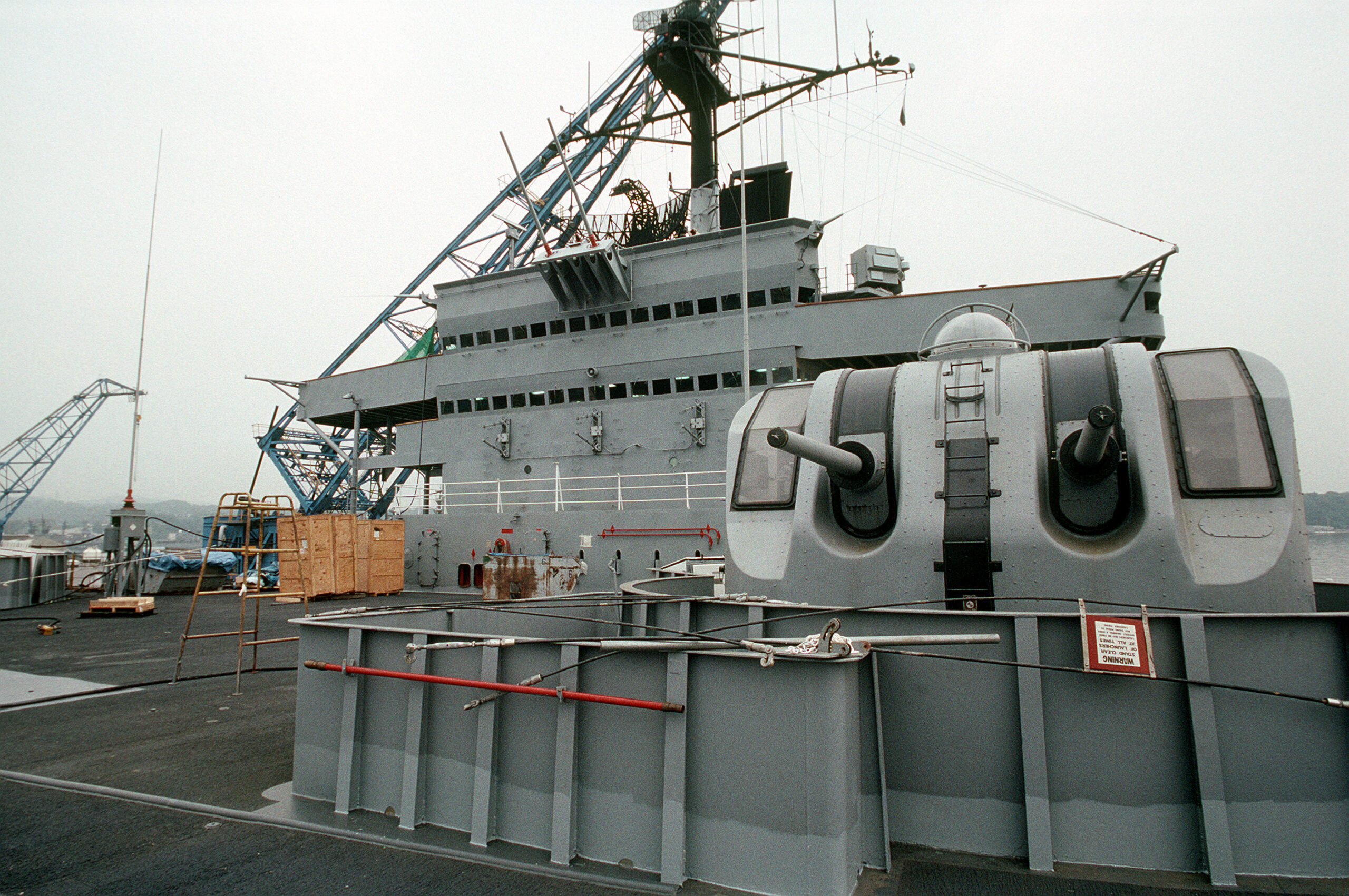
The ship also features a flight deck capable of operating military Seahawk helicopters, used for transport, surveillance, and logistical support. Even though it is a command ship, it has defensive armaments, including:
- Phalanx CIWS systems to intercept missiles
- 25 mm automatic guns
- Heavy machine guns
These systems serve only for self-defense against nearby threats.
The Brain Of The US 7th Fleet
The US 7th Fleet is one of the largest naval forces on the planet. It covers a vast area that includes:
- Sea of Japan
- South China Sea
- Western Pacific Ocean
- Indian Ocean
This region is considered strategic because it concentrates vital maritime routes for global trade. To operate in such an extensive area, the fleet requires a highly advanced command center. This is exactly the role played by the Blue Ridge.
Onboard the ship, a maritime operations center operates, where officers analyze data and coordinate missions involving dozens of ships simultaneously. This capability allows the fleet to:
- organize international military exercises
- coordinate humanitarian missions
- monitor areas of geopolitical tension
- manage maritime security operations
All of this can be done directly from the ship without relying on land bases.
A Ship That Participated In Historic Conflicts
Throughout its long career, the USS Blue Ridge has participated in several important military operations. Among them are:
- Vietnam War: In the 1970s, the ship participated in the final operations of the conflict, serving as a command platform for American naval forces in the region.
- Desert Shield and Desert Storm Operations: During the Gulf War, the Blue Ridge also served as the flagship for the American naval command in the Middle East.
- Indo-Pacific Operations: In recent decades, its focus has been on the western Pacific, where the United States maintains a constant military presence.
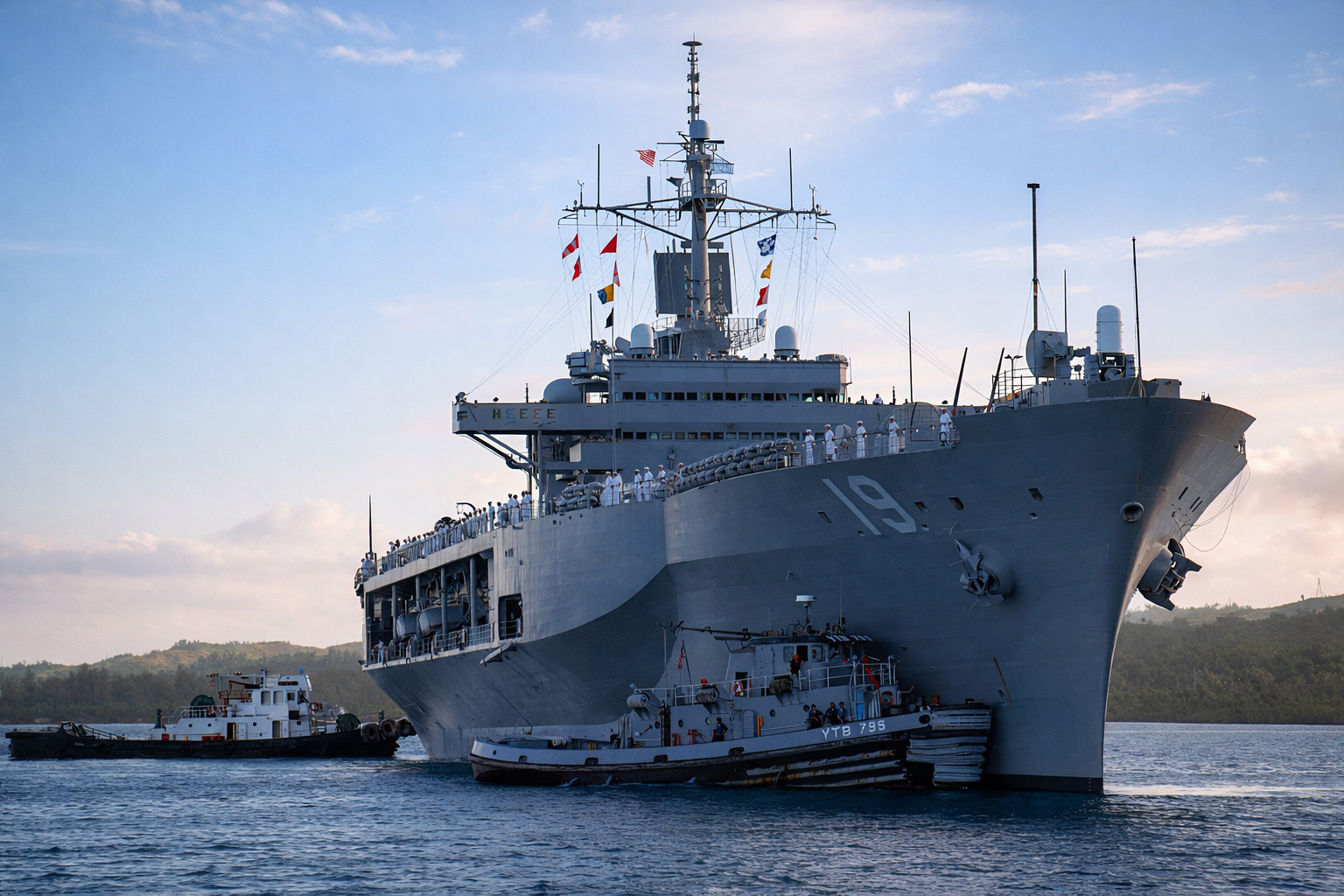
This includes joint exercises with the navies of allied countries such as Japan, South Korea, Australia, and the Philippines. These operations are considered essential to maintaining maritime stability in the region.
The Strategic Importance Of The Blue Ridge Today
Although it was designed during the Cold War, the Blue Ridge continues to play a fundamental role in American naval strategy. This is because modern wars increasingly rely on information and networked force coordination.
In contemporary conflicts, the ability to integrate data from different platforms — ships, aircraft, drones, and satellites — can be more decisive than isolated firepower. In this context, the Blue Ridge functions as a true floating nerve center of the fleet.
From it, commanders can monitor the strategic situation of vast ocean areas and make quick decisions, coordinating complex operations in real-time.
The Oldest Ship In Active Service In The US Navy
Another striking detail is the longevity of the Blue Ridge. More than fifty years after its entry into service, it continues to be the oldest ship in active operation in the United States Navy. This fact demonstrates not only the robustness of the vessel but also the strategic importance of dedicated command ships.
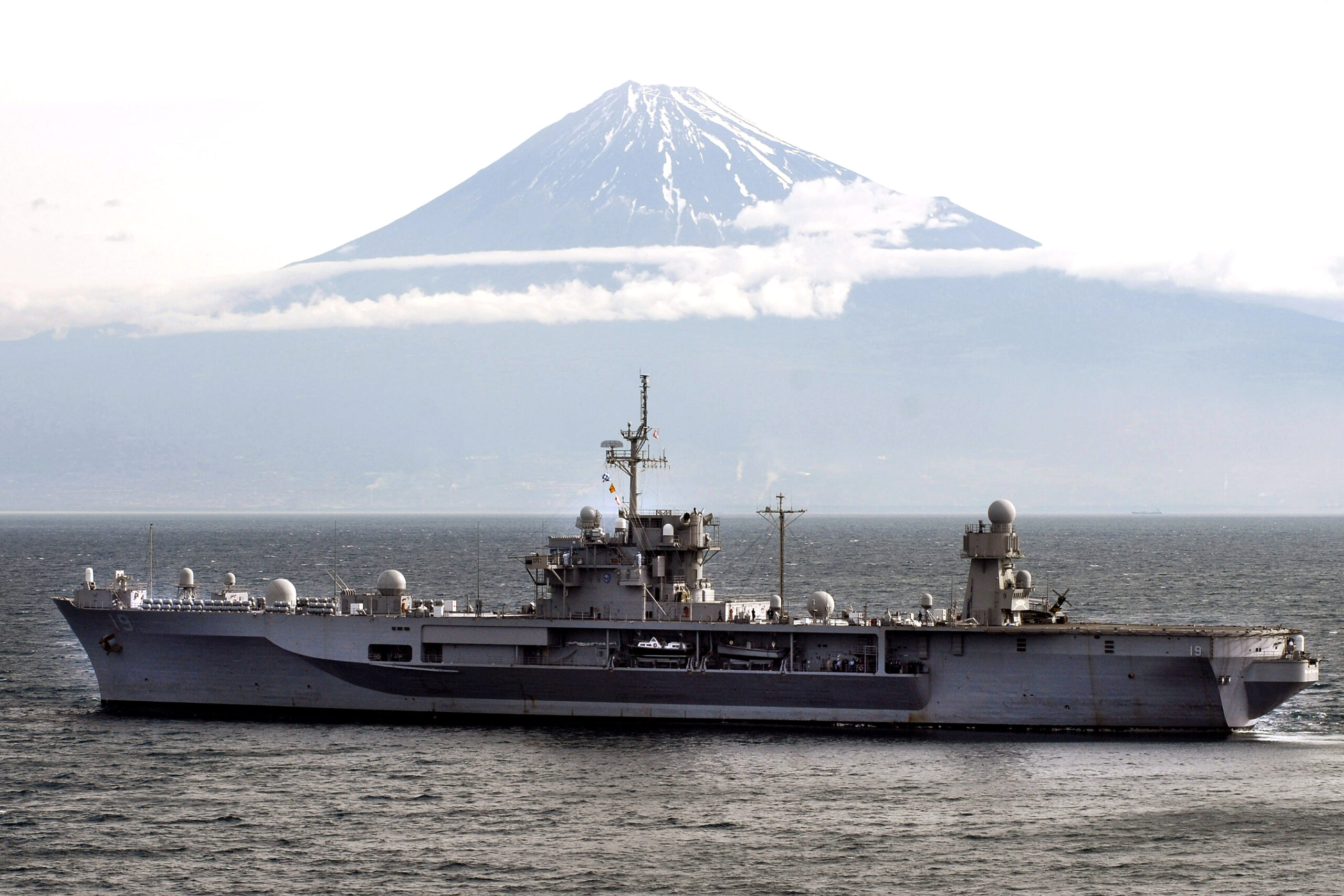
While new destroyers, submarines, and aircraft carriers are regularly launched, the role played by the Blue Ridge remains essential to the command structure of the American navy.
A Floating Headquarters In The Middle Of The Ocean
In popular imagination, naval power is often associated with weapons and combat. However, modern military operations increasingly depend on coordination, information, and command capability.
In this context, the USS Blue Ridge represents a central piece of American naval strategy. Even without launching missiles or torpedoes, this gigantic ship continues to be one of the most important elements of the United States’ military presence in the Pacific.
It proves that, in many situations, the true power of a fleet lies not only in the weapons it carries but in the ability to coordinate all of them at the same time.






Seja o primeiro a reagir!