





 Portuguese
  English
  Spanish
  6 min of reading
  1 comment





Recent Indicators Of Income, Inflation, Competitiveness, Cost Of Living And Economic Growth Show That Uruguay Has Lost Relative Positions In South America, Now Recording Performance Below Brazil And Argentina In Metrics That Historically Sustained Its Image Of Regional Stability
Uruguay is often presented abroad as a stable, safe, and organized country, frequently compared to a “Switzerland of Latin America.”
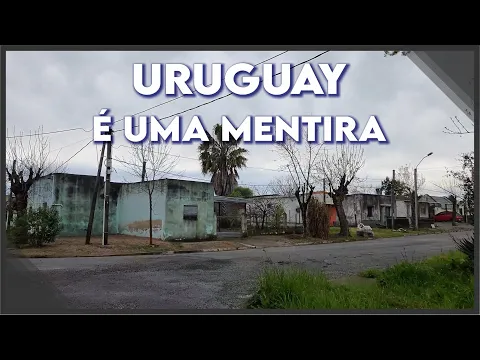
Throughout a video-recorded journey, the channel Sincero SC travels through different regions of the country to confront this image with the reality observed outside traditional tourist spots, especially in common urban areas and peripheral neighborhoods.
The narrative begins with an initial observation: places like Punta del Este, frequently associated with the Uruguayan standard of living, concentrate a minimal portion of the population.
-
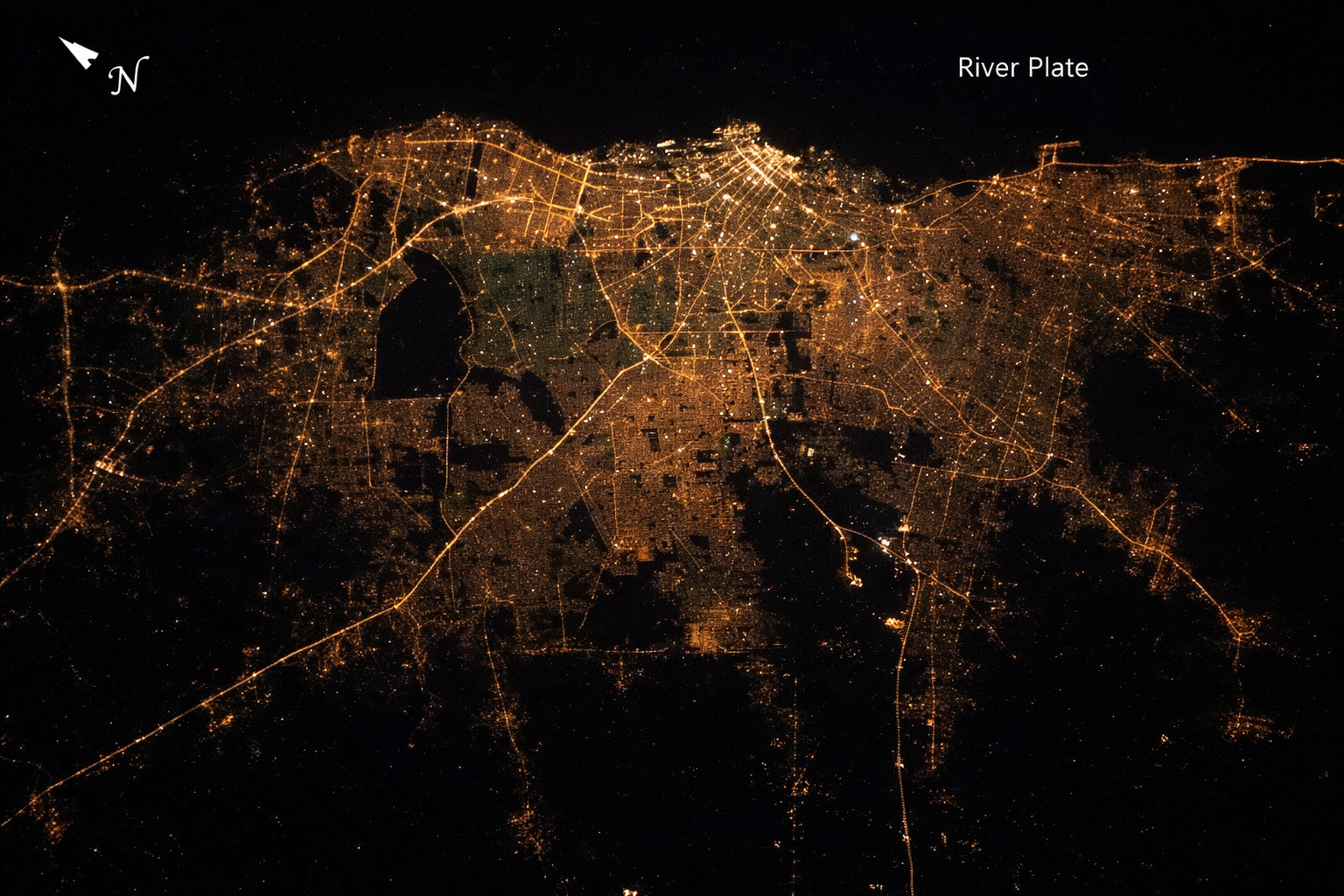
From space, Buenos Aires appears as a colossal spot of light surrounded by kilometers of darkness, revealing at a single glance the exact boundary between the metropolis and the countryside, seen from 400 km altitude.
-
NASA spent over 118 million reais to build a single bathroom that works in zero gravity, and it has just gone to space on the first crewed mission to the Moon in more than 50 years.

-
Man never set foot on the Moon? 5 scientific proofs confirm that humanity has been there and definitively dismantle conspiracy theories.

-
The Brazilian Army will adopt humanoid robots to test the concept of future combat, says a website, surprising everyone, but later revealing that it was all just an allusion to April Fool’s Day.

With around 18 thousand residents in a country of more than 3 million inhabitants, the resort represents a statistical and spatial exception, not an average portrait of the country.
The Difference Between The Postcard And Daily Life

The comparison made by the channel is direct. Imagining that all of Uruguay lives like Punta del Este would be equivalent to assuming that all of Brazil reproduces the standard of high-end coastal neighborhoods.
Upon leaving these areas, what is found are unpaved streets, old houses, buildings stuck together, and clear signs of a lack of urban maintenance.
This landscape is repeated in several visited cities, even close to the capital Montevideo. Even in areas considered rich, the difference between the main avenue and the adjacent streets is striking.
The well-maintained waterfront contrasts with internal blocks of dirt roads, accumulated trash, and degraded buildings.
A Sparsely Populated Country With Small Residences
With about 3.4 million inhabitants distributed across a predominantly rural territory, Uruguay has a low population density.
Still, according to the channel’s report, most urban residents live in small houses or one-bedroom apartments, even outside central areas.
The contrast is striking: a lot of available space, but compact housing and, in many cases, deteriorated.
Outside urban centers, extensive pasture areas dominate the landscape, reinforcing the agricultural character of the country.
Unequal Road Infrastructure And High Costs

Another recurring point of the journey is the road infrastructure. Well-maintained private highways charge considered high tolls, while public roads in common neighborhoods present poor or non-existent paving.
The cost of traveling between neighboring countries can exceed hundreds of reais just in tolls.
This inequality reinforces the perception that the international image of the country is supported by specific corridors, used by tourists and investors, while the everyday urban fabric remains in the background.

Aging Urban Centers And Retreated Commerce
In central regions of historic cities, the channel observes old buildings, closed stores, and low foot traffic, even during peak times or outside of winter.
Monuments and historic buildings remain imposing but are surrounded by signs of abandonment and graffiti.
The described feeling is one of prolonged stagnation, with infrastructure built decades ago and few signs of recent renewal.
The comparison with countries that experienced an economic peak in the last century arises repeatedly throughout the report.

Cost Of Living And Income: A Visible Discrepancy
Uruguay is often cited as one of the most expensive countries in Latin America. The channel’s experience reinforces this perception.
Basic food items have high prices when converted to real, even in a country with strong agricultural production.
The average salary, according to reports from local residents, ranges between 25,000 and 30,000 Uruguayan pesos, around 650 to 800 dollars.
However, rent for simple apartments can consume almost all of that income, compressing purchasing power and affecting quality of life.
Social Impacts And Population Aging
Uruguay is experiencing a process of population aging with official data confirming demographic trends that influence social and urban dynamics.
In 2023, the population was estimated at about 3.44 million inhabitants with very slow growth, about 0.26% per year.
The fertility rate is low: 1.19 children per woman in 2024, well below the replacement level of 2.1, reflecting few births.
The proportion of people aged 65 years or older is approximately 15.7%, while the young population is smaller, indicating an aging demographic structure.
Furthermore, Uruguay has a negative net migration balance, with more people leaving than entering.
This official data shows a demographic picture of low birth rates, an older population, and migration that, combined, may reduce urban dynamism and increase social challenges associated with aging.
Safety And Risk Perception
Contrary to the image of a safe country, the channel reports episodes of theft, local recommendations to avoid certain areas at night, and the need for private parking even in central regions.
There are mentions of organized crime, trafficking, and disputes between factions, although on a smaller scale than in larger countries in the region.
These reports are presented as part of urban daily life, far from the narrative of absolute tranquility often associated with the country.
Tourism, Expectations And Frustrations
From a tourist perspective, the experience described is ambiguous. There is recognition of the natural beauty of specific areas, such as the port of Montevideo, where the presence of sea lions stands out as one of the most remarkable experiences of the trip.
On the other hand, the high cost, limited activity offerings, and episodes of unexpected charges, such as undisclosed fees or imposed tips, contributed to a negative perception of tourist hospitality in some situations.
Culture, Politics And Identity
The narrative also addresses cultural and political aspects. Uruguay is described as a country influenced by a vision of a strong state and by a valuation of a simpler life, with less pressure for consumption and aesthetics.
This mentality, associated with past political leaderships, has shaped a national identity distinct from its more industrialized neighbors.
At the same time, the channel observes contradictions between the discourse of valuing taxes and everyday practices of evasion or informality, as well as an ambiguous relationship with foreigners, viewed simultaneously as a source of income and as agents of economic exploitation.
Foreign Investments And Regional Concentration
A significant part of the current economic dynamism of the country is concentrated in the department of Maldonado, driven by foreign real estate investments.
According to the report, many properties are acquired not for permanent residence but as a fiscal strategy, remaining vacant for much of the year.
This dynamic contributes to cities with infrastructure geared toward high-standard tourism but with little direct impact on improving local living conditions.
Regional Comparisons And Final Balance
At the end of the journey, the channel makes direct comparisons with Brazilian and Argentine cities. Capitals like Curitiba and Buenos Aires are cited as examples of more dynamic urban centers, with greater cultural offerings, more competitive costs, and a superior sense of urban vitality.
Uruguay, according to this experience, does not present itself as an attractive destination for long-term residence nor as a cost-benefit favorable tourist option, despite its specific qualities and landscapes.
The conclusion is not one of absolute negation of the country but a warning against generalizations.
Uruguay exists beyond its postcards and marketing campaigns, with structural, social, and economic challenges that become visible when traversing the territory outside traditional routes.
Note To Readers
This text is not intended to belittle Uruguay, nor to establish a simplistic comparison to exalt Brazil or any other country.
The intention is to expose real structural, social, and economic problems, observed outside the tourist routes and confirmed by local residents, with the aim of contributing to a more honest, critical, and informed analysis of Uruguayan reality, without idealizations or gratuitous attacks.







Não tem vergonha de falar tanta mentira.