





 Portuguese
  English
  Spanish
  3 min of reading
  0 comments



The Appreciation of the Real Helps, but Fiscal Risks Prevent Acceleration in Interest Rate Cuts.
According to André Lion, partner and CIO of equities at Ibiuna Investimentos, the weak dollar has helped to alleviate inflationary pressures in Brazil, but it is not enough to justify accelerated cuts in the Selic rate. The monetary authority is still observing fiscal risks that could compromise the stability of the scenario.
Meanwhile, Jerson Zanlorenzi, creator of the Morning Call and head of the equities and derivatives desk, emphasizes that although a stronger real is positive, the Central Bank needs to maintain prudence.
Reducing interest rates too quickly could necessitate a future reversal, with even greater costs for the economy.
-
“No one will make us change the Pix,” says Lula after the US report.

-
Lula responds directly to Trump and says that Pix is from Brazil and will not change under pressure from anyone, after a report from the United States pointed out the Brazilian payment system as an American trade barrier.

-
Amazon has just announced a new fee on all deliveries, and your online purchases will become more expensive starting April 17, including for those buying from the United States here in Brazil.

-
He sold his share for R$ 4 thousand, saw the company become a giant worth R$ 19 trillion, and missed the opportunity of a lifetime.


The Impact of the Weak Dollar on Inflation
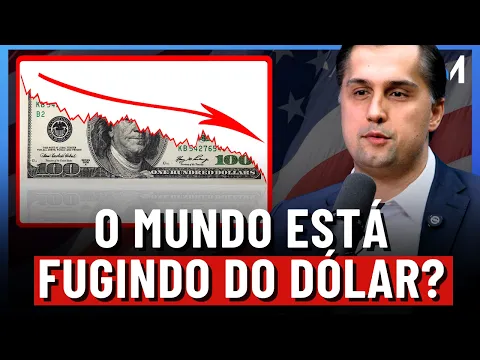

The weakening of the dollar in the international market benefits Brazil through two channels: lower prices for imported commodities and appreciation of the real against the American currency.
This movement reduces pressure on domestic prices, especially for food and fuel.
However, as Lion points out, the exchange rate effect is just one part of the equation.
Monetary policy also needs to consider the country’s fiscal trajectory, which remains a source of uncertainty for investors and could limit the positive effects of the exchange rate.
Why the Central Bank Remains Cautious
The Central Bank does not want to repeat past mistakes, when it cut interest rates prematurely and had to reverse the trajectory shortly after.
Zanlorenzi emphasizes that the communication of the monetary authority is as important as the decision itself, as it guides market expectations.
Thus, even with the weak dollar, the priority is to ensure that inflation is indeed converging toward the target, without leaving room for new credibility shocks.
The fiscal risk remains the main barrier to more aggressive cuts.
The External Factor: Fed and American Productivity
Another element mentioned by experts is the monetary policy of the United States. The Federal Reserve balances inflation and employment, and its communication directly affects the global flow of capital.
If the Fed signals cuts, Brazil could gain space to reduce interest rates without putting pressure on the exchange rate.
At the same time, there is discussion about whether future productivity gains from artificial intelligence could alleviate American fiscal issues.
However, for Lion, this effect is long-term and does not solve the current dilemmas of the global economy.
Brazil versus the United States in the Fiscal Spotlight
While the U.S. enjoys the privilege of issuing the global currency and sustaining deficits for longer, Brazil needs to provide swift answers to maintain confidence.
The difference in perception between foreign and local investors regarding Brazilian fiscal risk reinforces the need for discipline.
In this context, the weak dollar is a temporary relief, but it does not replace structural reforms or fiscal adjustments that support a longer cycle of Selic cuts.
The debate between André Lion and Jerson Zanlorenzi shows that the weak dollar excites the market, but it is not enough to change the Central Bank’s strategy.
Monetary policy needs to be firm, even under pressure, to avoid losing the hard-won trust.
What do you think? Should the Central Bank take advantage of the weak dollar to accelerate Selic cuts, or is caution the right path given the fiscal risk?
Leave your opinion in the comments and join the debate.









Seja o primeiro a reagir!