





 Portuguese
  English
  Spanish
  5 min of reading
  4 comments


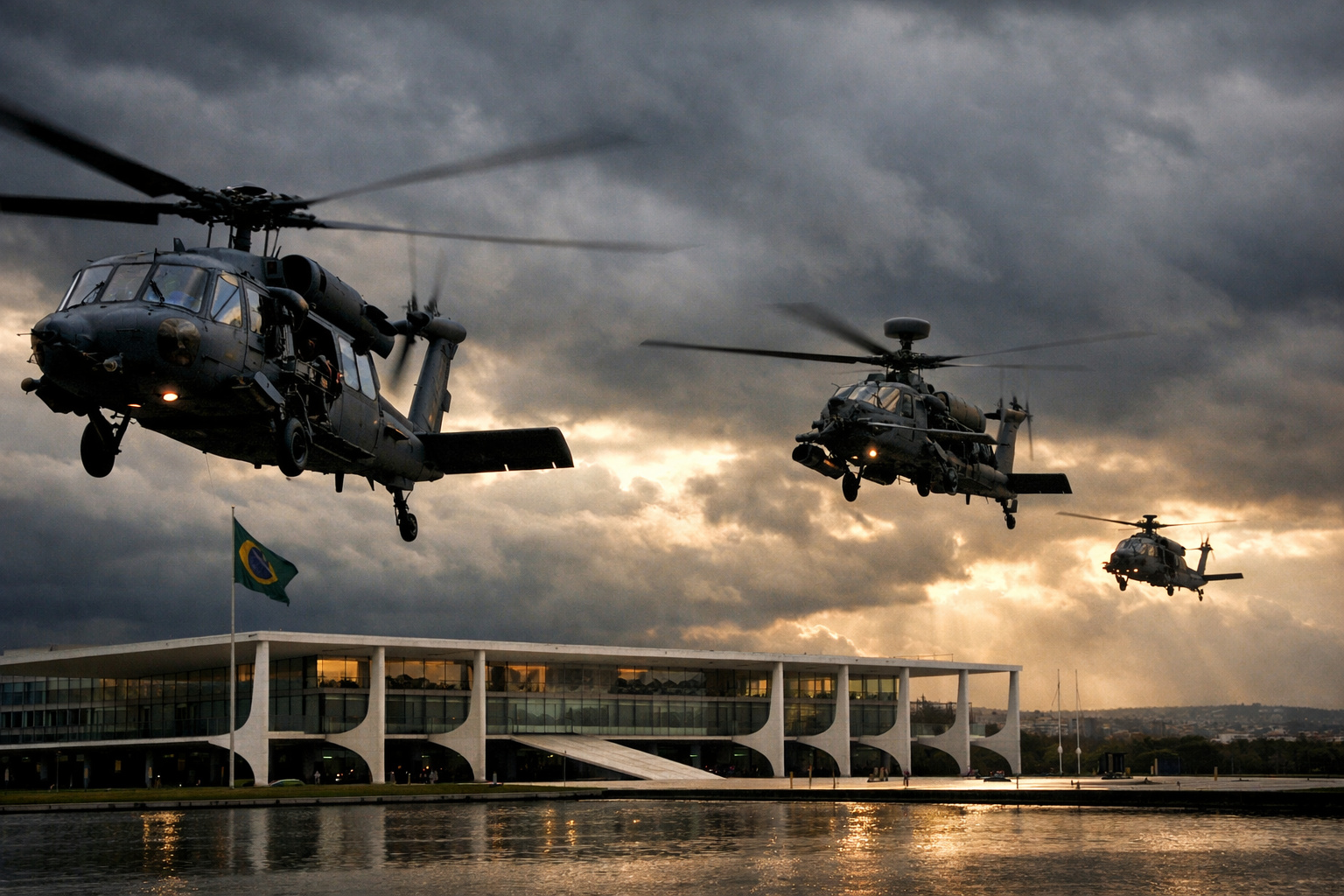


After The Capture Of Nicolás Maduro By American Forces, Analysts Evaluate Whether Brazil Would Have Military, Strategic, And Political Means To Respond To A Surgical Operation By The USA In Its Territory
The recent capture of Nicolás Maduro by American forces on Venezuelan soil has reignited a debate that goes far beyond the specific crisis in Venezuela. The episode raised sensitive questions about national sovereignty, military power projection, and limits of deterrence in Latin America. In this scenario, an inevitable question arises: what if the United States attempted to carry out a similar operation against Brazil?
It is important to emphasize from the outset that there is no concrete indication that an American military action against Brazil is underway or even being planned. The country maintains stable diplomatic relations with Washington, actively participates in multilateral forums, and is not among the main strategic focuses of current U.S. foreign policy. At the moment, the American government seems more focused on issues such as Greenland, Colombia, and disputes in other regions of the globe.
Still, the planning of national defense requires the analysis of hypothetical scenarios, including those considered improbable. After all, understanding vulnerabilities and capabilities is an essential part of the strategy of any sovereign state.
-
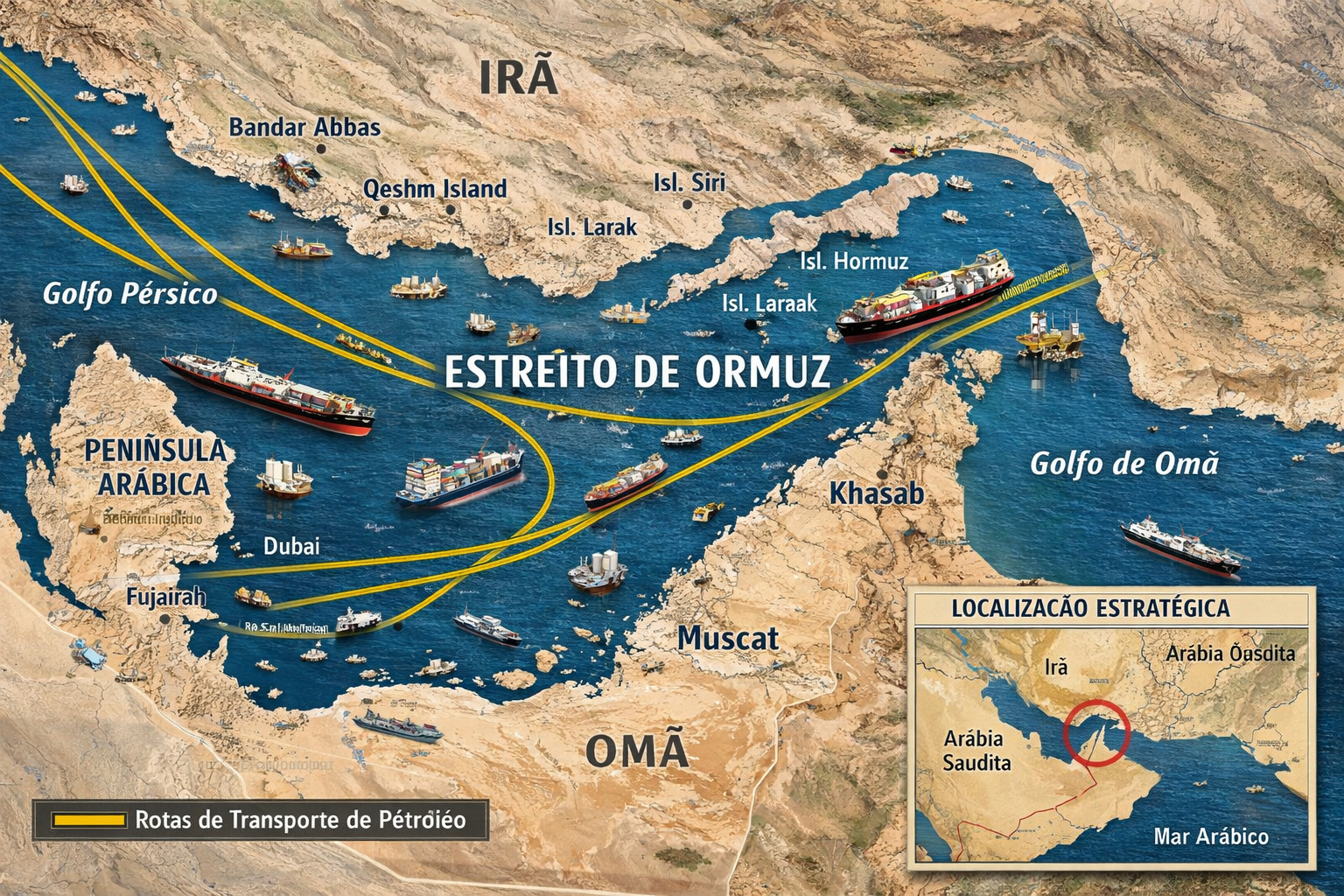
Global summit with over 40 countries pressures Iran for a blockade in the Strait of Hormuz and warns of direct impact on oil, food, and the global economy.
-
Russia has broken the U.S. maritime blockade to send oil to Cuba and is now loading a second ship while Trump says that “Cuba is next” in a possible military action against the island.
-
Spain challenges the USA and closes its airspace for operations against Iran, raising global tension and provoking the threat of a trade rupture.
-
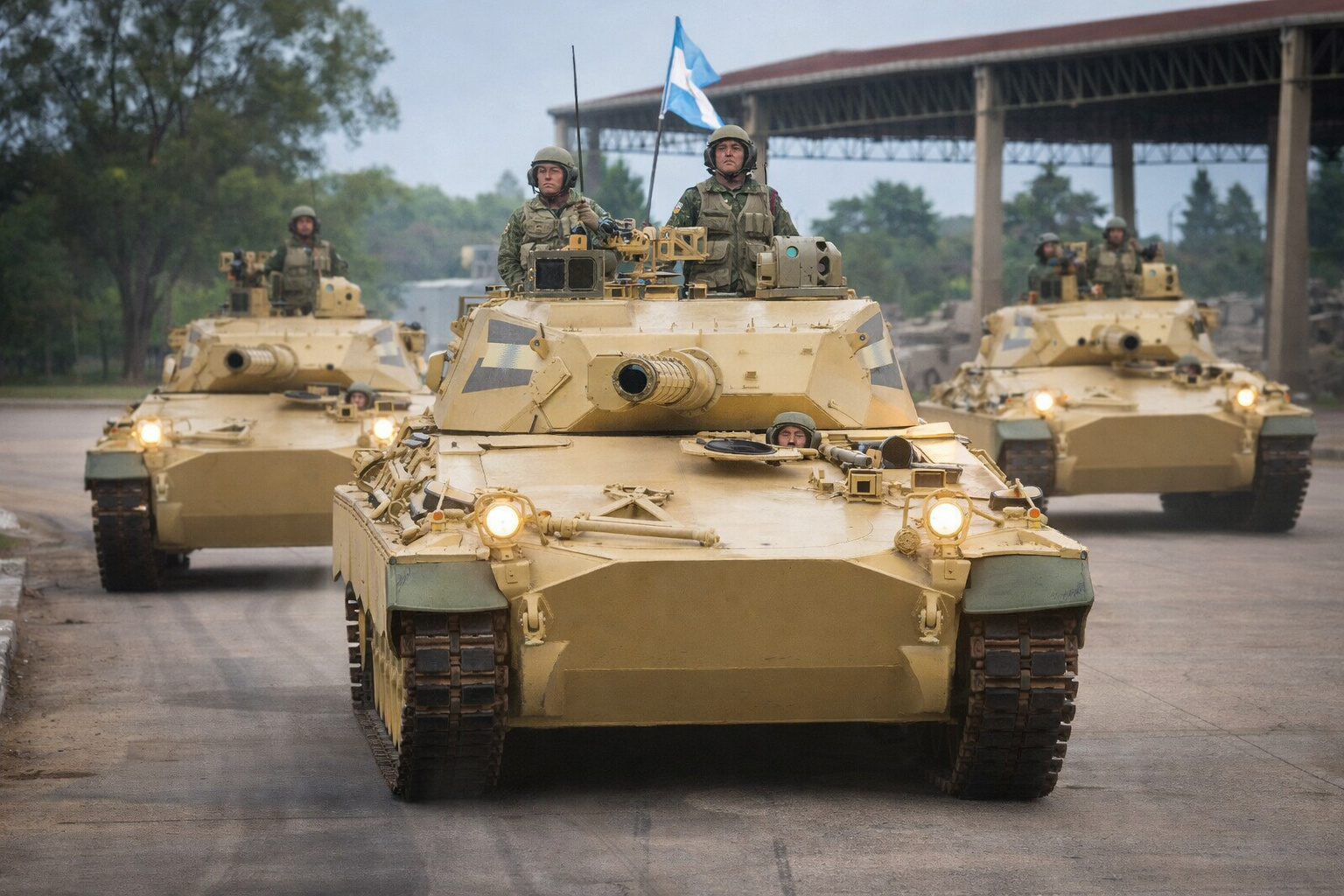
While no other country manufactures tanks in Latin America, Argentina activates the TAM 2C-A2 and raises a curiosity about the technological lag in the region.
This information was disclosed by Gazeta do Povo, which consulted military experts and defense analysts to assess the real limits of Brazil’s capacity in the face of a superpower.
Brazil Is A Regional Military Power, But Not Global

Despite its structural weaknesses, Brazil cannot be compared to Venezuela. The American operation that captured Maduro was swift, precise, and executed without casualties, exposing the profound fragility of the Venezuelan Armed Forces.
According to the Global Firepower ranking, which assesses the military power of 145 countries, Brazil currently ranks 11th, ahead of European countries such as Germany, Italy, and Spain. Venezuela appears only in 50th place. With approximately 360,000 active military personnel, Brazil maintains the largest armed forces in South America.
However, this position must be analyzed cautiously. Security consultant Daniel Tavares, a reserve colonel and former head of the Intelligence Division of the Brazilian Army’s Intelligence Center, states that the numbers reveal a significant force at the regional level, but insufficient against the United States.
According to Tavares, “Brazil’s conventional deterrent is structurally limited in the face of a power that operates at a much higher level of technology, budget, and power projection.”
The asymmetry is evident. While the USA has over 13,000 military aircraft, Brazil has about 513, of which only a portion would be capable of operating in a high-intensity combat scenario. Reserve Colonel Paulo Filho, a master’s degree in Military Sciences, summarizes: the United States lead not only in personnel but in logistics, budget, and long-range attack capability.
Military Deterrence And The Real Limits Of Brazilian Defense
In conceptual terms, experts make a clear distinction between regional defense and global deterrence. For Paulo Filho, deterring a superpower requires more than troops and equipment: it is necessary for the adversary to perceive that these means will be effectively employed.
“Brazil has the capacity to deter medium powers and regional aggressions, but lacks means capable of directly deterring the greatest military power in history,” says the expert. According to him, only countries with nuclear arms can impose any real degree of direct deterrence to the United States.
Still, Brazilian territory presents a significant obstacle to any prolonged action. The continental dimensions of the country provide what analysts call strategic depth. An eventual invader would have to deal with long supply lines, multiple biomes, and difficult-to-access areas such as the Amazônia, Pantanal, and Caatinga.
Moreover, there is a crucial geographical difference compared to Venezuela. Caracas is less than 20 kilometers from the sea, while Brasília is over 1,000 kilometers from the coast, which complicates rapid capture operations based on naval incursions.
Daniel Tavares reinforces this point by highlighting that Brazil is geographically distant from the United States, oriented towards the South Atlantic and West Africa, which would make a classic land invasion unfeasible. This scenario would favor strategies of attrition, resistance, and defensive warfare.
Strategic Vulnerabilities And Modern Warfare
Despite territorial advantages, experts warn of real vulnerabilities, especially in the maritime domain. According to Daniel Tavares, the greatest risk would not be in a territorial occupation, but in indirect strategic pressure actions.
“The South Atlantic and Brazil’s maritime routes are vulnerable to naval blockades, something technically simple for the U.S. Navy,” he states. Such a blockade could generate severe impacts on the economy and supply without the need for occupation of the territory.
General Marco Aurélio Costa Vieira emphasizes that the operation in Venezuela was not a conventional war, but a special forces raid, a model that has become standard in modern conflicts. “This is today’s warfare: pinpoint actions, with aerial, naval, cyber, and electronic warfare support. No country is completely immune to this type of operation,” he asserts.
Brazil maintains systems such as SISFRON, aimed at monitoring land borders, and SISDABRA, responsible for aerospace defense. These systems utilize radars, sensors, drones, and command centers, but, according to Tavares, are more effective against low-intensity threats.
The analyst warns that SISFRON is still far from being fully implemented and functions as a sort of “electronic Maginot Line”, vulnerable to adversaries with global sensors and fifth-generation weapons.
International Political Weight As The Main Shield
Finally, experts unanimously agree that Brazil’s greatest protection factor is not military, but political and diplomatic. An American action on Brazilian soil would have a very high political and diplomatic cost, with immediate repercussions in forums such as UN, OAS, and G20, besides provoking instability throughout South America.
The consensus is clear: although Brazil does not have the capacity to prevent a surgical operation by a superpower, the international cost of such an action would be enormous, even for the United States itself.
In light of this scenario, to what extent does Brazil’s protection depend on its military capacity, and where do the limits imposed by international political and diplomatic costs begin?







EUA sequer precisaria invadir e pisar em solo brasileiro. Pelo tanto que o presidente gosta de viajar e passar a maior parte do ano fora do país, seria fácil de capturar ele em qualquer momento dessas viagens. 😂
O bostil pode confiar tanto nas forcas armadas, que os eua sequestrariam o nove dedos e os **** iriam perceber a falta do **** so no outro dia……
O Brasil deixou de ser este peso político com um falastrão **** apoiando ditaduras, nem China, nem a Rússia ou qualquer pais do Mundo tem poder de impedir ou agir contra a atuação Militar dos americanos. O Lula sabendo disto ja colocou o **** entre as penas e entregou o que o Trump quer! Agora fica fazendo marketing de cão Pincher latindo para manter a pose e popularidade aos **** úteis, como faz todo ditador.
Calma que teu capitão vai sair da prisão kkkk