





 Portuguese
  English
  Spanish
  3 min of reading
  0 comments


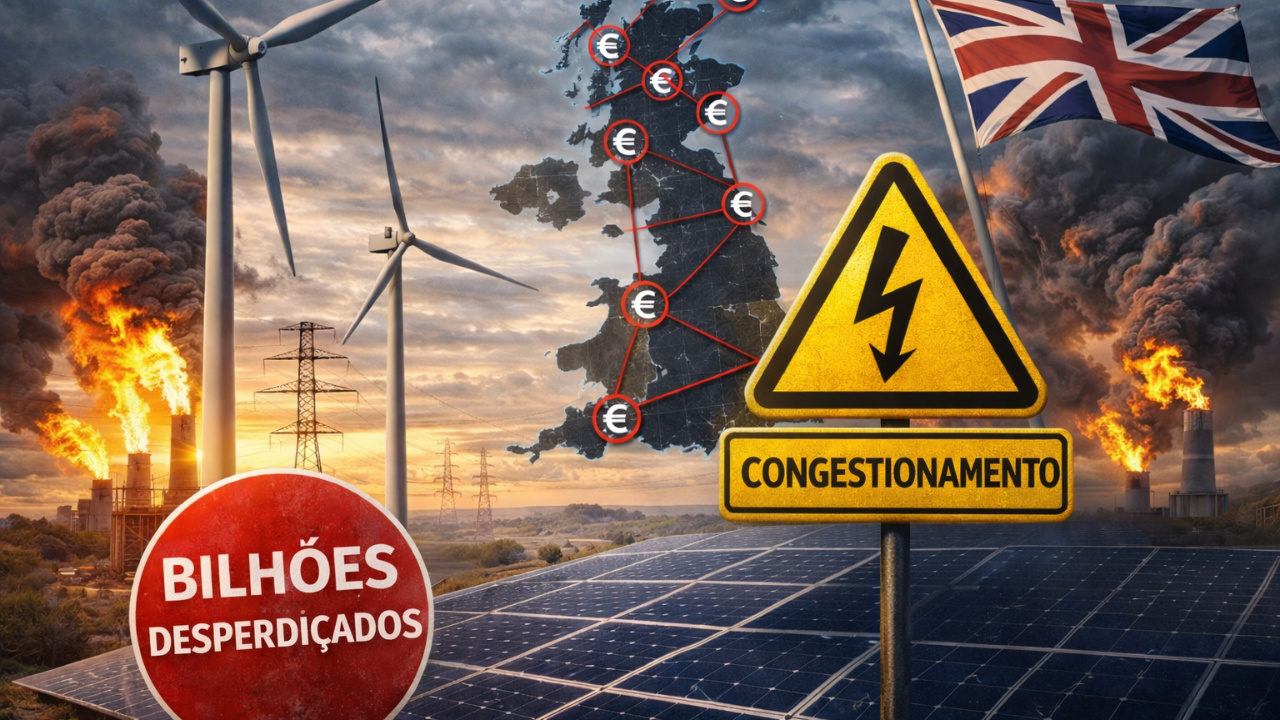
The Advancement of Wind Energy in Europe and the United Kingdom Reveals Limits of Electric Infrastructure, Causes Waste of Billions, and Pressures Governments for Urgent Investments in Transmission Networks.
The expansion of wind energy in Europe has entered a new phase. On one hand, there are successive records of installed capacity and generation. On the other, structural limitations in the electric grids that prevent the full utilization of this clean electricity. As a result, turbines are shut down, public resources are wasted, and fossil fuel plants continue to be activated.
A survey released by Euronews indicates that the lack of adequate investments in infrastructure has created an energy paradox: even with abundant wind and growing installed capacity, a significant portion of wind energy cannot reach final consumers.
United Kingdom Breaks Records but Wastes Clean Energy
The United Kingdom epitomizes this scenario. In 2025, the country reached the highest volume of approvals for renewable projects in its history. Offshore wind farms accounted for nearly 17% of all national electricity, solidifying wind energy as a pillar of the British energy matrix.
-
Giant of the winds in Rio Grande do Norte: Serra do Tigre Wind Complex receives new investments and accelerates the expansion of clean energy generation to supply millions of Brazilian homes.
-
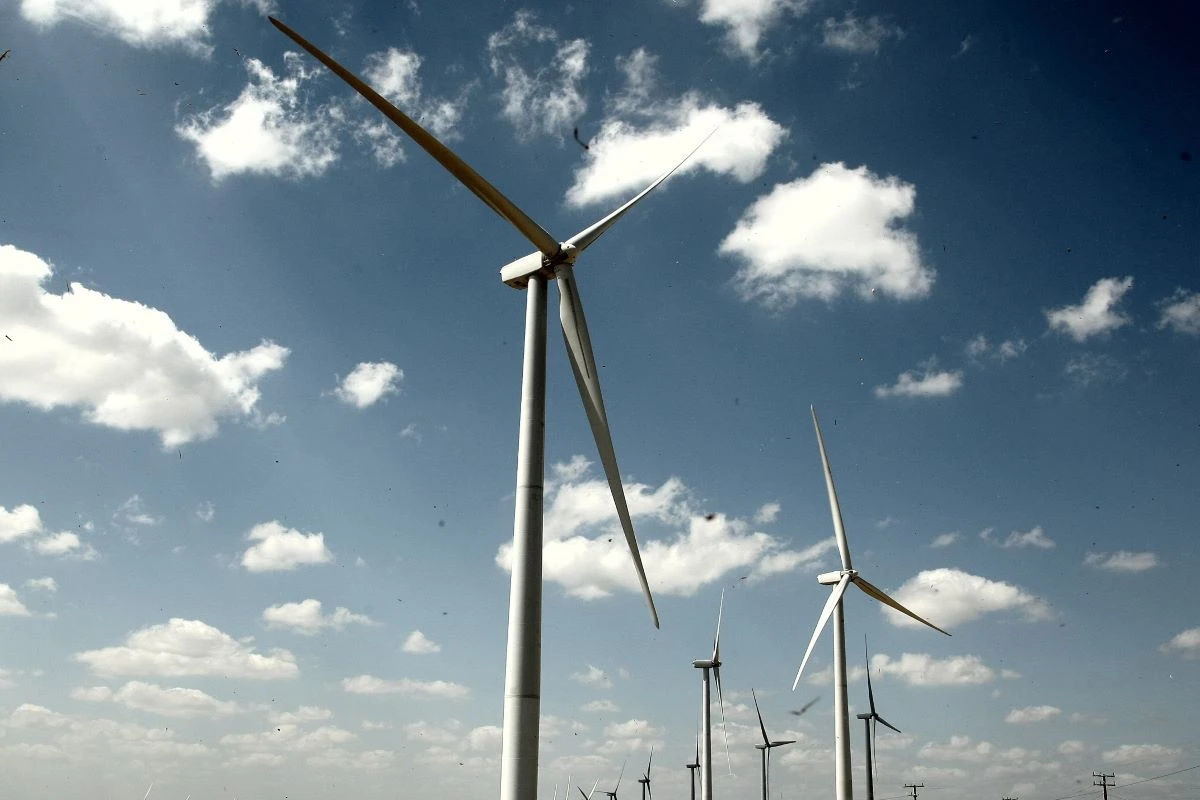
Urgent energy transition: Greenpeace advocates for massive investments and points to Brazil as a global leader in wind energy production in the coming years.
-
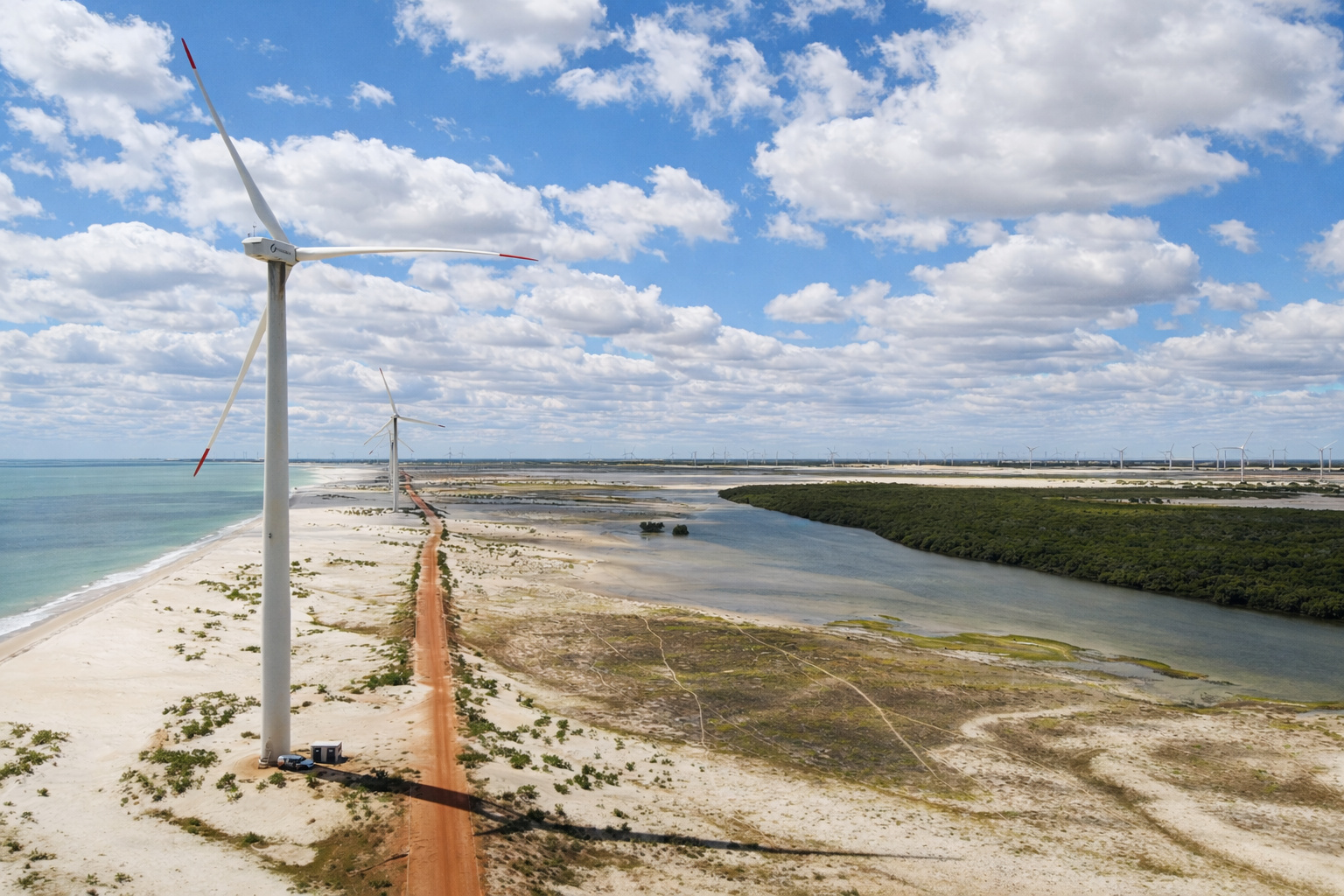
Conflict in the Sertão: Rural communities in Rio Grande do Norte report issues with wind farms and the new challenges of clean energy in the semi-arid region.
-
231 turbines of 260 meters at 160 km from the coast, monopiles weighing as much as nine blue whales embedded in the North Sea, and a crane ship taller than the Eiffel Tower: Hornsea 3 will be the largest offshore wind farm on the planet by 2027, and its first components have already arrived in England.
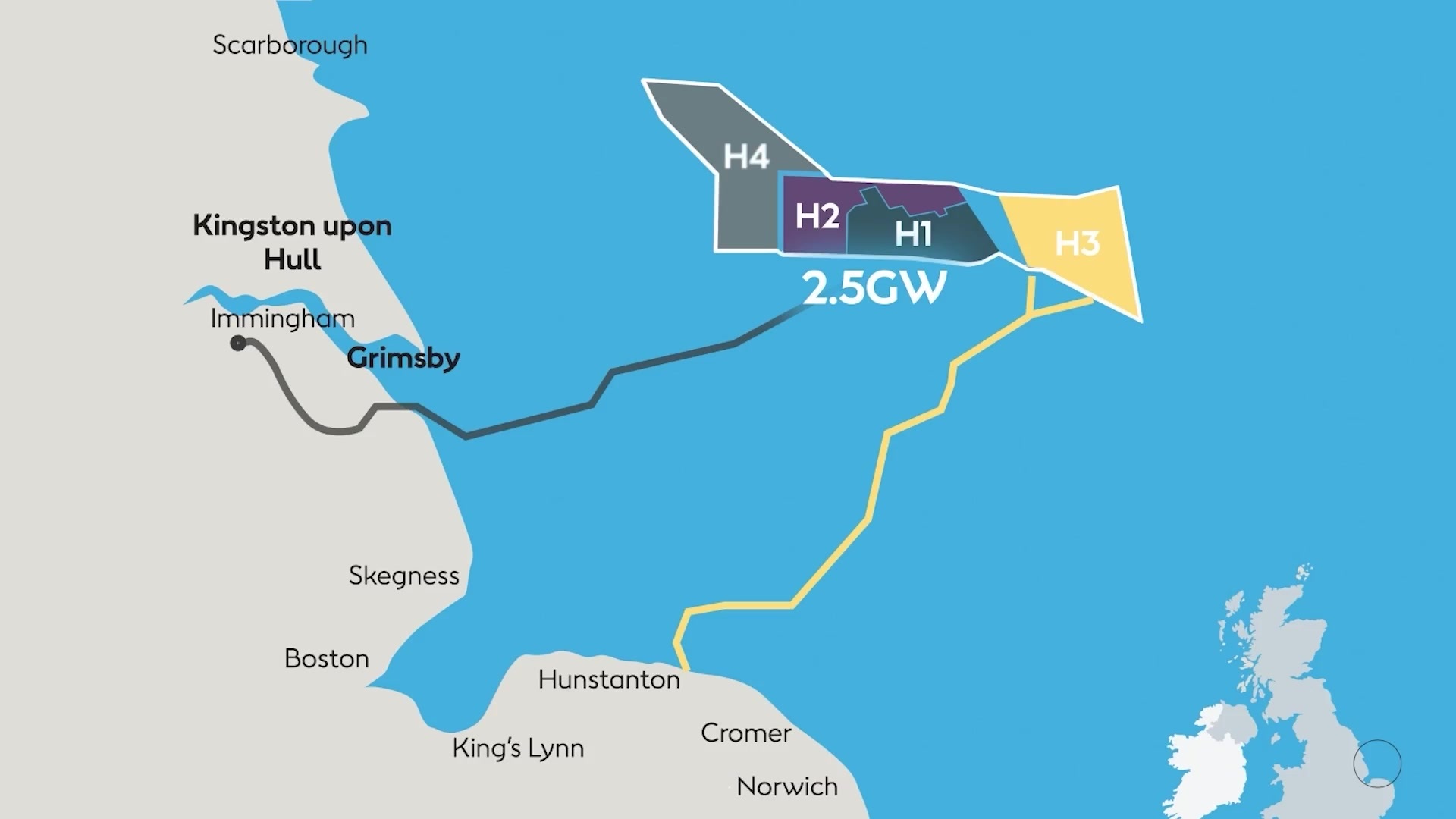

On December 5 of last year, wind generation reached 23,825 megawatts. This amount would be sufficient to power over 23 million homes. Nevertheless, much of this production was not fully utilized.
Billions Paid to Shut Down Turbines and Activate Fossil Plants
Data compiled by Euronews, based on analyses from Octopus Energy, shows that the United Kingdom wasted about £ 1.47 billion in 2025. This figure refers both to the forced reduction of wind turbine production and the payments made for gas plants to operate in areas where renewable electricity could not reach.
In total, the cost of wasted wind energy has already exceeded £ 3 billion. This volume corresponds to approximately 24,643 MWh of renewable electricity, enough to power all of Scotland for an entire day.
Network Congestion Limits the Utilization of Wind
The central problem lies in the functioning of the electric grid. During periods of strong winds, the supply of electricity grows rapidly. However, the transport capacity of the system does not keep pace. Thus, a technical bottleneck is created that prevents the flow of the produced energy.
“This creates congestion in the grid, and the energy cannot reach where it is needed,” explains Octopus Energy. In light of this scenario, the system operator opts to shut down wind turbines and, at the same time, activate fossil sources in areas where renewable electricity does not reach.
Expensive Energy for Consumers Increases Political Pressure
The waste occurs at a sensitive moment for consumers. Starting in January 2026, the average British household is expected to pay around £ 1,758 per year for gas and electricity, equivalent to around R$ 11,000, according to official estimates.
This contrast between high bills and wasted clean energy has intensified public debate about energy planning, system efficiency, and investment priorities.
Europe Faces Similar Structural Challenges
Although the United Kingdom holds significant data, the problem is not isolated. Several European countries face similar challenges, with electric grids designed for a centralized and fossil system, now pressured by distributed and intermittent renewable sources, such as wind energy.
Without reinforcements in transmission lines, substations, and management systems, the risk of curtailment — forced cuts in generation — is likely to increase, even with the expansion of renewables.
Billion-Dollar Investments Aim to Unlock the System
To tackle the bottleneck, the British regulator Ofgem announced a £ 28 billion investment package. The resources will be directed towards expanding gas networks and, primarily, electricity networks, focusing on transmitting energy from producing regions to major urban centers.
The expectation is that these investments will reduce waste, increase system security, and enable wind energy to fully fulfill its role in the European energy transition.








Seja o primeiro a reagir!