





 Portuguese
  English
  Spanish
  4 min of reading
  1 comment


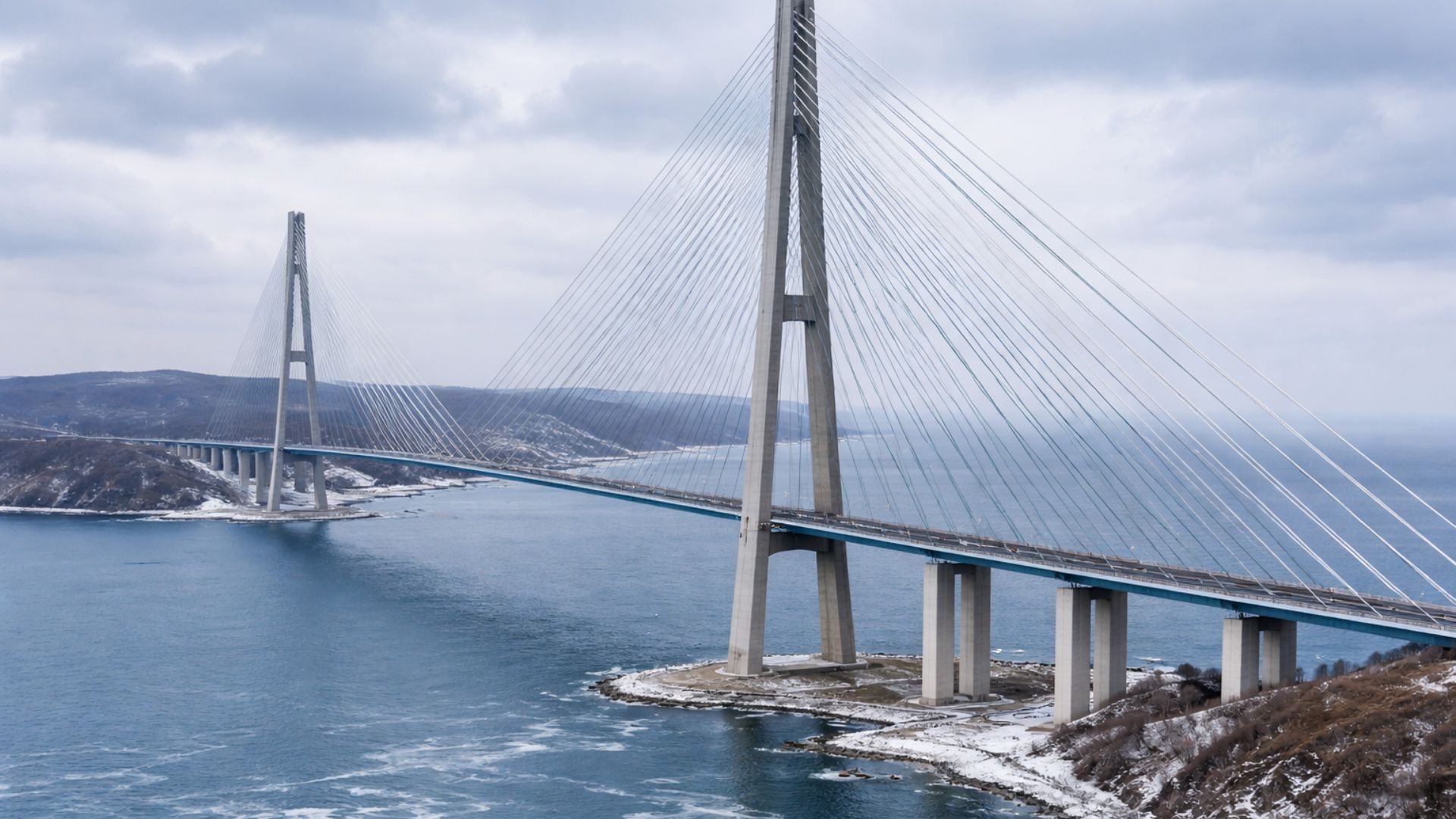


Monumental Structure Combines Large Volumes of Steel and Concrete with Engineering Solutions Developed to Operate in an Environment of Intense Winds, Extreme Cold, and Strong Thermal Variation in One of the Most Challenging Regions of Russian Territory.
The Russky Bridge, located in Vladivostok in the far east of Russia, was designed to connect Russky Island to the mainland via the Eastern Bosphorus Strait.
Widely publicized technical data indicate that the main span deck concentrates 22,567 tons of structural steel, while the two reinforced concrete pylons reach a height of 320.9 meters.
The structure was designed to operate under winds of up to 36 m/s and within a thermal range reported between -40 °C and 40 °C, in a region marked by severe weather conditions throughout the year.
-
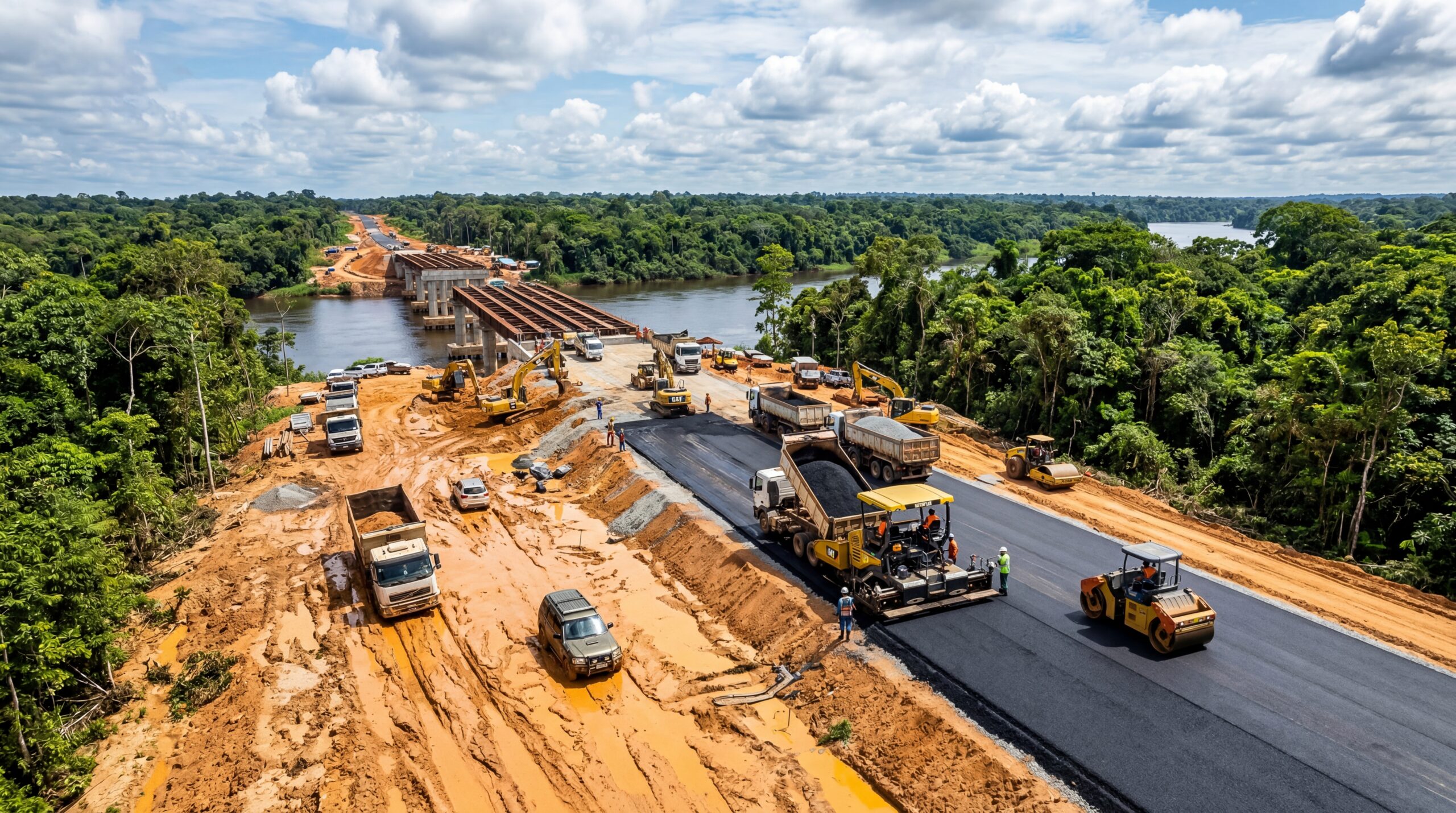
After nearly 50 years of neglect, BR-319 receives R$ 678 million to pave 340 km, gain a 320-meter bridge, and try to lift Amazonas out of the mud, the quagmire, and road isolation.
-
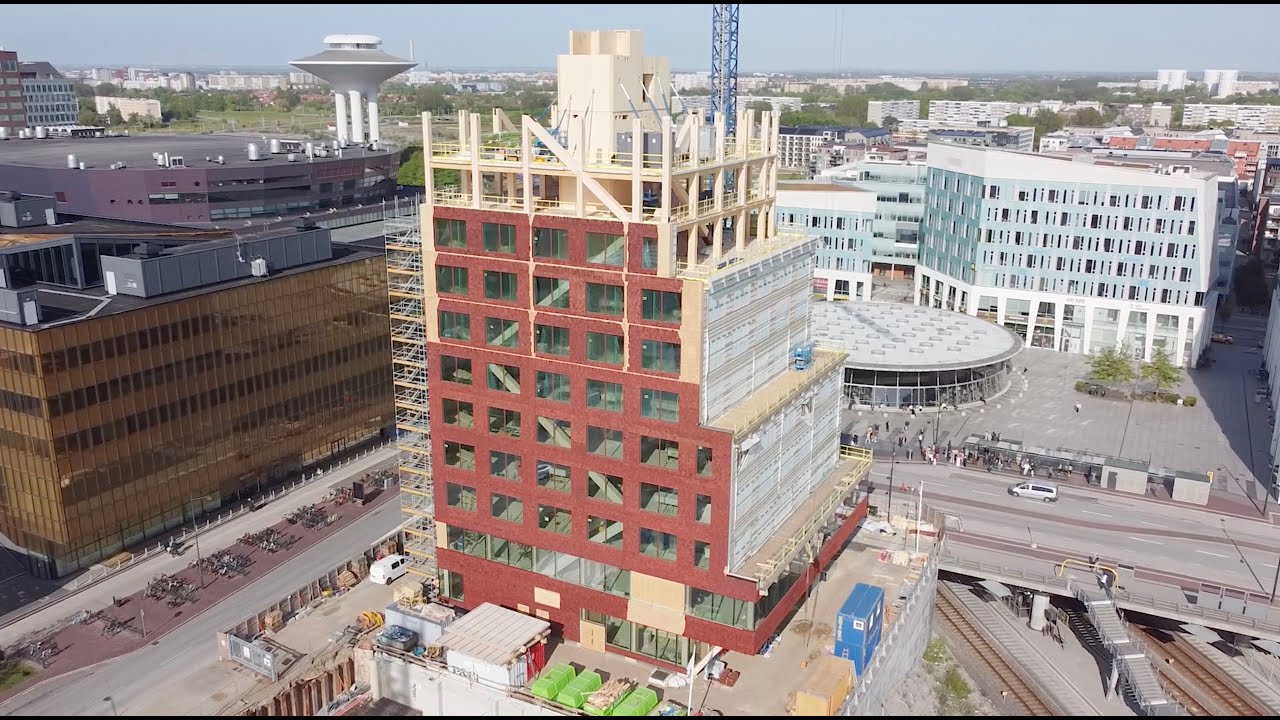
In Sweden, a 51-meter tower was built almost entirely of wood, without a concrete structural core and with solar panels integrated into the facade, using CLT and laminated beams to challenge the dominance of steel and concrete in modern buildings.
-
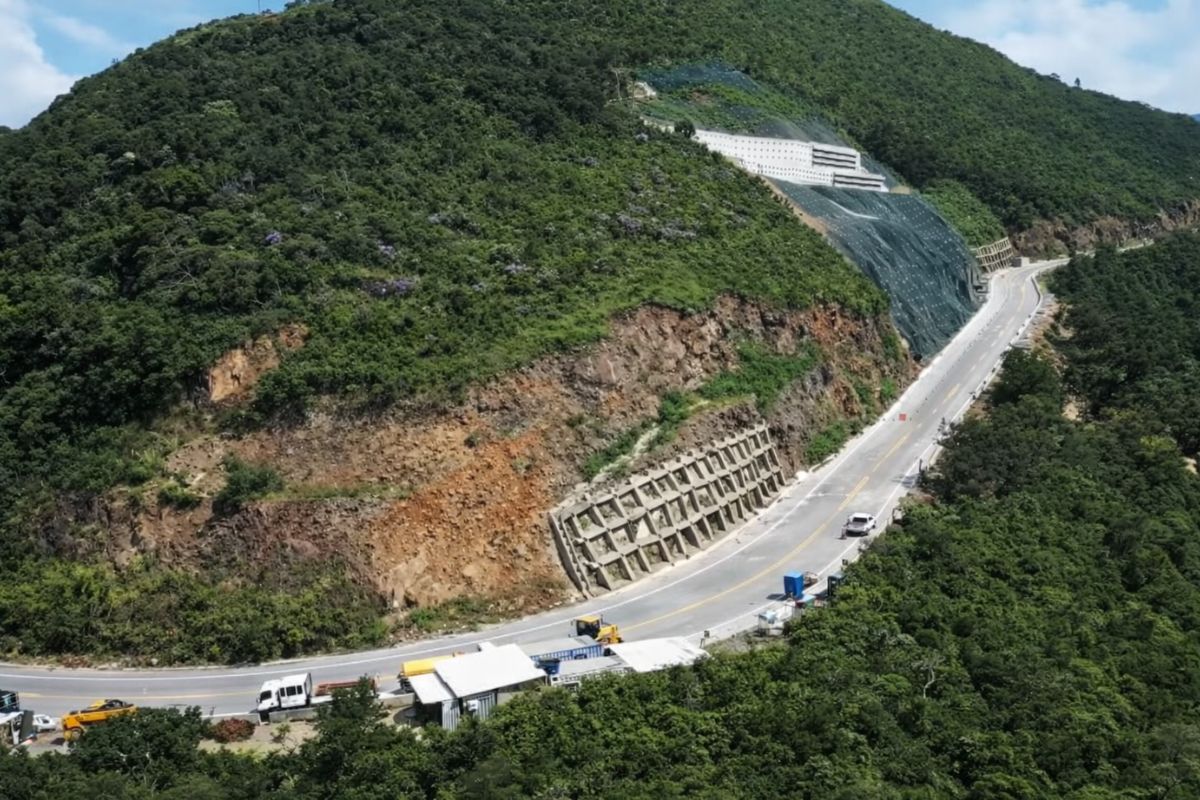
The section of Serra da Rocinha on BR-285 is now open in Timbé do Sul: 50 m tensioned curtains and top-down technique stabilize the slope, with a stairway duct controlling the water.
-
Scientists use sawdust mixed with clay to create a lighter brick, promising efficient thermal insulation and impressing by transforming waste into a solution for construction.


Type of Bridge and Structural Dimensions
It is a cable-stayed bridge, with two main pylons and a cable system supporting the deck by tension.
The central span measures 1,104 meters, a value recorded in technical documents and often cited in specialized publications as one of the largest ever adopted in this type of structural solution at the time of its construction.

The bridge has four traffic lanes and allows navigation beneath the deck, with a noted vertical clearance of 70 meters over the main channel.
Engineering Choices and Intensive Use of Materials
The quantities of material are directly associated with the engineering choices made in the design.
According to available technical literature, the intensive use of steel in the main deck is related to the need to reduce the self-weight of the structure and enable modular construction, a common method in long-span bridges.
The reinforced concrete pylons, with “A” shaped geometry, were designed to provide global stiffness and to receive the forces transmitted by the cables, which concentrate permanent and variable loads.
Cable System and Structural Control
The cable system is one of the central elements of the bridge.
Public information indicates the existence of 168 cables, with lengths varying between 135.77 meters and 579.83 meters.
Cables of this size require special attention to dynamic effects, such as wind-induced vibrations and tension variations associated with thermal expansion.
For this reason, technical reports mention the adoption of protection and damping devices, as well as material specifications aimed at durability in aggressive environments.
Extreme Climate as a Design Premise
The climatic conditions of the region were treated as design premises from the early phases.

Technical documentation describes Vladivostok as an area subject to intense winds, storms, and ice formation during winter.
According to engineers involved in publicly disclosed analyses, these characteristics influenced both the structural sizing and the planning of the work, affecting assembly procedures, operational safety, and execution timelines at height.
Aerodynamics, Thermal Expansion, and Maintenance
In this context, the aerodynamic behavior of the deck was treated as a critical variable.
In cable-stayed bridges, specialized publications indicate that the deck’s shape directly affects the wind response, potentially reducing transverse forces and limiting aeroelastic vibrations.
The need for stability under high winds, combined with wide thermal cycles, also guided decisions related to expansion joints, support devices, and inspection strategies throughout the structure’s lifespan.
Complementary Quantities and Industrial Effort
In addition to the steel used in the main span, technical bases indicate approximately 3,650 tons of steel associated with the cable system.

The pylons, for their part, concentrate about 41,419 m³ of concrete, in addition to the corresponding reinforcements.
These figures, disclosed in public engineering records, help to size the industrial effort involved, which includes manufacturing, transportation, assembly, and rigorous control of geometric tolerances.
Regional Integration and Infrastructure
The bridge’s implementation occurred during a period of infrastructure expansion in the Vladivostok region, aimed at improving connectivity with Russky Island.
Before the construction, access relied on maritime crossings and indirect routes.
With the completion of the bridge, the connection became permanent, integrating the island into the local road and urban system, according to official regional planning records.
Technical Use and Engineering References
From a technical perspective, the Russky Bridge is frequently used as a case study in engineering publications for its large span, intense climatic exposure, and structural solutions compatible with these constraints.
Industry experts point out that projects of this type require balance between stiffness, flexibility, and durability, factors that directly reflect in the amounts of steel, concrete, and the protection systems adopted.





36 m/s !!!!! SÓ????? 36 m/s = 130 Km/h . Tem regiões aqui no Brasil pela ABNT que devem atingir 40/45 m/s .
Naquelas regiões tem ventos de 200km/h