





 Portuguese
  English
  Spanish
  4 min of reading
  0 comments


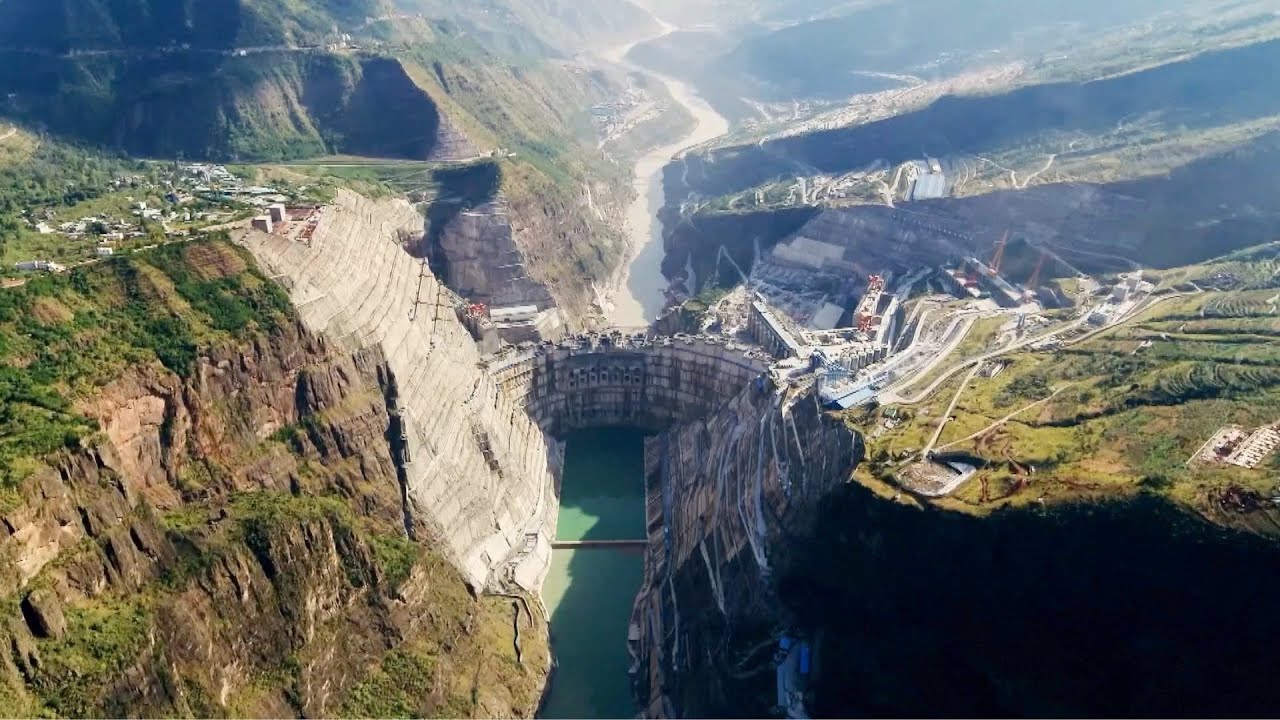
With 8 Million M³ of Concrete and 289 M High, Baihetan Is the 2nd Largest Hydropower Plant in the World and One of the Greatest Feats of Modern Engineering.
Located on the Jinsha River, on the border between Sichuan and Yunnan, the Baihetan Hydropower Station is one of the largest engineering projects ever completed by China and the world. According to official data from the China Three Gorges Group, its builder, the project consumed 8 million m³ of concrete and erected a dam with 289 meters in height, a dimension that surpasses the height of many global skyscrapers.
Furthermore, Baihetan is now the second largest hydropower plant on the planet, following only the Three Gorges Dam. With an installed capacity of 16,000 MW, it represents a monumental leap in the Chinese energy matrix and a definitive milestone in the history of hydraulic megastructures.
8 Million M³ of Concrete: A Volume Worthy of the Largest Dams in Humanity
The amount of concrete used in Baihetan is enough to:
-
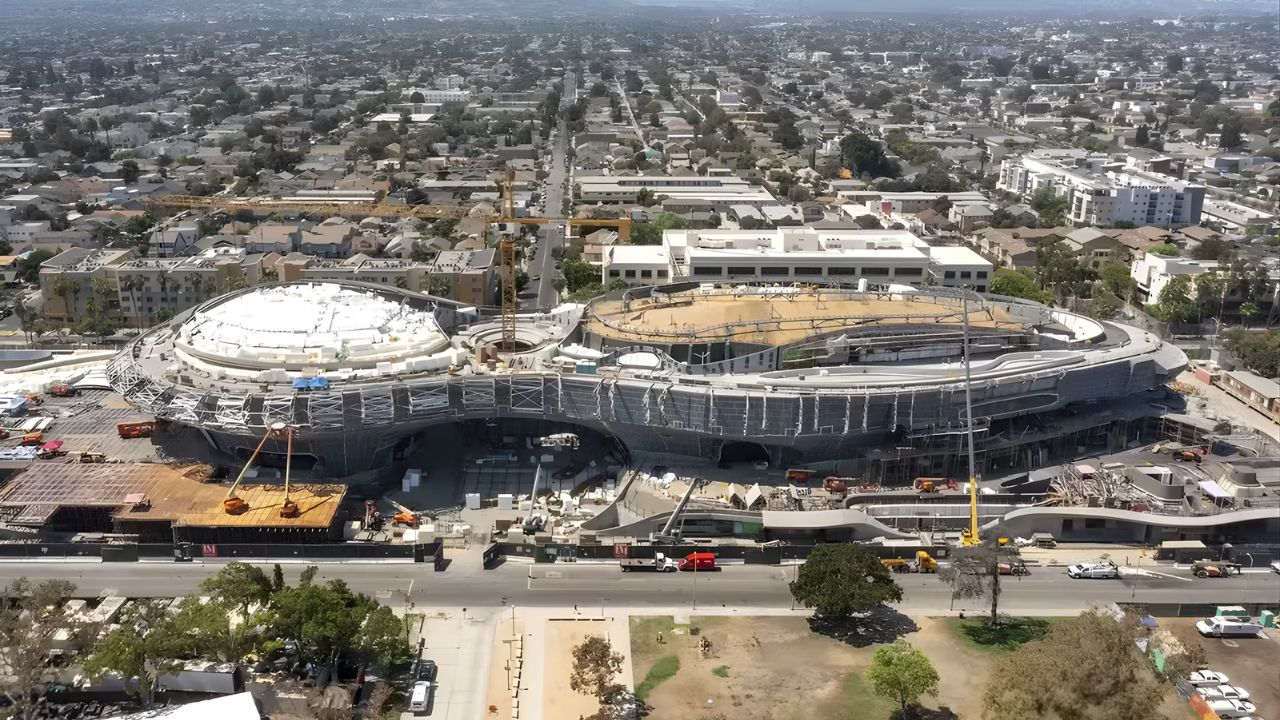
Created by George Lucas with over $1 billion, a futuristic museum in the shape of a spaceship with 1,500 curved panels is about to open in Los Angeles and will house one of the largest private collections of narrative art in the world.
-
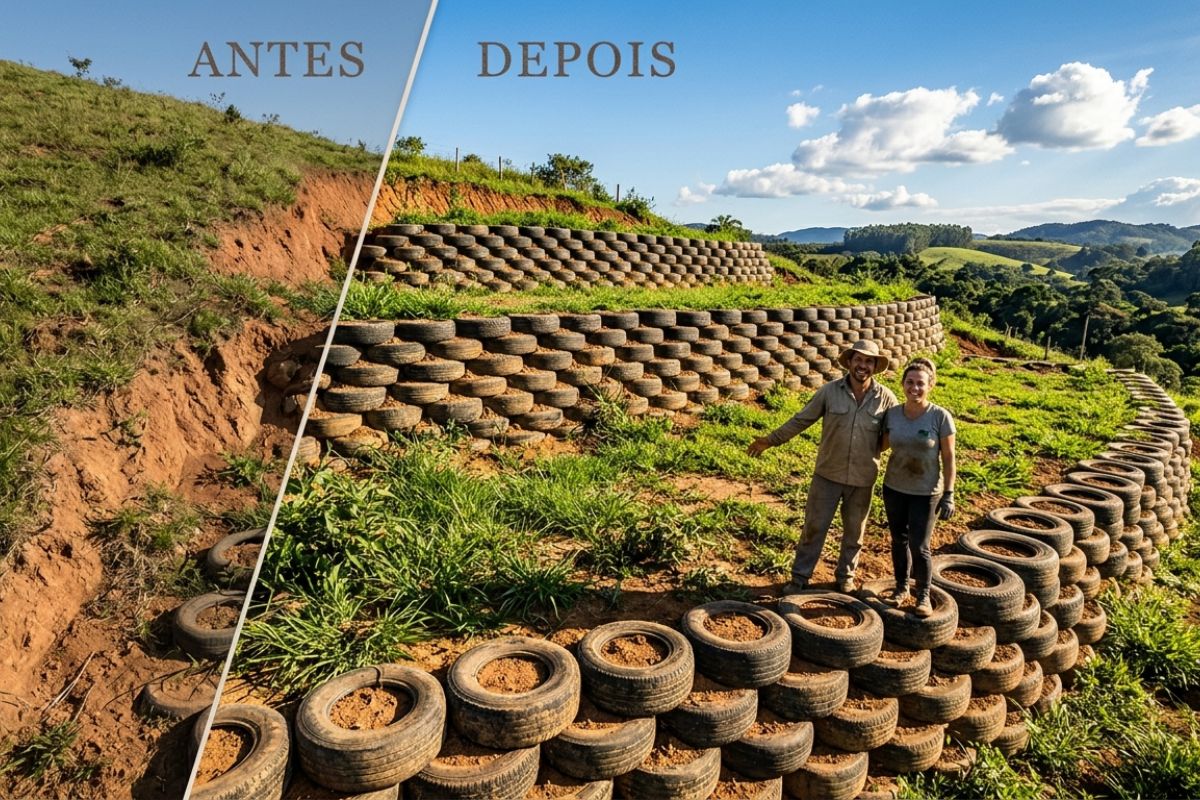
Couple shows how they built a retaining wall on their property using 400 old tires: sloped land turned into plateaus, tires are aligned, filled, and compacted with layers of soil, with grass helping in support and at almost zero cost.
-
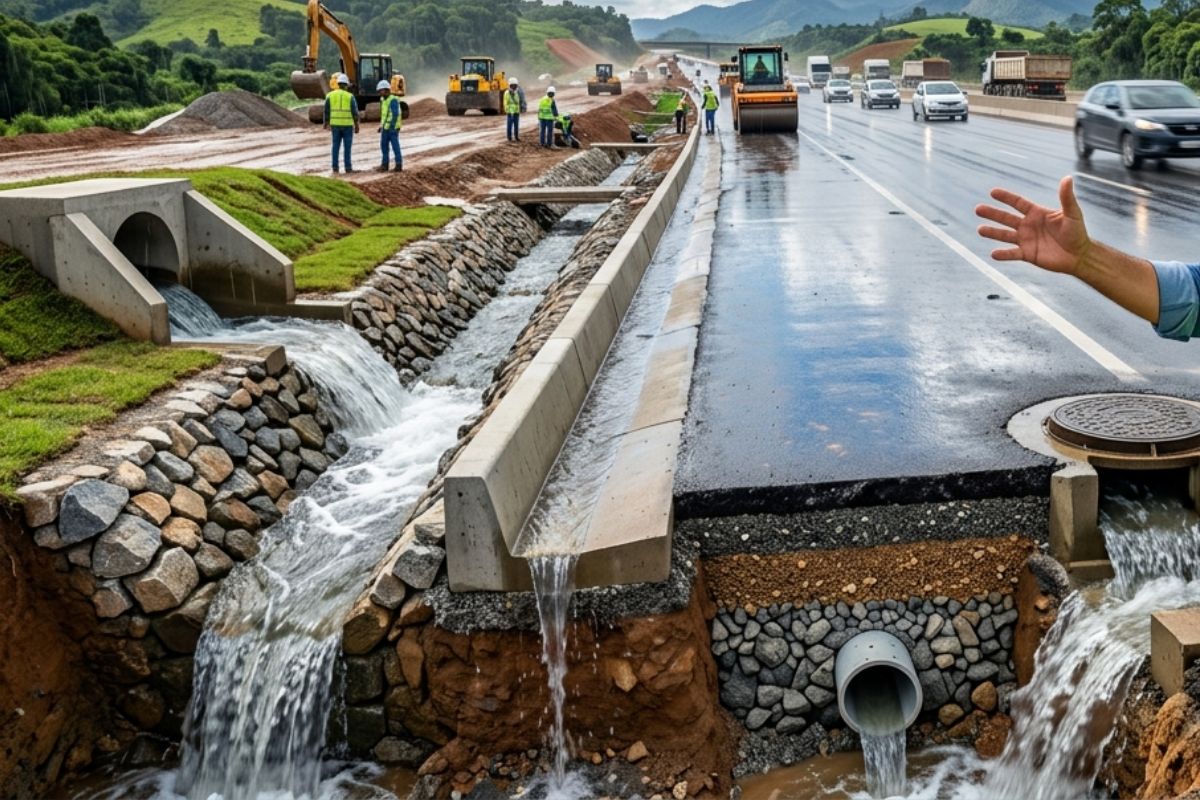
Engineer explains drainage during the rainy season: the difference between surface water and deep water, ditches, gutters, and water outlets on the road, as well as drains and drainage mattresses, to prevent erosion, aquaplaning, and flooding at the construction site today.
-
With 55 floors, 177 meters in height, a 15-meter walkway between the twin towers, ventilated facade, and 6,300 m² of leisure space, Ápice Towers already has one tower completed and another nearly at the top.

- build several dams the size of Tucuruí,
- erect hundreds of 30-story buildings,
- or pave thousands of kilometers of highways.
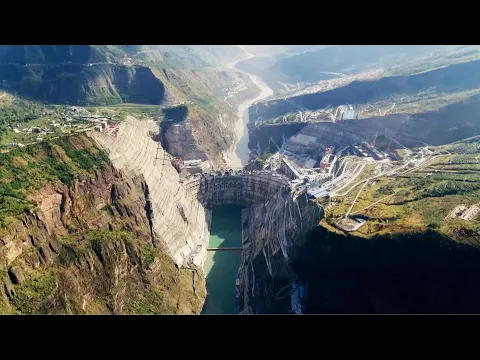

This volume was applied in a gravity arch structure, a type of dam that channels the forces of the reservoir to the side walls of the mountains.
Therefore, the concrete needs to achieve ultra-high density, exceptional mechanical strength, and predictable behavior under extreme pressures.
The concreting process occurred 24 hours a day in successive stages, with strict thermal control to prevent shrinkage cracks, ensuring durability and structural integrity to withstand the enormous volume of impounded water.
A 289-Meter Dam: Taller Than Skyscrapers and Equivalent to a 95-Story Building
The 289 meters in height of Baihetan impress even when compared to iconic vertical constructions:
- it is taller than the Eiffel Tower (324 m) when considering only the structure of the dam;
- it surpasses Hoover Dam (221 m);
- it is well above Itaipu (196 m);
- and rivals the tallest dams on the planet, such as Jinping-I (305 m).
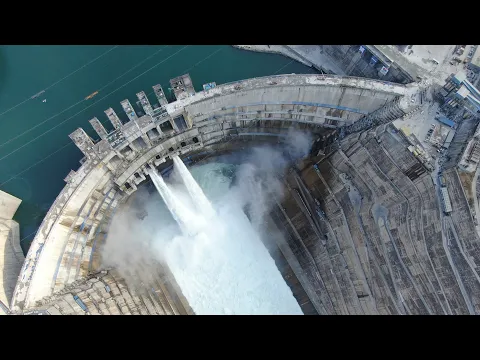
This extreme height requires advanced geotechnical engineering solutions, including:
- reinforcements on the side rocks,
- high-capacity drainage systems,
- continuous seismic instrumentation,
- and internal pressure relief mechanisms.
The mountainous and seismic environment of the region made the project even more challenging.
16 GW of Power: Enough Energy to Supply Tens of Millions of People
With 16,000 MW of installed capacity, Baihetan:
- generates energy equivalent to the annual consumption of a megacity,
- drastically reduces China’s dependence on coal,
- supports the industrial development of the southwest of the country,
- and contributes to climate goals for emission reductions.

The turbines, among the largest ever produced, were developed with Chinese technology and operate with high efficiency — an additional industrial milestone of the project.
Tunnels, Spillways, and Hidden Systems: The Invisible Engineering Behind the Mega Project
In addition to the impressive concrete wall, Baihetan has:
- diversion tunnels extending for hundreds of meters,
- spillways capable of releasing gigantic flows during floods,
- internal inspection and drainage galleries,
- sensors that monitor pressure, deformation, and temperature,
- control mechanisms distributed across multiple levels of the dam.
The underground engineering is as complex as the external structure itself — something common in dams of this size.
Geological and Climatic Challenges of One of the Most Difficult Terrains in China
The Jinsha River region is known for:
- steep slopes,
- rocks with unpredictable behavior,
- strong seismic activity,
- and extreme variations in water level during the monsoon period.
To face these challenges, engineers adopted:
- deep anchoring,
- lateral structural reinforcements,
- redundant energy dissipation systems,
- and state-of-the-art geotechnical instrumentation.
This set of measures ensures the performance and safety of the dam even under extreme conditions.
A Definitive Milestone of Modern Engineering
Baihetan represents:
- Chinese dominance in hydropower megaprojects,
- structural records,
- massive use of concrete on an industrial scale,
- and integration of high-level civil, electrical, and geotechnical engineering.
With 8 million m³ of concrete, 289 meters in height, and 16,000 MW of capacity, the Baihetan Hydropower Station is more than just a plant: it is a colossus that symbolizes modern engineering’s ability to overcome mountains, turbulent rivers, and extreme geological challenges.









-

-

-

-

-

-

41 pessoas reagiram a isso.