





 Portuguese
  English
  Spanish
  4 min of reading
  1 comment


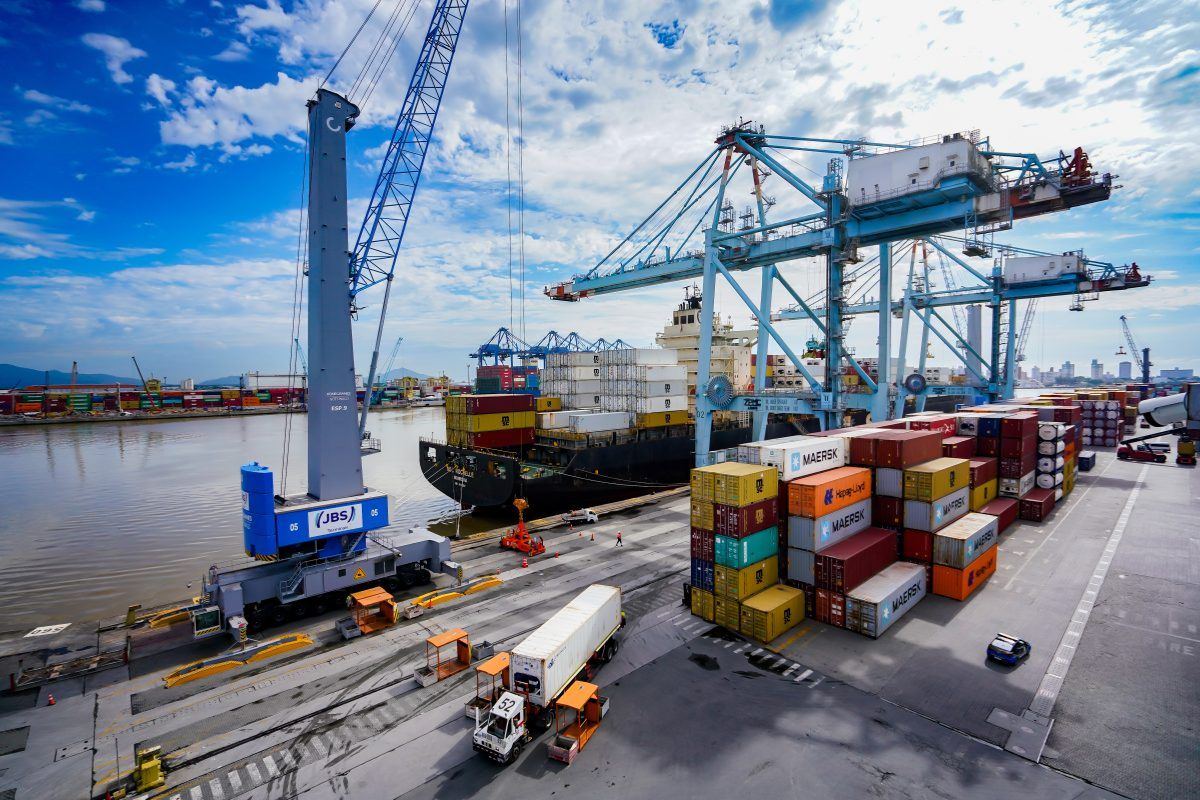


With Management of JBS Terminals Since October 2024, the Port of Itajaí Closed 2025 With Nearly 390 Thousand TEUs and Over 430 Thousand Moved Under New Management. The Investment of R$ 220 Million Brought 125-Ton Cranes, 1,708 Reefer Plug-ins, and Eight Gates, Expanding Routes and Predictability.
The Port of Itajaí Has Become a Direct Indicator of How Investment and Management Change the Speed of a Terminal: In 2025, Operations Closed With Nearly 390 Thousand TEUs for the Year, After a Period Marked by Stoppage and Decline in Competitiveness.
At the Same Time, the Change Scaled Up Quickly: Since October 2024, Over 430 Thousand TEUs Have Been Handled Under New Management, in a 15-Month Window That Combines Physical Modernization, Reorganization of Flow and the Attempt to Reestablish Santa Catarina on a More Stable Route in International Trade.
What Does “Nearly 390 Thousand TEUs” Mean and Why Is It News?
TEU Is the Standard Unit for Measuring Containers, Equivalent to a 20-Foot Container. When a Terminal Talks About “Nearly 390 Thousand TEUs,” It Is Not Just Adding Boxes: It Is Describing Actual Turnaround Capacity, Yard Occupation, Berthing Cadence, and Efficiency in Receiving and Releasing Loads.
-
“No one will make us change the Pix,” says Lula after the US report.

-
Lula responds directly to Trump and says that Pix is from Brazil and will not change under pressure from anyone, after a report from the United States pointed out the Brazilian payment system as an American trade barrier.

-
Amazon has just announced a new fee on all deliveries, and your online purchases will become more expensive starting April 17, including for those buying from the United States here in Brazil.

-
He sold his share for R$ 4 thousand, saw the company become a giant worth R$ 19 trillion, and missed the opportunity of a lifetime.


In the Case of the Port of Itajaí, the Volume in 2025 Was Presented as 11% Higher Than Registered in 2022, the Period Prior to the Stoppage of Terminal Activities.
This Comparison Draws Attention for a Practical Reason: It Suggests That the Terminal Has Returned to Operate Above the Pre-Interruption Level, Which Typically Requires Synchronization Between Ships, Yard, Gates, and Dock Equipment.
R$ 220 Million in Modernization: Where the Money Shows in the Operation

The Amount of Approximately R$ 220 Million Was Directed Towards Technological Modernization and Infrastructure, Focusing on Removing Bottlenecks in Container Handling. The Most Visible Highlight Is the Acquisition of Two Mobile Cranes MHC Konecranes Gottwald ESP.9, Capable of 125 Tons and with a Reach of Up to 20 Rows of Containers.
In Practice, This Type of Equipment Affects the Time of Operation Per Ship, Flexibility to Handle Different Types of Vessels, and Loading and Unloading Productivity.
When a Terminal Increases Lifting and Reach Capacity, It Affects the Most “Expensive” Element of the Schedule: Dock Time, Which Is the Period the Ship Is Docked for Operation.
Reefers, Gates, and the “Invisible” Side of Efficiency
The Terminal Reinforced Its Focus on Protein and Refrigerated Cargo With the Installation of 1,708 Reefer Plug-ins, the Refrigerated Containers That Require Constant Power in the Yard. This Is Not a Technical Detail, As the Ability to “Plug In” Reefers Directly Limits How Much Cold Cargo the Terminal Can Maintain Without Operational Risk.
Another Decisive Point Was the Implementation of Eight Reversible Gates, Entry and Exit Access That Can Have Their Direction Reversed Depending on Demand. In Terms of Land Logistics, Gates Are the Point Where Trucks Enter, Undergo Inspection, and Release or Pick Up Containers.
When Gate Infrastructure Improves, the Effect Typically Shows Up in Shorter Lines, Better Distribution of Windows, and More Predictability for Carriers and Shippers.
Docks, Berths, and the Gear That Connects Santa Catarina to the World
The Infrastructure Described for the Port of Itajaí Includes an Operational Area of 180 Thousand Square Meters, 1,030 Meters of Dock, and Four Berths, with a Depth of 14 Meters.
These Numbers Define the Size of the “Corridor” Through Which Trade Passes: How Many Ships Can Operate, What Size, and What Margin of Maneuver Exists to Maintain Regular Calls.
The Operation Operates With 10 Regular Shipping Lines and Seven Weekly Calls, Connecting Santa Catarina to Markets in Asia, Europe, the Americas, the Middle East, and Africa. In 2025, the Terminal Received 384 Vessels, Operating in Full Container LC and Full Container CB Segments.
And, in January, Another Service Was Added to the Portfolio, the LUX, Designed to Connect Brazil to Northern Europe With Weekly Calls in Itajaí.
Who Benefits, Which Cargo Dominates, and Where Pressure Increases
The Portfolio Served Under New Management Was Described as Diverse, With Three Thousand Clients. In the Export Agenda, Meats Lead, Followed by Timber. In the Import and Export Flow, Plastics, Prepared Animal Foods, and High-Value Machinery Appear, a Mix That Tends to Require Window Control, Storage, and Document Discipline to Avoid Delays in the Yard.
In Social and Labor Terms, the Operation Supports 345 Direct Employees and Mobilizes Around 600 Casual Port Workers (TPAs) Daily.
This Point Is Often Sensitive Because Productivity, Scale, and Workplace Safety Need to Go Hand in Hand: As Volume Grows, So Does the Demand for Stricter Port Management Routines, Training, and Shift Coordination.
What Stands When Numbers Cool Down
The Recovery Discourse Does Not Rely Solely on Records: It Depends on Continuity. A Terminal Becomes a “Logistics Hub” When It Maintains Regularity, Preserves Windows, and Balances Refrigerated Cargo, General Cargo, and Seasonal Variations Without Collapsing Land Access.
At the Port of Itajaí, the Combination of Investment, Equipment, Yard Infrastructure, and Service Expansion Suggests a Relevant Repositioning, but the Final Test Is Always the Same: Maintain Flow Above the Pre-Stoppage Period Without Losing Predictability for Exporters and for Those Who Depend on the Terminal to Import Inputs and Machinery.
And, Looking as a Citizen and Consumer, This Affects Daily Life: More Efficiency Can Mean More Stable Deadlines for Supply Chains, While Bottlenecks Tend to Increase Freight Costs and Uncertainty for Companies and Workers.
Have You Experienced Any Practical Impact of Improvement or Deterioration in Logistics (Deadline, Price, Availability) Because of Ports in Brazil? And, In Your View, What Most Changes a Terminal: Heavy Investment in Equipment or Management and Operational Rules on a Daily Basis?









Se o Brasil tivesse o foco no desenvolvimento, investimentos em infraestrutura como ferrovias, estradas, hidrovias, portos, aeroportos de qualidade, com certeza seríamos p/menos um país desenvolvido, de primeiro mundo e com melhor distribuição de renda.
Quando vejo um país de dimensões continentais, que não apresenta grandes variações de mudanças bruscas nas 4 estações do ano, que produz de tudo nas 5 regiões, c/cerca de 8 mil de litoral, uma das maiores bacias hidrográficas do planeta, as maiores áreas agricultaveis do mundo, as maiores reservas **** e de petróleo, fico a pensar quando vamos tomar **** e começarmos a cobrar de nossas autoridades as verdadeiras mudancas que nosso país tem que passar, começando pela reforma política.
Não dá mais esperar. Já fizeram as reformas da Previdência, Trabalhista, Tributaria, agora fala-se na Administrativa, mas a que deveria ser a primeira, a que baliza todas as outras, que é a política, nunca sai.
Chega de tanta negligência. São tantos desvios de recursos e condutas de nossos governantes, que dá nojo em ver nas autoridades, que deveriam ser os salvaguardas da sociedade, ao ocuparem os cargos e se prevalecer da imunidade dos cargos públicos e praticarem vários crimes, como as fatídicas EMENDAS PIX/SECRETAS.
Nossas autoridades, não têm o direito de negar o desenvolvimento deste país.