





 Portuguese
  English
  Spanish
  5 min of reading
  0 comments


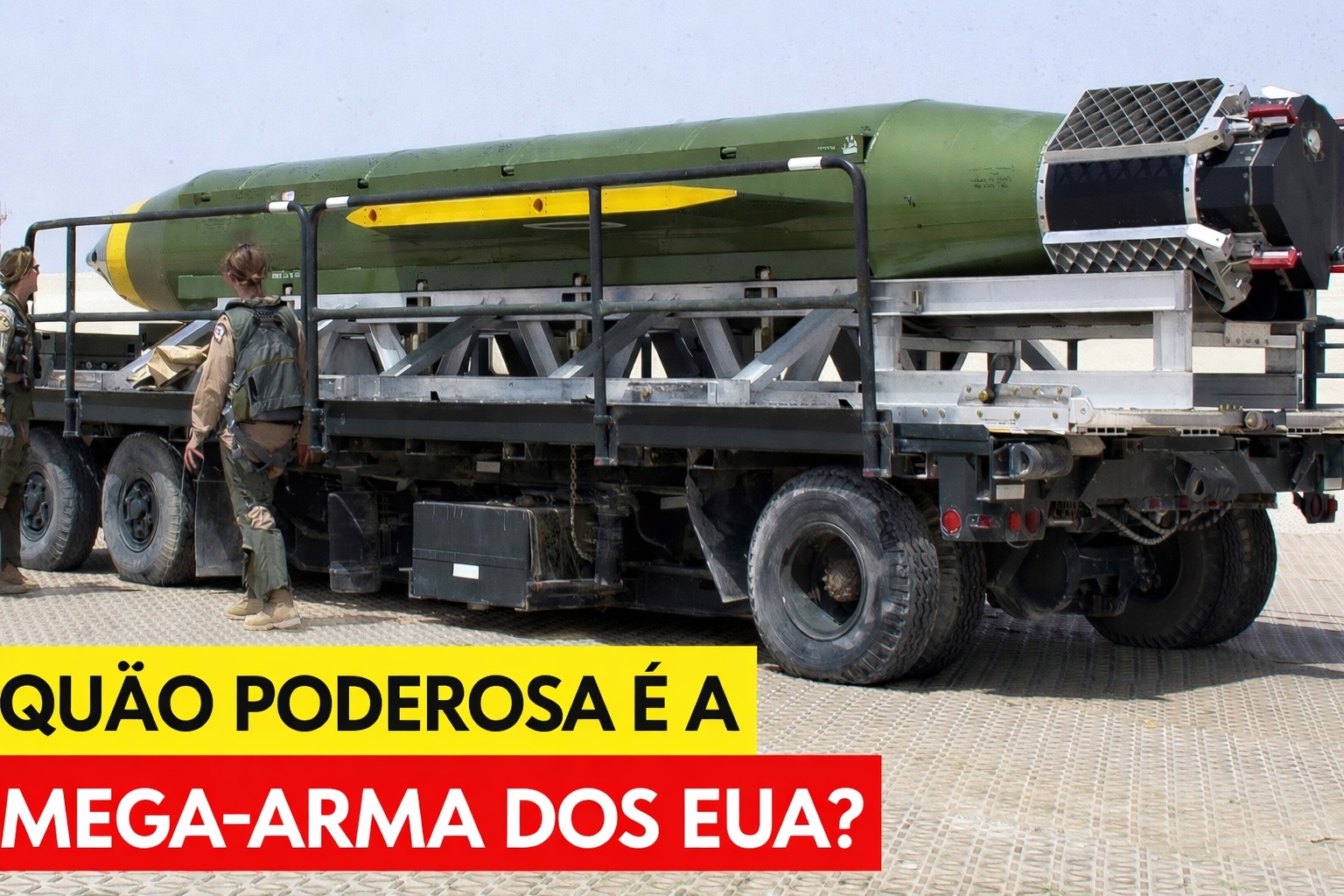
The GBU-43/B MOAB Weighs 9.8 Tons, Releases Energy Equivalent to 11 Tons of TNT, and Became the Largest Non-Nuclear Bomb Ever Used in Combat. Understand How It Works.
The story of the so-called “Mother of All Bombs” begins far from the nuclear imaginary. Despite the sensational nickname, the GBU-43/B Massive Ordnance Air Blast, or simply MOAB, was designed specifically to deliver extreme destructive power without resorting to nuclear warheads. It is a conventional weapon, but taken to the absolute limit of what military engineering can extract from chemical explosives.
The project emerged in the early 2000s, when the United States sought a solution capable of destroying fortified areas, deep caves, and underground complexes used by armed groups in mountainous regions. The goal was not surgical precision, but maximum impact in a single detonation, capable of neutralizing extensive targets and causing a devastating psychological effect.
What Exactly Is the GBU-43/B MOAB – the “Mother of All Bombs”
The MOAB is a GPS-guided free-fall bomb, with a total mass of 9,800 kg. Of that weight, about 8,500 kg is made up of H6 explosive, a mixture of RDX, TNT, and aluminum powder, formulated to generate an extremely rapid release of energy and a shock wave of great range.
-
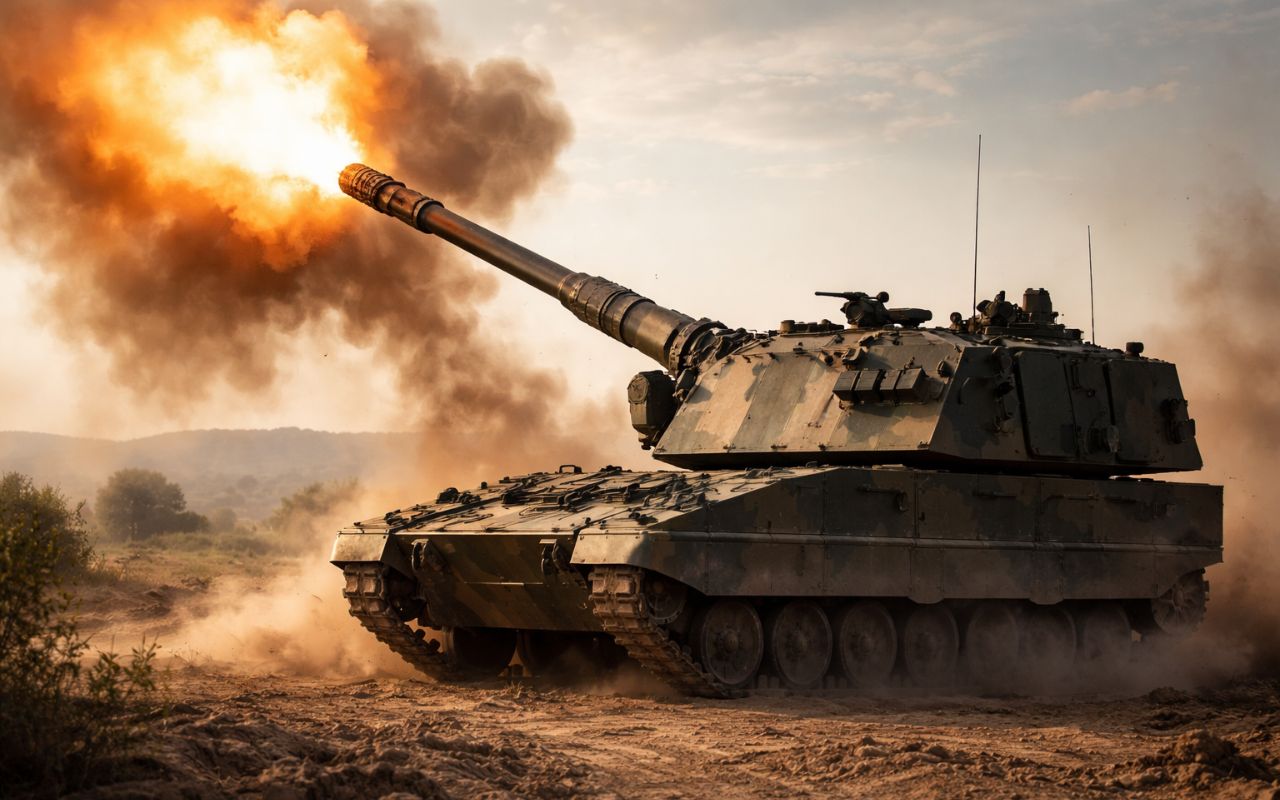
The German “steel monster” weighing 55 tons fires up to 10 projectiles per minute at over 40 km and avoids counterattacks on the battlefield by moving quickly to escape enemy attacks; meet the Panzerhaubitze 2000.
-
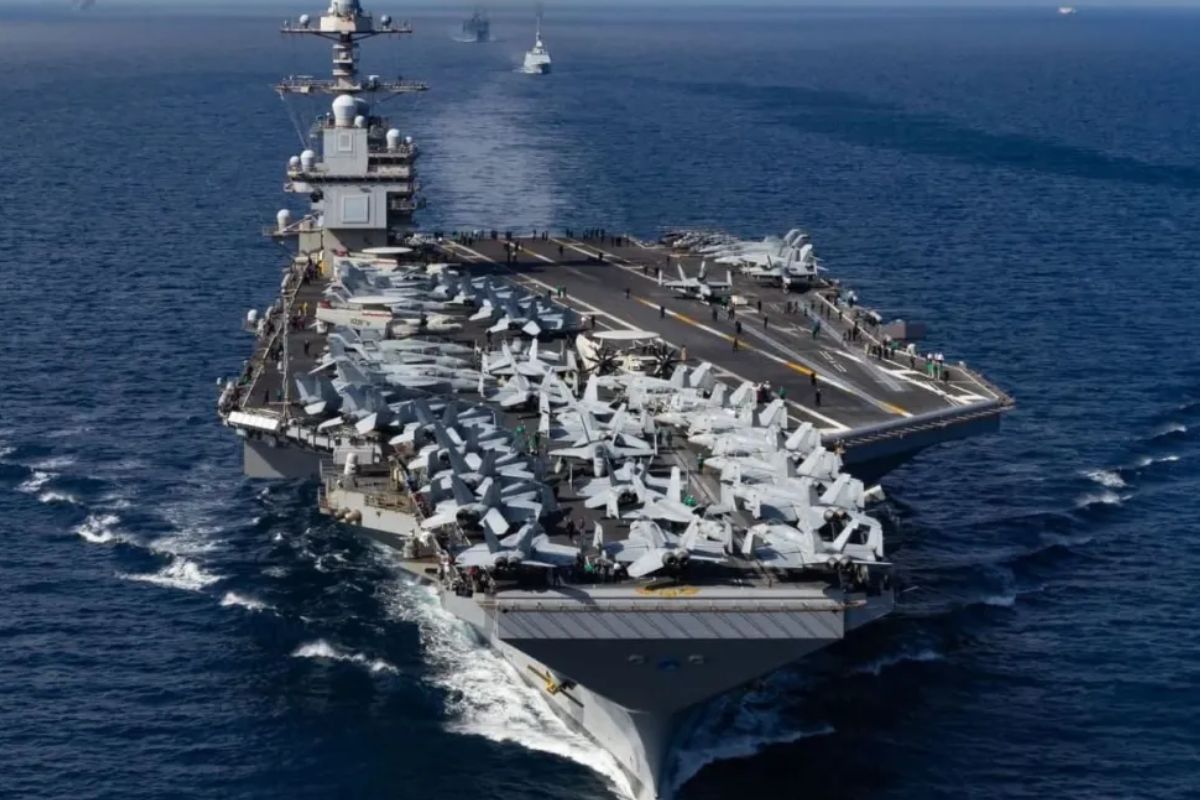
USS Gerald R. Ford, the largest aircraft carrier in the world, returns to sea after a fire in the laundry in the Red Sea; repaired in Crete, it resumes missions of Operation Epic Fury against Iran.
-
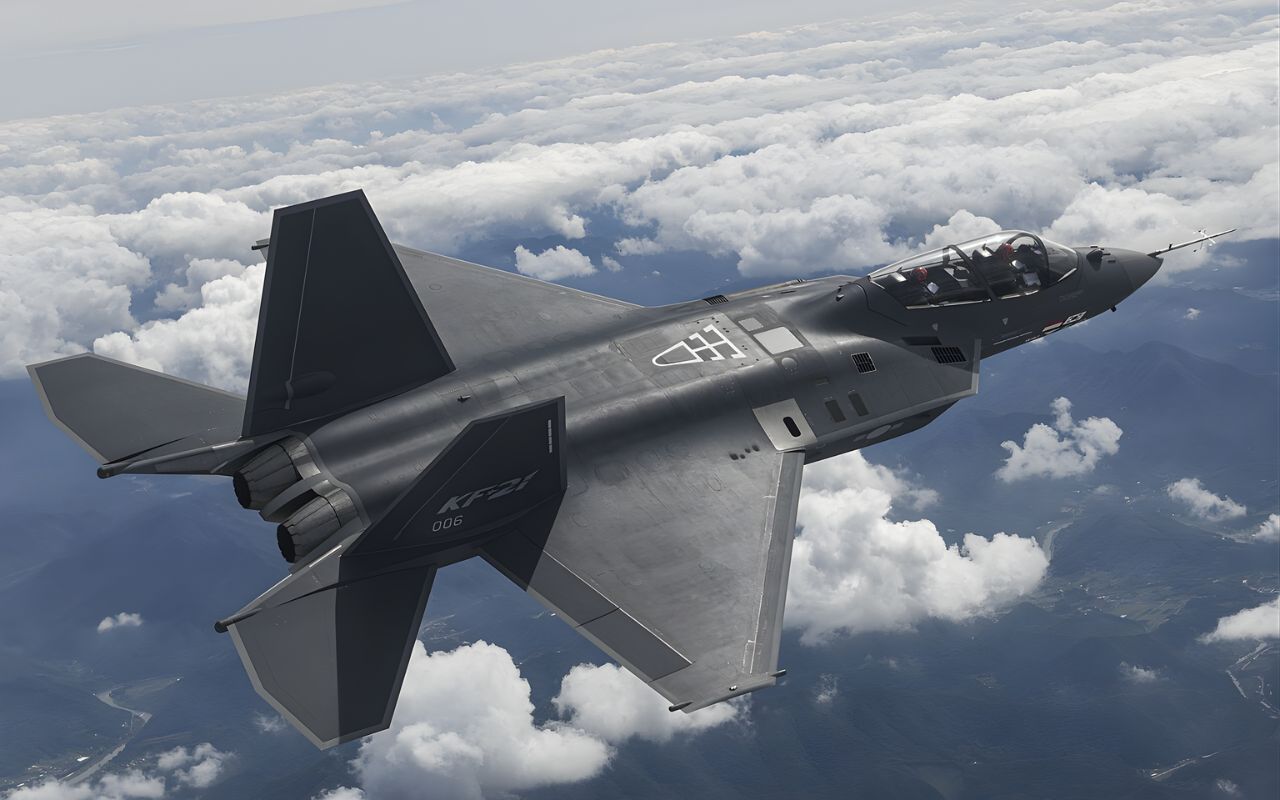
Military power: South Korea’s new KF-21 fighter jet will be a key component in replacing the aging aircraft of the air force, placing the country on the map of air military powers.
-
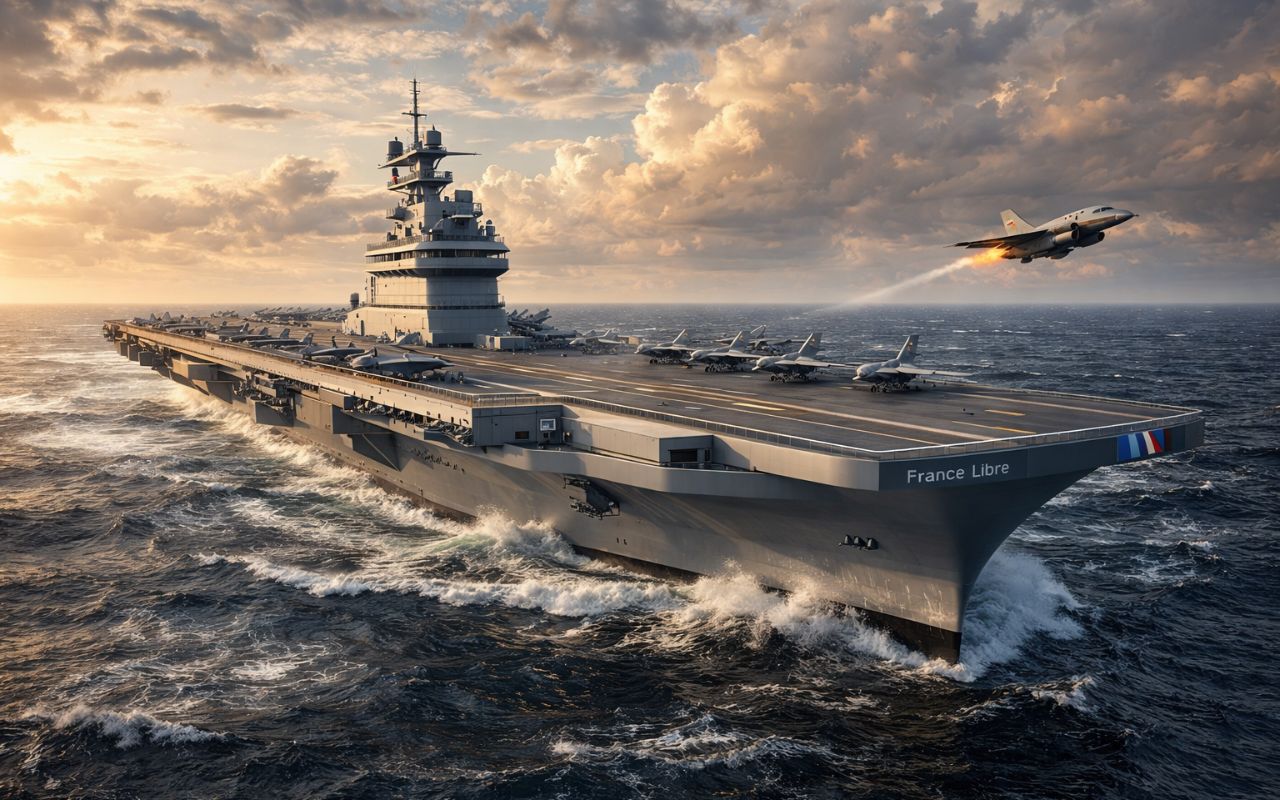
With 310 meters, 80 thousand tons, and capable of operating for 45 years, the new nuclear aircraft carrier France Libre will be the largest in France and will enter service in 2038.

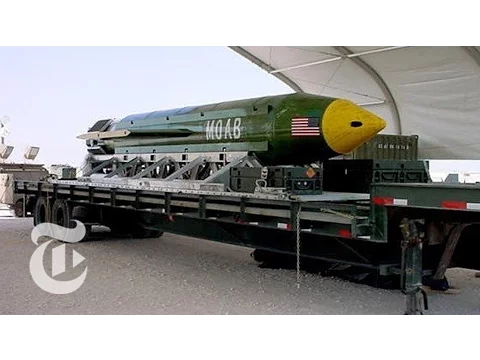

It measures approximately 9.17 meters in length and 1.03 meters in diameter, dimensions that make it closer to a missile than to a conventional bomb. For this reason, it cannot be transported by traditional fighter jets or bombers. Its launch requires a specialized transport aircraft, the MC-130, which releases the bomb from the rear using an extraction parachute system.
Unlike penetrator bombs, the MOAB was not designed to penetrate the ground. Its principle is air detonation, a few meters above the surface, maximizing the lateral propagation of the shock wave and pressure.
Energy Released and Comparison with Nuclear Weapons
The most impressive figure is the energy released in the explosion. It is estimated that the GBU-43/B produces an effect equivalent to about 11 tons of TNT.
For comparison purposes, the Hiroshima bomb released something around 15,000 tons of TNT. The difference is colossal, but within the realm of conventional weapons, the MOAB occupies the absolute top.
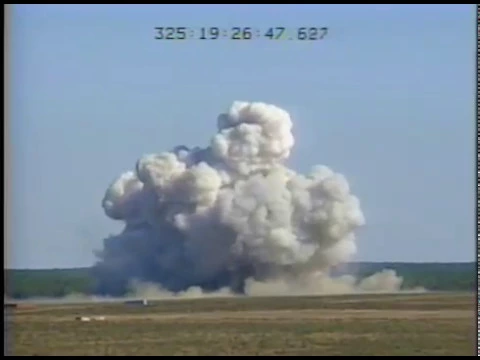
This release of energy creates a shock wave capable of destroying structures, collapsing tunnels, crushing lightweight buildings, and causing severe damage kilometers from the impact point. The effect is amplified in mountainous areas and valleys, where the pressure reflects and channels.
In addition to physical destruction, there is the overpressure effect, which can be lethal even for people sheltered in caves or behind obstacles, due to the rapid variation in atmospheric pressure caused by the explosion.
How the MOAB Is Launched and Guided
The process of using the MOAB is as unique as its size. The bomb is transported inside the fuselage of an MC-130, secured to a special cradle. At the moment of launch, the aircraft’s rear ramp is opened, a small parachute is activated, and literally pulls the bomb out of the plane.

After release, the MOAB stabilizes its trajectory using fins and corrects its course through a GPS navigation system, ensuring that it hits the target area with enough precision for an area effect weapon.
Since it does not rely on penetration or direct impact, centimeter precision is not the central factor. The goal is to position the detonation at the ideal point to maximize the propagation of the shock wave.
The Only Real Use in Combat of the MOAB
Although developed in the early 2000s, the MOAB remained unused operationally for years. This changed on April 13, 2017, when the United States dropped a GBU-43/B in eastern Afghanistan, in Nangarhar province.

The target was a complex of tunnels and caves used by fighters from the Islamic State of Khorasan Province (ISIS-K). According to military officials, the detonation destroyed tunnel entrances, weapon depots, and defensive positions, as well as causing dozens of casualties among the militants.
It was the first and, to this day, the only time the “Mother of All Bombs” has been used in real combat, which solidified its fame and turned the weapon into a symbol of extreme conventional military power.
Psychological and Strategic Impact
More than the physical damage, the MOAB carries a significant psychological weight. The mere existence of a conventional weapon capable of producing an explosion of this magnitude serves as a deterrent element.
Military analysts highlight that its use signals a willingness to escalate firepower without crossing the nuclear threshold, sending a message to both armed groups and adversary States. It is a demonstration of strength that occupies an intermediate space between conventional bombings and weapons of mass destruction.
Limitations and Controversies
Despite its impressive power, the MOAB is not a versatile weapon. Its use is extremely restricted, depending on total air superiority and specific terrain conditions. Furthermore, the collateral impact is high, limiting its application in urban environments or densely populated areas.
There are also criticisms regarding its cost-effectiveness. Each unit costs millions of dollars, and many experts question whether the same military effect could be achieved with multiple smaller attacks and greater tactical flexibility.
The GBU-43/B MOAB represents the pinnacle that military engineering has reached in the field of conventional air-burst weapons. It is not the most precise weapon, nor the most commonly used, but it is certainly one of the most impressive ever created.
It marks a clear boundary between conventional and nuclear armament, showing how far it is possible to go with just chemistry, physics, and engineering. Thus, the “Mother of All Bombs” is not just a weapon, but a historical milestone of modern firepower and a reminder of how technology can concentrate destruction on a colossal scale without resorting to the atom.









-

-

3 pessoas reagiram a isso.