





 Portuguese
  English
  Spanish
  5 min of reading
  0 comments



With the Unemployment Rate at the Lowest Level in History, the National Market Turns to Immigrant Labor to Meet Industrial Demand, Generating a Record Number of Formal Hires Led by Venezuelans Seeking Stability and Labor Rights in the South Region of the Country
Between January and October 2025, Brazil recorded a positive balance of 73,400 formal vacancies for foreigners, driven by a low unemployment rate of 5.4% and led by Venezuelan immigrants filling industrial and service gaps in the South and Southeast.
Exponential Growth of the Foreign Workforce
The total number of foreigners employed with signed work permits in Brazil showed a significant increase in recent years. Data from the General Register of Employed and Unemployed (Caged) reveal that the balance was positively impacted by 73,400 hires in just the first ten months of 2025.
This volume surpasses the numbers recorded throughout the previous year, when the balance was 71,100 vacancies. The current scenario represents a remarkable jump of 196.2% compared to 2020, the year when the Caged historical series began using the current methodology.
-
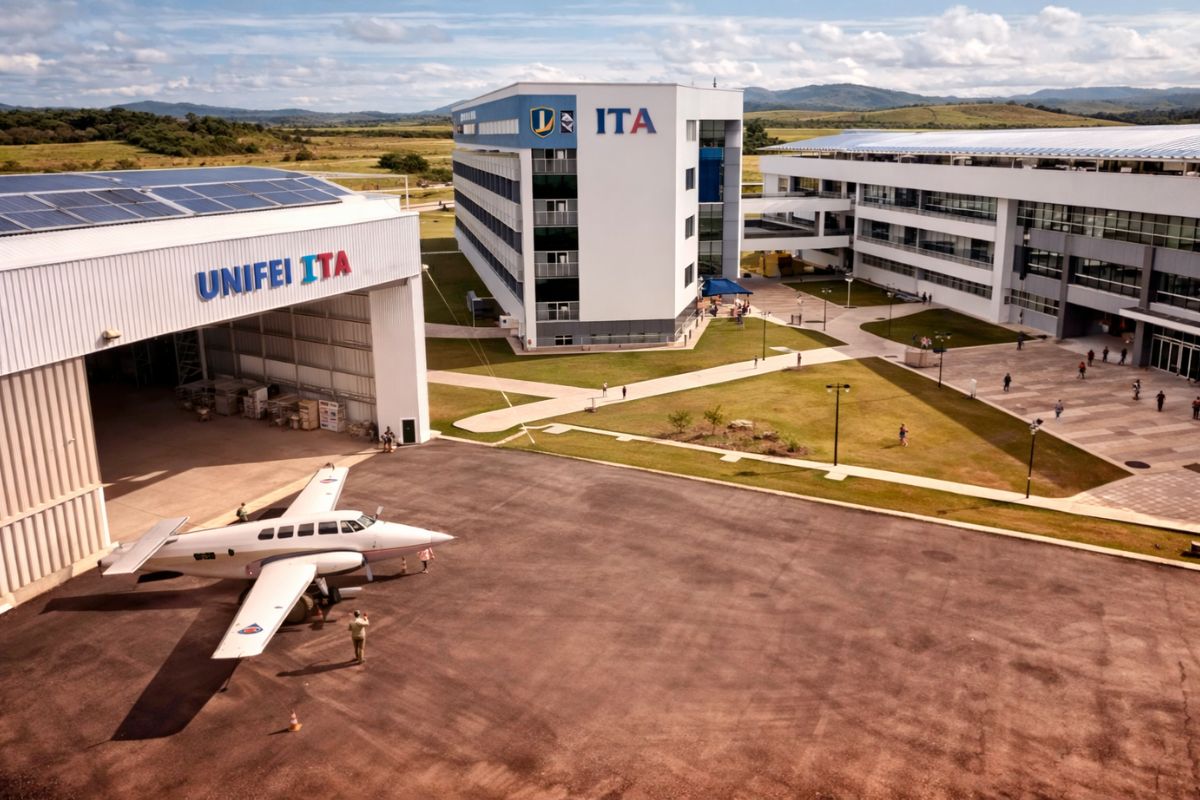
The institute that trained the greatest aerospace engineers in Brazil has just opened its first campus outside São Paulo after 75 years: ITA Ceará will have R$ 445 million, new courses in energy and systems, and classes are expected to start in 2027.
-
Luciano Hang, owner of Havan, goes to Juiz de Fora after the tragedy in February, brings R$ 1 million, hands out R$ 2,000 cards, and donates up to R$ 15,000 to victims in the region.

-
The Brazilian passport allows legal residence in dozens of countries without the need for a prior visa, and most Brazilians are unaware that they can apply for residency directly upon arriving in nations in South America, Africa, and even Europe.

-
Petrobras sends a message to Brazilian truck drivers after fuel collapse and reveals plan to have 100% domestic diesel.


Workers from other nationalities now account for about 4% of all hires in the Brazilian formal market. The total number of new vacancies created in the country during the analyzed period was 1.8 million, highlighting the growing relevance of immigrant labor in the workforce composition.
The historical evolution shows that the participation of these workers has been consistently increasing. In 2020, even with the general elimination of jobs due to the pandemic, 24,800 foreigners were hired.
In the following year, 2021, the balance fell to 5,200 vacancies, representing 0.19% of the total. However, the recovery was swift. In 2022, the number jumped to 35,900 hires, equating to 1.78% of the total balance. By 2023, the volume rose to 47,300, reaching 3.2%.
Nationalities and Predominant Sectors in the Economy
Among the nationalities that occupy formal job positions in Brazil, Venezuelans lead by a wide margin. They represent 47.8% of the total number of foreigners admitted in 2025. This group is followed by Haitians, who occupy 8.2% of the vacancies.
Argentinians place third, with 4.8% of the hires, closely followed by Paraguayans, with 4.3%.
The migratory movement of these groups directly impacts various sectors of the national economy, meeting specific market demands.
These workers are primarily engaged in the service sector, in trade, and, notably, in industries. The most occupied positions by foreigners include operational roles where there is difficulty hiring Brazilians.
The position of production line feeder leads the statistics, with a positive balance of 13,800 hires by October. Other notable occupations include cleaners, with 5,300 filled vacancies, butchers, with 4,700, and construction helpers, totaling 4,100 positions.
Economic Context and Scarcity of Local Labor
The increase in the hiring of foreigners occurs in a context of historically declining unemployment rates. In the quarter ending in October 2025, unemployment stood at 5.4%, the lowest level since the historical series began by IBGE in 2012.
This reduction is progressive: the rate was 12.1% in 2021, fell to 8.3% in 2022, reached 7.6% in 2023, and arrived at 6.2% in 2024. The scarcity of available labor drives the search for workers from abroad.
Bruno Imaizumi, an economist at 4intelligence specializing in the labor market, states that the main reason for absorbing this labor force is the market’s heating. According to him, Brazil benefits from the arrival of foreigners, offsetting the net outflow of Brazilians.
Employee turnover in the labor market has also reached record levels, hitting 36.1% of formal workers in the past 12 months. In the pre-pandemic period, at the beginning of 2020, this rate was below 25%.
A survey by the Federation of Industries of the State of São Paulo (Fiesp) supports this view. The study shows that 20.5% of São Paulo industries that sought new employees between early 2024 and March 2025 were unable to fill the vacancies.
Geographical Concentration and Adaptation Profiles
The majority of Venezuelans are being hired in the southern states. Between January and October, 25,900 secured formal jobs in this location. Santa Catarina leads with 10,800 hires.
Paraná follows with 9,300 filled vacancies, followed by Rio Grande do Sul, with 5,600. São Paulo also figures as a significant state in absorbing this labor force, being a destination for many immigrants after arriving in the country.
The Venezuelan Miguel, who has lived in Brazil for eight years, is an example of this integration. He chose Porto Alegre to live in and works with a signed contract at a private bank. Miguel began without any knowledge of the commercial area but learned through the training offered by the company.
According to him, the effort is worthwhile to achieve his goals. Besides him, his parents and sister also reside in the state. Miguel plans to deepen his studies in other languages, such as French or Mandarin, but intends to stay in Brazil.
For many immigrants, the biggest challenge is the language, being unfamiliar with simple words like “cup” and “towel.” In Brazil, they achieve stability by working for several consecutive months in formal jobs.
Qualification Stories and Life Reconstruction
Many immigrants arrive with qualifications that exceed the initial vacancies they occupy. The Venezuelan immigrant is viewed as someone who adapts quickly and completes the workday, being considered a qualified labor force for the sectors they occupy.
The common strategy is to become financially stable initially and later bring their family from Venezuela.
Demographic Data and Migration Flow
The recent migratory movement is partially explained by humanitarian and political crises. The number of Haitians in Brazil, for example, surged 106,294% over 12 years until 2022, increasing from 54 to 57,453 individuals, reflecting the 2010 earthquake.
In the case of Venezuela, the worsening socioeconomic difficulties during Nicolás Maduro’s dictatorship fueled the exodus.
The 2022 Census by IBGE shows that, between 2010 and 2022, the number of Venezuelans entering Brazil rose from 2,900 to 271,500.
Data from the Ministry of Justice and Public Security indicate that, from 2010 to 2025, 182.2 million foreigners entered Brazil through border posts. In the same period, 184.2 million exited the country.
This resulted in a negative balance of more than 2 million people in the overall flow of entries and exits. Despite this total negative balance, the permanence of foreigners for formal work continues to follow an upward curve, filling vital gaps in the Brazilian economy.










-

Uma pessoa reagiu a isso.