





 Portuguese
  English
  Spanish
  4 min of reading
  8 comments


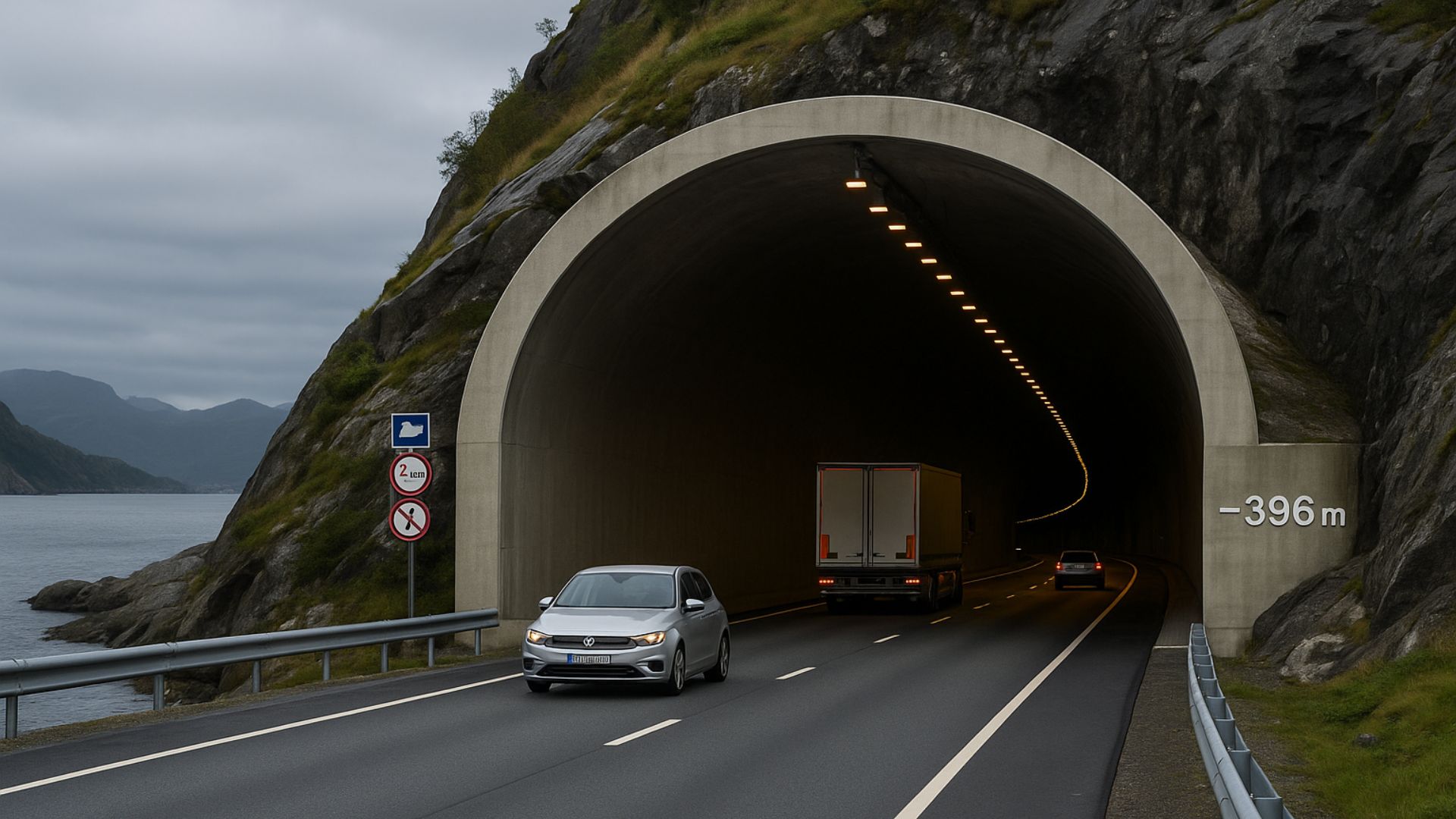


Norwegian Project Creates One of the Most Extreme Tunnels in the World and Promises to Revolutionize Mobility, Logistics, and Daily Life by Connecting Areas Previously Separated by Deep Fjords.
The underwater tunnel Rogfast, under construction on the west coast of Norway, is set to become the longest and deepest underwater road tunnel in the world.
With approximately 26.7 km in length and nearly 400 meters below sea level, the connection under Boknafjorden promises to eliminate dependence on ferries in one of the most strategic sections of the European highway E39.
The project is expected to reduce travel times and improve the flow of goods that support a significant portion of the country’s exports.
-
Congonhas receives the monorail promised for the 2014 World Cup after more than a decade of delays and becomes the first airport in Brazil with integrated subway.
-
Goodbye, concrete: a new trend in civil construction reduces the weight of the structure by up to 30%, accelerates projects by up to 40%, cuts costs on steel and labor, and improves thermal insulation with EPS.

-
Russian engineers create an innovative propeller blade for aircraft that could completely change the way airplanes and helicopters operate.

-
Couple finishes building PVC chalet on the beach on the last day, with air conditioning and curtains, but discovers the bathroom drain is inverted: water escapes from the drain, risking breaking the floor, and the rush continues before the trip.


Strategic Connection on the E39 and Regional Impact
The Rogfast connects the municipalities of Randaberg and Bokn, in the county of Rogaland, north of Stavanger, under Boknafjorden.
The project also includes a branch to Kvitsøy, creating a continuous corridor between areas currently separated by stretches of deep sea.
When operational, the tunnel will definitively integrate this segment into the E39, a route linking cities such as Kristiansand, Stavanger, Bergen, and Trondheim.
The E39 is one of the main road axes in Norway.
Along approximately 1,100 km on the west coast, the route still relies on multiple ferries to cross large fjords, making travel time-consuming and vulnerable to weather conditions.
Today, the complete journey between Kristiansand and Trondheim takes about 21 hours, including sea crossings.
The country’s plan is to transform this route into a “coastal highway” with fixed connections, reducing total travel time by several hours.
How Rogfast Changes Travel and Routine on the West Coast
In practice, the stretch between Stavanger, Haugesund, and Bergen still heavily relies on ferries, which can be suspended due to strong winds, fog, or rough seas.
This affects residents, tourists, and especially the transportation of time-sensitive goods, such as the oil, gas, and seafood sectors, which are pillars of the local economy.
With the tunnel in operation, vehicles will be able to travel continuously under the fjord, without queues or boarding windows.

The expectation is to shorten travel time along the coast and provide more predictability for long-distance travel, reducing the Kristiansand–Trondheim journey by up to 11 hours.
Demand studies indicate that Rogfast is expected to receive about 6,000 vehicles per day, including passenger cars, trucks, and buses.
This new capacity is expected to relieve logistical bottlenecks, better integrate cities around Stavanger, and strengthen flows between industrial hubs and export ports.
Engineering of the Largest Submerged Tunnel on the Planet
Rogfast will be approximately 26.7 km long and reach about 392 meters in depth, surpassing the current record holder Ryfylke.
The infrastructure will consist of two parallel tubes, each with two lanes, connected by emergency passages at short intervals.
In addition to the ventilation system, the tunnel will be equipped with thousands of sensors, cameras, emergency phones, and electronic panels for continuous monitoring.
Construction began in 2018, with initial detonations.
In 2019, the government suspended the project after estimates indicated rising costs.
With technical and financial revisions, the project was resumed with a new contracting model.
In recent years, Norway has signed contracts for excavation in the northern, southern, and intermediate sections, as well as the Kvitsøy branch.
International companies are involved in the construction, which is progressing through various fronts simultaneously. The tunnel is expected to open for traffic around 2033.
Billion-Dollar Investment and Toll Model
The cost of Rogfast has risen since the initial estimates. Current projections indicate a budget between 22 and 25 billion Norwegian crowns, equivalent to just over € 2 billion.
Funding combines direct government resources and loans paid for by tolls.


It is estimated that the state will cover about 40% of the cost, with the remaining amount to be covered by user fees.
International projections indicate a toll of around £ 30 per crossing for cars.
The combination of estimated daily traffic and tolling should allow for the amortization of loans and fund maintenance.
Exports, Logistics, and Regional Transformation
The west coast concentrates essential sectors such as oil and gas, shipyards, and a strong chain of fish and seafood.
Studies indicate that about 60% of Norwegian exports originate from this region, which relies on the E39 to access southern Europe.
By eliminating ferry bottlenecks, Rogfast is expected to reduce delays, lower logistical costs, and increase delivery reliability.
For smaller communities, the connection under the fjord means quicker access to essential services, with a direct impact on quality of life and labor attraction.
Improvements in access could also stimulate tourism, as visitors will find it easier to travel along the coast without relying on ferries.
The project is also attracting international attention: delegations from countries interested in deep tunnels, such as Spain and Morocco, have visited the construction site to study solutions applicable to projects under the Strait of Gibraltar.





2 Bi € para 26,7 km, embaixo d’água. Ensina-nos….Ensina-nos como…
Como é possivel o camião na mesma faixa do inverso??????
Não acho confiável, o homem quer ser superior a Deus, quem lembra do Titan.