





 Portuguese
  English
  Spanish
  6 min of reading
  2 comments


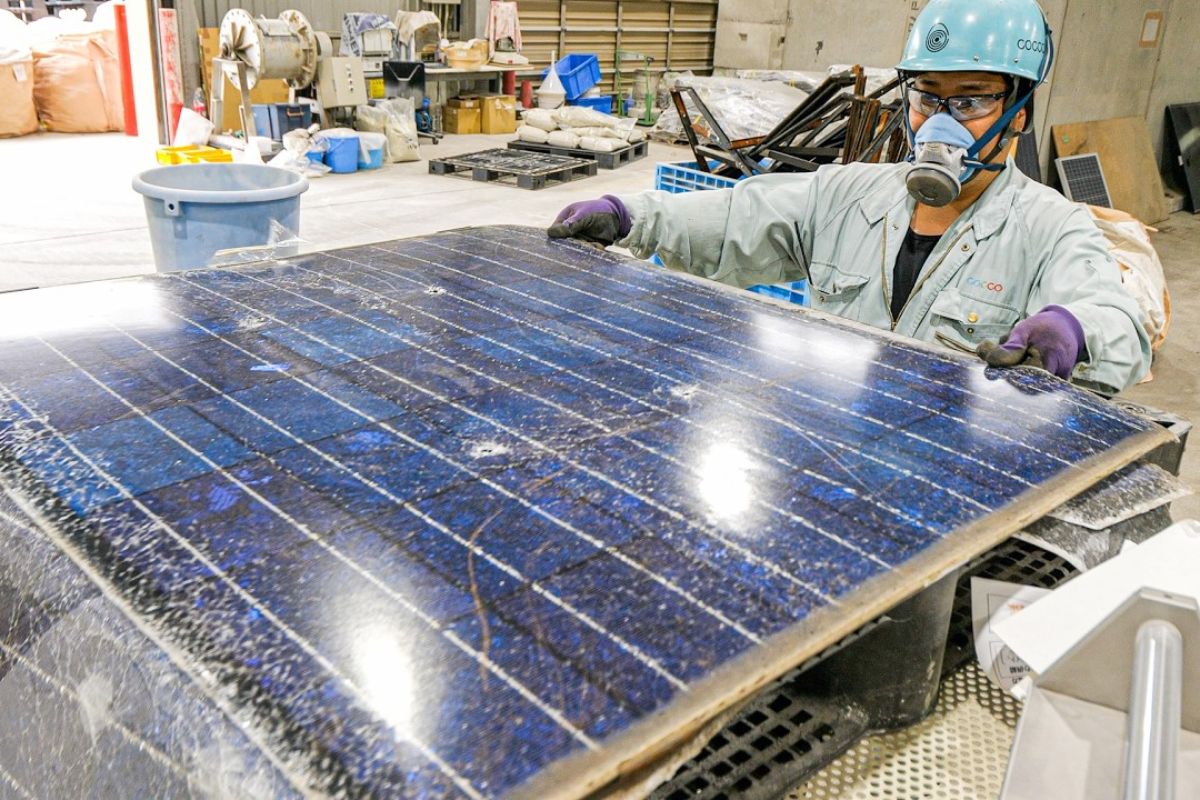


In Hiroshima, a Recycling Center Gives New Destination to Discarded Solar Panels While Testing Reuse Possibility, Separating Aluminum and Cables, Recovering Glass with Metal Bead Jets and Sending Precious Metals to Refineries, Creating Sustainable Products and Strengthening a True Circular Energy Economy in the Renewables Sector.
Japan is practically demonstrating that solar panels do not need to become toxic waste after their useful life. In Higashihiroshima, the Kokko Kurose Recycling Center has developed a meticulous process that tests, dismantles, and transforms each component of photovoltaic modules into new industrial inputs, reducing waste and creating value in the supply chain.
As the world rushes to install more clean energy, there is also growing concern about the fate of millions of solar panels that will reach the end of their useful life in the coming decades. By combining advanced technology, detailed sorting, and partnerships with refineries and manufacturers, the Japanese model points to a concrete path toward circular economy for the solar industry.
How Japan Is Testing and Reusing Solar Panels Before Dismantling Everything

The process begins before any cutting or shredding. Each discarded solar panel is connected to a specialized measuring device, which simulates light incidence and checks if there is still energy generation capability.
-
Iceberg A23a, one of the largest in the world, is undergoing accelerated collapse and may disappear: what explains the end of the ice giant?

-
The simplest swap at home can reduce energy consumption by up to 90% without changing habits, using a technology that lasts up to 25 times longer and consumes only a fraction of the electricity.
-
With over 14 million baskets of earth moved, an ancient North American metropolis built a monumental pyramid of 30 meters and established a city with 20,000 inhabitants nearly a thousand years ago.

-
A 1,900-year-old treasure emerges from a Roman house destroyed by fire and sealed since antiquity in Romania, with coins and metals fused among the ashes.

This verifier analyzes appearance and electrical performance and makes a technical judgment based on five main criteria, such as voltage, short-circuit current, open-circuit behavior, resistance, and insulation. If the panel passes all parameters, it receives an approval mark and enters the reuse queue, instead of being destroyed.

When the result is negative and the module receives an “X,” it means that it does not conduct electricity safely or efficiently. In this case, the panel is not discarded: it goes on to an advanced sorting and dismantling flow, where each layer will be separated to generate new materials.
Precise Dismantling: Aluminum, Cables, and Glass Come Out of the Panel in Stages

The next step is mechanical and straightforward. The solar panels are positioned in a machine that removes the aluminum structure and cables from the sides and the junction box.
This metal frame, with high recyclable value, is separated and goes for reuse in other industrial applications.

After removing the structure, the “naked” panel goes to the technological heart of the process: the glass shredding and recovery system.
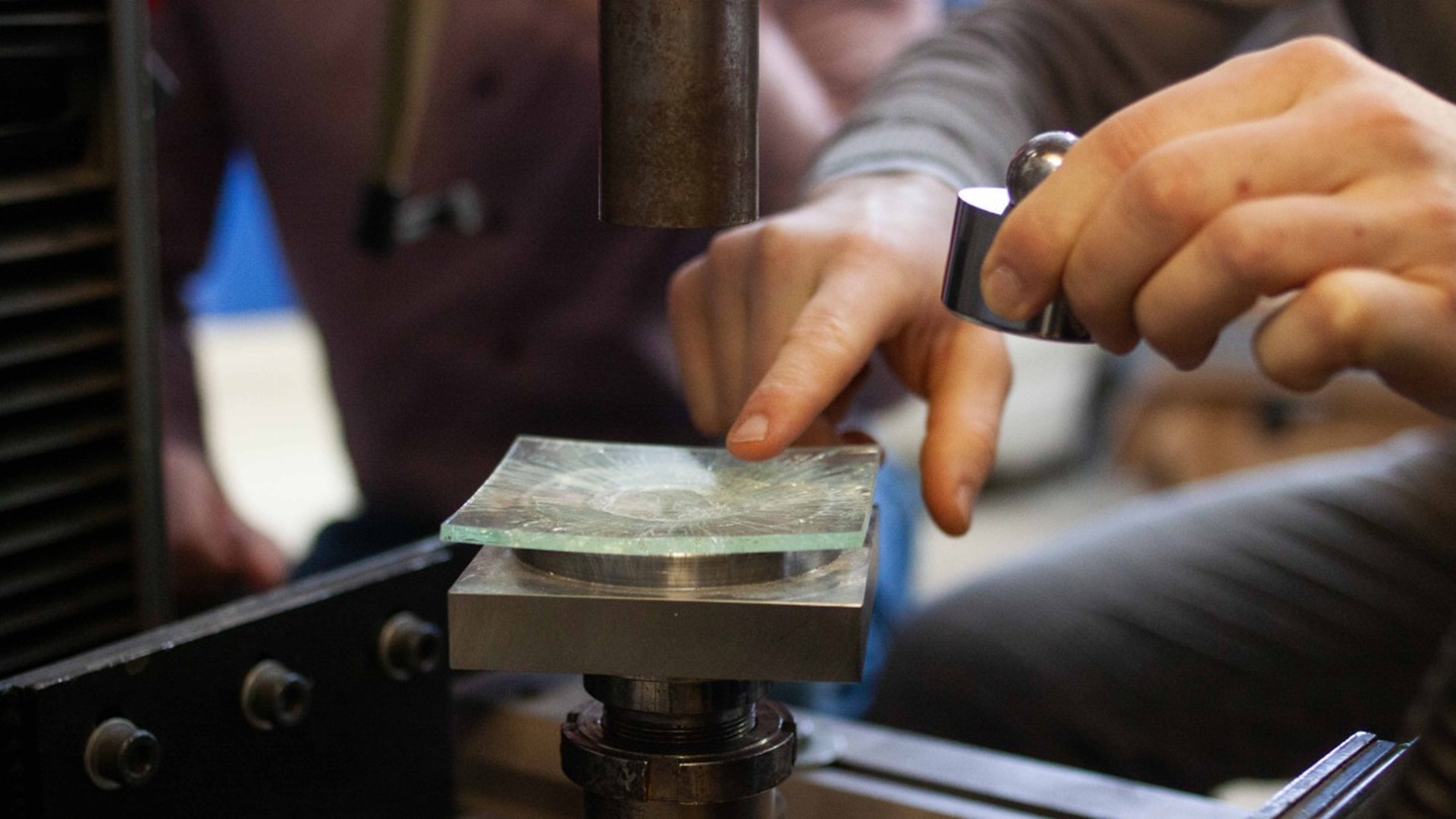
A bead jet machine fires stainless steel beads about 1 millimeter in diameter, removing only the glass layer from the surfaces of the solar panels.
From a typical module weighing around 30 kilograms, approximately 18 kilograms correspond to glass. With the help of mechanical displacement, the glass is removed cleanly, exposing the internal layers such as the sealing material, silicon, the backing sheet with copper and silver, and the junction box.

The result is a disassembled panel in clear components: aluminum, glass, cables, and the metal-rich film, all ready to follow different recycling chain flows.
Advanced Separation: Clean Glass, Metal Powder, and Rare Metals on Different Routes

After removal, the glass extracted from the solar panels is not treated as a single waste. It goes through a high-speed sorting process, where the material is vacuumed, sieved, and separated according to size and purity.

First, a wind-powered sorting machine is put into action, which blows the material and separates the clean glass from the one that still contains dirt or impurities.

The more intact glass goes for higher value-added uses, while the material with residues can be allocated to less noble applications.
Next, a second stage involves magnetic sorting. This process differentiates the magnetic ball powder, generated by the wear of the stainless steel beads, from the glass powder itself.
Thus, the Japanese center can recover not only the glass but also the metallic material used in the blasting, further closing the recycling loop.

Solar panels without glass, exposing their backing and internal parts, are sent to specialized refineries. In these units, silver and other valuable metals are extracted from the electrical conduction layer, which return to the industry as inputs for new technological products.
From Waste to Product: Solar Panel Glass Turns into Supersol and New Materials
One of the most interesting points of the Japanese model is that it does not just aim to “make waste disappear.” The Kokko center actively works to transform the glass from solar panels into new products, within a real logic of circular economy.
If the annual estimate reaches hundreds of thousands of tons of discarded solar panels, that represents around hundreds of thousands of tons of glass per year.
To respond to this volume, the recovered glass is mixed with a material called Supersol, in different tested proportions from 5% to 100%, until the ideal composition for each application is found.
This compound allows for the creation of slabs, panels, and other sustainable products, which can be used in construction, landscaping, or industrial solutions.
Thus, the glass that once protected photovoltaic cells gains a second life as a structural or decorative element, without having to go to landfills or dumps.
Direct Reuse: Approved Solar Panels Become Small Renewable Plants
Not all solar panels reach the end of the line. Those that pass all electrical tests can be reused as generators in new energy projects, especially in smaller or community installations.
After sorting, the reusable modules are separated by size and shape, carefully marked, and repackaged.
They are then sent to energy companies that install them in renewable plants, where they resume electricity production for a few more years.
This direct reuse is powerful for two reasons. First, it extends the useful life of solar panels and reduces the need to manufacture new modules from scratch, saving energy and raw materials.
Second, it increases access to clean energy in lower-budget projects, which can benefit from reused, yet still functional equipment.
Beyond Solar Panels: Thermal Recycling and Energy from Waste
The Japanese center is not limited to solar panels. The same logic of maximizing each resource appears in other areas, such as thermal recycling of wood chips and other materials.
These wastes go through a rotary press shredder that can process tons per day. The crushed material moves up conveyor belts, is subjected to magnetic separation to remove nails and metals, and then goes to a storage area, where it will be used as fuel in thermal processes.
The heat generated by controlled incineration is converted into thermal energy and, subsequently, into electricity, closing another cycle of utilization. The message is clear: everything that can generate energy or material value should be reused as much as possible, reducing the pressure on natural resources.
Real Circular Economy: What This Model Teaches Other Countries
The case of Higashihiroshima shows that talking about circular economy does not need to be just a nice slogan. By combining advanced technology, detailed sorting, and a long-term vision for solar panel waste, the Japanese center manages to:
- Extend the useful life of some modules through reuse
- Recover aluminum, cables, glass, and valuable metals
- Create new products from recycled glass
- Transform other wastes into thermal and electric energy
All of this practically builds a future where solar energy does not end up in mountains of electronic waste, but integrates into a system where raw materials, energy, and technology circulate longer.
In light of this example, an inevitable question arises: do you believe that Brazil should invest in specialized centers to fully recycle solar panels and turn this future waste into a new source of sustainable wealth?






Sem dúvidas nenhuma é o mais correto a ser montado e feito no Brasil
50 a
Orientador financeiro
Comércio exterior
Acredito que deva investir sim. Não somente na reciclagem dos painéis, mas também em muitos outros itens, como por exemplo pneus, madeiras, etc. A natureza agradece.